A contract risk assessment framework scores each clause two ways at once. How bad it could get (likelihood times impact), and how much that matters on this deal (deal value crossed with your risk tolerance). The output is a number per clause category and one decision: accept, negotiate, escalate, or walk. Everything below is how to get to that decision in one pass.
Here is the part most checklists get wrong. Risk is not a property of the clause. The same uncapped indemnity is fine on a $5,000 order and unacceptable on a $5M one. A framework that scores clauses against a generic redline misses this. A real one scores your exposure on this deal.
This guide is for in-house counsel and legal ops at scaleup and midmarket US companies. It sits next to our in-house contract review playbook, which covers routing and fallback positions. This post is the scoring layer that decides what to do once a clause lands in front of you.
TL;DR
Part of our in-house counsel guide series.
- Score risk per clause category (limitation of liability, indemnification, IP, termination, data protection, payment, warranties, dispute resolution), not per contract. Most of the risk sits in a handful of clauses.
- Risk is likelihood times impact, and impact is scaled to deal value and your risk tolerance. An identical clause scores differently on a $10K SaaS order and a $2M MSA.
- Turn the score into one action: accept, negotiate, escalate, or walk. The scoring matrix below maps every score band to an action so the decision is written down, not improvised.
- Standards like ISO 31000 frame risk as the effect of uncertainty on objectives, assessed by likelihood and consequence. The clause-category framework here is that idea applied to contracts.
- AI does the first-pass flagging (spot the clause, compare to your position, surface the deviation). Humans own the impact call, since impact depends on business facts the document does not contain.
A clause scores 15 (likelihood times impact) on a deal. What does the scoring matrix say to do?
Why score by clause category, not by contract
A whole-contract rating ("this MSA is medium risk") is too coarse to act on. It does not tell a reviewer which line to push on. Risk in a commercial agreement concentrates in a small set of clauses, so the scoring works at the clause-category level.
Eight categories cover most of what can hurt you. Each fails in a different way, so each gets its own likelihood-and-impact read.
Limitation of liability. The cap on what the counterparty owes you when things break. A cap at three months of fees, on a deal where a failure costs a year of revenue, is a real gap.
Indemnification. Who pays when a third party sues. Which way it runs, what triggers it, whether it is capped. A mutual indemnity for everything quietly makes you the insurer of the other side's conduct.
IP ownership and license. Who owns the deliverables, your inputs, and any data the tool derives. The failure mode is a license broad enough to reuse your confidential material, or a grab of rights in data you fed the tool.
Termination. How either side exits, the notice period, the cure window, and whether prepaid fees come back. One-sided termination for convenience leaves you locked in while the vendor walks.
Data protection. For vendors touching personal data, the processing terms: breach notice timing, sub-processors, transfer mechanism, deletion on exit. This is where a contract gap turns into a regulatory one.
Payment. Net terms, price-increase caps, auto-renewal, and late-payment remedies. The sleeper risk is an evergreen renewal with no notice window, which some states regulate.
Warranties. What the counterparty promises about the product, and the remedy if it fails. A pure "as-is" disclaimer on a system you depend on shifts the operational risk to you.
Dispute resolution. Governing law, venue, and arbitration versus court. The cost stays hidden until you have a dispute, then a hostile venue or a fees-shifting clause sets the economics.
The core idea: likelihood times impact, scaled to the deal
Standard risk practice scores a risk on two axes. How likely is the bad outcome, and how bad is it if it happens. ISO 31000, the international risk management standard, defines risk as the effect of uncertainty on objectives and assesses it through likelihood and consequence (ISO 31000:2018, checked June 2026). Contract risk is the same idea pointed at a clause.
Likelihood is how probable it is that this clause gets triggered. An indemnity in a low-conflict SaaS subscription rarely fires. The same indemnity where you resell the vendor's product to your own customers fires often. Your customers are the ones who sue.
Impact is the size of the loss if it does. The generic checklist skips the key move here: impact is not fixed by the clause text. It is the clause text crossed with the deal value and your tolerance. A liability cap at fees paid limits your recovery to the contract value. So a $10K deal caps near $10K and a $2M deal caps near $2M.
So the score for one clause is likelihood (1 to 5) times impact (1 to 5), with impact calibrated to this deal. The same clause text can score a 4 on a small order and a 20 on a large one. That swing is expected behavior in this framework.
The scoring matrix
Score each clause category on likelihood and impact, multiply, then read the action off the band. This is the page a reviewer keeps open. The bands below are a starting calibration. Set your own thresholds against your risk tolerance and rewrite them before you ship this.
| Score (likelihood x impact) | Risk band | Default action |
|---|---|---|
| 1 to 4 | Low | Accept. Within tolerance for this deal. Log it and move on. |
| 5 to 9 | Moderate | Negotiate. Push to your fallback position; close if the counterparty meets it. |
| 10 to 15 | High | Escalate. In-house counsel or GC reviews before any concession. |
| 16 to 25 | Severe | Escalate or walk. No acceptance without senior sign-off; be ready to walk. |
The likelihood and impact scales, so a reviewer scores them the same way each time:
| Rating | Likelihood (will this clause trigger?) | Impact (how bad if it does, on this deal?) |
|---|---|---|
| 1 | Rare; no realistic path to it firing | Negligible; absorb it without notice |
| 2 | Unlikely; needs an uncommon event | Minor; a known, budgeted cost |
| 3 | Possible; plausible over the term | Moderate; a meaningful but survivable loss |
| 4 | Likely; expected on deals like this | Major; a loss that hits the quarter or a key obligation |
| 5 | Near certain; built into the deal shape | Critical; existential, regulatory, or core-IP loss |
A worked read. SaaS vendor, $15K ACV, liability capped at three months of fees. Likelihood the cap matters: 2, since a small subscription rarely produces a large claim. Impact: 2, since your worst case is roughly the contract value. Score 4, low band, accept. Same clause, same vendor, now a $2M deal where their software runs your billing. Likelihood: 3. Impact: 5, since an outage could cost far more than fees paid and the cap blocks recovery. Score 15, high band, escalate. Same words, different exposure, different score.
Counterparty risk feeds the likelihood score
The clause text sets the shape of the risk. Who sits across the table sets how likely it is to fire, and whether the protection is worth anything when it does. A well-capitalized public company honors its obligations because a dispute is cheap for it to avoid. A pre-revenue startup or a counterparty in a hostile jurisdiction defaults, gets acquired, or disappears, and every clause you scored on paper gets tested at once.
Counterparty risk is not a separate axis. It moves the likelihood number. Before you score, run a short read on the other side:
- Financial health. Can they actually fund a judgment, a refund, or an indemnity? A liability cap is worthless against a counterparty that cannot pay the loss.
- Signing entity. Is the entity on the signature block the one that holds the assets, or a thin subsidiary? Confirm you are contracting with the party that carries the obligations.
- Concentration. How much revenue or how critical a function rides on this one relationship? Concentration lifts impact, not just likelihood.
- Track record. Prior disputes, a pattern of aggressive renewals, or missed deliverables all push likelihood up.
A shaky counterparty can move a clause a full band. An indemnity that scores moderate against a stable partner scores high when the partner cannot fund it. For counterparty review inside a larger transaction, see the M&A due diligence legal workstream checklist.
Tie the score to your risk tolerance
Two companies can read the identical clause and land on different, correct answers. A bootstrapped startup may accept a one-sided indemnity to close its first enterprise customer, because the revenue is existential. A public company with a mature risk posture rejects the same clause, because one bad indemnity across a large contract base is a board-level number.
That difference is risk tolerance, and it sets where your action bands sit. A risk-averse team might move the negotiate threshold down to a score of 4 and the escalate threshold to 8. A team chasing growth might run accept up to 6. Neither is wrong. The framework only works if the thresholds reflect your tolerance, written down, instead of each reviewer guessing.
Deal value is how tolerance becomes concrete per contract. The same indemnity scores low where the maximum exposure is small against your balance sheet, and high where it is not. The framework never says "this clause is risky" in the abstract. It says "this clause, at this deal value, against our tolerance, scores X, so we do Y."
Turn the score into action
A score earns its keep when it maps to a decision. Four actions cover it.
Accept. Low band. The clause is within tolerance for this deal, so you sign it as written and log the score. Logging matters: the same clause from the same vendor on a bigger deal next year may not be acceptable, and you want the record.
Negotiate. Moderate band. You have a pre-set fallback position, so push the counterparty to it. If they meet it, the clause drops into the accept band and you close. The contract review playbook covers how to set those fallbacks so a reviewer is not inventing the number mid-call.
Escalate. High band. The clause is past what a reviewer should concede alone, so it goes up a level before any movement. Treat escalation as routing, not as an admission that the reviewer failed. It puts a real-exposure call in front of the person who owns that exposure.
Walk. Severe band with no acceptable path. Some clauses are deal-breakers at a given size: an uncapped indemnity running to you on a large contract, a license grab over your core IP, a data clause that puts you offside a regulator. Naming the walk line in advance stops a reviewer from conceding it under deadline pressure.
For the actual fallback and walk-away language per clause, see the clause-position table in the in-house contract review playbook and the standalone clause library. This post scores; those resources tell you what to redline.
Where AI fits in the scoring
AI is strong at the first pass and weak at the impact call. The split below keeps each side doing what it is good at.
What AI does well: flag and compare. A first-pass AI reviewer reads the counterparty paper, identifies each clause category, and compares it to your written position. It returns the deviations: cap below your floor, indemnity running the wrong way, auto-renewal with no notice window, missing data-breach terms. This pattern-matching is fast and consistent. For the mechanics, see our AI contract review guide.
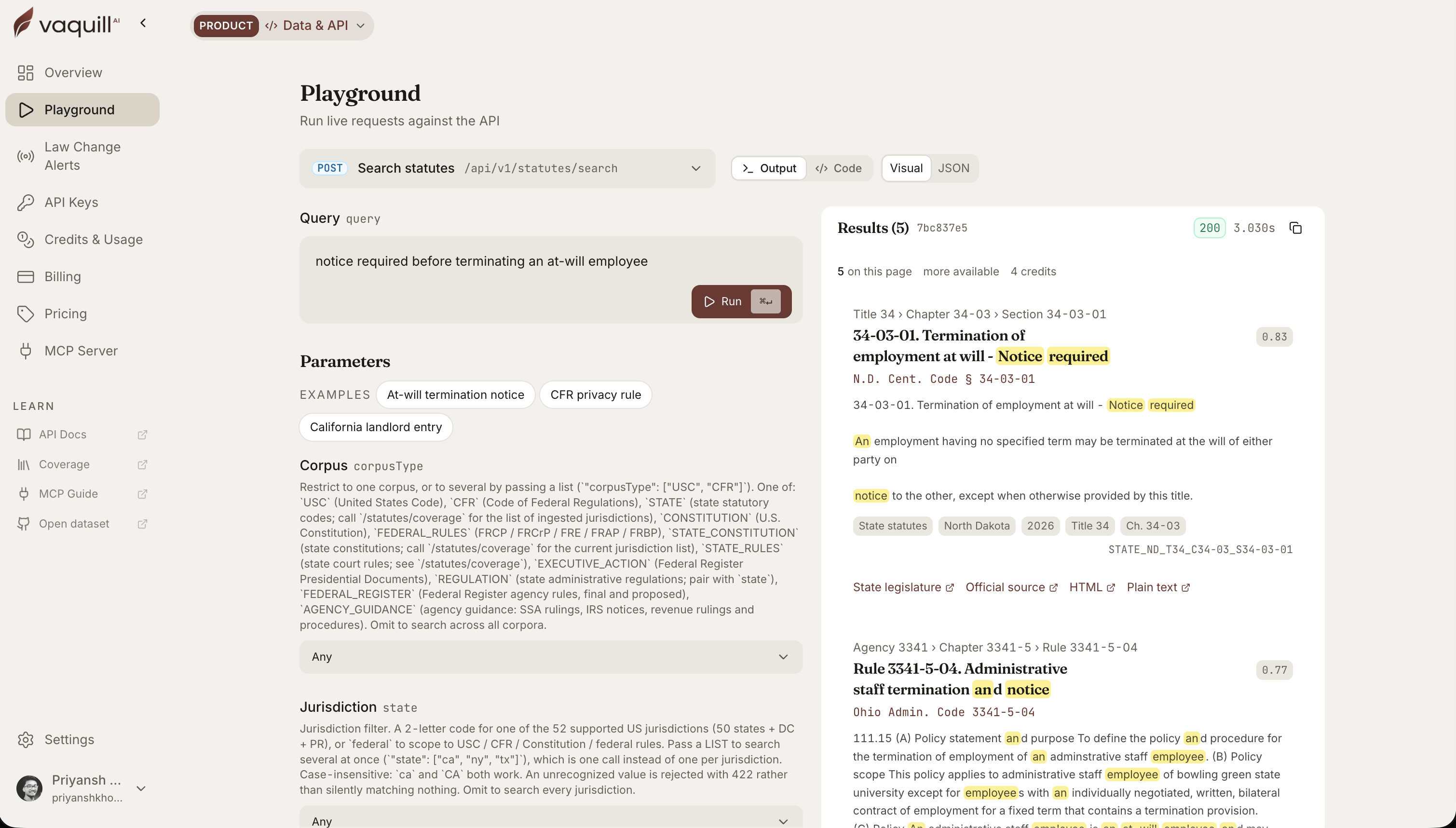 The same corpus behind this article, queried live. Every result carries its citation and a link to the official source.
What AI cannot do alone: score impact. Impact depends on facts outside the document. How strategic is this customer. What does this vendor run for us. What is our real exposure if the indemnity fires. A parser sees the clause text, not the business context that turns a moderate clause into a severe one. So AI proposes a likelihood and flags the clause; a human sets impact against the deal.
Run it as AI-assisted scoring, where the human keeps the final call. The model produces a populated first-pass matrix across the queue, which is the part that takes a reviewer the most time. The reviewer then adjusts the impact scores using context the model never had, and makes the accept, negotiate, escalate, or walk call. To run this scoring across many contracts at once (M&A diligence, a renewal sweep), see bulk contract review with a document matrix.
One category deserves its own pass: data protection. For vendors touching personal data, the impact is regulatory, and the questions warrant a structured intake. Our vendor security questionnaire for in-house counsel covers what to ask before you can score that category honestly.
Common mistakes that break the framework
The framework fails in predictable ways. Each one turns a defensible score back into a guess.
Scoring the clause, not the exposure. The most common error is reading impact off the clause text and ignoring the deal. A generic "uncapped indemnity is high risk" rule flags a $5,000 order the same as a $5M one. Scale impact to deal value and tolerance, or the number means nothing.
Leaving thresholds unwritten. If the accept, negotiate, and escalate bands live in each reviewer's head, two reviewers score the same clause differently and neither can defend the call. Write the bands down and calibrate them to your tolerance before the matrix goes into use.
Scoring only the paper in front of you. A clause scored at intake and never revisited goes stale. A renewal, a price increase, or a new data flow can move a low-band clause into a high one. Re-score at every event that changes exposure, which is easier when contract renewal tracking surfaces those triggers for you.
Treating the AI output as the answer. A first-pass model produces a fast, generic flag. It does not know how strategic the customer is or what the vendor runs for you. Taking its impact score at face value bakes the model's missing context into your decision.
Skipping the counterparty. Scoring clauses against a stable-partner assumption understates likelihood when the other side is thin. The paper protection is only as good as the entity standing behind it.
The verdict
A contract risk assessment framework earns its keep when it scores your exposure on the actual deal rather than a clause against a generic checklist. The core is small: eight categories, likelihood times impact, impact scaled to deal value and tolerance, four actions. The matrix turns a fuzzy "this feels risky" into a number and a decision a reviewer can defend.
The honest limit: these scores are judgment calls dressed up as numbers. Likelihood and impact are estimates, only as good as the calibration behind them. The matrix is there to make the call consistent and to record why you made it. It does not remove the human judgment underneath.
If you want this scoring to live inside the review instead of a separate spreadsheet, that is where a workbench helps. Vaquill AI is the legal AI suite in-house teams use to run a first-pass review across the queue, flag clause-by-clause deviations against your positions, and start the matrix you then calibrate by hand. It is one honest fit among several. Pick the tool that puts the scoring where the redlining happens.
FAQ
What is a contract risk assessment framework?
It is a method for scoring contract risk clause by clause, then deciding what to do about each one. You rate each clause on likelihood and impact, multiply, scale the impact to deal value and tolerance, and read an action off a matrix: accept, negotiate, escalate, or walk. It gives you a consistent, defensible decision that a reviewer can repeat across the queue.
Which contract clauses carry the most risk?
Most of the risk concentrates in eight categories: limitation of liability, indemnification, IP ownership and license, termination, data protection, payment terms, warranties, and dispute resolution. Which one is worst depends on the deal. A data clause dominates a vendor processing personal data; a liability cap dominates a large software dependency. Score all eight and let the numbers tell you where to spend your time.
How do you score contract risk?
Rate each clause on likelihood (1 to 5) and impact (1 to 5, scaled to this deal), then multiply. A score of 1 to 4 is low, 5 to 9 moderate, 10 to 15 high, and 16 to 25 severe. Map each band to an action. Calibrate the thresholds to your own risk tolerance before you use them.
Why does the same clause score differently on different deals?
Because risk is your exposure, not the clause text. An identical liability cap limits your recovery to the contract value, so the worst case on a $10K order is small and on a $2M order is large. Likelihood can shift too: an indemnity that rarely fires in a simple subscription fires often when you resell the product. The framework scores the deal, so the same words land in different bands.
How do I set my company's risk tolerance for contracts?
Risk tolerance sets where your action bands sit, and it follows your stage and balance sheet. A growth-stage team closing its first enterprise deals can run a higher accept threshold, since the revenue outweighs the clause risk. A larger company with many contracts moves the escalate and walk lines down, since one bad clause repeated across the base becomes a material number. Write the thresholds down so every reviewer applies the same line.
Can AI do contract risk assessment?
AI handles the first pass well: it identifies each clause, compares it to your written position, and flags deviations like a cap below your floor or a missing data-breach term. It does not reliably set impact. Impact depends on business facts the document does not contain, like how strategic the customer is or what the vendor runs for you. Use AI to populate the matrix fast, then have a human calibrate impact and make the call.
How is contract risk assessment different from a contract review checklist?
A checklist tells you whether a clause matches a generic standard, pass or fail. A risk framework asks how much a deviation matters on this deal, given the value and your tolerance, then produces a score and an action. A checklist treats every contract the same. A framework treats your exposure as the thing being measured, so it can accept a clause on one deal and reject the identical clause on another.
What are the five types of contract risk?
Risk-management taxonomies usually group contract risk into five types: financial (payment, pricing, penalties), legal (breach, enforceability, litigation), compliance (regulatory failures like GDPR or HIPAA), operational (missed milestones, delivery failures, unclear ownership), and reputational (public disputes, bad partnerships). This framework scores by clause category instead, because a category maps to a line you can actually redline. The two views overlap: a data-protection clause carries compliance risk, a liability cap carries financial risk. Score the clause, and the risk type takes care of itself.
Should I assess the counterparty or just the contract?
Both, and they connect. The contract sets the shape of each risk; the counterparty sets how likely it is to fire and whether the protection is collectible. A liability cap or an indemnity is only as good as the entity behind it, so a thin or shaky counterparty raises the likelihood score and can push a clause up a full band. Run a short read on financial health, the signing entity, revenue concentration, and track record before you finalize the scores.
How often should I reassess contract risk?
Score at intake before signing. Reassess at any event that changes your exposure: a renewal, a price increase, a new data flow, or an expansion that makes a vendor a core dependency. A clause that scored low on a small initial order can move into a high band when the relationship grows. The score travels with the deal, not just the original document.
Last updated: July 2026
New legal AI guides, weekly.
Further Reading
Contract Renewal Tracking: How to Never Miss a Deadline
Read postContract Turnaround Time: How to Measure and Cut It
Read postHow Big Should an In-House Legal Team Be? Benchmarks by Company Size
Read postWhat Is In-House Counsel? Role, Duties, and How the Job Works
Read postHow to Evaluate Legal AI Vendors: A Buyer's Framework
Read postHow to Find and Cite New Hampshire Law
Read post
Co-Founder & CEO · Attorney
Arshita leads product and strategy at Vaquill, building the legal AI suite that solo, small-firm, and in-house US lawyers use to run a matter end to end.