Casetext was acquired by Thomson Reuters for $650 million in 2023, and its AI assistant CoCounsel became the basis for Thomson Reuters CoCounsel. The standalone Casetext research product is effectively gone: as of July 2026, casetext.com redirects to Thomson Reuters, and the affordable, self-serve tool solos loved no longer exists.
If you landed here after a search told you Casetext "shut down," that is the short version. The longer version is a story about consolidation, and it is worth understanding before you pick a replacement.
TL;DR
- Casetext was not killed by failure. It was absorbed. Thomson Reuters bought it for $650M in 2023, folded its AI (CoCounsel) into Westlaw, and retired the standalone product.
- The legacy Casetext research platform closed April 1, 2025. casetext.com now redirects to Thomson Reuters CoCounsel (checked July 2026).
- CoCounsel lives on, but not cheaply. It ships in Westlaw-tied tiers, and case-law search sits behind a Westlaw subscription, so the ~$65/month Casetext era is over.
- The best replacement depends on your need: the direct successor (CoCounsel), a broad research library (vLex/Fastcase), a single AI assistant (Paxton AI), or an independent AI-native workbench.
- The real lesson is consolidation. Standalone legal-research startups keep getting bought by incumbents, which is exactly why a transparently priced, independent option matters.
How much did Thomson Reuters pay for Casetext?
What happened to Casetext
Casetext launched in 2013 as a scrappy, AI-forward alternative to Westlaw and Lexis. It was cheap, roughly $65 a month. It won a loyal base of solos, small firms, and litigators who could not justify a four-figure research bill.
In 2023 it shipped CoCounsel, one of the first GPT-4-powered legal assistants. That product got attention fast.
Then the incumbent moved. Thomson Reuters closed its acquisition of Casetext on August 17, 2023 for $650 million in cash (Thomson Reuters press release). At the time, TR described CoCounsel as an AI assistant for document review, research memos, deposition prep, and contract analysis.
For about eighteen months the two coexisted. Then, on April 1, 2025, Thomson Reuters retired the standalone Casetext product and moved its capability into the Thomson Reuters stack. Coverage across the legal-tech press and an advocacy campaign both marked that date. Casetext had also run one of the few free public case-law search tools, which is part of why the closure drew a public backlash.
Today the domain tells the story on its own. As of July 2026, casetext.com returns a 301 redirect to Thomson Reuters CoCounsel. There is no standalone Casetext login, no separate pricing page, no independent product to buy.
The CoCounsel name, meanwhile, kept moving up-market. Thomson Reuters rebuilt CoCounsel Legal from the ground up and opened early access in June 2026, with general availability planned for August 2026 in the US (LawSites). The lineage runs straight from Casetext, but the price and the packaging do not.
What Casetext users lost, and what changed
The technology did not disappear. The affordable, independent way to buy it did. Here is the before and after.
| What Casetext offered | What replaced it (2026) |
|---|---|
| Standalone product at roughly $65/month | Folded into Westlaw-tied CoCounsel tiers |
| Self-serve signup, no sales call | Configurator for small firms; sales quote above ~10 seats |
| One tool for research plus CoCounsel AI | Case-law search sits behind a separate Westlaw subscription |
| A free public case-law search option | Closed April 1, 2025; no free public successor from TR |
| Independent roadmap | Roadmap set inside a research incumbent |
The cost jump is the headline. CoCounsel now sits in the incumbent's pricing band, several times the old Casetext number. We keep the exact current figures in our dedicated pricing piece rather than restate them here: see Casetext in 2026: why it shut down and what to use instead for the sourced sticker prices.
The structural change matters as much as the number. Case-law research is no longer bundled into one cheap seat. To get the CoCounsel assistant plus real case-law search, you generally need a Westlaw subscription underneath. That is the opposite of the "one affordable tool" pitch that made Casetext popular.
The best Casetext alternatives in 2026
There is no drop-in clone of old Casetext. The thing that made it special, good AI at a self-serve price from an independent vendor, is exactly what the acquisition removed. So match the replacement to what you actually used Casetext for. For a wider field, our roundup of Westlaw alternatives for solo and small firms covers the same buyer question from the incumbent side.
Prices below are vendor-published or attributed to a named, dated source we checked. Quote-based vendors are labeled as such, not invented.
| Tool | Starting price | Access | Best for |
|---|---|---|---|
| Thomson Reuters CoCounsel | Quote-based; Westlaw-tied tiers (TR plans) | Configurator / sales | The direct successor, if budget allows |
| Vaquill AI | Published | Self-serve, free trial | Independent AI-native research plus drafting |
| vLex (Fastcase) | Free via many state bars; standalone quote-based | Bar benefit / sales | The broadest research library |
| Paxton AI | $499/user/mo, $2,999/user/yr | Self-serve | A single AI assistant, published price |
| Midpage | $100/mo Professional | Self-serve | A research pick with an AI citator |
Thomson Reuters CoCounsel: the direct successor
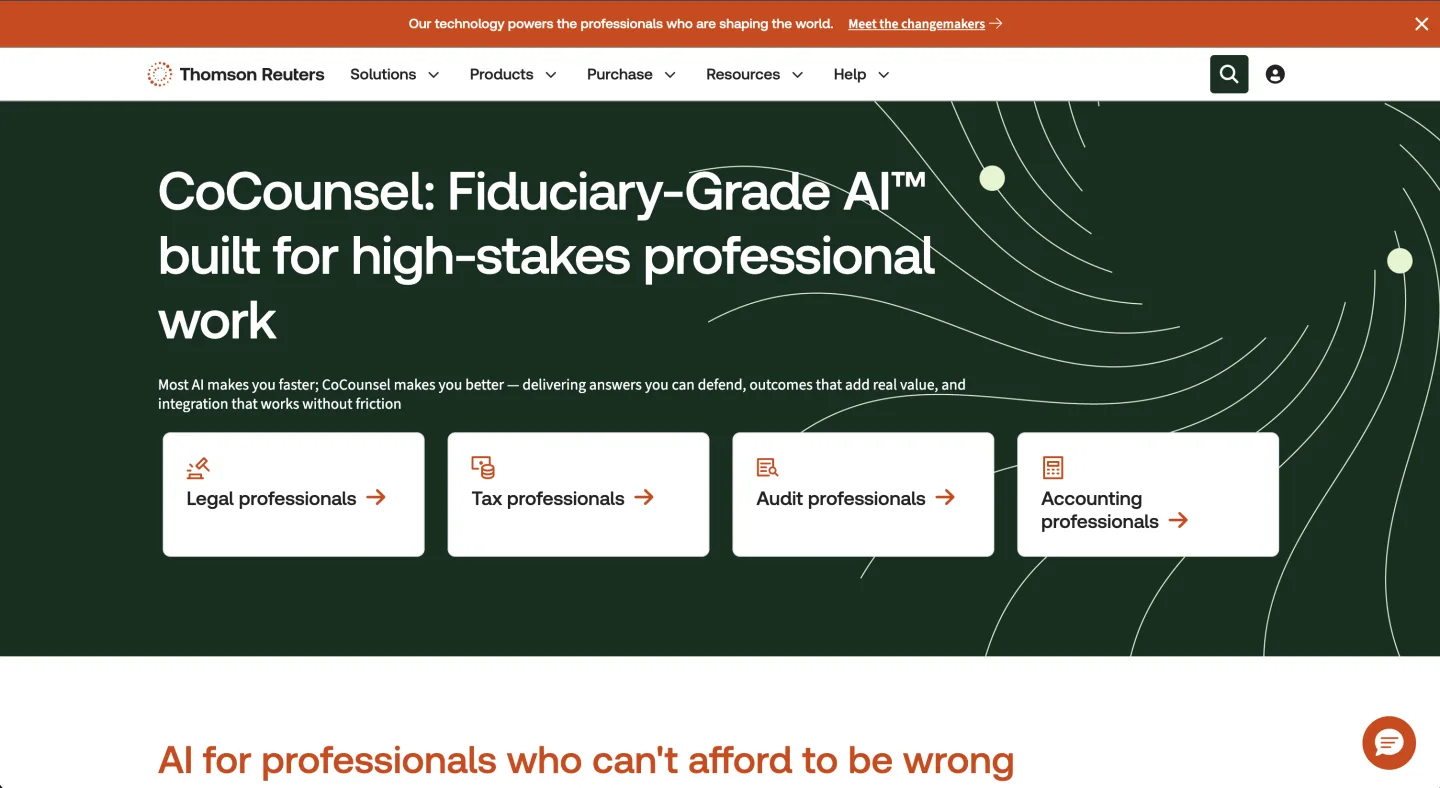
CoCounsel is where Casetext's AI actually went, so it is the closest thing to continuity. The assistant handles research, document review, and drafting, now grounded in Thomson Reuters content and rebuilt on a newer agentic architecture for the 2026 release.
The catch is everything that made Casetext attractive. Pricing is quote-based and sits in the incumbent band, packaging ties to Westlaw, and case-law search needs that Westlaw subscription underneath. If you want the honest breakdown of where it fits and where it does not, we wrote a full CoCounsel review, plus a roundup of CoCounsel alternatives.
Best for: firms already standardized on Westlaw that want the Casetext lineage without leaving the Thomson Reuters ecosystem.
vLex (Fastcase): the broadest research library
vLex merged with Fastcase in 2023 into one of the largest legal libraries anywhere, covering US and international primary law. Many state bars hand Fastcase to members for free, so a lot of former Casetext users already have a research baseline they are not using.
Its Vincent AI layer drafts memos and finds similar cases, but that tier is quote-based, so you go through sales to learn the price. For pure primary-law breadth at low or zero cost, this is the strongest option on the list.
Best for: bar members who want a deep, credible research library without a per-seat AI bill.
Paxton AI: a single AI assistant with a published price
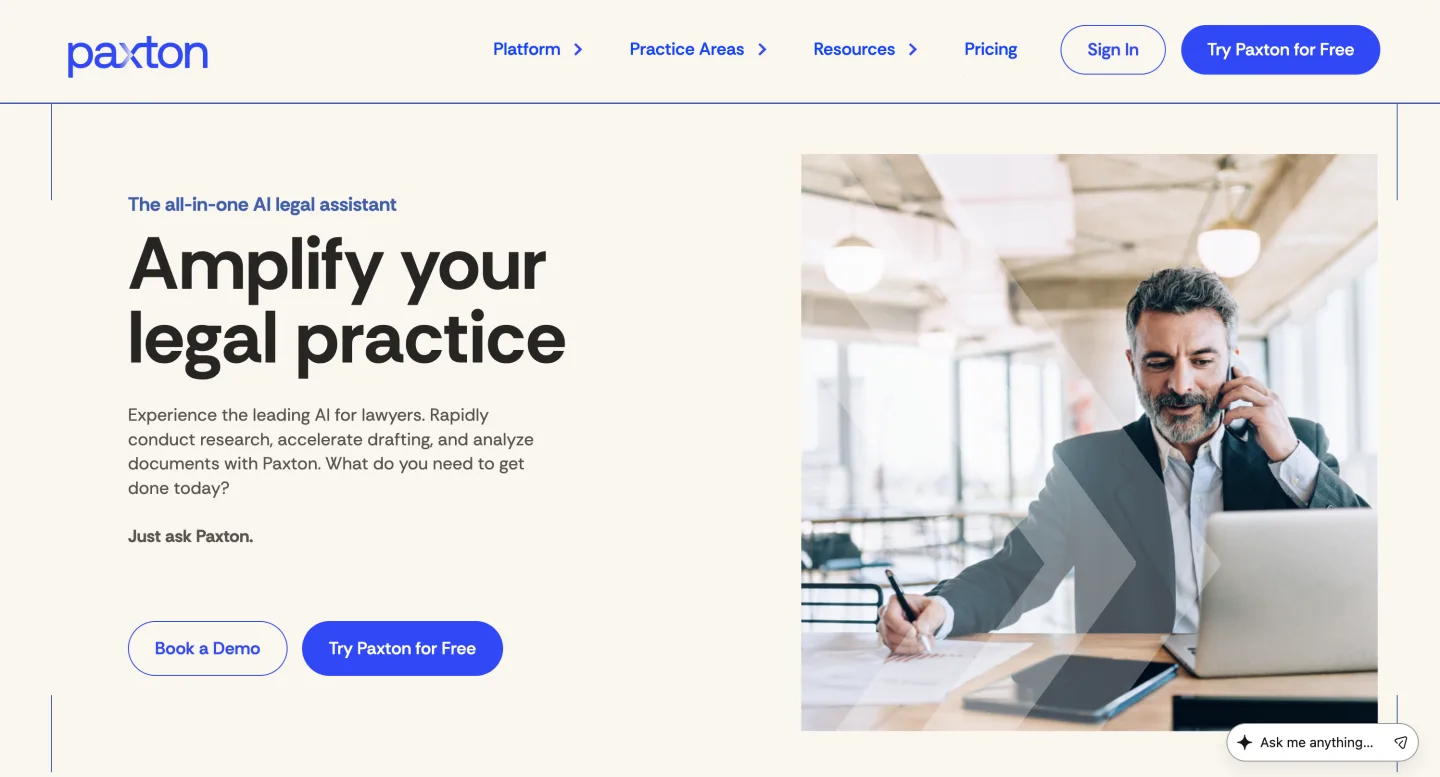
Paxton AI is an AI-native assistant for research, drafting, and document review, and it publishes its number: $499/user/month, or $2,999/user/year, with a 7-day trial (paxton.ai/pricing, verified July 2026). That transparency is refreshing after a quote-based incumbent.
The tradeoff is cost. At $499 a month it runs several times the cost of a self-serve suite seat, and there is no KeyCite-style editorial citator. For a solo who wants one capable assistant and can see the price up front, it is a clean pick.
Best for: solos and small firms who want one published-price AI assistant and do not need a deep citator.
Vaquill AI: an independent AI-native workbench
Vaquill AI is one honest option in this set, not the automatic winner. It is an AI-native US workbench, self-serve, that pairs research with drafting and redline in one place. You ask a legal question in plain language, get an answer with citations, then open the linked source to verify each one.
Where it falls short: it is younger than the incumbents, it has no 60-year negative-treatment citator like KeyCite, and its editorial layer is thinner. One scope note for accuracy: Vaquill AI's public API is statutes-only (US Code, CFR, all 50 states); case-law research is an in-product feature, not an API. Test it against your own jurisdiction before you rely on it.
Best for: teams that want an independent, transparently priced tool and value source verification over a decades-deep citator.
A research-focused pick: Midpage
If your Casetext use was mostly "find the cases and tell me if they are still good," a research-first AI tool with a citator fits better than a general assistant. Midpage publishes a flat $100/month Professional price ($80/month billed annually) and ships an AI citator that flags negative, caution, or neutral treatment with quotations.
It is younger and thinner on secondary content than the incumbents, and drafting mode adds usage-based charges on top of the base seat. But for a published-price AI citator, it is the cleanest research-focused option here.
Best for: research-heavy solos who want an AI citator with a price they can see before committing.
The real story: consolidation
Casetext is not a one-off. It is a pattern.
The independent legal-research startup gets good enough to threaten the incumbent's price. The incumbent buys it. The cheap, self-serve product gets folded into the expensive stack, and the disruptive price does not survive the deal.
That is the case for keeping at least one independent, transparently priced tool in your stack. Not because independents are automatically better, but because an option you can see the price of, and cancel month to month, is the one an acquisition cannot quietly take away from you.
How to migrate off Casetext
If you were a Casetext user and still need a working setup, do it in order.
1. Recover your work product. Pull any saved research, memos, or documents you generated before access lapses. Do not assume old exports will stay available.
2. Restore a primary-law baseline first. Check whether your state bar includes Fastcase. If it does, turn it on today for free case-law and statute access while you evaluate AI tools.
3. Match the AI layer to your real use. Research-heavy? Look at a citator tool. Drafting-heavy? Look at an AI workbench. General assistant? Compare published-price options before any quote-based one. In-house teams can start from our guide to legal AI tools for in-house counsel.
4. Test on closed matters. Run three matters where you already know the answer through each candidate, and check the citations against the source.
5. Favor self-serve and monthly billing. After Casetext, the value of a tool you can start and stop without a sales cycle should be obvious. Read the cancellation clause before you sign anything annual.
The verdict
Casetext did not fail. It got acquired, and the affordable independent product was retired into Thomson Reuters CoCounsel. As of July 2026 there is no standalone Casetext to return to.
For a direct successor, CoCounsel is the honest answer, with the honest caveat that it costs far more and ties to Westlaw. For breadth on a budget, bar-included Fastcase is the baseline. For a published-price AI assistant, Paxton or a research-focused tool like Midpage fits. And if the Casetext story taught you anything, an independent, transparently priced workbench is worth a look precisely because no one can buy it out from under you.
If you want an AI-native research and drafting workbench published and self-serve, with source verification and no sales call, Vaquill AI is one option to try. You can also browse our clause library to see the drafting side.
FAQ
Is Casetext shut down? Yes. The standalone Casetext research product closed on April 1, 2025, about eighteen months after Thomson Reuters acquired the company. As of July 2026, casetext.com redirects to Thomson Reuters CoCounsel, and there is no independent Casetext product to sign up for.
What replaced Casetext? Casetext's AI assistant, CoCounsel, was absorbed into Thomson Reuters and now ships in Westlaw-tied tiers as CoCounsel. The technology continued; the affordable, self-serve standalone product did not.
Why did Thomson Reuters shut down Casetext? Casetext undercut Westlaw at roughly $65 a month. The AI was worth more to Thomson Reuters folded into its premium Westlaw ecosystem than kept alive as a low-cost competitor. Consolidation, not product failure, is the reason.
How much does CoCounsel cost now? It is quote-based and sits in the incumbent pricing band, several times the old Casetext price, with case-law search generally requiring a Westlaw subscription underneath. For current sourced figures, see our Casetext pricing breakdown.
Is there a free alternative to Casetext? Partly. Many state bars include Fastcase (part of vLex) as a member benefit, which covers primary law for free. Google Scholar is free for known-case lookups but has no citator, so neither fully replaces a paid AI research tool.
What is the best Casetext alternative for a solo? It depends on use. For a published-price AI assistant, Paxton AI ($499/month) or Midpage ($100/month with a citator). For an independent AI-native research plus drafting workbench, a self-serve, published-price tool. For breadth, bar-included Fastcase.
Did Casetext have a free case-law database? Yes. Casetext ran one of the few free public tools for searching federal and state case law online, and its closure in 2025 removed that free access, which is part of why the shutdown drew public criticism.
Can I still log in to my old Casetext account? No. The standalone product was retired and the domain now redirects to Thomson Reuters. Migrate any saved work through your current Thomson Reuters access, and export what you can.
Last updated: July 2026.
New legal AI guides, weekly.
Further Reading

Co-Founder & CEO · Attorney
Arshita leads product and strategy at Vaquill AI, the US primary law data API. As an attorney, she decides which law we carry, how each section is sourced and cited, and what legal AI and compliance teams need from the data.