For most solo and small firms in 2026, the best Westlaw alternatives are bar-included vLex Fastcase plus Google Scholar for free primary law, with an AI layer on top: either vLex Vincent (quote-based), Midpage at $99/month (published), or an AI-native US workbench with self-serve pricing for research, drafting, and redline together.
Stay on Westlaw only for deep federal-litigation work that leans on KeyCite, since Westlaw is quote-based and routinely lands above a self-serve seat while the tools below cover the same daily work for far less.
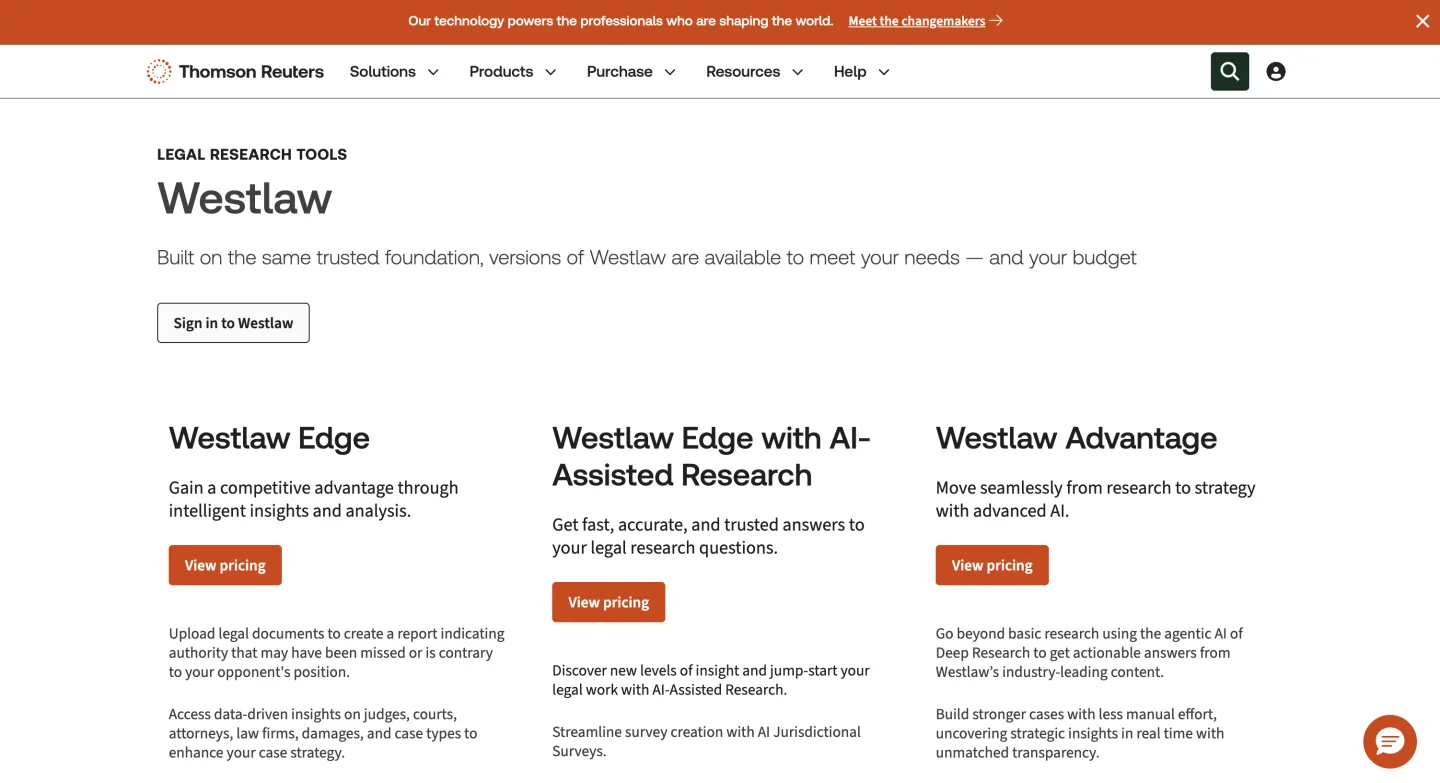
Westlaw is still the gold standard of legal research, and there are good reasons for that. KeyCite is reliable. Its coverage of federal and state primary law is hard to beat.
But for solo practitioners and small firms, the math stopped working a long time ago.
TL;DR
- Westlaw earns its price on deep federal-litigation work and on KeyCite's negative-treatment depth. Everywhere else it overcharges solos by 3-5x.
- Bar-included vLex Fastcase plus Google Scholar covers most state-specific solo work for $0, with an AI layer through Vincent (quote-based), Midpage ($99/mo, published), or a US-focused workbench with self-serve pricing.
- Lexis+ AI is the other incumbent, but like Westlaw it is quote-based and runs in the same premium band, so it is not a budget cut.
- AI-native suites built from scratch (peers like Harvey, Legora, CoCounsel) consolidate research, drafting, and redline at one price; the cheaper ones publish that price, the expensive ones hide it.
- Migration discipline matters more than tool choice. Parallel-run 30-60 days, audit citator coverage on five real cases, and read the cancellation clause before signing.
What is Midpage's published Professional price?
Quick comparison: 10 Westlaw alternatives at a glance
Prices are vendor-published or attributed to a named, dated source we checked (HTTP 200). Quote-based vendors are labeled as such, not invented.
| Tool | Starting price | Free option? | Citator | AI features | Coverage | Self-serve or sales | Best for |
|---|---|---|---|---|---|---|---|
| vLex Fastcase | Free via 40+ state bars; standalone ~$95/mo (UC Berkeley Law) | Yes (bar members) | Cert (AI + human) | Vincent (add-on) | US + global, very broad | Self-serve / bar | Bar members who want free primary law |
| AI-native workbench (Vaquill AI) | Self-serve | Free trial | AI verification (no 60-yr citator) | Research + drafting + redline | Millions of US opinions, US Code, CFR, 50 states | Self-serve | AI research with source verification |
| Google Scholar | Free | Yes | None | None | US case law since ~1950 | Self-serve, no account | Fast free case lookups |
| Midpage | $99/mo Professional; $25/mo students (midpage.ai/pricing) | 2-week trial | AI citator (negative/caution/neutral) | Research + drafting | 99% binding federal + state appellate | Self-serve | Solos who want a published-price AI citator |
| vLex Vincent | Quote-based / "Contact Vendor" (Lawyerist, 2026) | Free trial | Built on Fastcase cert | Vincent AI (memos, similar cases) | US + global, very broad | Sales-led | Firms wanting AI on vLex's library |
| Paxton AI | $499/user/mo, or $2,999/user/yr (paxton.ai/pricing) | 7-day trial | No KeyCite-style citator | Research, drafting, review | US federal + state | Self-serve | Solos sold on a single AI assistant |
| Lexis+ AI (Protege) | Quote-based; est. $275-525/mo solo all-in (AI Vortex, 2026) | Demo / trial | Shepard's (deep) | Lexis+ AI / Protege | US + global, very broad | Sales-led | Firms that need Shepard's depth |
| Bloomberg Law | Quote-based / on request | Demo | Editorial (not KeyCite depth) | Brief Analyzer, analytics | Strong transactional + regulatory | Sales-led | Transactional and regulatory practices |
| Clio (+ legal research) | EasyStart $49/user/mo; higher tiers quote-based (clio.com/pricing) | Trial | Via add-on/integration | Manage AI (quote-based add-on) | Practice mgmt + research add-ons | Self-serve / sales | Firms wanting research inside practice mgmt |
| CoCounsel (Thomson Reuters) | $225-400+/user/mo (founder-confirmed) | Demo | Inherits TR data | AI assistant, Parallel Search | US, thin on appellate | Sales-led | Understanding what acquisitions do to price |
Which one is right for you?
Skip the list if you already know your buyer type. Here is the fast router.
- Budget-first (lowest possible cost). Turn on bar-included vLex Fastcase and use Google Scholar for free case lookups. Total: $0. Add Midpage at $99/mo only when you want an AI citator with a published price. For a fuller walk through the sub-$100 stack, see the best AI legal research tools for solo attorneys on a budget.
- Privacy-first (control over where data goes). Favor self-serve tools with a contract you can read before signing and monthly billing you can cancel. Avoid multi-year sales-led deals where the data terms arrive late.
- Research-heavy litigator. If you live in KeyCite or Shepard's negative treatment, Westlaw or Lexis+ AI still win on citator depth. If you mostly need "find the leading cases and tell me if they are still good," Midpage or an AI-native workbench is faster and far cheaper.
- All-in-one (research plus drafting plus redline). An AI-native workbench with self-serve pricing consolidates the three jobs at one published price. CoCounsel does similar work but quote-based and several times the cost.
- By practice area. Transactional or regulatory: Bloomberg Law's flat bill. State-specific litigation: bar Fastcase plus a verification layer. Practice-management-first firms: Clio with a research add-on.
How we picked
We judged each tool the way a solo or small-firm buyer would after deciding to leave Westlaw.
That means coverage you can rely on, a citator or AI equivalent that flags bad law, and a price you can predict before you sign.
The real test is cost and friction: can you start without a sales call, and do you know what you will pay each month?
Prices here are vendor-published, founder-confirmed, or attributed to a named, dated third-party source we checked, never invented. Quote-based vendors are labeled as such. Sentiment lines come from real forums and studies, linked where the source returns a live page.
What to look for in a Westlaw alternative
Before the list, here is the checklist that matters most.
Coverage breadth. You want federal courts, all 50 state courts, statutes, and regulations. If your practice is state-specific, deep coverage in your jurisdiction beats a long national list.
Citator quality. You need to know if a case was overruled, distinguished, or questioned. This is where free tools struggle the most, and getting it wrong is malpractice territory.
AI capabilities. Every platform now claims AI. The question is whether it cuts your research time or just makes text you still have to verify. Look for tools that cite sources you can open. Worth knowing: a Stanford and Yale reliability study found Westlaw's AI-Assisted Research hallucinated in about one in three responses, the worst of the paid tools tested, while Lexis+ AI came in around 17% (arxiv.org). AI does not remove the duty to verify.
Pricing transparency. Published prices, no per-document fees, no auto-renewal traps, monthly billing. These should not be radical demands, but in legal tech they often are.
1. vLex Fastcase: best for bar members who want free primary law
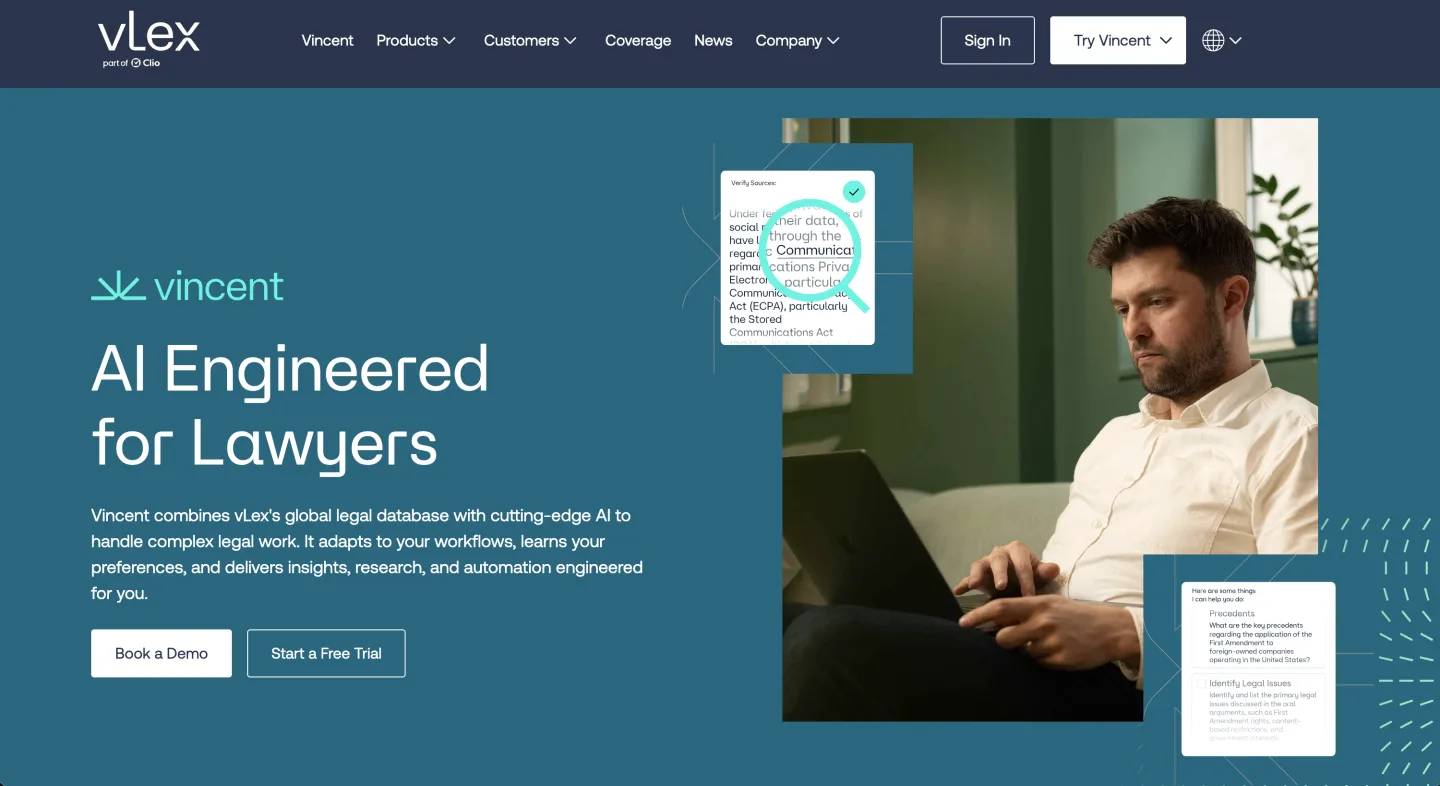
At a glance: Free through most state bars; standalone around $95/month (UC Berkeley Law Library) · Self-serve, free for bar members · Best for lawyers whose bar includes it
If your state bar includes Fastcase, you already have a competent research platform for $0. Fastcase merged with vLex in 2023 into one of the largest legal libraries anywhere. More than 40 state bars hand it to members as a benefit.
What's good
- Free for members of 40-plus state bar associations
- Covers federal and state case law, statutes, regulations, and court rules
- Cert citator mixes AI and human review across 700,000-plus citations
- Vincent AI can draft research memos and find similar cases
Where it falls short
- The citator does not match KeyCite's depth of negative treatment
- Vincent AI is an add-on at extra cost
- Secondary sources (treatises, practice guides) are thin next to Westlaw
What users say: vLex is quote-based for its AI tier, so most public chatter is about Fastcase as a free bar benefit rather than the paid product; no single forum thread stands out as representative.
Bottom line: If your bar includes it, turn it on today and use it as your primary-law baseline. If you would be paying out of pocket, the standalone price narrows the gap with more capable AI-native tools.
For related vendor / pricing / buyer-guide coverage, see Best Westlaw Alternatives in 2026: 7 Tools Solo and Small Firms Switch To and How Much Does Westlaw Cost in 2026? Solo, Small-Firm, Westlaw Plus Pricing.
2. AI-native US workbench (Vaquill AI): best for AI research with source verification
At a glance: Self-serve, published pricing (sign up to see the latest) · Self-serve, free trial · Best for solo and small-firm lawyers who want verifiable AI research
An AI-native workbench is built from scratch instead of bolted onto a legacy database, and Vaquill AI is one example. You ask a legal question in plain language and get an answer with case citations inside the app. Then you open the linked sources to verify each one.
What's good
- Published self-serve price with a free trial, no sales call
- Answers run through retrieval, relevance scoring, and hallucination checks
- Direct links to source text, not just a summary
- Covers millions of US opinions, the US Code, CFR, and all 52 state and territory codes, and pairs research with drafting and redline in one workbench
Where it falls short
- Younger than Westlaw and Fastcase
- No 60-year negative-treatment citator like KeyCite or Shepard's
- The editorial layer (headnotes, practice guides) is thinner than incumbents
- The public API is scoped to statutes and legislation only, not case law
What users say: This category is newer than the incumbents, so there is no large independent forum record yet; we are not inventing praise, and the honest read is to test it against your own jurisdiction first.
Bottom line: Strong on AI-native research, drafting, redline, and source verification at one published per-seat price. Weak on a decades-deep citator and secondary content, so check your jurisdiction before you commit.
3. Google Scholar: best for fast, free case lookups
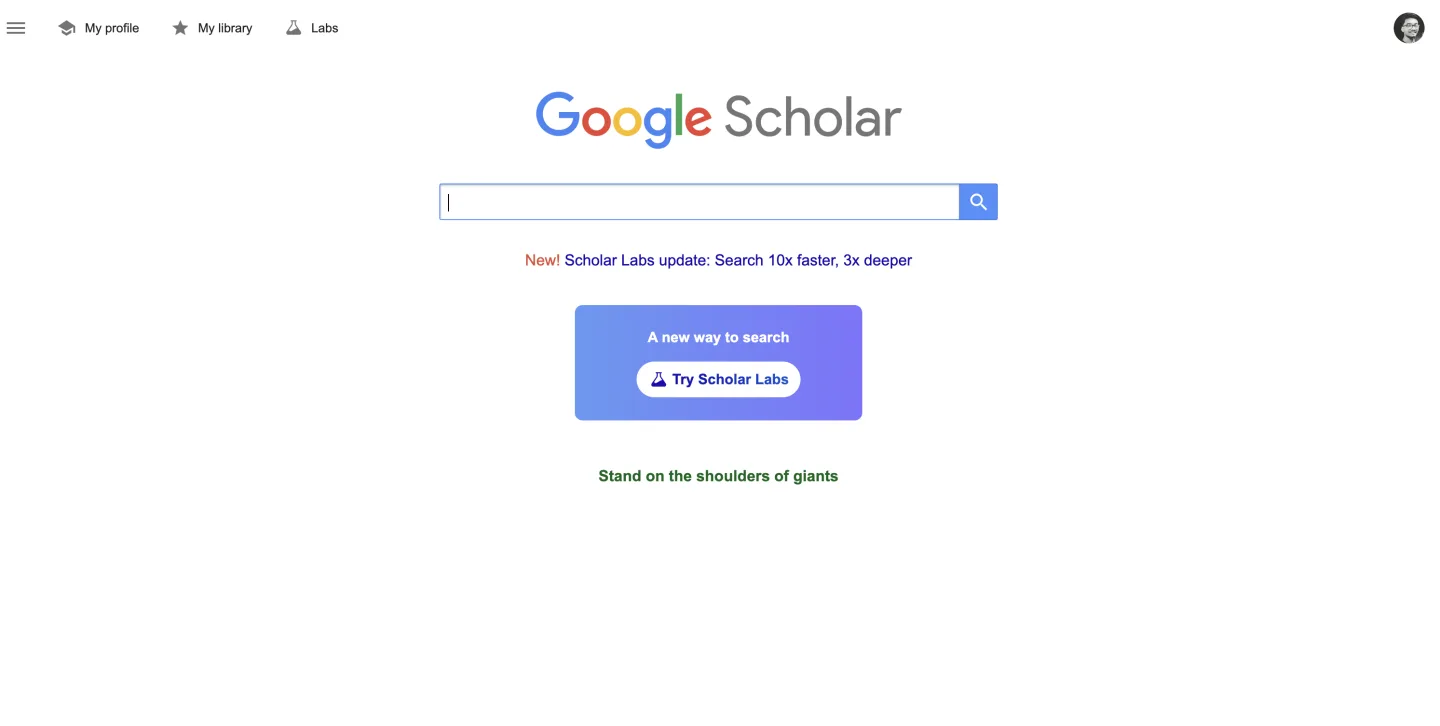
At a glance: Free · Self-serve, no account needed · Best for quick lookups and citation checks
Google Scholar is the fastest way to confirm a case exists and read what it said, for free. Its legal database holds state supreme and appellate decisions since 1950 plus federal appellate and district opinions, with Google's search on top.
What's good
- Completely free, no login required
- Fast, familiar search interface
- Filters by jurisdiction and date, with citation links between cases
- Often quicker than logging into Westlaw for a known case
Where it falls short
- No citator at all, so you cannot check if a case is still good law
- Coverage has gaps in unpublished and trial-court opinions
- New opinions can take weeks to appear
- No headnotes, key numbers, or editorial enhancements
What users say: Practitioners treat it as a free lookup layer, not a research tool of record; the recurring caution is its lack of any citator, which the platform itself does not dispute.
Bottom line: Use it to find cases you already know about and to scan a topic before deeper work. Never make it your only tool for anything going into a brief, because the missing citator is disqualifying on its own.
4. Midpage: best for a published-price AI citator
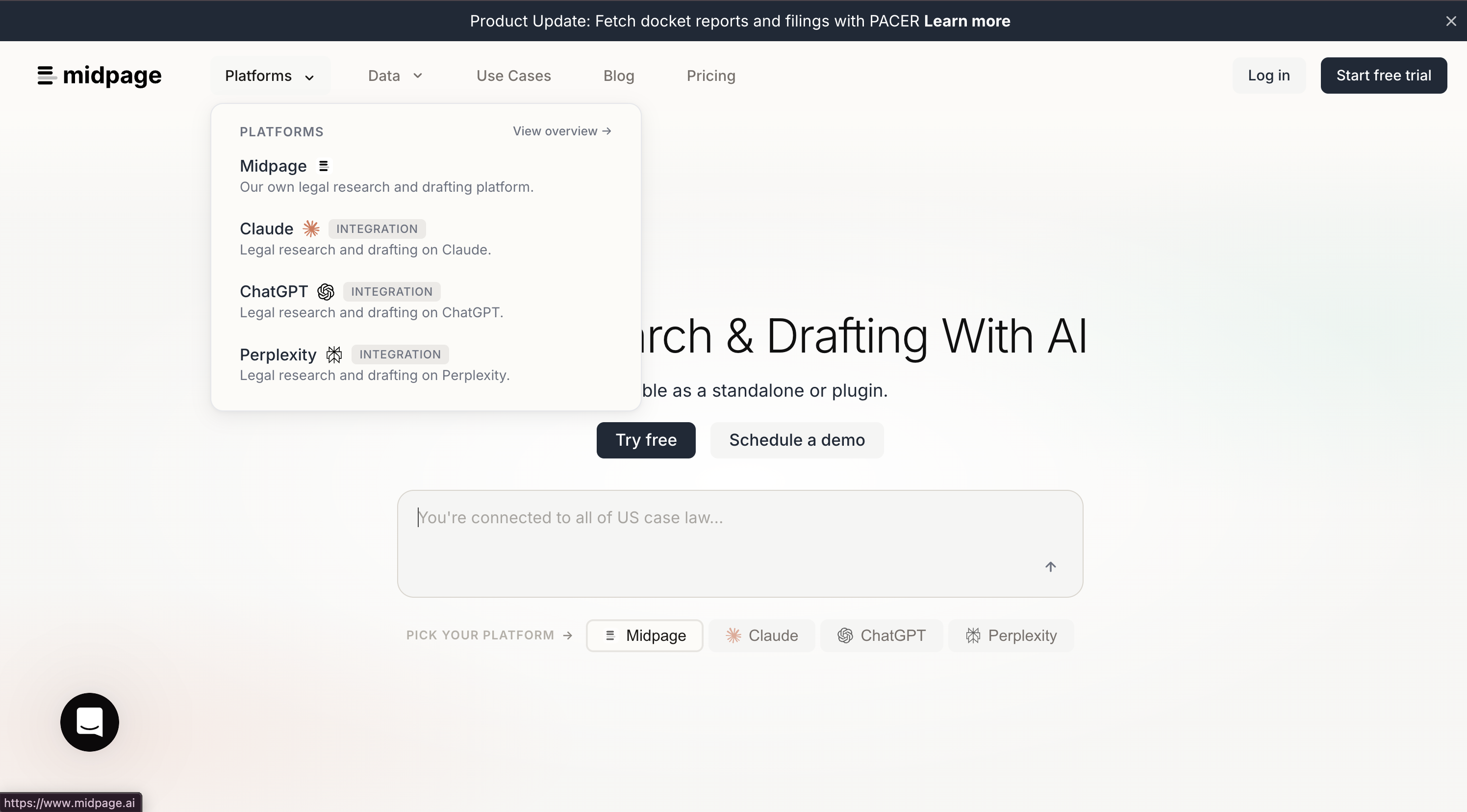
At a glance: $99/month Professional, $25/month for students, two-week free trial (midpage.ai/pricing, verified 2026-06-18) · Self-serve · Best for solos who want an AI citator at a published price
Midpage is one of the few AI-native research tools that publishes a flat monthly price and ships an actual citator. Its AI-powered citator categorizes citing references as negative, caution, or neutral with plain-language reasoning. The company says it covers 99% of binding federal and state appellate decisions plus substantial district-court material.
What's good
- Published $99/month price, no sales call to see a number
- AI citator with treatment signals (negative / caution / neutral) and quotations
- Drafting mode included, with usage-based AI costs on top of the base seat
- Two-week free trial, plus a $25/month student tier
Where it falls short
- Drafting mode adds usage-based AI charges beyond the $99 base, so the bill is not fully fixed
- Younger and thinner on secondary content than the incumbents
- The AI citator is newer than KeyCite or Shepard's and has a shorter track record
- US-only, no practice-management integration
What users say: Coverage and the citator launch were the milestones legal-tech press tracked through 2025; the recurring caution on any AI citator is the same as for the rest of the category, which is to verify treatment on the cases you actually cite.
Bottom line: If you want an AI citator with a price you can see before you commit, Midpage is the cleanest published option in this list. Budget for the drafting-mode usage on top of the base seat.
5. vLex Vincent: best AI layer on a very large library
At a glance: Quote-based, listed as "Contact Vendor" (Lawyerist Vincent AI review, 2026) · Sales-led, free trial · Best for firms that want AI sitting on vLex's library
Vincent is vLex's AI assistant, broken out here from the free Fastcase tier because it is a separate paid product. It drafts research memos, finds similar cases, and works across the combined vLex and Fastcase library, which is one of the broadest US-plus-global collections available.
What's good
- Sits on a very large US and international library
- Drafts memos, summarizes, and surfaces similar cases
- Backed by Fastcase's cert citator underneath
- Free trial before you commit
Where it falls short
- No published price; Lawyerist lists it as "Contact Vendor" with "No Published Pricing" in its cons
- You go through sales to learn what you will pay
- Citator depth still trails KeyCite and Shepard's for negative treatment
- Best value usually requires you already be in the vLex ecosystem
What users say: Independent reviews praise the breadth and the memo drafting but flag the lack of published pricing as the main friction for a solo trying to compare costs.
Bottom line: A strong AI layer if you want vLex's library and can tolerate a sales conversation to learn the price. If you need a number before you talk to anyone, Midpage or an AI-native workbench is the more transparent path.
6. Paxton AI: best single AI assistant for a solo
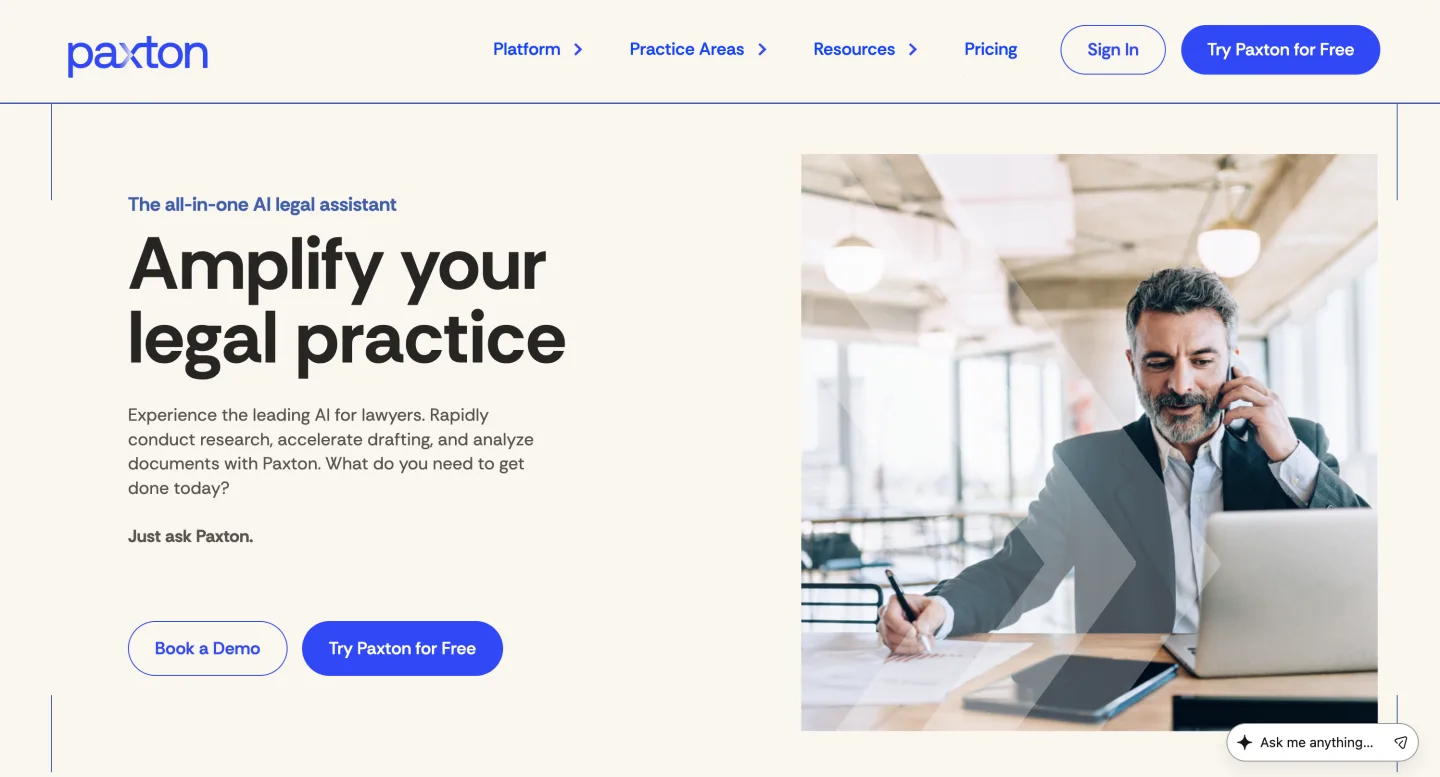
At a glance: $499/user/month, or $2,999/user/year (about 50% off annual), 7-day trial (paxton.ai/pricing, verified 2026-06-18) · Self-serve · Best for solos sold on one AI assistant for research and drafting
Paxton AI is an AI-native assistant aimed squarely at solos and small firms, covering legal research, drafting, and document review in one interface. Unlike the incumbents, it publishes its price, which makes the cost comparison honest.
What's good
- Published price you can see without a sales call
- Research, drafting, and document review in one tool
- Annual plan roughly halves the monthly rate
- 7-day trial to test on your own work
Where it falls short
- At $499/month it is well above the $99 self-serve tier from Midpage or an AI-native workbench
- No KeyCite-style editorial citator
- US-only, with no practice-management integration
- No independent hallucination benchmark to point to yet
What users say: Solo and small-firm reviewers have called it a "game-changer," while the recurring gripe is that the price is steep for a solo and there is no independent accuracy benchmark (Lawyerist Paxton AI review).
Bottom line: A capable, transparently priced single assistant. Just note the gap: at $499/month it costs roughly five times a $99 self-serve seat that does similar daily work.
7. Lexis+ AI (Protege): best for Shepard's depth, if budget allows

At a glance: Quote-based, no published price; third-party estimates put a solo all-in around $275-525/month (AI Vortex Lexis pricing, 2026) · Sales-led · Best for firms that need Shepard's negative-treatment depth
Lexis is the other research incumbent, and its Shepard's citator is the main rival to KeyCite for depth of negative treatment. Lexis+ AI (now branded with Protege) layers an AI assistant on top.
Like Westlaw, none of this is published: the official store routes you to a sales conversation, and Lawyerist lists the starting cost as "Contact Vendor."
What's good
- Shepard's is a genuine, decades-deep citator
- Broad US and international coverage, strong secondary sources
- In the Stanford and Yale study, Lexis+ AI hallucinated less than Westlaw, around 17% versus roughly one in three (arxiv.org)
- AI assistant integrated with the research database
Where it falls short
- Quote-based with no published price; AI is positioned as an add-on to an existing Lexis+ subscription
- Third-party estimates put a full solo bundle in the $275-525/month range (AI Vortex), so this is not a budget cut over Westlaw
- The "hallucination-free linked citations" marketing is overstated against the study results
- Sales-led, often multi-year
What users say: Reviewers value Shepard's and the lower hallucination rate, but flag the opaque pricing and the gap between the marketing and the independent benchmark.
Bottom line: If you specifically need Shepard's depth, Lexis+ AI is the strongest non-Westlaw incumbent. As a cost move for a solo, it lands in the same premium band as Westlaw, so it solves the citator problem, not the budget one. We break the numbers down further in the Lexis+ AI pricing guide.
8. Bloomberg Law: best for transactional and regulatory work
At a glance: Quote-based / on request · Sales-led, demo required · Best for transactional and regulatory practices
Bloomberg Law trades Westlaw's per-document surprises for one flat, all-inclusive price. The catch is that the price is quote-based and usually comes with a multi-year deal. So this is a lateral move on cost, not a budget cut.
What's good
- Flat pricing with no per-document or out-of-plan fees
- Strong on securities, tax, and corporate governance research
- Brief Analyzer and docket analytics are included
- Practitioner-written editorial content is high quality
Where it falls short
- Quote-based with a long minimum commitment
- Case-law annotation does not match KeyCite's granularity
- AI features lag newer, AI-native platforms
- The contract length is a real risk for a solo
What users say: Buyers like the predictable flat bill but flag the long contract and the quote-based entry; because pricing is not published, there is no clean per-seat figure to cite.
Bottom line: Bloomberg Law fits transactional or regulatory practices that value predictable billing over a low number. For pure litigation research on a budget, it solves the wrong problem.
9. Clio with a legal-research add-on: best for practice-management-first firms
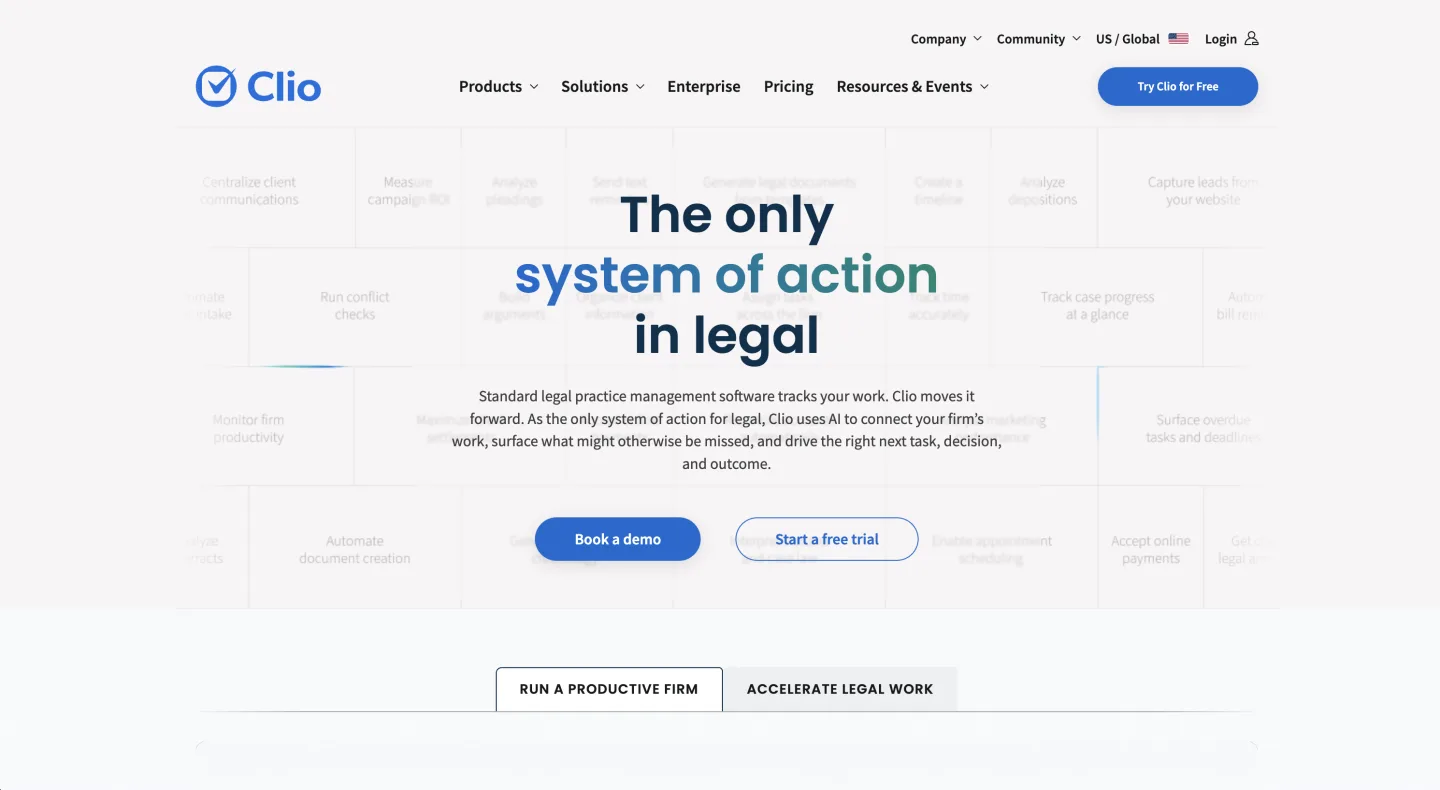
At a glance: EasyStart from $49/user/month billed annually; higher tiers and AI add-ons quote-based (clio.com/pricing, verified 2026-06-18) · Self-serve for the base, sales-led for add-ons · Best for firms that want research inside their practice-management hub
Clio is not a research database on its own. It is the practice-management hub many small firms already run, and it now bundles AI (Manage AI) and document automation (Clio Draft) plus research through integrations. If your firm lives in Clio, adding research there can beat juggling a separate login.
What's good
- Low published entry price (EasyStart from $49/user/month annually)
- Research and AI sit next to matters, billing, and intake
- Self-serve start for the base plan
- Manage AI brings drafting and summarization into the same hub
Where it falls short
- Only EasyStart's price is published; Essentials, Advanced, and Expand are quote-based
- Manage AI and Clio Draft are "contact sales" add-ons with no listed price
- The research depth depends on the integration you bolt on, not on Clio itself
- No native KeyCite-style citator
What users say: Clio is widely adopted as a practice-management backbone; the research and AI layers are newer, so buyers weigh them as add-ons rather than a Westlaw replacement on their own.
Bottom line: A sensible path if Clio is already your hub and you want research and AI in one place. As a standalone research swap for Westlaw, it leans on whatever you integrate, so price it as add-ons, not as a single sticker.
10. CoCounsel (formerly Casetext): what the acquisition changed for solo buyers
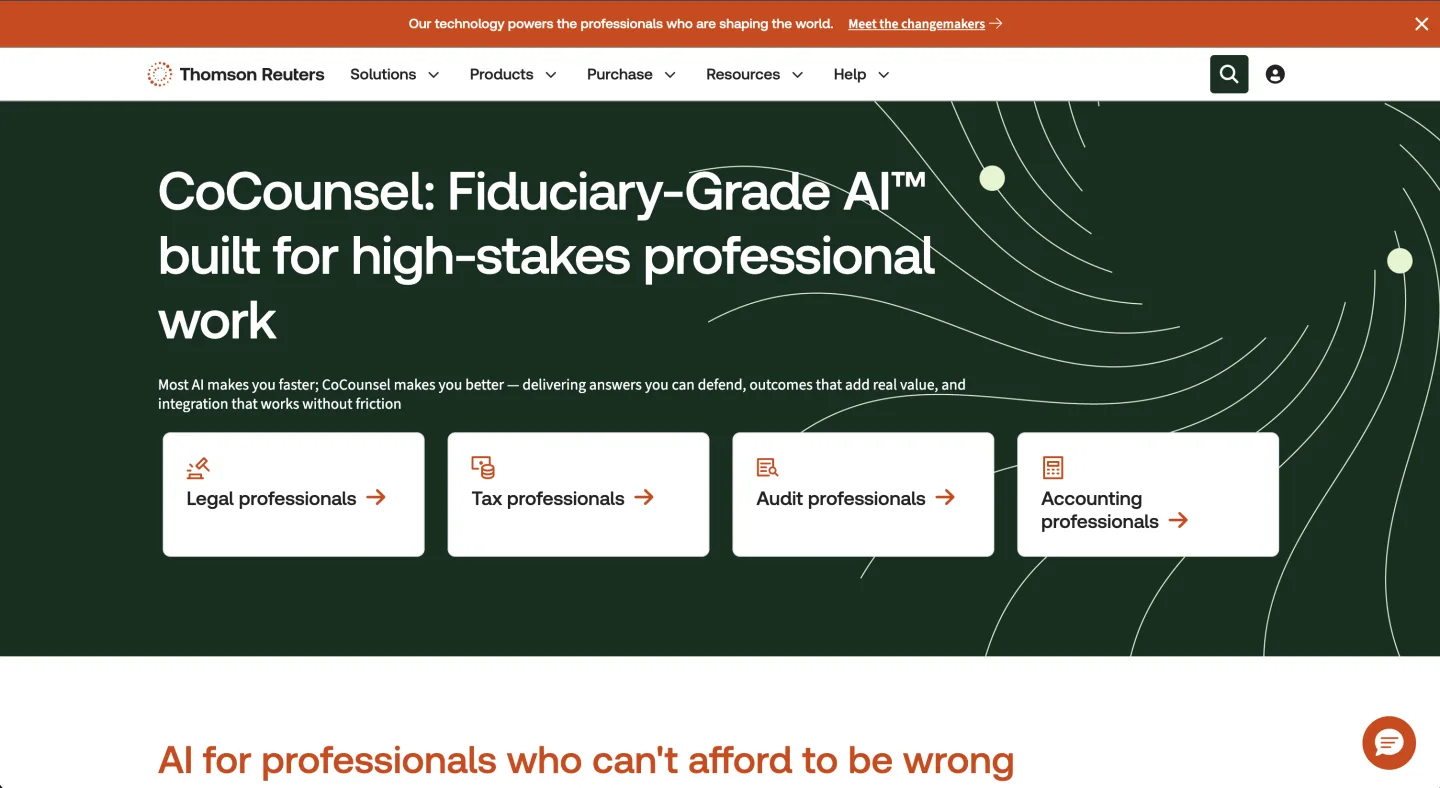
At a glance: $225 to $400+ per user/month · Sales-led, demo required · Best for understanding what acquisitions do to pricing
CoCounsel is here as a warning, not a recommendation. Casetext launched in 2013 as a cheap, AI-forward Westlaw alternative at roughly $65/month. Then Thomson Reuters bought it for $650 million in 2023 and folded it into its ecosystem.
What's good
- The underlying AI assistant was genuinely good
- Parallel Search and document review save real time
- Now backed by Thomson Reuters infrastructure
Where it falls short
- The affordable standalone product no longer exists
- Pricing jumped to $225 to $400+ per user/month
- Users still report fabricated citations
- Thin on appellate material
What users say: A University of Michigan legal-tech review found users liked the time savings but warned it still fabricates citations and is thin on appellate coverage, with the advice to verify everything (repository.law.umich.edu/legaltechseries/18).
Bottom line: If you are pricing AI research, the Casetext story is the lesson, not the product itself. When a big incumbent buys a disruptor, the disruptive price rarely survives the deal. We tracked the before-and-after in Casetext vs Westlaw pricing.
Others worth knowing (free and low-cost)
These do not make the ranked list because none ships a citator or AI layer a switching solo would lean on, but they are real, free or cheap, and worth a bookmark.
- Cornell Legal Information Institute (LII). Free. The full US Code, the Code of Federal Regulations, every Supreme Court opinion since 1992, and a strong plain-language law dictionary. No case-law breadth below the Supreme Court and no citator, so treat it as a statute and regulation reference, not a litigation database. Live at law.cornell.edu, checked June 2026.
- Justia. Free. Federal and state case law, statutes, regulations, and a large free-form legal library, with no login. No citator and lighter editorial depth than the paid tools. The site blocks automated checks, so we name it without a link rather than show a status we cannot confirm.
- VersusLaw. A long-running low-cost subscription database of core US court decisions and codes, often cited in law-library guides as a budget Westlaw alternative. We could not reach its site on the date we checked (June 2026), so confirm it is still operating and get a current price in writing before relying on it.
For a librarian-maintained survey of paid and free US databases, the NYU GlobaLex guide to fee-based US legal databases (checked June 2026) is the most thorough free reference.
What you actually save: the annual-cost math
Here is the dollar difference, using attributed third-party Westlaw and Lexis estimates alongside Vaquill AI's published, self-serve pricing. Treat the incumbent numbers as ranges, since both are quote-based.
Solo attorney, one seat, per year
| Stack | Annual cost | Source |
|---|---|---|
| Westlaw (solo) | ~$1,800-4,800 | $150-400/mo (Clio, 2026) |
| Lexis+ AI all-in (solo) | ~$3,300-6,300 | $275-525/mo estimate (AI Vortex, 2026) |
| Cheap stack: bar Fastcase + Google Scholar | $0 | Bar benefit + free lookups |
| AI seat: Vaquill AI (self-serve) | Self-serve, published | Sign up for current pricing |
20-attorney firm, per year
| Stack | Annual cost (20 seats) | Notes |
|---|---|---|
| Lexis+ AI all-in (~$400/seat/mo midpoint) | ~$96,000 | $275-525/mo band (AI Vortex, 2026) |
| Cheap stack: bar Fastcase + Google Scholar | $0 primary law | Add a verification layer per attorney as needed |
| AI seats: Vaquill AI (self-serve), 20 seats | Self-serve, published | Sign up for current pricing, all 20 seats |
The pattern holds at every firm size: a published, self-serve AI seat undercuts a quote-based incumbent bundle by thousands of dollars per attorney, while a bar-included free stack covers the primary-law baseline at zero.
The trade you make is citator depth and secondary content, which is exactly the decision the router above is built around.
The AI-native difference
Westlaw, LexisNexis, and Bloomberg Law all added AI to platforms built decades ago. They are fitting language models onto systems designed around Boolean search and per-document licensing.
That works, but it carries constraints. The AI sits on top of the old system, so the data structures and pricing models keep their legacy assumptions.
AI-native platforms can design the whole pipeline as one system, with verification baked in rather than added later. That does not make them automatically better, since Westlaw's editorial depth is real value.
But for the common "find the leading cases and tell me if they are still good law" query, an AI-native tool is often faster and cheaper.
How to evaluate and switch: a migration checklist
If you are thinking about leaving Westlaw, do it methodically.
1. Audit your usage. Pull six months of Westlaw usage reports. Most solos find they use 20% of what they pay for.
2. Test with real work. Pick three closed matters where you know the answers. Run the same queries on each alternative and check the cases and citations.
3. Check jurisdiction coverage. If you practice in one or two states, search for cases you know should be there. Do not assume coverage.
4. Evaluate the citator. Run five cases you cite often through each platform. If one misses that a case was distinguished or limited, that is a dealbreaker.
5. Review contract terms. Read the cancellation policy, renewal terms, and price escalation clauses. Favor monthly billing with no auto-renewal traps.
6. Plan the transition. Run both platforms in parallel for 30 to 60 days before you cancel Westlaw.
The bottom line
There is no single perfect Westlaw replacement. The right pick depends on your practice area, jurisdiction, budget, and how much you value AI versus traditional editorial content.
Here is the shorthand:
- Already a bar member? Turn on vLex Fastcase today. It is free and competent.
- Federal litigator on a budget? Google Scholar plus Fastcase covers a lot for zero dollars.
- Want a published-price AI citator? Midpage at $99/month is the cleanest option.
- Want AI-native research with verification, plus drafting and redline? Try an AI-native US workbench with self-serve pricing.
- Need Shepard's depth? Lexis+ AI, with the caveat that it is quote-based and premium-priced.
- Transactional practice with budget room? Bloomberg Law's flat pricing removes surprise charges.
- Need the deepest US case law coverage? Westlaw is still the answer, and that is fine.
The legal research market has more real competition now than at any point in thirty years. Solo and small-firm lawyers benefit most.
Test the alternatives on your actual work, and stop paying $300 a month for a tool you use three times a week.
FAQ
Is there a free Westlaw alternative? Yes. Bar-included vLex Fastcase and Google Scholar each cover real research needs at no cost, though neither ships a full citator. Fastcase via your bar is the strongest free primary-law baseline.
What is the best free Westlaw alternative? For most solos it is bar-included vLex Fastcase, because it covers federal and state case law, statutes, and rules with a cert citator on top. Google Scholar is the fastest free option for known-case lookups but has no citator at all.
Is Lexis cheaper than Westlaw? Not meaningfully for a solo. Both are quote-based and land in the same premium band; third-party estimates put a full Lexis+ AI solo bundle around $275-525/month (AI Vortex, 2026). The honest answer is to get both quotes in writing for your exact content needs and compare like for like, since neither publishes a number.
Does vLex or Fastcase have a citator like KeyCite? Fastcase ships a cert citator that blends AI and human review across more than 700,000 citations, and Midpage and other AI-native tools offer AI citators with negative/caution/neutral signals. None matches the decades of editorial negative-treatment depth in KeyCite or Shepard's yet, so verify treatment on the specific cases you cite.
What does Westlaw cost for a solo? Westlaw is quote-based and climbs once you add AI and federal content, routinely landing well above a self-serve seat. Get the quote in writing before you sign.
Can an AI tool replace KeyCite? Not yet for deep negative treatment. AI-native tools verify citations against source text, but a 60-year editorial citator like KeyCite or Shepard's still has no exact match.
What if I only need Westlaw for one case? You have cheaper paths than a full subscription. Bar-included Fastcase covers most one-off primary-law needs at $0, and many public law libraries and courthouse terminals offer Westlaw or Lexis access for the occasional pull. Some AI tools bill month-to-month or per task, so you can spin one up for a single matter and cancel. A full annual Westlaw contract rarely pencils out for one case.
Can I switch mid-contract? Often not without a penalty. Most incumbent deals are annual or multi-year with auto-renewal, so read the cancellation and escalation clauses before signing. The cleanest switches start on month-to-month tools (Midpage, an AI-native workbench) that you can cancel, then drop Westlaw at its renewal date after a 30-60 day parallel run.
What is the best Westlaw alternative for solo attorneys? If your bar includes Fastcase, start there for $0. Add a published-price AI layer (Midpage at $99/month or an AI-native workbench with self-serve pricing) when you want AI research, drafting, and verification without a sales call. Reserve Westlaw or Lexis+ AI for when you genuinely need KeyCite or Shepard's depth.
Can you practice law without Westlaw? Yes. Plenty of solos run entirely on bar-included Fastcase and Google Scholar for primary law, with an AI layer for speed. The one thing you cannot skip is checking that each case is still good law, which is where a citator (or careful manual verification) earns its keep.
Is AI legal research as reliable as Westlaw? Not blindly. The Stanford and Yale reliability study found Westlaw's own AI-Assisted Research hallucinated in about one in three responses and Lexis+ AI in around 17% (arxiv.org), so even the incumbent tools require verification. The safe move with any AI tool, incumbent or newcomer, is to open the linked source and confirm the holding before you cite it.
Part of our legal AI vendor comparison and pricing series.
New legal AI guides, weekly.
Further Reading
Vaquill AI vs Midpage: US legal data API comparison
Read postOpenLaws vs Midpage vs Vaquill AI: US legal data API comparison
Read postVaquill AI vs OpenLaws: US legal data API comparison
Read postHarvey AI Pricing 2026: Per-Seat Cost and the Renewal Increase
Read postLexis+ AI Pricing 2026: Per-Seat Costs, Hidden Add-Ons, Cheaper Suite Alternatives
Read postHow Much Does Westlaw Cost in 2026? Solo, Small-Firm, Westlaw Plus Pricing
Read post
Co-Founder & CEO · Attorney
Arshita leads product and strategy at Vaquill, building the legal AI suite that solo, small-firm, and in-house US lawyers use to run a matter end to end.