The single best reason to look past CoCounsel is that you do not already pay for Westlaw. CoCounsel Legal is Thomson Reuters' agentic AI layer, and the strongest version of it depends on Westlaw content and integration. If your team is not on that stack, much of what makes CoCounsel good is value you are paying around.
That is the split this post is about. CoCounsel fits litigation teams already living in Westlaw research. It fits an in-house commercial desk less well, because primary-law research is a smaller slice of that week than the price implies.
This is the honest roundup of what those teams shortlist instead. Who each tool fits, where it breaks down, and hedged pricing checked June 2026.
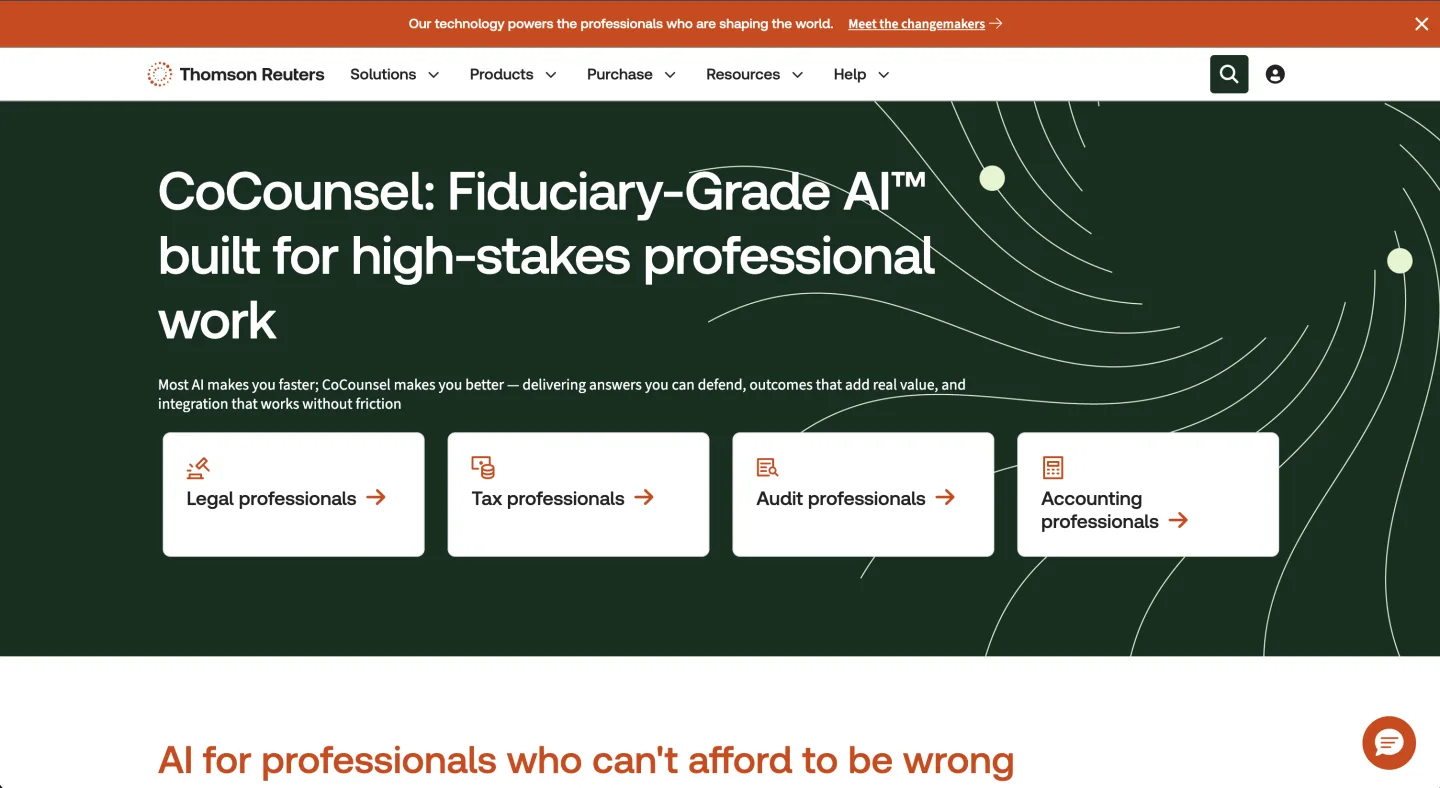
CoCounsel: Thomson Reuters' agentic AI assistant, built on the Westlaw stack.
TL;DR
- CoCounsel is strong for litigation teams already on Westlaw. It is a weaker first buy for a commercial in-house desk off Westlaw, because its strongest features lean on Westlaw content you would not otherwise pay for.
- The realistic alternatives split three ways: enterprise research-and-drafting platforms (Harvey, Lexis+ AI), an in-house workbench, and point tools for drafting or research (Spellbook, Paxton AI).
- Pricing across this market spans more than 6x. CoCounsel itself is reported near $300 to $639 a seat once the Westlaw subscription under it is counted (gc.ai, checked June 2026), not the entry number.
- Two questions decide more buys than features. Can you trial it this week without procurement, and does it fit your actual week (contracts and matters, or case-law research)?
- Pick the shape before the brand. A research platform and a contract workbench are not rivals, and comparing them is how teams overpay.
What seat price does Paxton AI publish, per the post?
We already published an honest CoCounsel review and a Harvey, Legora, and CoCounsel pricing breakdown. This post does not restate them. It is the dedicated alternatives roundup: what to buy instead, and for whom.
Why teams look past CoCounsel
CoCounsel is a credible product. Thomson Reuters bought Casetext for $650M in 2023 and rebuilt the AI on Westlaw's content, KeyCite, and its databases. For a litigation team in that ecosystem, it is a natural extension. Teams pass for three reasons of fit, not quality.
It leans on Westlaw. The strongest version of CoCounsel depends on Westlaw content and integration, so much of the value assumes you already pay for that research. Firms on Lexis, vLex, or no research platform at all tend to look at a different stack.
It is built around research. CoCounsel centers on case-law research and litigation document work. A commercial in-house team lives in NDAs, MSAs, and DPAs, where primary-law research is a smaller part of the week than the platform assumes.
The real price is the bundle. The AI line item can read cheaper than Harvey, but the seat is reported near $300 to $639 once Westlaw is counted. One published configuration put a solo on Westlaw Advantage with CoCounsel Essentials at about $639 a month on a one-year term (gc.ai, checked June 2026, linked below).
There is also no public self-serve trial, so you cannot test it on three of your own contracts this afternoon. For a in-house team with no procurement department, that alone starts the search.
How to choose an alternative
Most bad legal-AI buys come from comparing tools that were never rivals. The "Which job are you replacing" section below is the sharper test. First, run every candidate through three filters that decide more buys than features ever do.
- Data posture. Does the vendor train on your documents? Can you get training exclusion and a retention term in writing? ABA Formal Opinion 512 puts confidentiality and AI supervision on you, so this is a duty, not a preference.
- Procurement friction. Can you trial it this week, or does it want a sales cycle and a seat minimum? A 10-seat minimum is a polite "you are not our customer."
- Price reality. Model the all-in seat, not the entry line. CoCounsel teaches this lesson well, since the headline number omits the Westlaw cost under it.
The CoCounsel alternatives, compared
1. Harvey: best for large firms wanting one broad platform
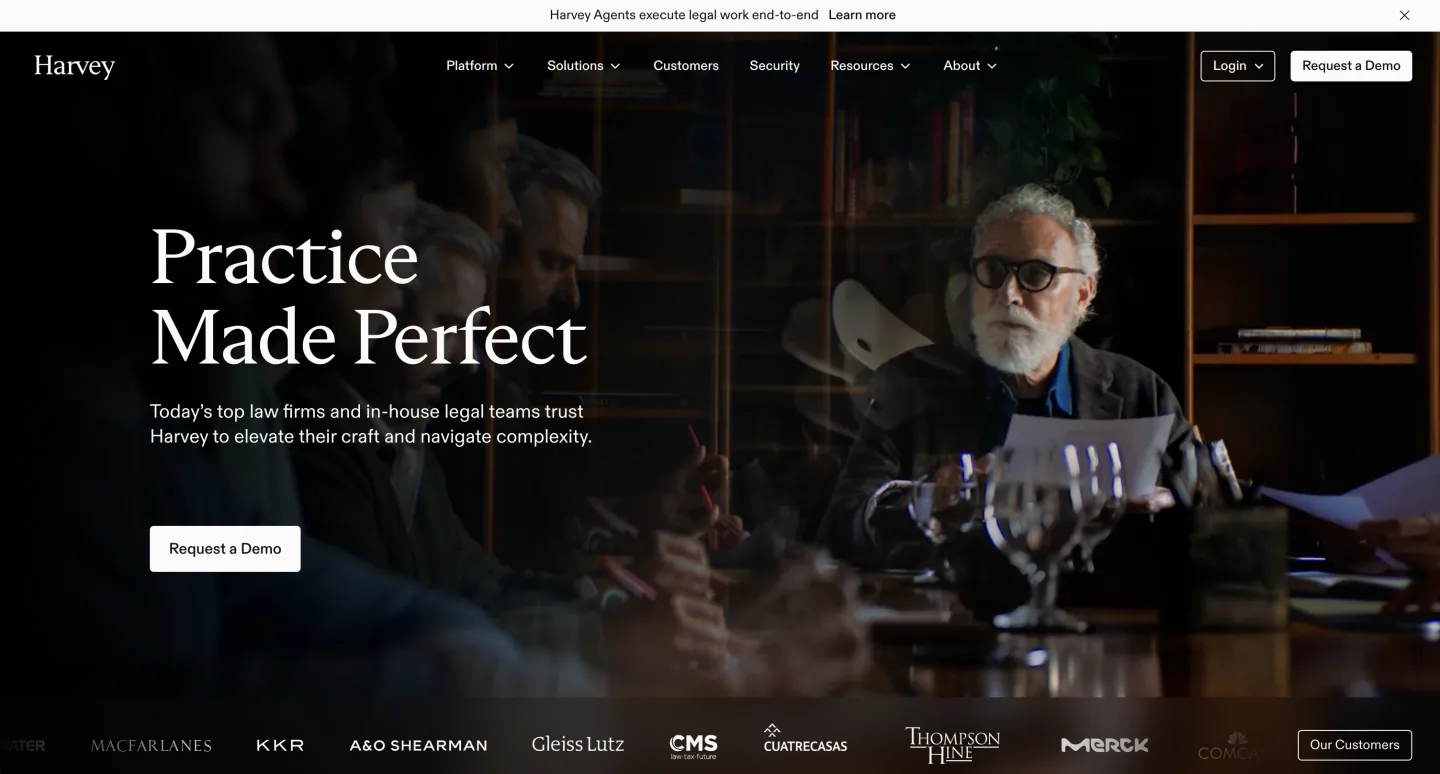
Harvey: the enterprise research-and-drafting platform for large firms.
At a glance: Not publicly disclosed; enterprise sales-led with seat minimums · Demo required · Best for large firms and well-funded legal departments
Harvey is the broadest enterprise platform here. It does deep document work, agentic workflows, and research. If you are leaving CoCounsel for capability, not price, this is the obvious cross-shop.
What's good
- Broad coverage spanning research through drafting and document analysis
- Agentic workflows built for large, complex matters
- Well-funded and widely deployed across large firms
Where it falls short
- No published pricing, and the sales motion assumes procurement
- Built around outside-counsel work, so a lean desk pays for breadth it will not use
- Seat minimums and annual terms put it out of reach for small teams
What users say: Forum talk centers on the price opacity and the firm-first fit.
Bottom line: Buy Harvey if you are a large firm with the budget and procurement. Skip it if you bounced off CoCounsel for being gated, because Harvey is more gated.
2. Lexis+ AI: best if you already hold Lexis seats

Lexis+ AI: the research-platform alternative for teams already on LexisNexis.
At a glance: Research-platform priced; quote-based, tied to a Lexis subscription · Sales-led · Best for litigation teams already on LexisNexis
Lexis+ AI is the like-for-like swap if your research home is Lexis instead of Westlaw. It takes the same shape as CoCounsel, grounded in LexisNexis content with linked citations.
What's good
- Grounded in Lexis content, the natural fit if you already pay for it
- Linked citations make verification faster than ungrounded chat
- Backed by a major incumbent, so it is not going anywhere
Where it falls short
- Same research-platform gravity that makes CoCounsel a poor commercial-in-house fit
- Its hallucination-free framing is overstated, so you still verify
- Quote-based and tied to a Lexis seat, with no self-serve trial
What users say: A Stanford HAI study found the paid research tools still hallucinate at meaningful rates, with Lexis+ AI among the less-bad but far from clean (2024, linked below).
Bottom line: Buy it if you live in Lexis and want AI on research you already trust. Skip it if your week is commercial contracts. Our Lexis+ AI review goes deeper.
3. Spellbook: best for transactional lawyers who live in Word
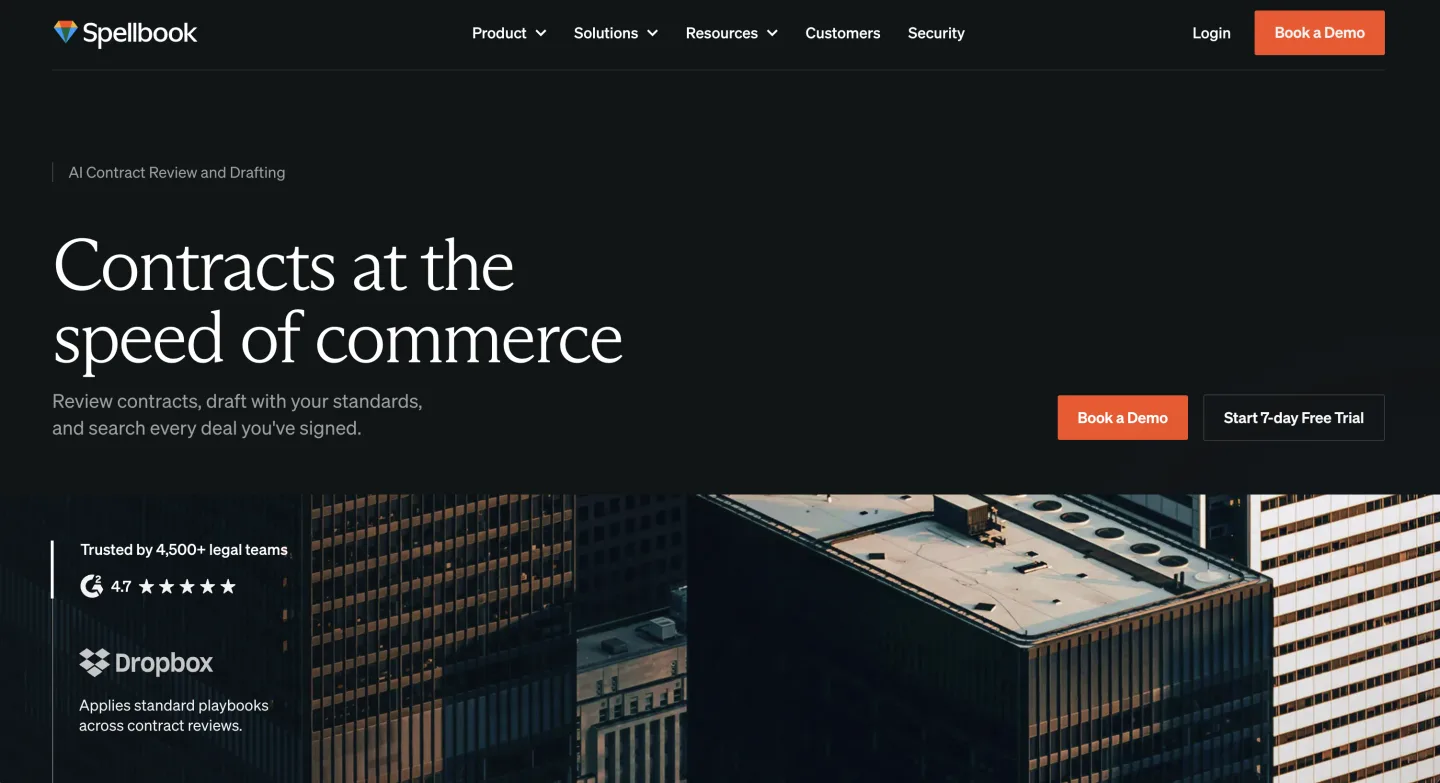
Spellbook: AI drafting and redlining inside Microsoft Word.
At a glance: Quote-based, priced by team size; free trial available · Demo for full pricing · Best for transactional lawyers drafting in Word
If your day is inside Microsoft Word, Spellbook is the most natural escape from a research platform. It is an add-in for drafting and redlining where transactional lawyers already work, with clause benchmarking and custom playbooks.
What's good
- Lives inside Word, so there is no new tab and no new habit
- Clause benchmarking and custom playbooks for transactional work
- Well-liked among transactional lawyers
Where it falls short
- No longer publishes a flat price; pricing is by team size after a demo
- Transactional-only, so it is weak for litigation and research
- Still inserts wrong citations sometimes, so you verify
What users say: Reviewers praise the Word add-in while flagging the wrong-citation issue and the transactional-only scope.
Bottom line: Buy it if drafting and redlining in Word is the bulk of your week. Skip it if you need litigation research. Our Spellbook alternatives breakdown covers where the add-in model boxes you in.
4. Paxton AI: best for research-first solos and small firms
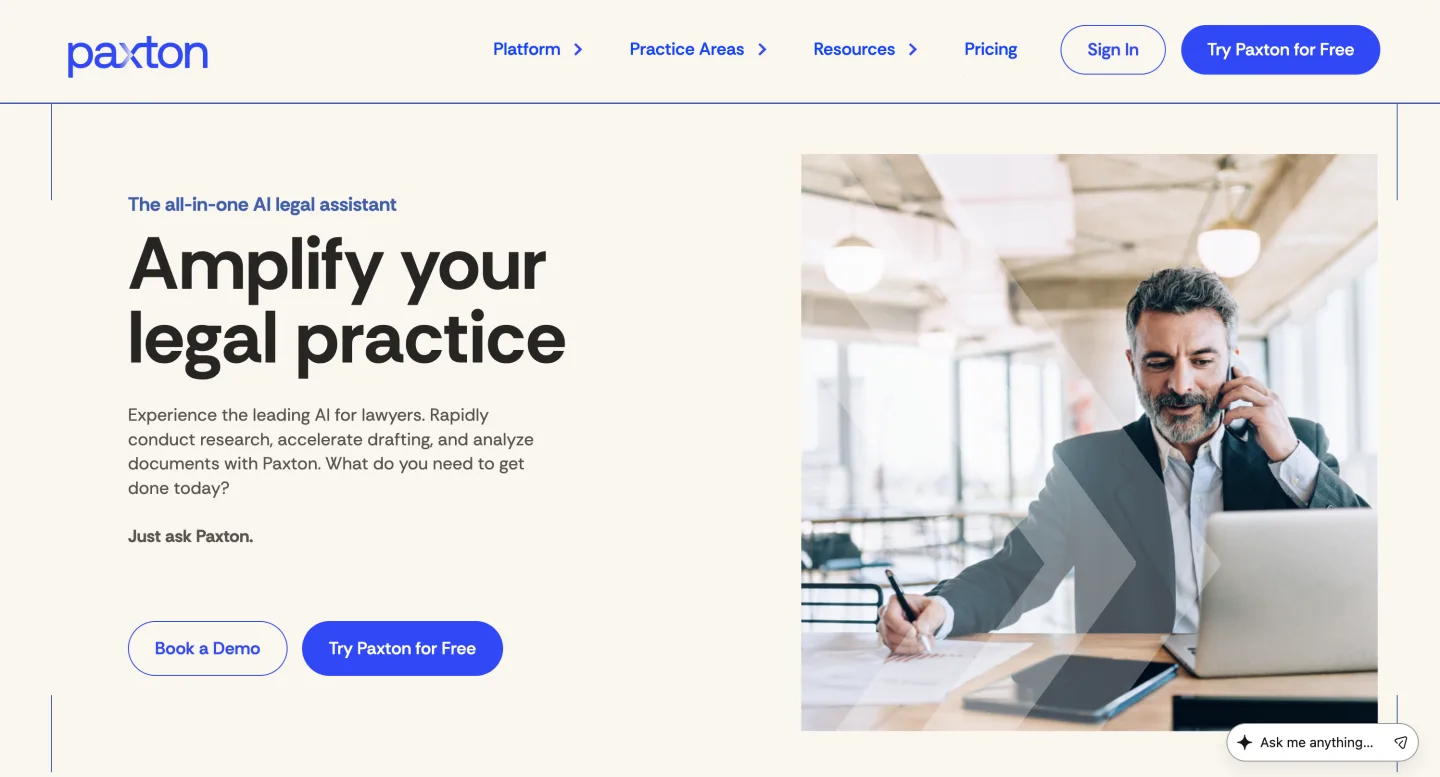
Paxton AI: a research-led assistant with drafting and analysis.
At a glance: $499 per user/mo (Individual); Enterprise custom · Self-serve, 7-day trial · Best for research-heavy solos and small firms
Paxton AI leans on research and publishes its price. That makes it a clean CoCounsel alternative for teams that want grounded answers with no Westlaw or Lexis contract underneath. It pairs that research with drafting and document analysis in one assistant.
What's good
- Self-serve with a published $499 seat and a 7-day trial
- Grounded research answers with citations, plus drafting and analysis
- No incumbent research subscription required first
Where it falls short
- The seat is steep for a solo
- No independent hallucination benchmark
- Built around research, so it fits a commercial in-house desk poorly
What users say: Solo and small-firm reviewers report real enthusiasm, while flagging the steep solo price and the absence of an independent accuracy benchmark.
Bottom line: Buy it if your week is research and analysis and you want a self-serve price. Skip it if your week is contract review and matter work.
5. vLex (Vincent AI): best for research grounded in a global legal database
A research-and-drafting surface, the kind Vincent AI competes with.
At a glance: Quote-based; free trial available · Demo for pricing · Best for teams wanting research and drafting grounded in vLex content
Vincent AI is vLex's assistant, not a Thomson Reuters or Clio product, though vLex is now part of Clio. It runs research, 50-state surveys, contract analysis, and redline comparisons on the vLex database. That makes it a non-Westlaw research alternative.
What's good
- Grounded in vLex's global legal database, not the Westlaw stack
- Covers research, multi-state surveys, and contract analysis in one assistant
- Offers a free trial rather than a paywall before you can test it
Where it falls short
- No published per-seat price, so you book a demo for a number
- Research and analysis lead; it is not a contract-and-matter workbench
- Depth depends on the vLex database fitting your jurisdictions
What users say: Reviewers treat Vincent as a capable research and analysis tool, with the usual caution to verify any cited authority.
Bottom line: Buy it if you want research grounded in vLex content without a Westlaw contract. Skip it if your week is contract review and matter management rather than research.
Comparison table
| # | Tool | Price (per user/mo) | Access | Best for |
|---|---|---|---|---|
| 1 | Harvey | Not disclosed; sales-led | Demo required | Large firms wanting one broad platform |
| 2 | Lexis+ AI | Quote-based, tied to Lexis | Sales-led | Teams already on LexisNexis |
| 3 | Spellbook | Quote-based, by team size | Demo for pricing | Transactional lawyers in Word |
| 4 | Paxton AI | $499 (Individual) | Self-serve, 7-day trial | Research-led solos |
| 5 | vLex (Vincent AI) | Quote-based; free trial | Demo for pricing | Research grounded in vLex content |
Which CoCounsel job are you replacing?
Here is the part most alternative lists skip. CoCounsel is not one product. It bundles three jobs: Westlaw-grounded research, drafting, and document or contract review. The right alternative depends on which job you are actually trying to replace, not on which tool scores highest overall.
So name the job first. Most teams use one of the three far more than the others, and pay for all three.
Job 1: drop the Westlaw relationship entirely. You want grounded answers without a Westlaw contract under them. Look at tools that bring their own legal database. Paxton AI grounds on its own corpus with a published $499 seat. vLex grounds Vincent AI on the vLex database. Both let you leave Westlaw and keep cited research.
Job 2: keep your research, cut the drafting and review cost. You still want a research platform, but CoCounsel's drafting and review felt like paying twice. Pair your existing research with a cheaper specialist. Spellbook handles drafting and redlines inside Word. An in-house workbench covers both at a published seat, with the matter trail attached.
Job 3: you only ever used it for contract review. If your CoCounsel logins were almost all contract review, you are paying research-suite money for one job. A focused review tool does that job for less. Spellbook reviews in Word; an in-house workbench reviews against your playbooks and keeps the matter trail.
The verdict
The real question is not "what is the best CoCounsel alternative." It is "which CoCounsel job am I paying for that I do not need." Name that, and the shortlist writes itself.
If your answer is research and you want to drop Westlaw, Paxton AI and vLex bring their own grounded corpus. If your answer is research and budget, keep Lexis+ AI or Harvey only if the depth earns the seat.
If your answer is drafting or contract review, you are likely overpaying inside a research suite. Spellbook fits a Word-first transactional desk. An in-house workbench fits a team that wants drafting, review, and matters in one place off Westlaw. The honest caveat: when your week is genuine case-law research tied to litigation, CoCounsel or Lexis+ AI still beats a workbench. Stay there.
For the full numbers behind these seats, see our legal AI pricing benchmark and the in-house counsel tool guide. If you also weighed Harvey, the Harvey alternatives for in-house counsel post covers that side.
To see the drafting side of a workbench in practice, browse the clause library and read a worked clause before any demo.
FAQ
What is the best CoCounsel alternative if I am not on Westlaw? There is no single best, since it depends on your week. For commercial contracts and matters, an in-house workbench fits better than a research platform. For research without a Westlaw contract, Paxton AI publishes a price, and Lexis+ AI is the swap if your research home is Lexis.
Why do teams switch away from CoCounsel? The common reasons are the Westlaw dependency, the lack of a self-serve trial, and an all-in seat that lands higher than the entry number once the research subscription is counted. Commercial in-house teams also find it research-heavy for a week built around contracts.
How much does CoCounsel actually cost? The AI line item can read modest, but the real seat is reported near $300 to $639 once the Westlaw subscription under it is counted (gc.ai, checked June 2026). One published configuration put a solo on Westlaw Advantage with CoCounsel Essentials near $639 a month on a one-year term.
Can I try a CoCounsel alternative without a sales call? Yes. Paxton AI offers a 7-day self-serve trial at a published price, and an in-house workbench in this list is self-serve with a free trial. Harvey, Lexis+ AI, and Spellbook route you to a demo before a real number.
Is Harvey a good CoCounsel alternative? Only if you are leaving for capability, not price or procurement. Harvey is a broad enterprise platform, but it is sales-led with seat minimums, so it is more gated than CoCounsel, not less.
Does CoCounsel make up citations? Users report it still fabricates citations and runs thin on appellate material, so verify every cite. A Stanford study found paid legal research tools hallucinate at meaningful rates, which is why verification is non-negotiable on any tool here.
What is the cheapest CoCounsel alternative? Among focused legal-AI tools with published prices, an in-house workbench with a self-serve, published seat is among the most affordable here. Paxton AI publishes $499. The rest are quote-based, so you book a demo before you see a number.
Is CoCounsel better than the alternatives? For a litigation team already on Westlaw, often yes. KeyCite and the Westlaw grounding are real advantages. For a commercial in-house desk off Westlaw, a workbench or a self-serve research tool usually fits the week and the budget better.
Last updated: June 2026.
Sources
- gc.ai: Harvey vs CoCounsel (June 2026)
- thelawgpt: CoCounsel alternatives (April 2026)
- AI Vortex: CoCounsel alternatives and the Westlaw dependency (April 2026)
- Stanford HAI: legal AI hallucination study (2024)
- LawNext: Thomson Reuters launches CoCounsel Legal (August 2025)
New legal AI guides, weekly.
Further Reading
CoCounsel's Next Generation: What Is New and What It Means for In-House Teams
Read postCoCounsel vs Harvey: Which Legal AI Fits Your Team?
Read postIvo Alternatives: 7 AI Contract Review Options Compared
Read postLegora Alternatives: 6 Options Compared
Read postWhat Lawyers Want From Legal AI in 2026: A 534-Lawyer Study
Read postAI Medical Record Review for Lawyers: How It Works, What It Costs, and Where It Breaks
Read post
Co-Founder & CEO · Attorney
Arshita leads product and strategy at Vaquill, building the legal AI suite that solo, small-firm, and in-house US lawyers use to run a matter end to end.