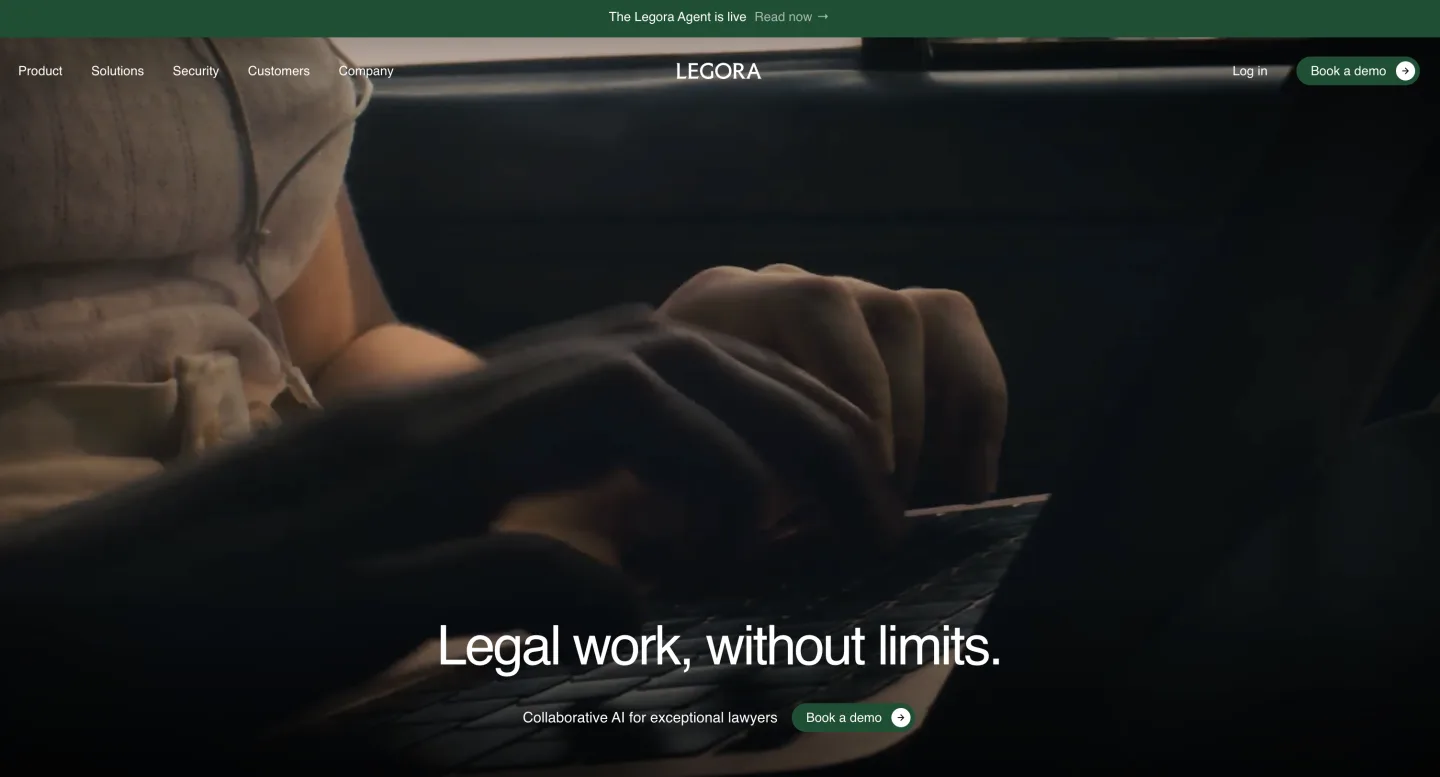
The best Legora alternatives depend on which Legora job you need: tabular review at scale, multi-language drafting, or research. For high-volume firm review, Harvey and CoCounsel are the closest swaps. For an in-house team that wants a public price and self-serve sign-up, an in-house workbench, Spellbook, Ivo, or LegalOn fit better. Legora is excellent at the grid, but it is demo-gated with a reported 10-seat minimum, the wrong shape for a in-house team.
This post compares six real alternatives and how to choose. One disclosure: we build one of the tools below. It gets one entry and one honest take, same as the rest.
TL;DR
- Legora's standout is tabular review: drop a folder of contracts in, each document becomes a row, each prompt a column. If that is not your bottleneck, you are paying for a firm platform you barely use.
- Pricing is quote-based. Independent reporting puts Legora near $300 to $800 per seat per month plus pay-as-you-go credits, with a reported 10-seat minimum, all sales-led. In June 2026 Legora moved its Agent Pro tier to consumption-based pricing (legora.com). Treat any number as a starting point, not a sticker.
- Match the shape, not the brand. Workbench, point tool, or research-first decide more buys than any feature grid.
- The honest split: firm review at volume goes to Harvey or CoCounsel; contract-first in-house work goes to an in-house workbench, Spellbook, Ivo, or LegalOn.
- We compare six alternatives below with hedged pricing, real limits, and a verdict. Prices checked June 2026.
What is Legora's standout capability?
For the deep single-tool take, see our Legora review. For the money question, how much Legora costs breaks down the seat math.
How to choose a Legora alternative
Most bad legal-AI buys come from comparing tools that were never rivals. Before any feature grid, decide which of three shapes you are buying.
The workbench. One place that drafts, reviews, redlines, manages matters, and holds your playbooks. The bet: legal work is a connected pipeline, and time leaks in the handoffs, not inside any single task.
The point tool. One job done better than anyone: redline in Word, review against a playbook, NDA triage. If a single repeated task eats your week, a point tool beats a generalist on it.
The research-first platform. A Westlaw or Lexis line with an AI layer on top. Built for "what does the law say," not "draft and manage my contracts."
Then run every candidate through three filters that decide more than features.
- Data posture. Does the vendor train on your documents? Can you get training exclusion, encryption, and a retention term in writing? ABA Formal Opinion 512 (July 2024) puts confidentiality and AI supervision on you, so these are duties, not nice-to-haves.
- Procurement friction. Can you trial it this week, or does it want a demo, an annual commitment, and a seat minimum? A 10-seat minimum is a polite "you are not our customer."
- Price reality. The published spread across this market is more than 10x. Price tracks who the vendor sells to, not how well it reviews your NDA.
The 6 best Legora alternatives
1. Harvey: best for large firms wanting maximum breadth
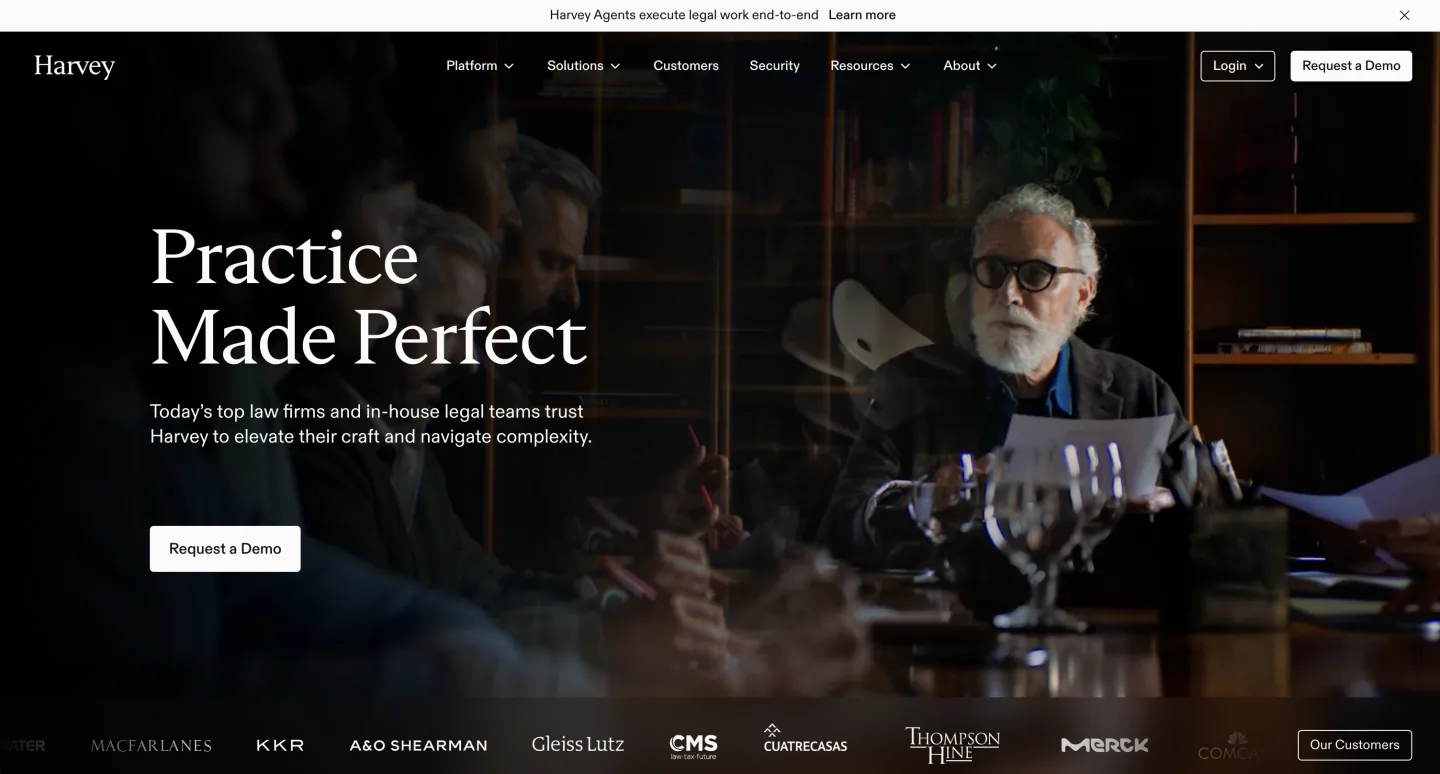
Harvey: the enterprise legal-AI heavyweight Legora is most often weighed against.
At a glance: Quote-based, reported ~$1,200 to $2,000+ per user/mo · Sales-led, demo required · Best for large firms and well-funded legal departments
Harvey is the tool most US firms put next to Legora. It has deep document work, agentic workflows, and a Lexis tie-in, and it reached roughly $190 million in ARR and an $11 billion valuation by early 2026. On raw scale, it leads.
What's good
- Deep research and drafting with strong US legal training data
- Agentic, multi-step workflows for large matters
- Word add-in and a content partnership most rivals lack
Where it falls short
- Opaque, high pricing built for large-firm budgets
- Same demo-gated, security-review sales motion as Legora
- Weaker than Legora on EU and multi-language work
What users say: On Reddit, the running comparison notes Harvey's depth but flags the cost and the sales cycle (r/legaltech).
Bottom line: Buy Harvey if you are a large team and want the broadest enterprise platform. Skip it if you left Legora to escape gated sales, because Harvey keeps that motion. For the self-serve angle, see our Harvey alternatives guide.
2. An in-house workbench: best for in-house teams wanting one place
An in-house workbench: drafting, review, redlining, and matters in one place.
At a glance: Self-serve, published seat pricing common in this tier · Self-serve trial · Best for two-to-ten-person in-house teams with no procurement
If your week is NDAs, MSAs, and vendor paper rather than diligence grids, a contract-first in-house workbench fits the work Legora was not built for. The bet is the connected pipeline: drafting, review, redlining in real Word track changes, plus matters and playbooks, at a price you find without a sales call. Trial terms across this tier vary, but self-serve sign-up is the norm.
What's good
- One place for drafting, review, redlining, matters, and playbooks
- Real Word track changes you accept or reject one by one
- Self-serve sign-up and a public price, no seat minimum on the entry tier
Where it falls short
- A dedicated point tool can beat it on one repeated task at volume
- Younger than the enterprise incumbents on this list
- No tabular-review grid at Legora's scale, so heavy diligence still wants a firm tool
What users say: This tier is newer, so independent forum threads are thin. We will not invent buzz.
Bottom line: Buy an in-house workbench if your week is a connected pipeline of contracts and matters and you want to start this afternoon. Skip it, and pick Legora or another tool, if high-volume tabular review or cross-border drafting is your actual bottleneck.
3. CoCounsel: best for teams already in Westlaw
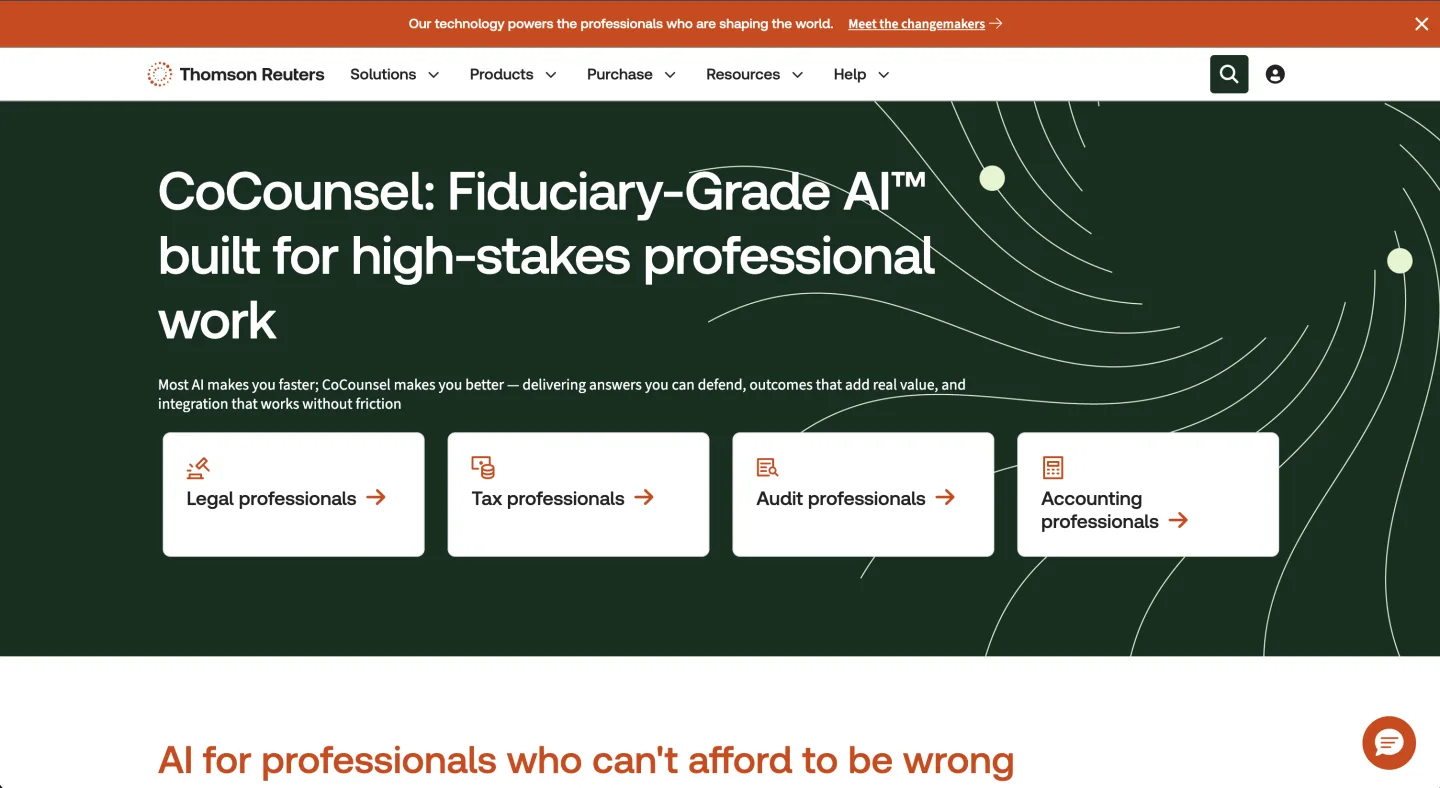
CoCounsel: Thomson Reuters' AI assistant, research-first.
At a glance: Reported ~$225/user/mo Core, more with capabilities · Sales-led, demo required · Best for litigation-leaning teams in the Thomson Reuters stack
CoCounsel is the research-first swap for Legora. If you already live in Westlaw, it slots in cleanly, with jurisdiction-aware research and solid document work. The catch is that full value assumes a Westlaw subscription underneath.
What's good
- Westlaw and Practical Law integration for litigation research
- More transparent entry pricing than Harvey or Legora
- Backed by Thomson Reuters, so it is not going anywhere
Where it falls short
- Full value needs Westlaw, which adds a large line item
- Less suited to bulk tabular processing than Legora
- Still fabricates citations, so you verify everything
What users say: Practitioner pricing threads weigh CoCounsel against Legora on cost and fit, with the Westlaw dependency the recurring caveat.
Bottom line: Buy CoCounsel if your week is litigation research and you already pay for Westlaw. Skip it if your week is commercial contracts and matters. The Harvey vs Legora vs CoCounsel pricing reality post runs the year-one math.
4. Spellbook: best for transactional lawyers in Word
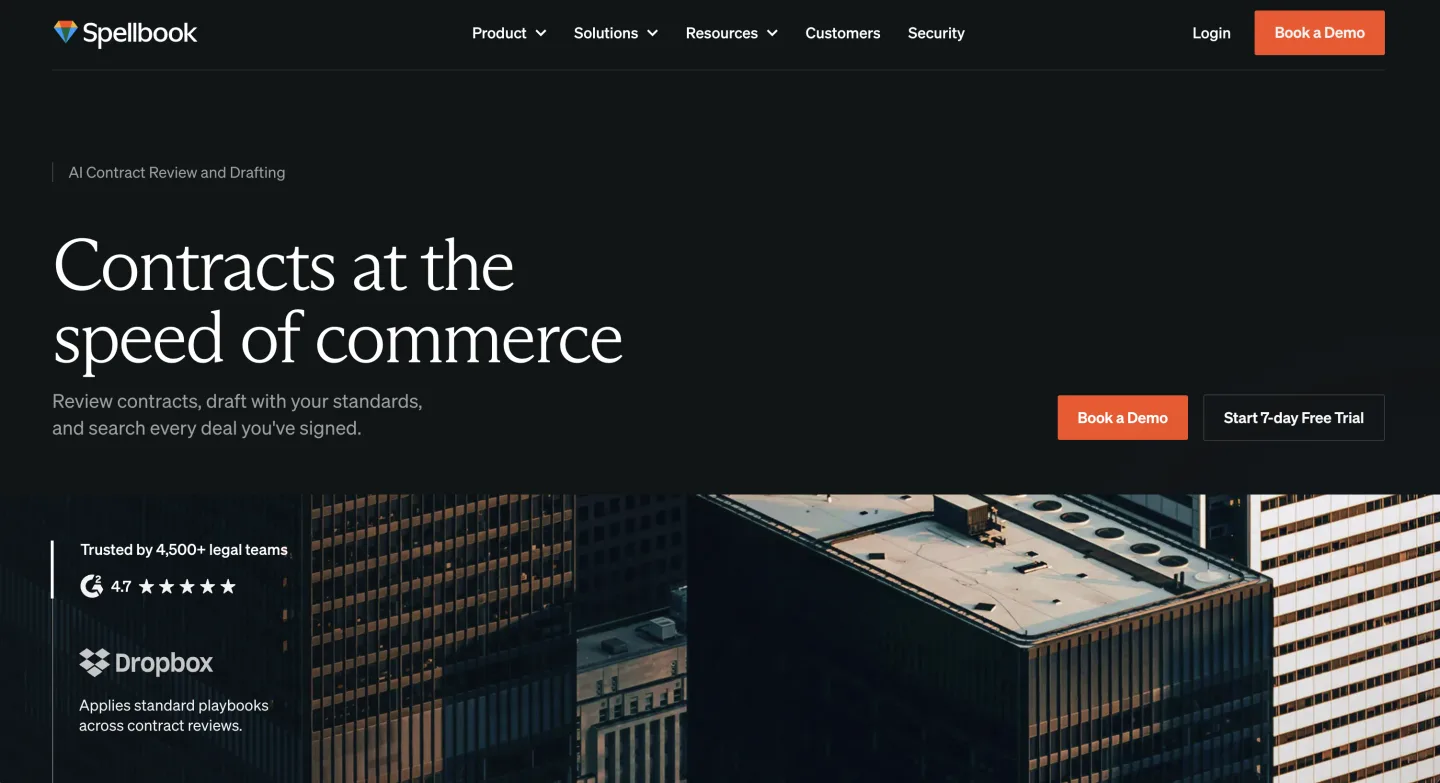
Spellbook: AI drafting and redlining inside Microsoft Word.
At a glance: Quote-based, reported ~$500 per seat/mo base (quote-gated) · Sales-led, free trial available · Best for transactional lawyers drafting in Word
If your day lives inside Word, Spellbook is the most natural escape from a separate platform. It drafts and redlines where transactional lawyers already work, with clause benchmarking and custom playbooks on top.
What's good
- Lives inside Word, so there is no new tab and no new habit
- Clause benchmarking and custom playbooks for transactional work
- Free trial, unlike most enterprise peers
Where it falls short
- Contract-only, so it is weak for litigation and broad research
- No bulk tabular review at Legora's scale
- Still inserts wrong citations sometimes
What users say: Lawyerist rates it about 4.1 out of 5, praising the Word add-in while flagging the wrong-citation issue and the transactional-only scope (Spellbook review).
Bottom line: Buy Spellbook if drafting and redlining in Word is the bulk of your week. Skip it if you need litigation coverage or the document-grid review Legora is known for.
5. Ivo: best for a lean, Word-native review tool

Ivo: the leaner, faster entrant in the playbook-review camp.
At a glance: Quote-based, reported around $500 per user/mo · Sales-led, demo required · Best for teams who found the incumbents heavy
Ivo is the lighter review tool teams reach for when older platforms feel heavy. It does Word-native redlining with a clean interface and an in-house focus, a tighter point-tool answer to Legora's review use case.
What's good
- Word-native redlining with a clean, fast interface
- In-house focus and named customers including Uber and Shopify
- Lighter to live in than the enterprise incumbents
Where it falls short
- A point tool, not a place to run your whole function
- Onboarding needs Ivo's team, and accuracy slips now and then
- No research or tabular-grid breadth
What users say: Reviewers on G2 call it a real AI reviewer with solid playbook redlining, while flagging team-led onboarding and occasional inaccuracies (G2, behind a bot wall when we checked).
Bottom line: Buy Ivo if review is your dominant job and you want a lighter feel. Skip it if you need a full workbench or research. Our Ivo pricing post covers the seat math.
6. LegalOn: best for high-volume playbook review

LegalOn: review-first checking against attorney-authored playbooks.
At a glance: Quote-based, per-seat base plus paid add-ons · Sales-led, demo required · Best for teams whose week is mostly contract review
If re-reading the same indemnity clause for the four-hundredth time is your nightmare, LegalOn is built for that. It is review-first, with attorney-authored playbooks and a reasoning layer behind its redlines. Where Legora reads as a firm platform, LegalOn stays focused on one job.
What's good
- 50-plus attorney-authored playbooks and a large reported customer base
- Checks incoming contracts against your standards with reasoned redlines
- Mature and focused, so it is reliable on the one job it does
Where it falls short
- A review engine, not a workbench, so matters and drafting live elsewhere
- Pricing is quote-based, with add-ons that inflate real spend
- No tabular grid or broad research
What users say: We found mostly vendor testimonials and little genuine peer forum discussion, so take the praise with that in mind.
Bottom line: Buy LegalOn if you have a real playbook and the volume to justify a dedicated review engine. Skip it if you need one tool to run the full pipeline. Our LegalOn pricing post breaks down the add-on math.
Comparison table
| # | Tool | Price (per user/mo, hedged) | Access | Best for |
|---|---|---|---|---|
| - | Legora (baseline) | Quote-based, reported $300 to $800 + PAYG, 10-seat min | Sales-led, demo | High-volume tabular review, multi-language firms |
| 1 | Harvey | Quote-based, reported ~$1,200 to $2,000+ | Sales-led, demo | Large firms wanting maximum breadth |
| 2 | In-house workbench | Self-serve, published | Self-serve trial | In-house teams wanting one place |
| 3 | CoCounsel | Reported ~$225 Core, more with add-ons | Sales-led, demo | Teams already in Westlaw |
| 4 | Spellbook | Quote-based, reported ~$500 base | Sales-led, free trial | Transactional lawyers in Word |
| 5 | Ivo | Quote-based, reported ~$500 | Sales-led, demo | Lean, Word-native review |
| 6 | LegalOn | Quote-based, base plus add-ons | Sales-led, demo | High-volume playbook review |
All figures checked June 2026. Vendors that publish nothing are marked quote-based. For a wider sourced view, see our legal AI pricing benchmark.
The verdict
Legora is genuinely strong at the grid. If your bottleneck is comparing hundreds of documents fast, or working across languages and jurisdictions, it is worth a pilot. Most alternatives here will not match it on that.
The question is whether that is your week. A firm running M&A diligence should weigh Harvey first. A litigation team in Westlaw should weigh CoCounsel. A transactional desk in Word should look at Spellbook or Ivo. A team whose week is review against a playbook should test LegalOn.
Say your week is a connected pipeline of NDAs, vendor paper, and matters, and you want a public price. Then an in-house workbench fits better than a firm-first platform. Browse our clause library for the kind of contract language these tools handle. Match the tool to your actual work, not to the headline valuation.
FAQ
What is the best Legora alternative? There is no single best one, because it depends on the job. For high-volume firm review, Harvey and CoCounsel are the closest swaps. For contract-first in-house work with a public price, an in-house workbench, Spellbook, Ivo, or LegalOn fit better. Pick the shape (workbench, point tool, or research-first) before the brand.
How much does Legora cost? Legora does not publish a flat price. Independent reporting puts it near $300 to $800 per seat per month plus pay-as-you-go credits, with a reported 10-seat minimum, all sales-led. Treat any number as a starting point for negotiation, not a sticker. Our Legora cost breakdown goes deeper.
Is Legora better than Harvey? Neither wins outright. Harvey leads on raw scale, US enterprise penetration, and content partnerships. Legora is stronger on tabular review and multi-language, cross-border work. For US BigLaw, many teams lean Harvey; outside the US, Legora is often the pick.
Which Legora alternative can I buy without a sales call? Most enterprise peers, including Harvey, route you to a demo. The self-serve options with public pricing tend to be in-house workbenches and tools like Spellbook that offer a free trial. The rest want a quote before you see a real number.
What is Legora's tabular review, and do alternatives have it? Tabular review turns a folder of contracts into a grid: each document is a row, each prompt a column. You extract clauses and risk flags across hundreds of documents at once. It is Legora's standout, and most alternatives do not match it at that scale. Harvey is the closest on agentic, high-volume work.
Is there a cheaper alternative to Legora for in-house teams? Yes, if your week is contracts and matters rather than diligence grids. In-house workbenches with self-serve pricing run well below firm-platform seats, and point tools like Ivo or LegalOn focus spend on review alone. The tradeoff is you give up Legora's grid and broad research.
When should I pick Legora over the alternatives? Pick Legora when high-volume tabular review or multi-language drafting is your real bottleneck, you have someone to drive a demo-gated quote, and you can meet the seat minimum. For M&A diligence and large data rooms, that is exactly the job it is built for. Our Legora review covers where the depth lives.
Do these tools train on my data? It varies by vendor and tier, so ask before you sign. Get training exclusion, encryption, and a retention term in writing, plus a SOC 2 report and a sub-processor list. ABA Formal Opinion 512 puts confidentiality and AI supervision on you, so this is a duty, not an option.
Last updated: June 2026.
New legal AI guides, weekly.
Further Reading
The Legal AI Funding Arms Race: What $11B Harvey Means for In-House Buyers
Read postCoCounsel Alternatives: 5 Options Compared
Read postHarvey vs Legora: Which Legal AI Should You Choose?
Read postIvo Alternatives: 7 AI Contract Review Options Compared
Read postWhat Lawyers Want From Legal AI in 2026: A 534-Lawyer Study
Read postAI Medical Record Review for Lawyers: How It Works, What It Costs, and Where It Breaks
Read post
Co-Founder & CEO · Attorney
Arshita leads product and strategy at Vaquill, building the legal AI suite that solo, small-firm, and in-house US lawyers use to run a matter end to end.