Pick Harvey if you want the broadest enterprise platform with the strongest brand and the deepest agent workflows for big-firm work. Pick Legora if you want fast, collaborative document review at a lower price, with a tabular grid that shines on high-volume contracts. Both chase the same large-firm buyer, just from opposite ends.
Harvey leads on breadth and reputation. Legora leads on collaborative review speed and a friendlier price. Neither publishes a public number, so any figure below is a sourced third-party estimate, checked June 2026.
TL;DR
- Harvey is the category's frontier platform: Assistant, Vault, Knowledge, Agents, and Contract Intelligence, with deep iManage and Microsoft 365 ties and a LexisNexis content partnership.
- Legora is the collaborative review specialist: its Tabular Review grid turns a folder of contracts into rows you can interrogate, plus drafting, research across 12 jurisdictions, and Word and Outlook add-ins.
- On price, Legora runs lower than Harvey. Neither is public; both gate the number behind a demo and a seat minimum.
- On brand and breadth, Harvey wins. On review speed and value, Legora wins.
- Harvey grew up inside large law firms. Legora grew up in Europe and is now expanding hard in the US.
- This is the feature-and-fit head-to-head. For the dollar figures, see our dedicated Harvey, Legora, and CoCounsel pricing breakdown.
Which tool is built around a Tabular Review grid?
How we compared them
We checked both vendors' own product pages in June 2026 and read independent comparisons from buyers who tested them. Capability claims come from Harvey's site and Legora's site. Positioning and customer counts are cross-checked against the SRA HQ Legora vs Harvey analysis and the GC AI feature comparison.
Neither vendor publishes pricing, so we hedge every number and point you to our pricing breakdown for the sourced figures. Treat seat prices as reported estimates, not quotes.
Harvey vs Legora: the real buying decision
Harvey sells breadth and brand. Legora sells collaborative review at a lower price. Both want the same large-firm buyer.
Harvey wants to be the platform a whole firm runs on, from diligence agents through research to drafting, under one enterprise contract. Legora wants to be the surface where a matter team and the AI work the same documents at once. It does that without the top enterprise price tag.
So the decision is narrow. You either pay for the full agent platform, or you pay less for the review grid and accept a thinner stack around it.
Head-to-head comparison
| Dimension | Harvey | Legora |
|---|---|---|
| Positioning | Frontier enterprise platform | Collaborative review challenger |
| Drafting | Assistant plus Word integration | Editor plus Word and Outlook add-ins |
| Contract / tabular review | Contract Intelligence, Vault bulk analysis | Tabular Review grid (a category standout) |
| Research | Knowledge, LexisNexis content partner | Legal Research across 12 jurisdictions |
| Collaboration | Shared Spaces | Built-in matter-team grid, Portal for clients |
| Agents / workflows | Agents, client-built Workflows | Agent, Monitors, Workflows |
| Integrations | iManage, SharePoint, Box, Microsoft 365 | Microsoft 365 (Word, Outlook), Portal |
| Security | SOC 2 II, ISO 27001 / 27701 / 42001, GDPR | SOC 2 Type II, ISO 27001 / 42001, GDPR, HIPAA |
| Pricing (reported) | Higher; quote-based, ~25-seat minimum | Lower; quote-based, ~10-seat minimum |
| Geographic strength | US BigLaw and enterprise | Europe, expanding fast in the US |
| Best for | Large firms wanting one platform | Teams wanting review speed at a better price |
Reported seat minimums and price bands come from the analyst figures in our pricing breakdown. Capabilities are from each vendor's site, checked June 2026.
Drafting
Both draft well, and the gap is small. Harvey's Assistant drafts inside the platform and through its Word integration, tuned for firm-style output. Legora's Editor and Word add-in do the same, and reviewers single out Legora's drafting polish and multi-language range.
If you draft across languages or want a tight Word loop, Legora has a slight edge. If you want drafting wired into a wider agent stack, Harvey fits better.
Contract and tabular review
This is Legora's signature. Tabular Review turns a folder of contracts into a grid: each document is a row, each prompt is a column. You run the same question down 200 contracts at once and read the answers side by side. For due diligence and large-portfolio review, that beats a chat box.
Harvey answers with Contract Intelligence and Vault, which stores and bulk-analyzes large document sets. Harvey's depth on diligence agents is real. But for the specific job of matrix review across many contracts, Legora's grid is the surface most reviewers prefer.
Research
Harvey's Knowledge handles complex legal, regulatory, and tax questions, backed by a LexisNexis content partnership that adds licensed material. That is a meaningful advantage for firms that already live in Lexis.
Legora runs Legal Research across 12 jurisdictions and strengthened it by acquiring research startup Qura in May 2026. It leans toward multi-jurisdiction and cross-border work. Both cite sources. Neither replaces a human cite-check, so verify every citation.
Collaboration
Legora was built collaborative from the start. The matter team and the AI share one grid, and Portal delivers work to clients. That shared-surface design is a core reason buyers pick it.
Harvey added Shared Spaces so teams across organizations can work together securely. It is capable. On Legora the shared workspace is the starting point, where on Harvey it sits as one feature among many.
Integrations
Harvey is deeper here. It ties into iManage, SharePoint, Box, and Microsoft 365, which matters for large firms with an established document stack. Legora covers Microsoft 365 through Word and Outlook add-ins plus its Portal. For a firm whose work lives in iManage, Harvey's depth is hard to match today.
Security
Both clear the enterprise bar. Harvey lists SOC 2 II, ISO 27001, ISO 27701, ISO 42001, GDPR, and CCPA. Legora lists SOC 2 Type II, ISO 27001, ISO 42001, GDPR, and HIPAA. Legora also states zero AI training on your data, with EU and US data residency. If HIPAA or EU residency is a hard requirement, Legora calls those out directly.
Pricing
Neither vendor publishes a price. Both gate it behind a demo and a seat minimum. Here is one figure to anchor the gap. Harvey runs about $1,200 to $2,000+ per user per month. Legora runs about $300 to $800. These are reported ranges for unlimited usage, per our Harvey, Legora, and CoCounsel pricing breakdown (June 2026). Treat them as bands, not quotes. Your real number moves with the add-ons and the seat count. In June 2026 Legora moved its Agent Pro tier to consumption-based pricing, so heavy agent use is metered rather than flat per seat (legora.com).
The seat minimum matters more than the sticker. Analysts who track leaked quotes put Harvey near a 25-seat floor and Legora near 10. For the full total-cost math, see that pricing breakdown and the legal AI pricing benchmark.
Fit
Harvey fits the firm that wants one platform to run on. It needs the budget and procurement to deploy it. Legora fits the firm or team that does heavy document review across languages or jurisdictions. It wants a lower price for that work.
What a real evaluation tests
The demo is the easy part. A scripted demo of either tool looks great, because the vendor picks the documents. The real test starts when you hand it your own files.
In a serious evaluation, ask the demo to run your actual workflow. For Legora, drop in 50 of your own contracts and run a clause-extraction column across all of them. Check the wrong cells, not the right ones. For Harvey, run a diligence agent on a live matter folder and read how it sources each claim. Both look strong on clean data, so probe the messy edges.
Procurement asks a different set of questions. Expect a security questionnaire, a request for the SOC 2 report and the DPA, and a sub-processor list. Both vendors clear that bar, so the friction is timeline, not pass or fail. Ask for two or three reference customers your own size, in your own practice area, and call them.
Pilots usually fail for reasons the demo hides. The top one is adoption. A partner champion signs, then gets buried in a deal, and the seats go unused. The second is fit drift. A firm buys for M&A diligence, then finds most daily work is small contracts the team could review by hand. The third is data plumbing. If your files live in iManage, Harvey's integration depth saves real setup time, and a tool without it adds weeks.
After the first week, a matter team notices different things on each. On Legora, lawyers like the grid for high-volume review and grumble when a long document runs past a few hundred pages. On Harvey, they like the agent depth and the Word loop. They also feel the price every time a light user opens a seat. Watch for which complaints repeat, because those are the ones that survive the honeymoon.
Harvey: pros and cons
Pros
- Broadest platform. Assistant, Vault, Knowledge, Agents, and Contract Intelligence under one roof.
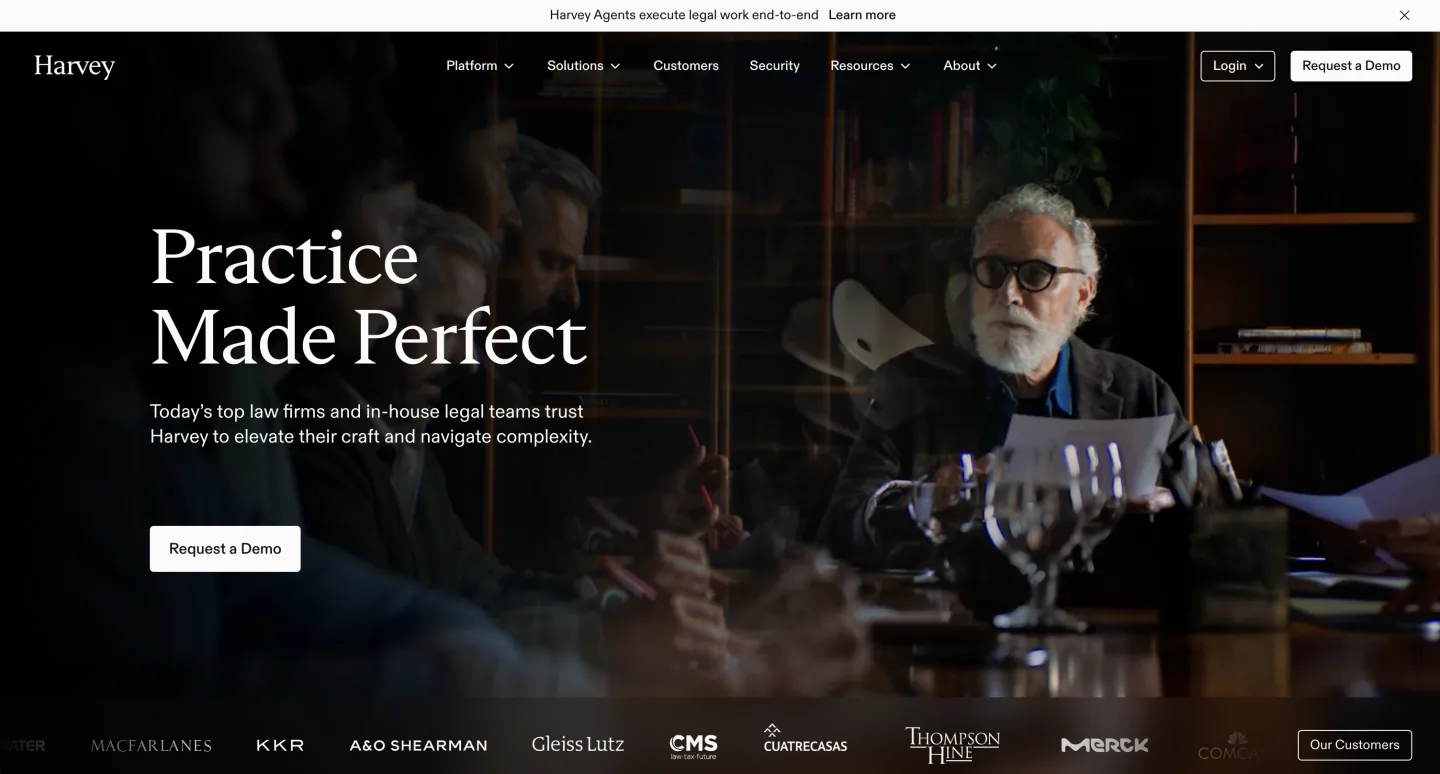
- Strongest brand and adoption. Used by a majority of the AmLaw 100, with 100,000-plus lawyers reported across roughly 1,300 organizations.
- Deep integrations. iManage, SharePoint, Box, and Microsoft 365, plus a LexisNexis content partnership.
- Agent depth. Purpose-built agents for diligence, review, and research that large firms actually run at scale.
Cons
- Highest reported price in this pair, with a larger seat minimum.
- Built for big firms. A small team pays for depth it will not use.
- Sales-led only. No public price, no self-serve trial.
- Collaboration is bolted on rather than the core design.
For the deeper single-vendor view, see our Harvey AI honest review.
Legora: pros and cons
Pros
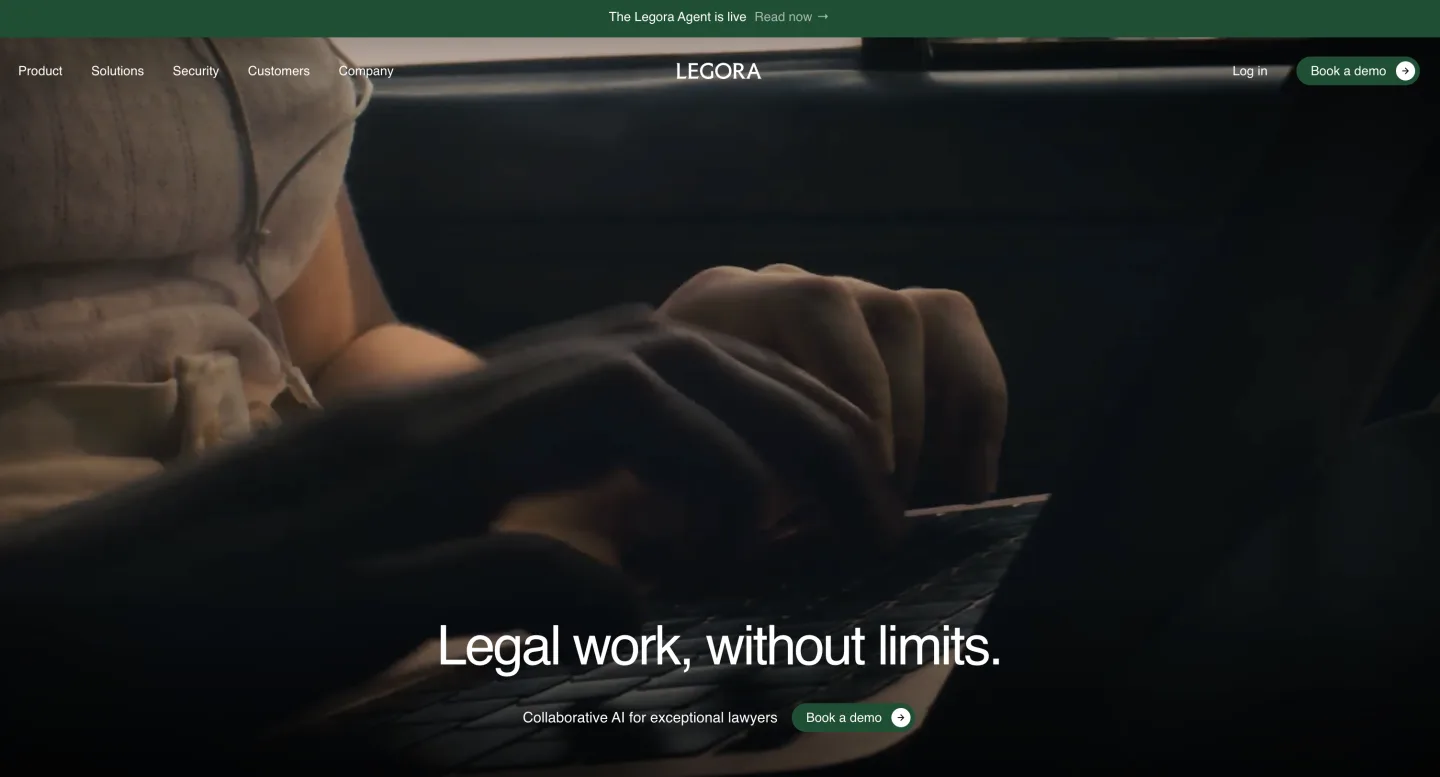
- Best-in-class tabular review. The grid is the fastest surface for high-volume contract work.
- Lower reported price and a smaller seat minimum than Harvey.
- Collaborative by design. Matter team and AI share one workspace; Portal handles client delivery.
- Strong multi-language and cross-border range, with a clear security posture (HIPAA, EU residency, zero training on your data).
Cons
- Still sales-led. No public price and a reported 10-seat minimum.
- Newer brand in the US, though it is expanding fast.
- Integration footprint is narrower than Harvey's iManage-deep stack.
- Firm-leaning workflows can be heavier than a in-house team needs.
For the deeper single-vendor view, see our Legora honest review.
Who should pick Harvey
Pick Harvey if you are a large firm or a Fortune 500 in-house team that wants one platform for diligence, research, drafting, and review. You also need the procurement function to buy it. Harvey fits best when your work lives in iManage or Lexis and you run M&A diligence at volume. The brand also reassures partners and clients. The price is steep. At AmLaw scale it is usually justified.
Who should pick Legora
Pick Legora if your daily work is high-volume contract and document review, especially across languages or jurisdictions. You get that capability without Harvey's top-end bill. Legora also fits when collaboration matters and the tabular grid maps to how you run diligence. A lower seat price and a smaller seat minimum can decide whether the deal closes. It is the value-and-speed choice in this pair.
A third option to keep in mind
If you are a solo GC or a small in-house team, both Harvey and Legora may be more than your work needs. Both carry seat minimums and a sales cycle that a in-house team cannot easily absorb.
The self-serve workbench segment covers research, drafting, and matter documents at published per-seat prices with no minimum. Nothing there will match Harvey's agent depth or Legora's grid at BigLaw scale. For a small team doing daily legal work, that tradeoff often favors the simpler tool.
If you are weighing Harvey, Legora, and CoCounsel together, our pricing reality breakdown lines up all three. If you want a quick sense of how a clause library fits your workflow, the clause tools page is a fast start.
FAQ
Is Harvey or Legora better? Neither is better outright; they fit different buyers. Harvey wins on breadth, brand, and integrations for large firms. Legora wins on collaborative tabular review and a lower price. Match the tool to your work, and ignore the funding headline.
What is the main difference between Harvey and Legora? Harvey is a broad enterprise platform built for big-firm depth. Legora is a collaborative review tool whose tabular grid is the standout, sold at a lower reported price. Harvey is breadth and brand; Legora is review speed and value.
Which is cheaper, Harvey or Legora? Legora is the lower-priced option. Reported ranges put Legora near $300 to $800 per seat per month, against Harvey near $1,200 to $2,000+. Both figures come from our pricing breakdown (June 2026). Neither vendor publishes pricing, so treat both as sourced estimates.
Does Harvey or Legora have better contract review? For matrix review across many contracts at once, Legora's Tabular Review grid is the surface most reviewers prefer. Harvey counters with Contract Intelligence and Vault bulk analysis, which are strong, especially inside larger diligence workflows.
Which has better integrations? Harvey is deeper, with iManage, SharePoint, Box, and Microsoft 365 plus a LexisNexis content partnership. Legora covers Microsoft 365 through Word and Outlook add-ins and adds its Portal. For an iManage-heavy firm, Harvey leads.
Is Legora a good Harvey alternative? Yes, for teams that want strong document review and collaboration at a lower price. Legora is widely used across 50-plus markets and is expanding in the US. It is a narrower platform than Harvey, which suits buyers who do not need the full enterprise stack.
Do Harvey and Legora publish pricing? No. Both are sales-led, gate the price behind a demo, and carry a seat minimum. Reported figures put Harvey higher with a larger floor and Legora lower with a smaller one. Plan for a procurement cycle, since neither lets you swipe a card.
Which should a small in-house team pick? Often neither, because both carry seat minimums and a sales cycle built for larger buyers. A small team may be better served by a self-serve suite with a public price. For a fuller list, see our guide to the best legal AI tools for in-house counsel.
Last updated: June 2026.
New legal AI guides, weekly.
Further Reading
The Legal AI Funding Arms Race: What $11B Harvey Means for In-House Buyers
Read postCoCounsel vs Harvey: Which Legal AI Fits Your Team?
Read postGC AI vs Harvey: Which Legal AI Fits Your Team?
Read postLegora Alternatives: 6 Options Compared
Read postWhat Lawyers Want From Legal AI in 2026: A 534-Lawyer Study
Read postAI Medical Record Review for Lawyers: How It Works, What It Costs, and Where It Breaks
Read post
Co-Founder & CEO · Attorney
Arshita leads product and strategy at Vaquill, building the legal AI suite that solo, small-firm, and in-house US lawyers use to run a matter end to end.