The best AI software for plaintiff law firms in 2026 is the one whose pricing model survives your losing files. That is the short answer, and it cuts against how most of these tools are sold.
The category leader by adoption is Eve, the loudest demand-letter products are EvenUp and Supio, and a dozen more cover medical-record review, intake, and case management.
Below is a sourced roundup of 11 tools, what each one actually does, what it costs where a price exists, and why a contingency practice should read the bill differently than a billable-hour firm does.
TL;DR
- The funded leaders in plaintiff AI (EvenUp, Supio, Eve) are strong on their core workflow but sold per matter, per case, or per seat through sales. Great at their slice, expensive to stack.
- Eve is the category leader by adoption (1,200+ firms) and the broadest single-vendor workflow; EvenUp and Supio own demand letters and medical review respectively; Vaquill AI, Paxton, and CoCounsel bring grounded research a demand generator does not.
- Contingency firms front every cost and only get paid on wins. A per-matter tool charges you on losers too. Overhead should scale with wins, not with files opened.
- A 2026 industry survey of 300+ PI firms found over half spend under $5,000 a year on AI. That budget cannot carry four separate point-tool subscriptions.
- Every point tool is another vendor holding your client's medical data. ABA Formal Opinion 512 makes confidentiality and verification a duty. One tenant beats four.
- Demand drafting is the last 10% of the work. Record review, chronology, and grounded valuation research are the 90%. Buy for the 90%.
- For how the underlying work actually gets done, see the companion personal injury AI guide. This post is the buyer's guide.
How much do over half of PI firms spend on AI per year?
Part of our legal AI vendor comparison and pricing series.
The 11 tools at a glance
Prices are stated only where a vendor publishes them or a named third party reports them. Where a vendor runs sales-led and publishes nothing, we write "quote-based." Vaquill AI's price is founder-confirmed and stated as fact.
The retrieval-vs-generation column flags whether a tool's research and citations come from retrieving real documents (safer) or from a model composing text (the Mata risk, covered below).
| Tool | Primary workflow | Pricing model | Price | Retrieval vs generation | Best for |
|---|---|---|---|---|---|
| Eve | Intake + medical review + drafting + case mgmt (suite) | Per seat / quote | Quote-based | Mixed (drafting + built-in research) | High-volume PI firms wanting one operating system |
| Vaquill AI | Research + extraction + chronology + drafting (suite) | Per seat, flat | Self-serve | Retrieval-grounded research with clickable sources | Mixed-docket plaintiff firms, 2 to 15 lawyers |
| EvenUp | Demand letters + medical review | Per case | Quote-based / per case | Generation, with optional human review tier | Auto-settlement shops with high demand throughput |
| Supio | Medical record analysis + demand letters | Per seat / quote | Quote-based | Generation over your records | Firms whose bottleneck is record analysis |
| ProPlaintiff | Demand letters + medical chronology + case mgmt | Per seat / quote | Quote-based | Generation, source-cited | Solo and mid-size PI firms |
| Anytime AI | Intake + investigation + discovery + drafting | Quote | Quote-based | Generation over case file | Complex, high-value PI and nursing-home cases |
| Tavrn | Medical retrieval + chronology + demand letters | Usage / quote | Medical Retrieval from $299.99/mo (20 requests) | Generation, hyperlinked to records | PI, SSDI, malpractice needing fast chronologies |
| DigitalOwl | Medical record review and summarization | Per seat / usage | Quote-based (self-serve under 30k pages/mo) | Extraction from records | Medical review at scale, mass tort, insurance |
| CoCounsel | Research + review + drafting (suite) | Per seat | $225 to $400+/user/mo | Mixed (Westlaw-linked, but can fabricate) | Firms already on Thomson Reuters / Westlaw |
| Filevine | Case management + AI drafting | Per seat / quote | Quote-based | Generation, inside case mgmt | Firms wanting AI inside their case-management system |
| Paxton | Research + drafting + medical chronology | Per seat, flat | $499/user/mo or $2,999/user/yr | Retrieval-grounded citations | Solos wanting research plus PI drafting |
Two columns do the real work here. "Pricing model" tells you whether the cost lands on every file you open (per case) or on each lawyer (per seat). "Retrieval vs generation" tells you whether the tool can hand you a fabricated citation.
Hold both in mind as you read the per-tool notes.
Medical record review and chronology
Record review is the single most common plaintiff AI use case. The 2026 Future of Legal Tech survey of 300-plus PI firms put medical-record summarization at the top, around 56% of firms.
It is also where the per-page math gets brutal: a single moderate-injury file can run 1,000 to 2,000 pages across five providers, and a serious case runs far higher. Here is what the record-review specialists claim, each figure attributed.
- DigitalOwl is the precision play. Its site states "97% or higher" accuracy, "up to 72%" reduction in review time, and processing of "1000s of pages of medical records in an 1 hour or less," with a "90% reduction in page count" (DigitalOwl, 2026). It runs self-serve for legal users reviewing under 30,000 pages a month and serves insurance and mass-tort work alongside PI.
- Tavrn focuses on speed and sourcing. It claims "50-70% reductions in record review time," up to "90% reduction in medical review time," chronologies "in under 24 hours," and record retrieval that "cut average turnaround time by 12 days" (Tavrn, 2026). Its chronologies are hyperlinked back to the source pages, which matters for verification.
- Supio frames it as time-to-demand. It says work that "used to take weeks to develop now take days and hours," processing "thousands of pages in seconds," with one firm recovering "437 hours across just six cases" and another reclaiming "80 hours per case" (Supio, 2026).
- EvenUp reports converting medical records into "interactive chronologies" and cutting "9+ hours of manual work per case," plus a treatment workflow it says saves "150+ hours" (EvenUp, 2026).
The capability that separates real tools from chat wrappers is multi-document extraction: pulling the same fields (treatment dates, providers, diagnoses, billed amounts) across dozens of files into one grid, rather than summarizing one PDF at a time.
That document-matrix step is the biggest hour-saver in the practice, and it is the part of the 90% that a demand generator alone does not touch.
Demand letters
The demand letter is the visible artifact, so it gets the marketing. By the time you are drafting it, though, the hard work (the record review and chronology above) is mostly done.
Two pricing patterns dominate the demand-letter category, and they pull in opposite directions for a contingency firm.
The first is per-case or per-demand. EvenUp is the reference point. It does not publish prices; engagement runs through sales, and the company announced a move to per-case pricing in 2025, "one clear, predictable cost per case" (EvenUp, 2025).
It offers two tiers, an instant AI demand and a legal-reviewed demand (EvenUp Demands, 2026). Its scale is real: "2,000+ personal injury firms," "$10B+ damages claimed," "10,000 cases processed weekly," and "+69% likelihood of hitting policy limit" (EvenUp, 2026). The per-case model fits a firm whose cases almost all pay back.
The second is per-seat or quote, where the demand generator is bundled into a broader plan. Supio generates demands that it says "consistently sounds like your firm, cites the right authority," with claimed savings of "$500-1000 saved per case" (Supio, 2026).
ProPlaintiff generates "simple or complex demand letters in minutes," claiming "90% average time saved per document" and a 9-minute draft (ProPlaintiff, 2026). Tavrn drafts demands "using AI-derived damages and financial context" and claims "6x return on platform cost within a single quarter" from demand settlements (Tavrn, 2026). Eve claims "90% faster demand letter generation" (Eve, 2026).
One rule cuts across both patterns: a demand-letter generator that invents a supporting citation hands you the same liability as any other generated text.
Prefer a tool that lets you verify each cited authority against a real source in one click. More on that in the safety section below.
The tools, one by one
Eve is first because it is the adoption leader and the broadest single-vendor workflow in this roundup. Vaquill AI follows at number two: the suite model is what we argue for, and since the tool is ours we rank it honestly rather than at the top. After that, the order roughly tracks adoption and category weight, not preference.
Read the contingency-math section before you rank them for your own firm.
1. Eve: the category leader, built as a plaintiff operating system
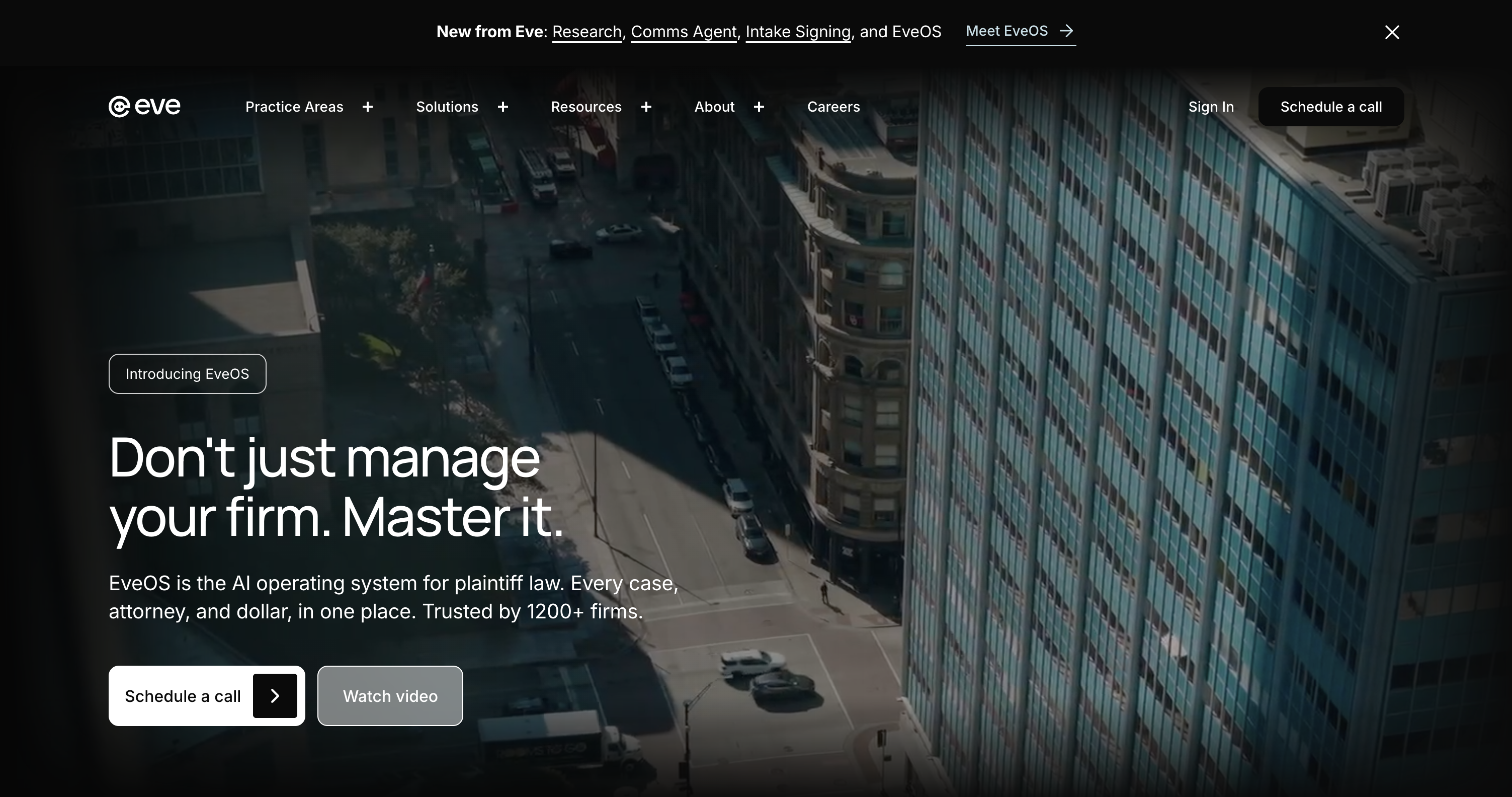
Eve calls itself "the AI operating system for plaintiff law" and is the broadest single-vendor workflow in this roundup: 24/7 intake in 28 languages, medical review and chronology, an "AI Auditor" that scans caseloads nightly for "missed TBIs, MRIs that should have been ordered," document drafting, discovery, built-in legal research with citations, and natural-language analytics (Eve, 2026).
It is also the adoption leader, "Trusted by 1200+ firms," with a "4.9/5 on G2 by plaintiff law firms" rating on its own site.
Its stated performance numbers are the most aggressive in the category: "2.5x increase in case capacity," "20 hours per attorney back per week," "90% faster demand letter generation," "15-30% Higher Settlements Reported across 1200+ customers," and a "3x More Cases" customer example (Eve, 2026).
Treat those as vendor-reported. Eve does not publish pricing; it runs sales-led and quote-based. Best for a high-volume PI firm that wants one platform to run intake through resolution and can absorb an enterprise quote.
2. Vaquill AI: best for mixed-docket plaintiff firms that need the whole 90%
Vaquill AI is a legal AI suite, not a point tool. It folds multi-document extraction, auto-built chronology, grounded legal research with clickable sources, and drafting into one tenant on a flat per-seat plan (founder-confirmed).
For a contingency practice that is the point. The file that dies after intake costs you almost nothing in tooling, and the file that settles got record review, chronology, research, and a draft from the same plan. There is no per-case meter rewarding you for opening files that may never pay back.
Where Vaquill AI differs from the demand generators is research. It returns real US opinions and statutory text with sources you can open and read, so valuation and liability memos are grounded rather than composed from a model's memory.
Case-law research lives inside the product surface; we do not sell a case-law API (the public API is scoped to statutes: US Code, CFR, and all 52 state and territory codes). Best for the 2-to-15-lawyer mixed-docket firm where a real fraction of intakes never convert.
3. EvenUp: best for high-throughput auto-settlement shops
EvenUp is the most funded name in the category and the demand-letter reference point. It pairs medical-record review with demand generation across pre-litigation and litigation stages, backed by a "250K+ verdict and settlement dataset" and a per-case pricing model (EvenUp, 2026). Its instant-vs-legal-reviewed demand tiers let you trade speed for a human pass (EvenUp Demands, 2026).
The per-case model is the whole story for fit. If your docket is auto cases that almost all settle, paying per case means paying on files that mostly pay you back, and EvenUp's throughput ("10,000 cases processed weekly") can be worth it.
If a real share of your intakes never convert, that same per-case meter taxes your optimism. Pricing is quote-based; engagement runs through sales.
4. Supio: best when record analysis is the bottleneck

Supio's core is medical-record analysis, with demand generation and intake layered on. It partners with Thomson Reuters to bring "agentic AI to plaintiff firms" and connects to Westlaw, Litify, MyCase, and CasePeer (Supio, 2026).
Its pitch is collapsing weeks of record work into "days and hours," with firm-reported savings of "437 hours across just six cases" and a "$495M verdict" case study (TorHoerman Law). Pricing is quote-based, sales-led.
Best for a firm whose throughput is gated by how fast it can read records, and that values the Thomson Reuters integration path.
5. ProPlaintiff: best for solo and mid-size PI firms

ProPlaintiff bundles a demand-letter generator, a medical-chronology tool that builds "a visual timeline of Doctor visits," an agentic case-management dashboard, a "Chat with Tiff" paralegal that "drafts filings, summarizes evidence, and cites every source," and footage analysis (ProPlaintiff, 2026).
It claims "90% average time saved per document" and pitches solos ("Automate the admin. Reclaim your time") through enterprise. Pricing is quote-based.
Best for solo and mid-size plaintiff firms that want demand plus chronology plus light case management in one place without an enterprise commitment.
6. Anytime AI: best for complex, high-value cases
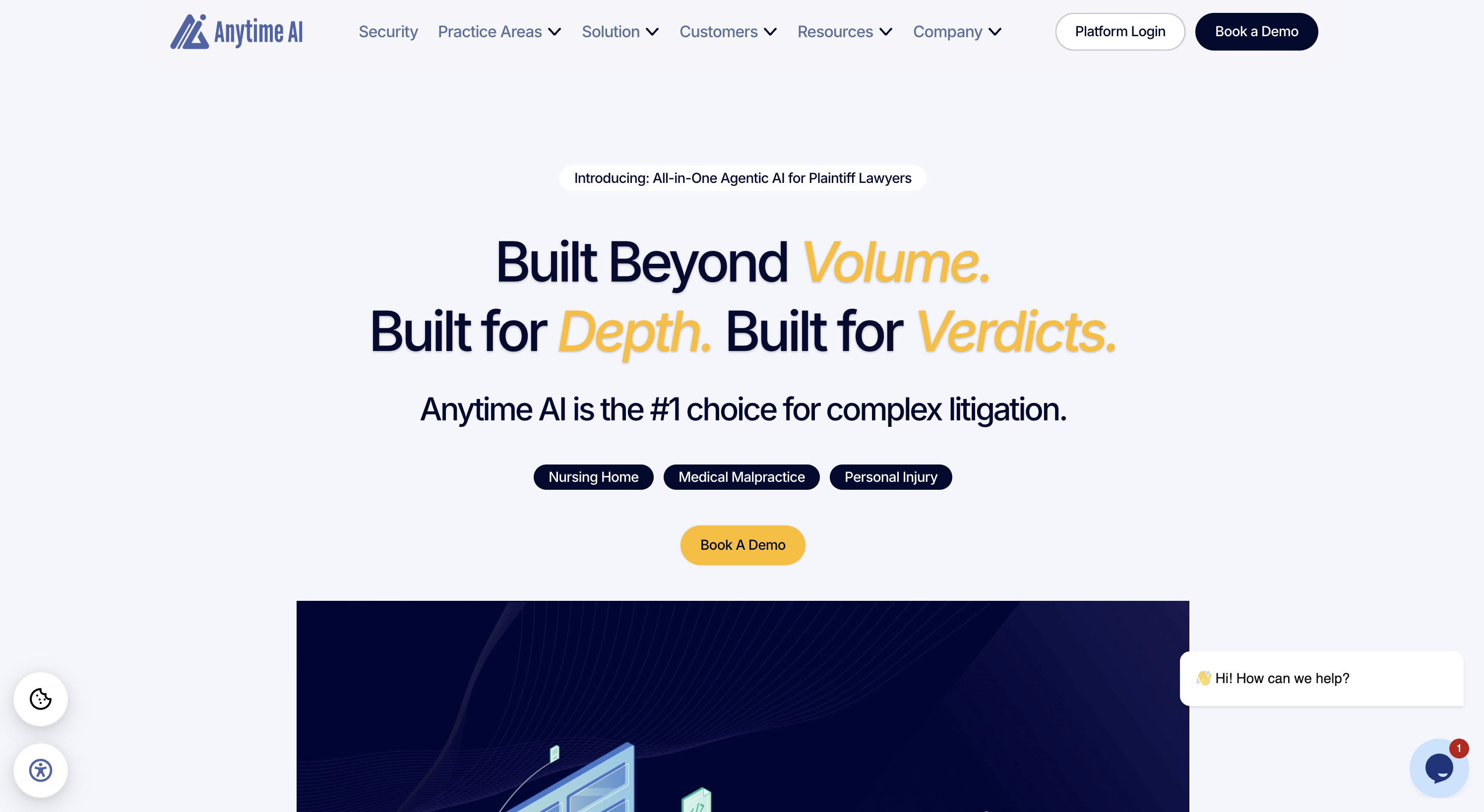
Anytime AI aims at depth over volume: intake and triage, "deep analysis of records and evidence, surfacing the winning case theory," agentic discovery and deposition prep, demand strategy, and drafting (Anytime AI, 2026).
It names nursing-home litigation, medical malpractice, trucking, and TBI as its sweet spots, and describes its buyer as "plaintiff firms that handle larger, complex cases and win on strategy, preparation, and depth."
Performance claims are qualitative ("hundreds of hours"); no benchmark figures are published, and pricing is quote-based. Best for firms whose cases are few, large, and won on case theory rather than throughput.
7. Tavrn: best for fast, source-linked chronologies
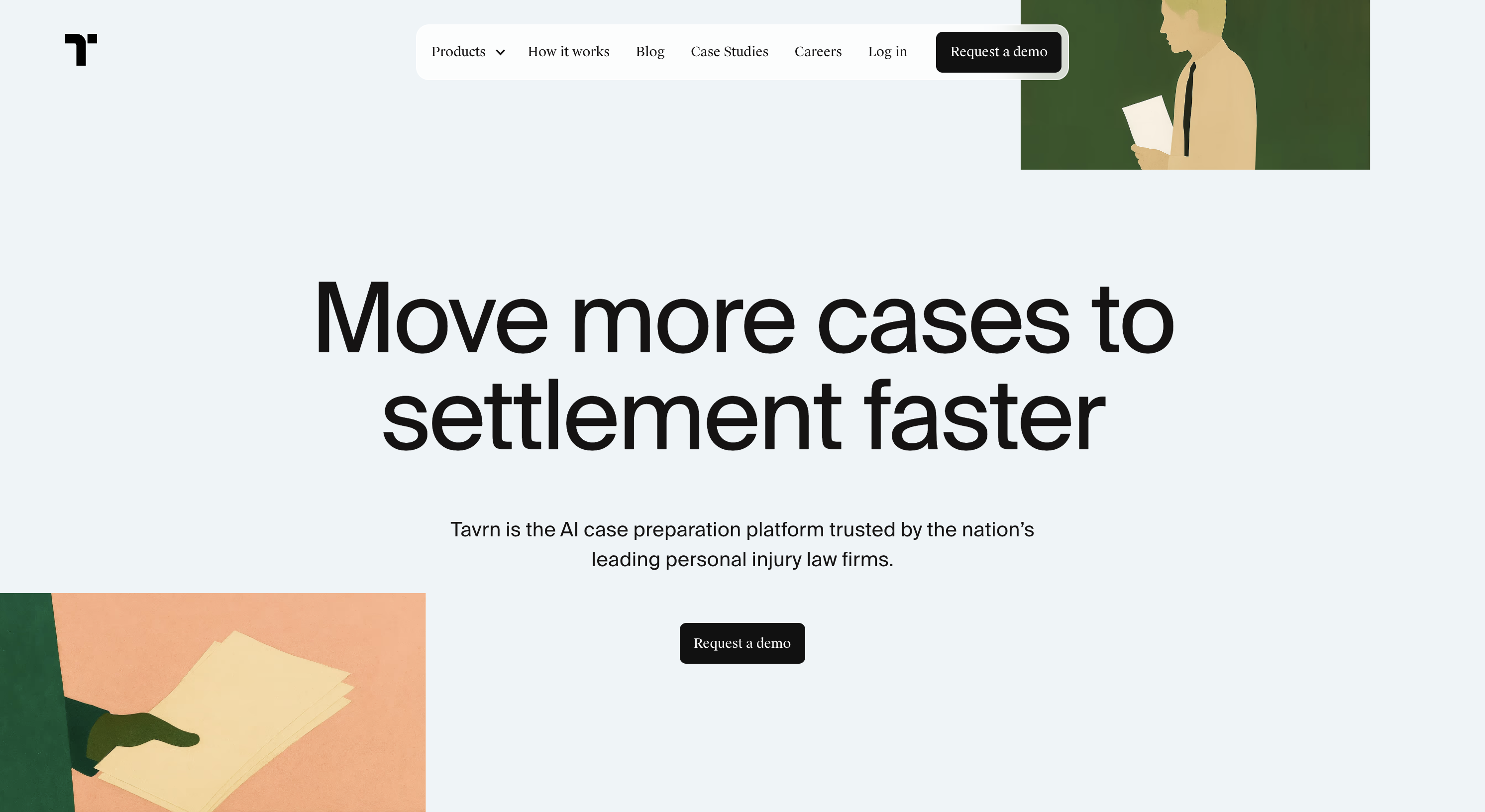
Tavrn covers three steps: medical retrieval (automating record acquisition from providers and insurers), medical chronology (turning "thousands of pages" into "structured, hyperlinked summaries"), and demand letters (Tavrn, 2026).
Its numbers are the most specific in the chronology category: "50-70% reductions in record review time," "2X faster time to settlement," chronologies "in under 24 hours," and retrieval that "cut average turnaround time by 12 days." The hyperlinking back to source pages is the verification-friendly part. Tavrn is one of the few plaintiff tools that publishes a number: Medical Retrieval starts at $299.99 per month for 20 requests (Tavrn, Mar 2026), with chronology and demand pricing quote-based.
Best for PI, SSDI, and malpractice firms where sequence and source-traceability matter and turnaround is the constraint.
8. DigitalOwl: best for medical review at scale
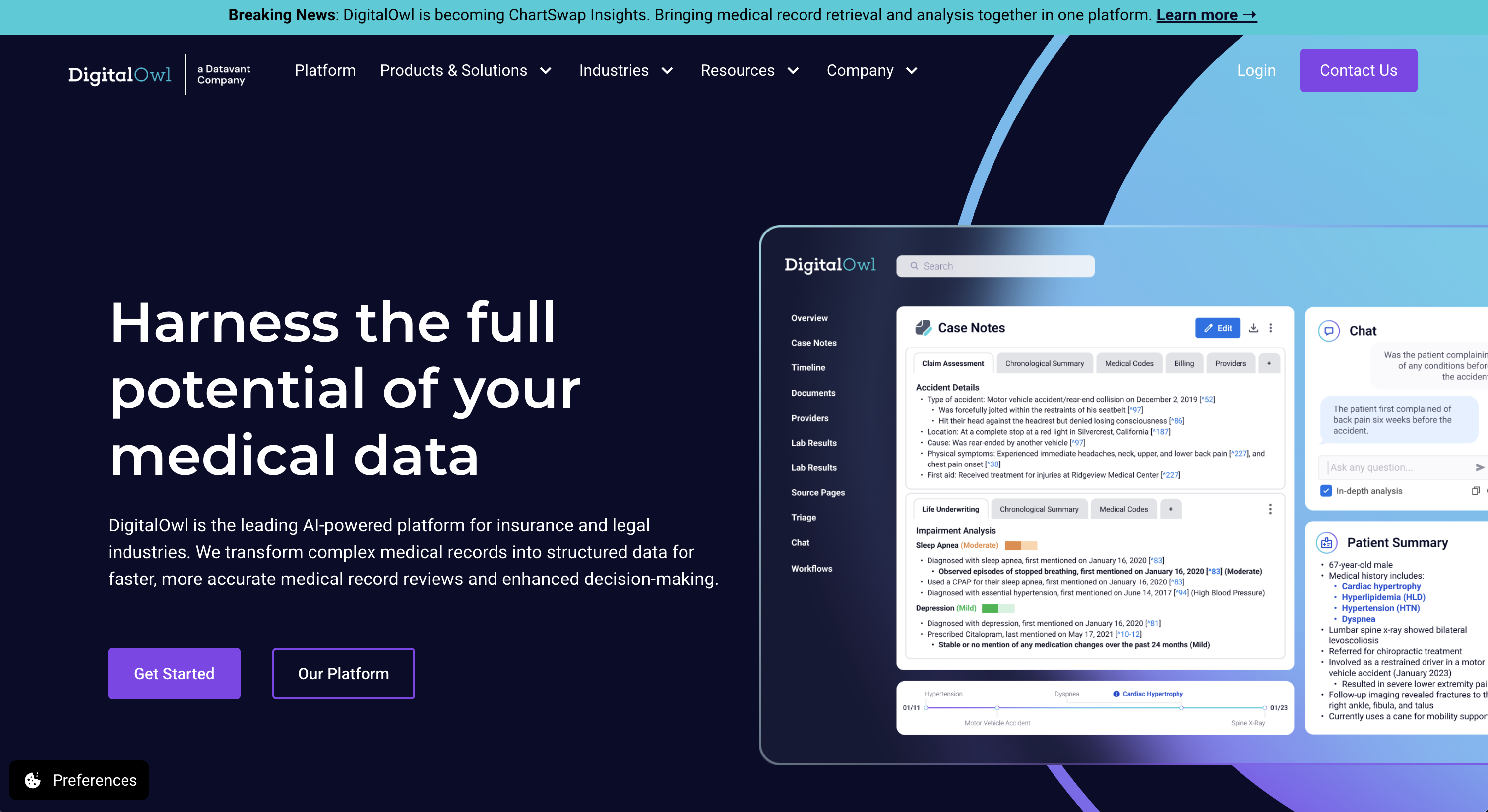
DigitalOwl is the precision-and-scale specialist, used across insurance and legal. It transforms medical records into structured data with stated "97% or higher" accuracy, "up to 72%" time reduction, processing "1000s of pages" in an hour or less, and "90% reduction in page count" (DigitalOwl, 2026).
Its product line (View, Chat, Triage, Workflows, Connect, Case Notes) is built around the record itself rather than the demand. It is self-serve for legal users under 30,000 pages a month and quote-based above that.
Best for firms or mass-tort teams whose volume of medical pages is the dominant cost, and who want extraction precision over a drafting suite.
9. CoCounsel: best for firms already on Westlaw
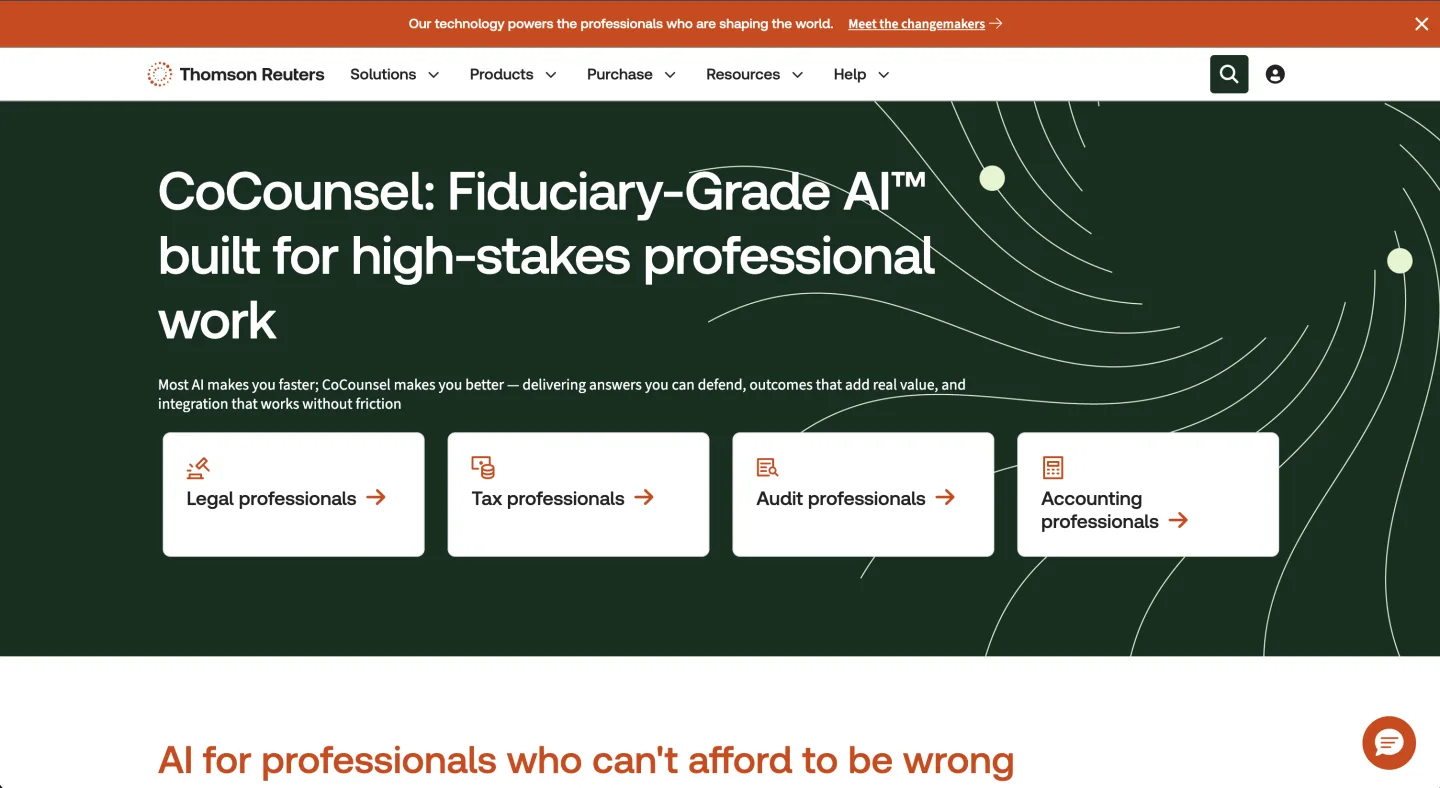
CoCounsel (Thomson Reuters) is a horizontal AI assistant: research, review, and drafting, linked to Westlaw content. It runs roughly $225 to $400+ per user per month depending on the capabilities included ([founder-confirmed; verified pricing notes, 2026]).
It is not plaintiff-specific, but its Westlaw tie makes research a strength relative to a pure demand generator. Two cautions from practitioner discussion: users report it can still fabricate citations and is "thin on appellate material," so the standing advice is "verify everything" (Michigan Law legal-tech series). Best for firms already inside the Thomson Reuters ecosystem.
10. Filevine: best for AI inside your case-management system
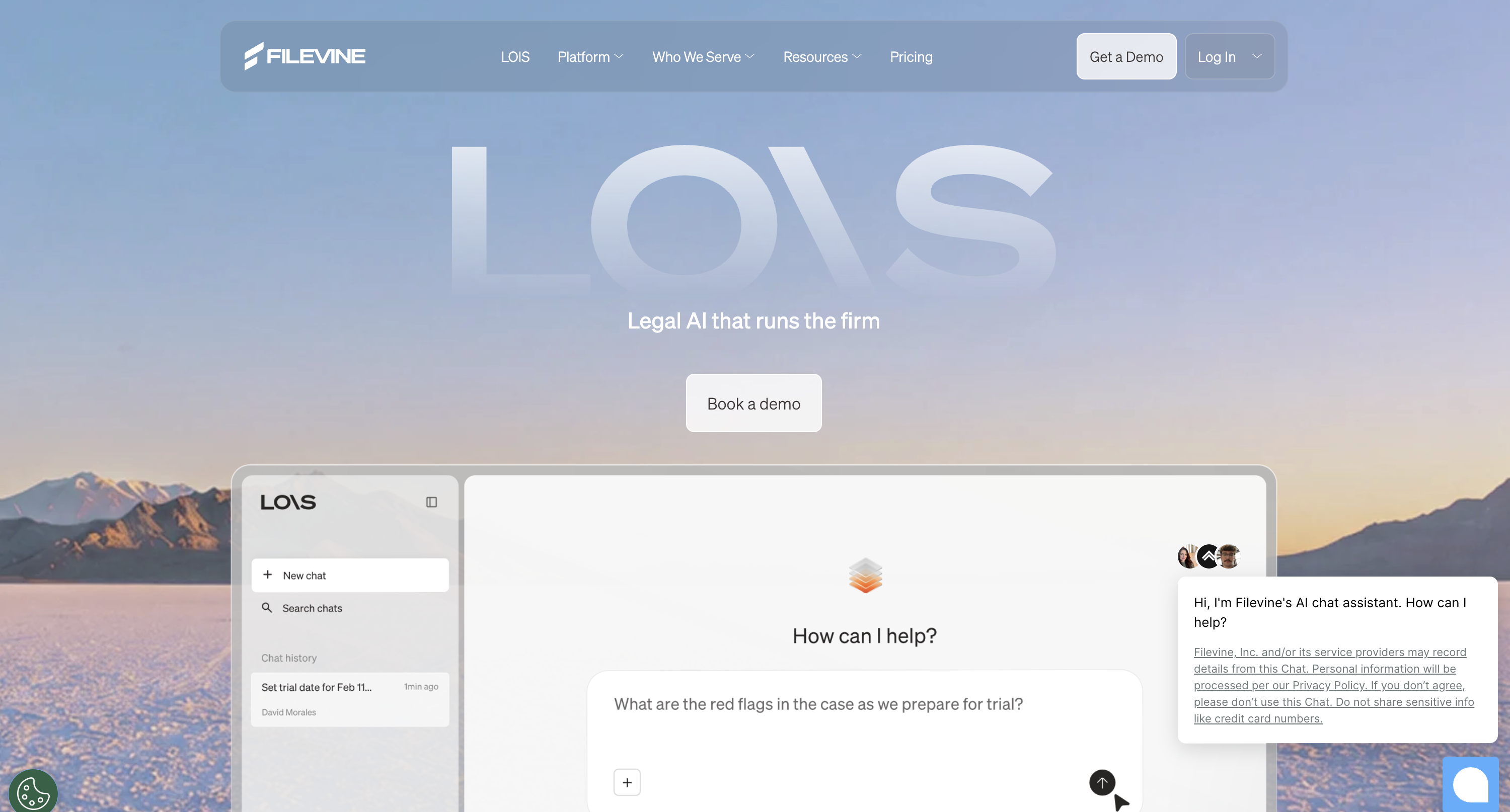
Filevine is a case-management platform (intake, matter and document management, billing) that has layered AI on top: firm-wide AI agents across matters, AI drafting in Word, and medical-record chronology tools (Filevine, 2026).
Its appeal for plaintiff firms is keeping AI where the case file already lives rather than bolting on a separate tool. Stated gains are modest and operational ("15% increased output," "14+% reduced drafting time"). Pricing is quote-based. Best for firms that want their AI inside the system of record they already run their cases in.
11. Paxton: best for solos who want research plus PI drafting
Paxton is a research-first assistant that also does document drafting, analysis, medical chronologies, and billing summaries across five practice areas including personal injury (Paxton, 2026).
Its differentiator is grounded, citation-verified research: Paxton reported 94% accuracy on the Stanford legal hallucination benchmark and built a Citator and a confidence indicator around verification (Artificial Lawyer, Jul 2024; LawSites, Jul 2024).
It publishes its price, rare in this market: $499 per user per month or $2,999 per user per year ([published, verified 2026]). Solo and small-firm users call it a "game-changer," though some find it steep for a solo budget. Best for a solo PI lawyer who wants verified research alongside basic medical-record drafting.
Others worth knowing
Three more names come up in plaintiff AI searches and earn a line, even if they did not make the core 11.
- NexLaw pitches a full-lifecycle PI platform (chronology, research, deposition and trial prep) on a flat-rate plan with a 3-day free trial, no card required (NexLaw, 2026). Worth a look for a firm that wants one bill and is willing to trial it.
- Darrow is a legal-intelligence and plaintiff-intake tool: it surfaces potential cases and qualifies claimants rather than reviewing records or drafting demands. Different job than the rest of this list, useful upstream of intake.
- CloudLex is a personal-injury case-management system that has layered AI features on top, in the same lane as Filevine: best when you want AI inside the system of record you already run cases in.
The math nobody puts on the slide
Here is the data point that should reframe the whole purchase. The Future of Legal Tech 2026 report, run with Morgan & Morgan and surveying more than 300 PI firms, found that over 60% of PI firms now use AI, that medical-record summarization is the single most common use case (around 56%), and that more than half of these firms spend under $5,000 per year on AI.
Sit with the sub-$5,000 figure. That is the budget reality for the firms actually buying. Now price a stitched stack against it.
Take a common four-tool plaintiff stack: an intake tool, a record-review tool like DigitalOwl or Tavrn, a demand generator like EvenUp on per-case pricing, and a research subscription like Paxton at $499 a month.
Paxton alone is roughly $6,000 a year for one seat, which already exceeds the sub-$5,000 line that over half of firms live under, before you add the other three vendors or a second seat. Even where the point tools quote lower, four bills plus the integration tax of moving a case file between them blows the budget fast.
The deeper problem is structural, and it goes beyond the running total. Contingency practice has an unforgiving cash-flow shape. You front the costs on every file: the experts, the records requests, the staff hours, the software. You only get paid on the files that resolve in your favor.
A tool priced per matter charges you the same whether the case settles for policy limits or evaporates after the first deposition. Stack four of them and you are paying overhead on your losers four times over.
The fix is to make per-matter software cost approach zero on the files that do not pan out.
That happens when one platform handles research, multi-document extraction, chronology, and drafting on a flat or seat-based plan, so opening a file that later dies costs you nearly nothing in tooling. Your AI overhead should track your wins, not your intake volume. Point-tool stacks invert that relationship. A suite preserves it.
For related vendor, pricing, and buyer-guide coverage, see 7 Ways AI Helps Personal Injury Lawyers Win Cases Faster and Personal Injury AI in 2026: What It Actually Does for Plaintiff Lawyers.
What most people get wrong about "best plaintiff AI"
Three assumptions show up over and over, and all three cost firms money.
They equate "best plaintiff AI" with "best demand-letter generator." The demand letter is the visible artifact, so it gets the attention. But by the time you are drafting the demand, the hard work is done.
The hours live upstream: reading 1,400 pages of records from five providers, building a treatment timeline, finding the gaps the defense will exploit, and grounding your valuation in real outcomes. Drafting is the last 10%. If your AI budget goes to the artifact and not the analysis, you bought the trophy and skipped the training.
They ignore the contingency math. Covered above, but it bears repeating because it is the single biggest blind spot. Per-matter pricing feels fair ("I only pay when I open a file") until you remember that most files do not pay you back. The pricing model should mirror your revenue model. It usually does not.
They forget data sprawl. This one is a sleeper. Every point tool you add is another vendor holding protected health information about your clients. Four tools means four data processing agreements, four breach surfaces, four sets of subprocessors, four answers you owe a client who asks where their MRI report lives.
ABA Formal Opinion 512 (July 2024) put generative AI squarely inside a lawyer's existing duties of confidentiality and competence, including verifying outputs and understanding where client data goes. Consolidating to one tenant costs less, and it is a smaller compliance footprint. We dug into the vendor-count problem in where your legal AI data actually goes.
Before you sign with any of these, ask for the same two documents from each: a current SOC 2 Type II report and a signed Business Associate Agreement (BAA) for the protected health information in medical records. Any tool that handles client medical data and cannot produce both on request is a procurement risk, not a shortlist candidate.
The verification trap is still live
There is one rule that does not change no matter which tool you buy, and plaintiff firms get burned by it more than most because demand letters and briefs cite cases under time pressure.
The 2023 Mata v. Avianca sanction, where a lawyer filed a brief full of cases ChatGPT had invented and drew a $5,000 penalty, is the canonical warning, and it is not a museum piece. The legal-academic tracker maintained by Damien Charlotin at HEC Paris had logged more than 1,600 court filings caught with AI-fabricated citations as of mid-2026 (Damien Charlotin AI Hallucination Cases Database, 2026). We break that tracker down in reading the hallucination tracker like a risk manager.
Any tool that generates text, including a demand-letter generator that fabricates a supporting citation, can hand you a confident, fluent, fictional case. The distinction that matters is retrieval versus generation: a system that retrieves real opinions from a corpus and shows you the source is categorically safer than one that composes plausible-sounding law from a model's memory.
This is not hypothetical for the big research tools either. A Stanford and Yale study of paid legal AI found Westlaw's AI-assisted research hallucinated in roughly one in three responses, and Lexis+ AI in about 17% (Stanford HAI / Yale ISPS, 2024). Even CoCounsel users warn that it still fabricates citations.
That is why the retrieval-vs-generation column in the table is not a technicality. Grounded research, returning actual federal and state opinions with citations you can click and read, is the difference between a valuation memo you can defend and one that detonates in front of a judge.
Verify every citation before it reaches a demand or a filing, and prefer tools that make verification a single click. More on the mechanics in our note on AI hallucinations and sanctions.
So which should a plaintiff firm actually buy?
Honest answer, because this is a buyer's guide and not a pitch: it depends on your shape.
If you are a high-volume firm whose entire business is auto cases that almost all settle, and demand-letter throughput is your literal bottleneck, a dedicated demand generator like EvenUp, or an all-in operating system like Eve, may earn its per-case or enterprise cost, because your matters mostly pay you back.
The contingency math that breaks point tools for everyone else can work for you.
If your bottleneck is specifically reading records, a precision specialist like DigitalOwl or a fast source-linked chronology tool like Tavrn may be the highest-leverage single purchase, especially in mass tort.
If you run a smaller, mixed-docket plaintiff practice (some PI, some employment, some civil rights, some product liability) where a real fraction of intakes never convert, the stacked-point-tool model quietly bleeds you. Your files do not all pay back, so per-matter overhead on every file is a tax on optimism.
A suite that handles record review, chronology, research, and drafting on one plan keeps your cost structure aligned with your revenue structure. That is the segment, the 2-to-15-lawyer firm, where the suite argument is strongest, and where Vaquill AI is aimed.
The wrong move, for almost everyone, is to default to "best demand generator" because it is the loudest category. Start from your conversion rate and your cash-flow shape, then pick the pricing model that survives your losers. The features will sort themselves out from there.
FAQ
Is Eve or EvenUp better for plaintiff firms? They solve different problems. Eve is a broad operating system covering intake through resolution and is the adoption leader at 1,200+ firms; EvenUp is the demand-letter and medical-review specialist with per-case pricing and a large verdict dataset.
A firm that wants one platform to run the whole practice leans Eve; a firm whose only bottleneck is demand throughput on cases that mostly settle leans EvenUp. Both are quote-based, so get pricing for your actual case volume before deciding.
How much does AI software for plaintiff law firms cost? Most published or third-party-reported figures land in two bands. Research-first tools that publish prices run from self-serve, per-seat suites at the low end to $499 per user per month (Paxton). The plaintiff-specific point tools (Eve, EvenUp, Supio, Tavrn, ProPlaintiff, Anytime AI, DigitalOwl) are mostly quote-based and sold per seat or per case.
A 2026 survey of 300+ PI firms found over half spend under $5,000 a year on AI total, which is the real ceiling most stacks have to fit under.
What AI builds medical chronologies? Most plaintiff tools do, with different strengths. DigitalOwl emphasizes extraction precision ("97% or higher" accuracy on its site). Tavrn delivers hyperlinked chronologies "in under 24 hours." Supio and EvenUp build interactive chronologies tied to their demand workflows. Vaquill AI and ProPlaintiff build chronologies from multi-document extraction inside a broader suite.
If chronology is your single biggest cost, a record-review specialist is the highest-leverage buy; if it is one of several needs, a suite folds it in.
Is AI safe for demand-letter citations? Only if you verify. The 2023 Mata v. Avianca sanction came from filing AI-invented cases, and a Stanford and Yale study found even paid research tools hallucinate (Westlaw around one in three responses). ABA Formal Opinion 512 makes verifying AI output a professional duty.
Prefer tools whose research retrieves real opinions and shows you the source, and never let a generated citation reach a demand or filing without checking it against the actual case.
What is the best AI for a solo PI firm? Watch the budget ceiling. A solo wanting verified research plus basic PI drafting can look at Paxton ($499/user/mo published) or Vaquill AI. A solo whose pain is demand letters and chronology specifically may prefer ProPlaintiff, which targets solos directly.
Avoid stacking three quote-based point tools as a solo; the per-case and per-seat bills compound faster than a one-person caseload can absorb.
What is the cheapest AI for plaintiff law firms? Among tools that publish a price at all, Paxton is the clearest full-suite rate card in this roundup at $499 per user per month, or $2,999 a year. Tavrn publishes a usage price too, from $299.99 a month for 20 medical-retrieval requests, though that covers retrieval rather than a full suite.
Most plaintiff-specific point tools are quote-based, so "cheapest" depends on your case volume; a per-case tool can be cheap for a low-volume firm and expensive for a high-volume one, or the reverse. Price the model against your own conversion rate, not the sticker.
Do I need a separate tool for medical record review and demand letters? Not necessarily. Several tools (Eve, EvenUp, Supio, ProPlaintiff, Tavrn, Vaquill AI) do both review and drafting in one product.
Buying two specialists makes sense only when one workflow is a true bottleneck that a generalist cannot keep up with, for example very high medical-page volume that justifies a precision tool like DigitalOwl. Otherwise each extra vendor adds a data processing agreement, a breach surface, and an integration tax.
How do I verify a plaintiff AI vendor's security before buying? Ask every vendor for two documents: a current SOC 2 Type II report and a signed Business Associate Agreement covering the protected health information in your clients' medical records. Then ask who their subprocessors are and where the data is stored.
A vendor that handles medical records and cannot produce both on request should not make your shortlist, because ABA Formal Opinion 512 puts the duty to understand where client data goes on you, not the software.
Is general AI like ChatGPT good enough for personal injury work? For brainstorming and rough drafts, maybe. For anything touching client medical records or headed to a filing, no. General chat tools are not covered by a BAA, so feeding them protected health information can breach confidentiality, and they generate citations that can be fabricated.
PI-specific tools are built around clinical records, treatment timelines, and verification, which is where the plaintiff workflow actually lives. Match the tool to the data sensitivity of the task.
Is legal AI for plaintiff firms different from AI for defense or in-house teams? The economics are. Plaintiff AI lives and dies on contingency math, so per-matter pricing on files that may never pay back is the trap. Defense and in-house teams bill or budget differently, so the same point-tool overhead reads as a smaller line for them. The workflows overlap (record review, research, drafting), but the right pricing model does not.
New legal AI guides, weekly.
Further Reading
Top AI Legal Research for Solo Attorneys on a Budget
Read postTop Legal Research Tools for Solo Family Law Attorneys
Read postWhat AI Legal Tools Are Actually Trained on Federal and State Case Law
Read postHow Much Does an AI Legal Seat Really Cost in 2026? Reading Quotes Like a Buyer
Read postLegal AI Tools for Solo Practitioners: 7 Picks That Fit a One-Person Firm
Read postPersonal Injury AI in 2026: What It Actually Does for Plaintiff Lawyers
Read post
Co-Founder & CEO · Attorney
Arshita leads product and strategy at Vaquill, building the legal AI suite that solo, small-firm, and in-house US lawyers use to run a matter end to end.