Short answer: personal injury lawyers use AI for seven jobs that eat the most hours: intake screening, medical-record review, treatment chronologies, demand letters, deposition prep, legal research, and case-valuation comparables. Each one compresses reading and drafting time. None of them try the case or set the number for you, and every output needs a verification pass before it leaves the office.
Personal injury is a volume practice built on paper. A single soft-tissue case can carry 400 pages of medical records, a stack of bills from five providers, an accident report, and a fat folder of correspondence.
Multiply that by a caseload of 80 open files on contingency, and the bottleneck is never the law. It is the reading.
AI for personal injury lawyers is useful precisely because it attacks the document-heavy parts of the work: triaging intake, pulling fields out of medical records, assembling treatment timelines, and grounding demand letters in the actual chronology.
It does not try a case for you. It compresses the hours between signing a client and sending a demand, which is exactly where a contingency-fee firm makes or loses money.
Here are seven concrete uses, what each one actually does, and where it bites back if you skip verification.
TL;DR
- PI is a document-and-deadline practice, so the highest-leverage AI uses are intake triage, medical-record extraction, chronology building, and demand-letter drafting.
- A Document Matrix pulls the same fields (date of service, provider, diagnosis, billed amount) across dozens of records into one grid instead of one-doc-at-a-time chat.
- A Chronology Builder turns that extracted data into an injury-and-treatment timeline, the spine of every demand and mediation brief.
- Legal research and case-valuation comparisons work only when answers are grounded in real opinions with citations you can open, not a model guessing.
- Settlement value stays a human call. AI gives you comparables and a research aid, not a number.
- Verify everything. Mata v. Avianca was a PI case where fabricated citations cost the lawyers a $5,000 sanction, and ABA Formal Opinion 512 makes verification a duty, not a courtesy.
What does this post say AI cannot do in personal injury case valuation?
Adoption is no longer the question. AI use among legal professionals jumped from 19 percent to 79 percent in a single year (Clio 2024 Legal Trends Report, October 2024). For a contingency practice, the real question is which tasks are worth handing over, and where the handoff bites back.
Part of our legal AI vendor comparison and pricing series.
1. Intake and case screening
Most PI firms lose money on the cases they should have turned down. The fix is faster, more consistent screening at the top of the funnel, before a paralegal spends three hours ordering records on a case with no liability.
This is a Workflows job. A workflow is a multi-step pipeline: intake to research to draft to review.
For screening, that looks like a structured intake form feeding a step that flags statute-of-limitations exposure, a step that checks the basic liability theory against the facts, and a step that drafts a short go/no-go memo for the lawyer.
The lawyer still makes the call. The workflow just stops you from making it on incomplete information at 7pm.
The point is consistency. Every intake runs the same checks in the same order, so a borderline case gets the same scrutiny whether it walks in on a slow Monday or during a backlog.
Worked example. A rear-end auto case comes in with a crash date of March 2, 2024. The screening step flags it against the state limitations period, notes the filing window, and drafts a one-line go memo: "Liability clear (rear-end, police report cites following too closely); SOL window open; treatment ongoing at two providers; recommend records order." The lawyer reads four sentences instead of a file.
Verification limit: the tool computes a deadline from the date you give it. A wrong intake date, or a tolling rule it does not know (minor plaintiff, discovery rule, government defendant with a short notice-of-claim period), produces a confident wrong deadline. Treat the flag as a prompt to check the calendar, not the calendar itself.
2. Medical-record review
This is where the hours go, and where AI earns its keep first.
Start with the part lawyers get wrong: you cannot feed records into anything until you have the authorization. Disclosure of protected health information for a use not otherwise permitted requires a valid authorization under the HIPAA Privacy Rule, 45 C.F.R. § 164.508 ("uses and disclosures for which an authorization is required").
Your signed HIPAA release is what makes the records yours to process in the first place. Keep that release scoped and current.
Once you have the records, the work is mechanical and miserable: read every page, find every provider, log every date of service, total the billed amounts.
A Document Matrix is built for exactly this. Instead of chatting with one PDF at a time, you load all the records and extract the same fields across every document into a single grid: date of service, provider, diagnosis or impression, treatment, billed amount, payment status. Forty documents become one sortable table.
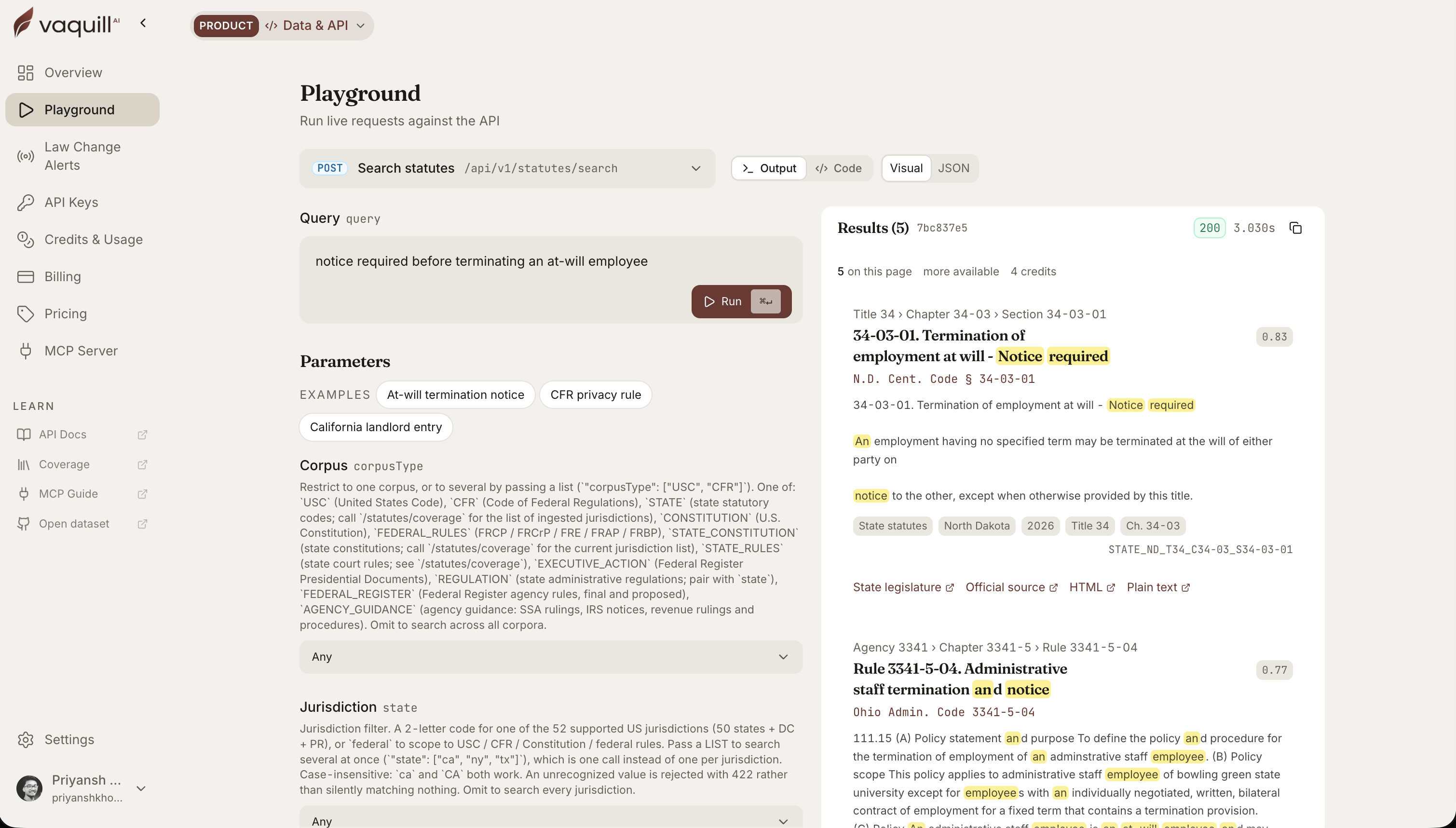 The same corpus behind this article, queried live. Every result carries its citation and a link to the official source.
That table is the raw material for everything downstream. One extracted row looks like this: 2024-03-09 | Mercy ER | cervical strain, r/o fracture | CT c-spine, discharge | $4,210 | unpaid. Forty of those, sorted by date, are your treatment story.
It is also where you catch the gaps a human reader misses on page 280: the three-week treatment lapse that defense counsel will hammer, the duplicate billing, the provider who never sent records at all.
Verification limit: extraction copies what the page says, and medical records contain scanned handwriting, OCR noise, and provider shorthand. Spot-check the billed-amount column and any diagnosis that drives the case against the source page before it feeds a demand. A misread "$4,210" as "$420" understates your specials by ten times.
For related vendor / pricing / buyer-guide coverage, see Personal Injury AI in 2026: What It Actually Does for Plaintiff Lawyers and Best AI Software for Plaintiff Law Firms in 2026 (Suite vs Point Tools).
3. Chronology Builder: the timeline that runs the case
Every PI case lives or dies on its chronology. When did the injury happen, when did treatment start, what was the gap between the ER visit and the orthopedist, when did the client hit maximum medical improvement. Adjusters and mediators read the timeline before they read your argument.
Building that by hand from records and bills is slow, and it is the single most repetitive task in the file.
The Chronology Builder constructs the case timeline directly from your documents: it reads the records and bills, places each event on a dated line, and links every entry back to the source page. You get the injury-and-treatment sequence assembled, then you correct it.
This is the real differentiator from generic single-document chat. Asking a chatbot "what happened in this record" gives you a summary of one file.
A chronology builder reasons across the whole set and produces a structured, sourced timeline you can drop straight into a demand or a mediation brief. Pair it with the Document Matrix from the last section and the extraction feeds the timeline: the grid gives you the dated events, the chronology orders and contextualizes them.
Worked example. Three rows of a generated timeline: Mar 2, 2024: MVA, EMS to scene (police report p.1) / Mar 9, 2024: ER, cervical strain, CT negative for fracture (Mercy records p.14) / Apr 1, 2024: orthopedist, MRI ordered, disc protrusion C5-C6 (Ortho records p.3). The 22-day gap between the ER and the orthopedist is sitting right there, sourced to a page, before defense counsel finds it. For a full walkthrough of turning records into the chronology that anchors a demand, see how to build a personal injury demand-letter chronology with AI.
The verification habit matters here too.
4. Demand letters grounded in the chronology
The demand letter is the product a PI firm actually sells. It needs the liability narrative, the full treatment story, the special damages math, and a number.
The slow part is not the prose. It is stitching the medical chronology and the billing totals into a clean narrative without missing a provider or fumbling a date.
Drafting works best when it is grounded in the chronology you already built, not generated from a blank prompt. Feed the timeline and the billed-amount totals from your Document Matrix into the draft step, and the letter is built on extracted facts instead of a model's best guess about what a demand letter usually says.
You get a first draft that already has the treatment sequence right and the specials tallied. You add the liability argument, the pain-and-suffering framing, and your judgment about the number.
A Workflow can chain this: chronology to specials calculation to demand draft, with a review step at the end. The lawyer edits a draft instead of starting from nothing, and the draft is anchored to the record rather than floating free.
Worked example. The specials block writes itself off the matrix totals: Mercy ER $4,210 + Ortho $2,860 + PT (14 visits) $3,150 + imaging $1,900 = $12,120 in medical specials, each line tied to a billing record. The draft puts that table in the letter and references the treatment dates from the chronology, so the narrative and the math agree.
Verification limit: the model will happily assert a liability theory or a damages figure that the record does not support if you let it write past the facts. Read the demand against the chronology line by line. AI demand-letter tools are now a category of their own (CasePeer, 2025), and the firms that get value from them treat the output as a first draft to interrogate, not a finished product to sign.
5. Deposition prep and discovery
Defense depositions of your client, and your depositions of the defendant or treating physicians, both turn on the same move: cross-referencing what a witness says against what the records show. The same move powers discovery review, where you are reading produced documents and transcripts for the one line that helps or hurts.
A Document Matrix plus Agent Mode handles the grind. Load the deposition transcript and the medical records, and you can pull every place the testimony touches a date, a diagnosis, or a prior injury, then line it up against the documented record.
Agent Mode runs the multi-step search autonomously: find every mention of the left knee across the transcript and the records, flag where they disagree. That is the impeachment material, surfaced before you walk into the room.
Worked example. Your client testifies at deposition that he had "no prior knee problems." Agent Mode surfaces an entry from a 2019 primary-care note in the produced records: "patient reports left knee pain x2 weeks, likely overuse." The tool returns both quotes with page cites and flags the conflict. You decide whether it is a real prior injury or a forgotten minor complaint, and how to handle it.
Verification limit: a transcript summary can compress a hedged answer ("I don't really remember, maybe?") into a flat assertion ("witness said no"). Pull the cited line and read the surrounding Q-and-A before you build a cross on it. For discovery at scale, the cross-reference is a starting filter, not a privilege review.
You still write the outline and pick the order. The tool finds the contradictions; you decide which ones to spring.
6. Legal research
PI litigation needs real research more often than the volume reputation suggests: premises-liability duty questions, comparative-fault rules that vary by state, admissibility of medical causation testimony, the occasional constitutional or procedural wrinkle.
The only kind of AI research worth trusting is grounded research: ask a question, get an answer tied to real opinions with citations you can open and read.
A grounded legal research feature can run retrieval over a corpus of more than 8 million US federal and state opinions. Retrieval-augmented, not a model reciting from training, is the difference between a citation that exists and one that does not.
For the mechanics, how AI legal research works with RAG walks through it.
Every cite comes back clickable. You read the opinion, not a summary of an opinion that may or may not say what the summary claims.
Worked example. You ask how your state treats a plaintiff who is 40 percent at fault. Grounded research returns the governing rule with a statute you can open (for example, a modified-comparative-fault 51-percent-bar provision) plus appellate opinions applying it, each citation linking to the full text. You confirm the bar threshold yourself instead of trusting a paraphrase.
Verification limit: grounded retrieval cuts hallucinated cites, it does not eliminate misreading. The model can pull a real opinion and still summarize its holding wrong, or miss that it was later overruled. Open the case and read the holding for anything you will put in a brief.
7. Case valuation and settlement analysis
Valuation is where AI is most useful and most dangerous, so be precise about what it does.
What it does: comparative research. You can ask for how courts in a jurisdiction have treated damages in cases with similar injuries, procedural posture, and fact patterns, and get grounded results pointing to real opinions and reported outcomes. That is a research aid for the conversation you have with your client about range and risk.
Worked example. You query reported outcomes for a C5-C6 disc protrusion with a single epidural injection and no surgery, in your venue. You get a set of opinions and reported verdicts or settlements you can open and read, with the injury and procedural posture of each. That is comparables to anchor a range, the same way a verdict reporter would.
What it does not do: set your settlement value. No model knows what this adjuster will pay on this file, and any tool that hands you a confident dollar figure is guessing.
Treat valuation output as comparables to inform your judgment, the same way you would treat verdict reporters, not as an answer. Your read of the venue, the client, and the defense counsel is the part that matters, and it is not in the corpus.
The caveat that is also the whole point: verify everything
If you remember one thing, make it this. Mata v. Avianca, 678 F. Supp. 3d 443 (S.D.N.Y. 2023), was a personal injury suit. A passenger said a serving cart hurt his knee.
His lawyers used a general-purpose chatbot for the research, it invented citations to cases that did not exist, the brief went in with the fake authority, and the court sanctioned counsel $5,000 once the fabrications surfaced.
The practice area in the canonical AI-hallucination horror story was yours.
That is not an argument against AI. It is an argument for grounded AI and for verification as a fixed habit.
ABA Formal Opinion 512 (July 2024) frames the duties directly: competence (understand the tool's limits), confidentiality (protect client information you feed it), candor to the tribunal (do not file what you have not checked), and supervision (the work is yours, not the software's). The opinion does not ban generative AI. It makes verifying its output a professional obligation.
This is the practical reason to insist on tools that return citations you can open. A system that grounds answers in real opinions and links to the source lets you discharge the verification duty in seconds.
A system that produces fluent text with no traceable source makes Mata easy to repeat. We wrote up the hallucination sanctions cases in more detail here if you want the longer cautionary file.
FAQ
How do personal injury lawyers use AI? Mostly for the document-heavy, repetitive work: screening intake, extracting fields from medical records, building treatment chronologies, drafting demand letters off those chronologies, prepping depositions, running grounded legal research, and pulling damages comparables for valuation. The lawyer keeps strategy, the number, and the client relationship.
Can AI write a personal injury demand letter? It can write a strong first draft when it is grounded in your extracted records and chronology, so the treatment sequence and the specials math are already right. You add the liability argument, the pain-and-suffering framing, and the demand number, then verify every fact against the record. AI demand-letter tools are a real category now, but the output is a draft to interrogate, not a letter to sign. See our demand-letter chronology walkthrough.
Is it ethical for personal injury lawyers to use AI? Yes, with duties attached. ABA Formal Opinion 512 (July 2024) frames competence, confidentiality, candor to the tribunal, and supervision. The opinion does not ban generative AI; it makes verifying the output and protecting client information professional obligations.
Can AI value a personal injury case or predict the settlement? AI can surface comparables: how courts and juries in your venue have treated similar injuries and postures. It cannot tell you what this adjuster will pay on this file. Treat a confident dollar figure from any tool as a guess, and use the comparables to inform your own range.
Is it safe to put medical records into an AI tool? Only with a valid HIPAA authorization and a tool whose data handling you trust. Your signed release is what makes the records yours to process under 45 C.F.R. § 164.508. Confidentiality is one of the explicit ABA Opinion 512 duties, so read the vendor's data terms before you upload a client file.
Will AI replace personal injury lawyers? No. AI compresses reading and drafting time. The judgment calls (what evidence matters, when to push, when to file, how to value the case) sit with the lawyer, and so does the malpractice and ethics exposure. The Mata v. Avianca sanction is the standing reminder that the work product is yours, not the software's.
Which AI tasks give a PI firm the fastest payback? Medical-record extraction and chronology building, because that is where the raw hours go. Both feed the demand letter, so the time saved compounds across the file. For a deeper buyer's view, see our personal injury AI guide for 2026 and best AI software for plaintiff firms.
Putting it together for a PI firm
The compounding win is not any single feature. It is the pipeline.
Intake screening with Workflows, extraction into a Document Matrix, a Chronology Builder that turns the grid into a sourced timeline, and a demand draft grounded in that timeline. Each step feeds the next, and the lawyer reviews instead of assembles.
For a solo or small contingency firm, that is the difference between carrying 60 files and carrying 90 without adding staff. If you are pricing a stack, the best AI legal research for solo attorneys on a budget and building a small-firm legal tech stack for 2026 cover what fits and what to skip.
The goal is not to replace judgment. It is to spend less of your week reading page 280 and more of it deciding what the case is worth and how to win it.
Vaquill AI is the workbench we built for exactly this pipeline: the Document Matrix, Chronology Builder, and grounded legal research in one place, with every extracted field and every cite linked back to its source page so the verification habit is fast instead of painful. If you run a contingency caseload, that is the part worth a look.
New legal AI guides, weekly.
Further Reading
Legal AI Tools for Solo Practitioners: 7 Picks That Fit a One-Person Firm
Read postPersonal Injury AI in 2026: What It Actually Does for Plaintiff Lawyers
Read postAI for Family Law: How Solo and Small-Firm Family Lawyers Use It
Read postAI for Criminal Defense: Research, Timelines, Evidence Review
Read postAI for Family Law Firms: A Workflow Playbook for Intake, Discovery, Filings
Read postTop AI Legal Research for Solo Attorneys on a Budget
Read post
Co-Founder & CEO · Attorney
Arshita leads product and strategy at Vaquill AI, the US primary law data API. As an attorney, she decides which law we carry, how each section is sourced and cited, and what legal AI and compliance teams need from the data.