Personal injury AI is software that reads medical records, builds the treatment chronology, drafts the demand letter, and grounds case valuation in real court opinions. In 2026 the firms getting value from it use it on four bottlenecks: medical record review, medical chronology, demand letters, and case valuation. The named tools plaintiff firms compare are EvenUp, Supio, Eve, Tavrn, DigitalOwl, and CoCounsel, with broad legal-AI suites underneath.
A moderate auto case lands on your desk with 1,400 pages of medical records from five providers. Before you can value it, you have to read all of it, build a treatment timeline, itemize the specials, and turn it into a demand letter that an adjuster takes seriously.
That is 15 to 30 hours of work per file, and most of it is reading.
Personal injury AI compresses that reading. Not the gimmick that drafts a whole demand from a one-line prompt, but the boring, useful work: pulling treatment dates and billed amounts out of a stack of records, stitching them into a chronology, and grounding your valuation research in real court opinions.
This guide is the overview: what the technology genuinely does for plaintiff solos and small firms in 2026, the named tools with honest pricing, how to adopt it, where it earns its keep, and the one rule that keeps you out of a sanctions order. For the deeper how-to on demand letters and chronologies, see the step-by-step demand-letter guide. For a use-by-use breakdown, see 7 ways AI helps PI lawyers.
TL;DR
- The four PI bottlenecks AI actually touches: medical record review, medical chronology, demand letters, and case valuation.
- The differentiator in 2026 is not single-document chat. It is extracting the same fields (treatment dates, providers, diagnoses, billed amounts) across dozens of records into one grid, and auto-building a chronology from them.
- The tool map splits into PI specialists (EvenUp, Supio, Eve, Tavrn, DigitalOwl), broad legal-AI suites (Harvey, CoCounsel, Vaquill AI), and intake bots. Specialist demand pricing runs roughly $200 to $500 per case; one published seat price is Tavrn at $299.99/month.
- Grounded research returns real US federal and state opinions with citations you can open. Generic chatbots invent cases, which is how a PI suit (Mata v. Avianca) produced six fake citations and a $5,000 sanction.
- ABA Formal Opinion 512 (July 2024) makes verification a duty, not a nice-to-have. Check every citation before it reaches a demand letter or a filing.
- The workflow worth running puts Document Matrix, Chronology Builder, grounded case-law research, and drafting in one workspace, with a statutes/legislation API on the side. The full PI pipeline chains them together.
How many hours is the records, chronology, and drafting work on a moderate PI file?
Part of our legal AI vendor comparison and pricing series.
The four places AI moves the needle in PI
Plaintiff work has a specific shape. A handful of tasks consume most of the non-billable hours, and they are exactly the tasks AI handles well because they are structured and repetitive.
Here is where it pays off, in order of hours saved.
1. Medical record review
This is the big one. A moderate car accident generates 500 to 2,000 pages. Catastrophic injury and med-mal files exceed 5,000.
The records come from multiple providers in inconsistent EHR formats, with handwritten notes and imaging reports mixed in. Organizing that into something usable is 10 to 40 hours of manual work per case.
What AI does well here is document-grounded question answering. You upload the full record set and ask across all of it at once: "List every visit where the patient reported lumbar pain." "Where is the first mention of the disc herniation?" "Find every gap in treatment longer than 30 days."
Good tools answer with a citation to the exact page, so you are verifying against the source, not trusting a summary.
The trap is single-document chat. Asking one PDF a question is fine for a contract. It falls apart when the injury narrative is spread across five providers and you need to see all of it together.
2. Medical chronology
Once the records are in, the chronology is the spine of the whole case. Treatment dates, providers, diagnoses, procedures, and costs, in order. Built by hand, it is tedious and error-prone, and a single missed treatment gap hands the defense an argument.
Chronology Builder auto-extracts dated events from the uploaded records and assembles the timeline for you. You review and correct rather than transcribe.
The output feeds directly into the demand letter and, if the case is litigated, into your mediation brief.
3. Demand letters
A demand package that actually moves an adjuster needs a liability narrative, a provider-by-provider chronology, itemized special damages, a general damages argument, and case law anchoring the valuation.
Done well, that is 8 to 20 hours of drafting. Done poorly, with conclusory language and a disorganized chronology, it leaves money on the table.
AI drafting grounded in your own case documents produces a structured first draft: the chronology pulled from the records, specials itemized straight from the bills, each figure citable back to the source page.
You are editing for tone and strategy, not assembling from scratch. The medical-records-to-demand pipeline chains these steps so intake, extraction, chronology, and draft run as one workflow.
4. Case valuation
Most solos value cases on a multiplier over medical specials, adjusted by gut for severity, jurisdiction, and liability. Dedicated verdict databases cost thousands a year.
The AI contribution here is grounded research over case law: find appellate opinions and reported outcomes involving similar injuries, liability facts, and your jurisdiction, with citations you can open and read.
A note on honesty: a research tool surfaces real opinions and verifiable citations. It does not conjure a settlement number.
Treat any figure it gives you as a starting point to verify, not a quote to put in a letter.
The 2026 differentiator: a grid across records, not a chat with one PDF
By now most tools can summarize a single document. That is table stakes.
The work that actually moves PI files is comparing the same fields across many records at once, and that is where Document Matrix changes the math.
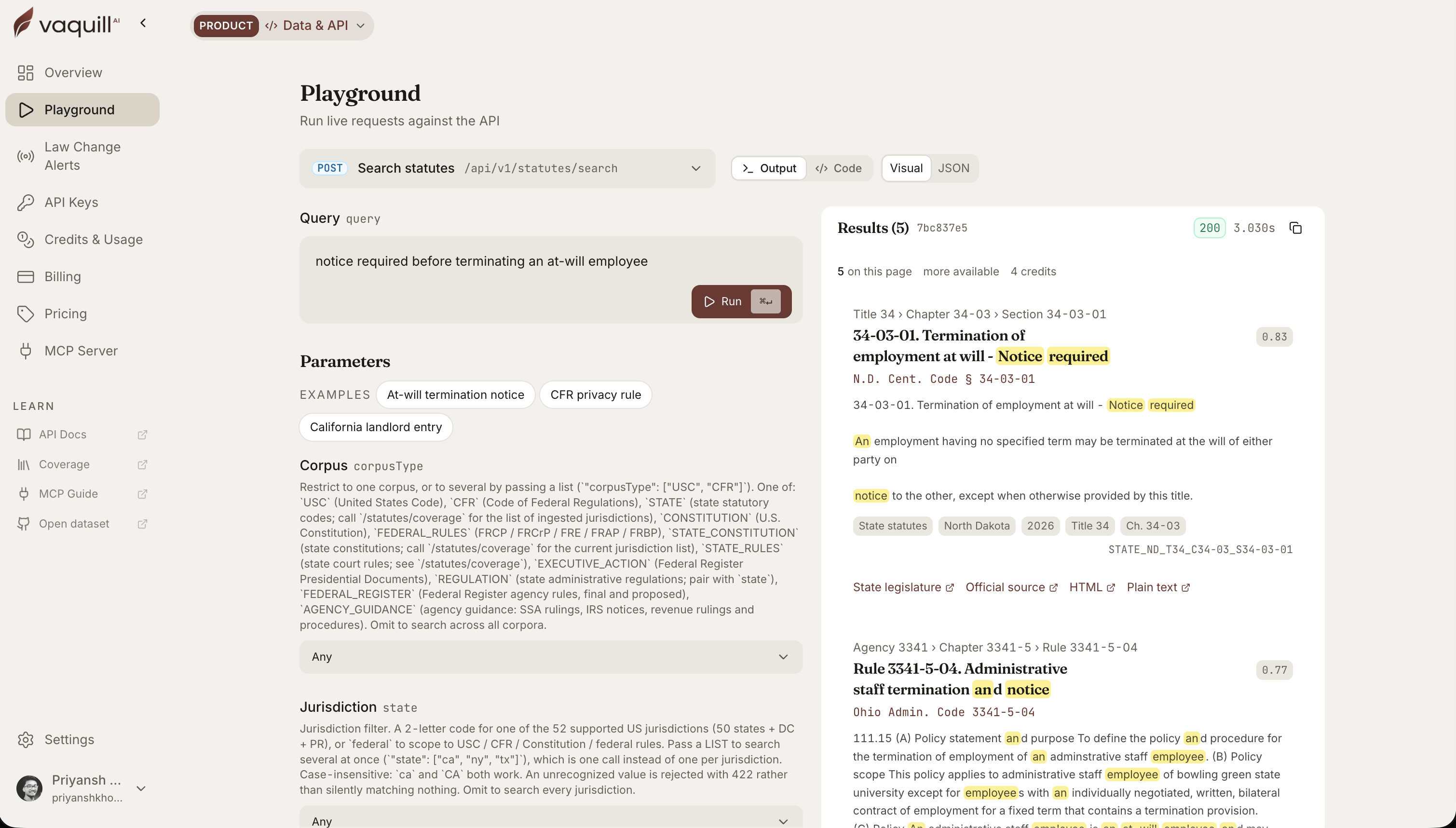 The same corpus behind this article, queried live. Every result carries its citation and a link to the official source.
Picture the grid. Rows are your provider records (ER, orthopedist, physical therapy, imaging center, billing). Columns are the fields you need on every one of them:
- Treatment dates
- Provider name and specialty
- Diagnosis / ICD codes
- Procedures performed
- Billed amount
- Paid amount (where present)
Instead of opening 30 PDFs and copying the same six fields out of each, you get one table. Scan a column to total the billed specials. Scan a row to see one provider's full involvement.
Spot the record where a diagnosis first appears, or where billing does not match treatment. This is the unglamorous core of PI record work, and a matrix view does it in minutes.
Pair the matrix with Chronology Builder and you have the two halves of the demand package: the grid gives you the damages math, the chronology gives you the narrative arc.
That combination, extraction across records plus an auto-built timeline, is the thing single-document chat cannot do.
For related vendor / pricing / buyer-guide coverage, see 7 Ways AI Helps Personal Injury Lawyers Win Cases Faster and Best AI Software for Plaintiff Law Firms in 2026 (Suite vs Point Tools).
The personal injury AI tools, compared (2026)
The market sorts into three groups. PI specialists are built around the records-to-demand pipeline. Broad legal-AI suites cover research and drafting across practice areas. Intake tools answer the phone and qualify leads. Most firms end up with one specialist plus a research tool, or one suite that does both.
Pricing is the hard part to pin down. Most PI vendors quote by case or by demand and publish nothing public, so the numbers below are labeled by source and date. Treat per-case figures as ranges, not stickers.
| Tool | Category | What it does best | Pricing (sourced) | Best for |
|---|---|---|---|---|
| EvenUp | PI specialist | Demand drafting, medical chronologies (MedChrons), intake-to-trial workflow | Per-case, not public; reported ~$200 to $500/case (ProPlaintiff breakdown, 2026). Raised $150M Series E at $2B (Fortune via Yahoo Finance, 2026) | High-volume firms standardizing demands |
| Supio | PI specialist | Medical chronologies, case economics, cross-case analysis, mass torts | Not public; vendor claims "$500 to 1,000 saved per case" (supio.com, accessed June 2026) | Litigation-heavy and mass-tort firms |
| Eve | PI specialist | Full lifecycle intake through discovery, medical summarization | Not public (eve.legal, accessed June 2026) | Firms wanting one platform end to end |
| Tavrn | PI specialist | Medical retrieval, chronology, demand letters, intake | $299.99/month for 20 requests (Tavrn pricing via Tavrn blog, accessed June 2026) | Smaller firms wanting a published seat price |
| DigitalOwl | Record review | NLP medical record analysis for causation, damages, liability | Not public | Firms whose bottleneck is purely records |
| CoCounsel | Broad suite | Document analysis, timelines, drafting, Westlaw-linked research | Not public (Thomson Reuters sales) | Firms already in the Westlaw ecosystem |
| Harvey / Legora | Broad suite | Cross-practice research and drafting | Per-seat, enterprise, not public | Multi-practice firms, not PI-only |
| Vaquill AI | Broad suite | Grounded case-law research, Document Matrix, Chronology Builder, drafting | Self-serve, solo and small-firm tiers (pricing) | Solos and 2-to-15-lawyer firms wanting research plus records-to-demand |
A few honest notes on the table. EvenUp and Supio are the most established PI specialists and the ones a high-volume firm will hear about first. Their per-case model can be a fit when you want demands standardized at scale, and it can get expensive if your case mix is light. Tavrn is one of the few that publishes a flat seat price. DigitalOwl is narrower, strong if records analysis is your only gap.
The broad suites (Harvey, CoCounsel, Vaquill AI) trade PI-specific demand templates for research you can verify and a workspace that covers more than one practice area. The case for a suite is consolidation: one tool instead of a demand generator plus a research subscription plus a record-chat tool.
The case economics, in plain numbers
The pitch for every tool on that list is the same: hours back per file. A moderate case is 15 to 30 hours of records, chronology, and drafting (practitioner estimate, not a vendor stat). At a paralegal cost of $40 to $60 an hour, that is real money per file, and it scales with caseload.
Supio publishes a "$500 to 1,000 saved per case" claim (supio.com, accessed June 2026); treat vendor savings figures as marketing until you run your own before-and-after on five real files. The honest version: AI does not value your case or replace your judgment. It cuts the reading time so a solo can carry more files without hiring, and the math only works if you actually verify the output instead of forwarding it.
How to adopt PI AI without getting burned
Most firms that bounce off AI tried to boil the ocean. The adoption path that sticks is narrow and staged.
- Start with your single biggest bottleneck. For most plaintiff firms that is medical record review or demand drafting. Buy for that one job, not for a feature list.
- Run a paid pilot on real, closed files. Use cases you already know the outcome of, so you can judge accuracy against ground truth. Two weeks, five files.
- Vet data handling before you upload a record. Ask where the data lives, whether it trains a model, and how tenants are isolated. PI files are full of medical and personal data, so this is a HIPAA-adjacent procurement question. (See where your legal AI data actually goes.)
- Write a verification rule and make it non-optional. Every citation and every extracted figure gets checked against the source before it ships. Put it in your file-closing checklist.
- Measure time-per-file, then expand. Once one job is faster and the output holds up, add the next stage. Chain intake, extraction, chronology, and drafting only after each link works on its own.
The firms that get value treat the tool as a fast first-drafter under supervision. The firms that get burned treat its output as finished work.
The rule that keeps you out of a sanctions order
A PI case is the cautionary tale every lawyer should know by name. In June 2023, Judge P. Kevin Castel of the Southern District of New York sanctioned two lawyers $5,000 in Mata v. Avianca, Inc. (1:22-cv-01461, S.D.N.Y.), a straightforward personal injury claim.
Their brief cited six cases that did not exist. ChatGPT had invented all of them. When opposing counsel flagged the citations, one lawyer went back to the chatbot, asked if the cases were real, and submitted its reassurance to the court. The court found subjective bad faith under Rule 11.
The lesson is not "do not use AI." It is "know the difference between a tool that retrieves and a tool that generates."
A general chatbot predicts plausible-sounding text, which is why it produces citations that look perfect and do not exist. Grounded research is different in kind: it retrieves real opinions from a corpus and cites them, so you can open the case and read it.
A workbench-style legal research view runs retrieval over 8M-plus US federal and state opinions, and every answer links to the source.
That still does not let you skip verification. It just makes verification fast instead of futile.
The full anatomy of how these fabrications happen, and the verification checklist that catches them, is in our piece on AI hallucinations and legal research sanctions.
What the ethics rules require
ABA Formal Opinion 512 (July 2024) put numbers on the duties most lawyers already sensed. It walks through how generative AI touches competence, confidentiality, communication, candor to the tribunal, supervision, and fees.
Two pieces matter most for PI work:
- Verify the output. The opinion is explicit that lawyers should not rely on AI output without independent review. Translate that to a hard rule: every citation gets confirmed before it reaches a demand letter, a mediation brief, or a filing. Open the case. Read the holding. Confirm the quote is a quote and not a paraphrase the model dressed up in quotation marks.
- Protect client confidences. PI files are dense with medical and personal information. Before you upload a record set, know where the data goes, whether it trains a model, and how it is isolated. That is a procurement question, not an afterthought. (For our own posture: US data residency, tenant isolation, contractual no-training. See security and where your legal AI data actually goes.)
The duties are not exotic. They are the existing rules applied to a new tool.
The firms that get burned are the ones that treat AI output as finished work instead of a draft to check. For a fuller breakdown of the duties by rule, see our notes on AI ethics for lawyers.
A realistic workflow, intake to demand
Here is how the pieces fit on an actual file, without the hype.
- Intake and SOL check. Screen for liability and run a research query on the statute of limitations for the claim type and state. SOLs vary widely by state and claim, and government-entity notice deadlines are short, so treat this as a verification step, not a memory test. Confirm against the current code before you rely on it.
- Records in. Upload everything from every provider into one matter. Ask questions across the full set, with answers citing the page.
- Extract the grid. Run Document Matrix to pull treatment dates, providers, diagnoses, and billed amounts across all records into one table. Total your specials from a column.
- Build the chronology. Chronology Builder assembles the dated timeline. You review and fix, not transcribe.
- Research the valuation. Use grounded legal research to find comparable appellate opinions and reported outcomes in your jurisdiction, with openable citations.
- Draft the demand. AI drafting grounded in the matter produces a first draft: narrative, chronology, itemized specials, supporting case law. You verify every citation, then edit for strategy.
Chained as a workflow, steps 2 through 6 run as one pipeline instead of six disconnected tasks.
The hours saved are real, but the output is a first draft you are responsible for, not a finished product you can forward unread.
Where a suite fits among the options
PI has a crowded vendor map. Dedicated demand-letter generators, document-intelligence tools, and case-management platforms with AI bolted on all solve slices of this. They are real options and worth evaluating against your actual caseload.
The suite angle is consolidation. Instead of a per-case demand generator plus a separate research subscription plus a third tool for record chat, you get grounded case-law research, Document Matrix, Chronology Builder, drafting, and a statutes API in one place, priced for solos and 2-to-15-lawyer firms rather than at AmLaw scale.
The real peers are the broad legal-AI suites (Harvey, Legora, CoCounsel are the reported comparables), not the verdict databases. If your bottleneck is records-to-demand and you also want research you can verify, that combination is the case for it.
If you only need demand letters and nothing else, a single-purpose tool may be enough; evaluate honestly against what you actually do.
FAQ
What is personal injury AI?
Personal injury AI is software that handles the document-heavy parts of a plaintiff case: reading medical records, building the treatment chronology, drafting the demand letter, and grounding case valuation in real court opinions. The useful versions extract the same fields across dozens of records into one grid and cite back to the source page, so you verify against the record rather than trust a summary.
What is the best AI for personal injury firms?
There is no single best, it depends on your bottleneck. EvenUp and Supio are the most established PI specialists for high-volume demand work. Tavrn publishes a flat seat price ($299.99/month for 20 requests, per Tavrn, June 2026). DigitalOwl is strong if records analysis is your only gap. If you want research you can verify plus records-to-demand in one workspace at solo and small-firm pricing, a broad suite like Vaquill AI fits.
How much does personal injury AI cost?
Most PI specialists price per case or per demand and do not publish public rates. Reported per-case figures land around $200 to $500 (ProPlaintiff EvenUp breakdown, 2026), with high-volume contracts going higher. Tavrn lists $299.99/month for 20 requests. Broad suites tend to use per-seat or self-serve pricing. Ask every vendor for the all-in number on your actual case volume, because add-ons move the price.
Can AI write a personal injury demand letter?
Yes, AI can produce a structured first draft: a liability narrative, a provider-by-provider chronology, itemized specials pulled from the bills, and case law for the valuation. It cannot finish the letter for you. You edit for tone and strategy, and you verify every citation and figure against the source before it goes to an adjuster. See the demand-letter how-to.
Is it ethical for lawyers to use AI in personal injury cases?
Yes, with supervision. ABA Formal Opinion 512 (July 2024) applies existing duties (competence, confidentiality, candor) to generative AI and requires independent review of output. The duty that gets firms sanctioned is verification: in Mata v. Avianca (1:22-cv-01461, S.D.N.Y., June 2023) lawyers filed six AI-fabricated citations and drew a $5,000 sanction. Check every cite before it ships.
Does personal injury AI hallucinate fake cases?
General chatbots do, because they generate plausible text rather than retrieve real documents. Grounded research is different: it retrieves opinions from a real corpus and links each one, so you can open and read it. Even then, verify, because the duty is on you, not the tool. More in AI hallucinations and legal research sanctions.
Is personal injury AI HIPAA compliant?
It depends on the vendor, not on AI as a category. PI files are full of protected health information, so before you upload a record set, confirm where the data lives, whether it trains a model, whether the vendor will sign a business associate agreement, and how tenants are isolated. Treat it as a procurement step. See where your legal AI data actually goes and our security posture.
Will AI replace personal injury paralegals?
No. It compresses the reading so a smaller team carries more files, but every output is a first draft a human is responsible for. AI does not value a case, exercise judgment, or carry the verification duty. The realistic effect is more files per person, not fewer people, and only if the firm actually checks the work.
For the suite-vs-point-tools buyer view, see best AI software for plaintiff law firms.
New legal AI guides, weekly.
Further Reading
Legal AI Tools for Solo Practitioners: 7 Picks That Fit a One-Person Firm
Read post7 Ways AI Helps Personal Injury Lawyers Win Cases Faster
Read postAI for Family Law: How Solo and Small-Firm Family Lawyers Use It
Read postAI for Criminal Defense: Research, Timelines, Evidence Review
Read postLegal AI Suite Intake-to-Filing Workflow: A Day in the Matter
Read postAI for Family Law Firms: A Workflow Playbook for Intake, Discovery, Filings
Read post
Co-Founder & CEO · Attorney
Arshita leads product and strategy at Vaquill, building the legal AI suite that solo, small-firm, and in-house US lawyers use to run a matter end to end.