Sometime in your first year of practice, a senior partner probably told you to "just use Lexis" or "just use Westlaw," and you nodded like that was a budget decision rather than a habit they inherited. Then you went solo, or joined a four-person shop, and the renewal quote landed in your inbox with a number that made you read it twice.
That is the moment most lawyers actually confront the Fastcase vs Lexis question. And almost everyone frames it wrong. They line up the two products feature by feature, citator against citator, AI assistant against AI assistant, and try to decide which one is "better."
That comparison is a trap, because it ignores the single most important variable in the entire decision: who is paying, and how much they already paid without realizing it.
Short answer: Fastcase (now vLex Fastcase, owned by Clio) is free for roughly 1.1 million U.S. lawyers through their bar association, and about $65/user/month standalone (Lawyerist, 2026). LexisNexis publishes no AI price; reported solo figures land near $275 to $525/month with the Lexis+ AI add-on. So for most solos and small firms, the honest call is to run free Fastcase as the primary-law baseline and pay for Lexis only when you can name a specific gap.
TL;DR
- The real axis is acquisition cost, not features. Roughly 1.1 million U.S. lawyers already get vLex Fastcase free through their bar association. For them, the comparison is "a tool I already own" versus "a premium tool quoted opaquely by a sales rep."
- Fastcase is the sunk-cost baseline. Standalone it starts around $65/user/month (Lawyerist Fastcase review, 2026; Capterra lists the same $65 entry), but most lawyers never pay that because every U.S. state bar provides free access to at least one low-cost research service.
- Lexis is the opaque-premium pole. There is no published AI pricing. Reported solo figures land around $175 to $400/month for Lexis+, plus a reported $50 to $125/user/month for the AI add-on, totaling a reported $275 to $525/month.
- The budget tool just changed owners. Clio completed its $1B acquisition of vLex/Fastcase on November 10, 2025. The "cheap" option now lives inside a practice-management giant, echoing the Casetext and Thomson Reuters consolidation.
- Neither citator removes your duty to verify. Cert from Fastcase and Shepard's from Lexis both reduce risk. Neither makes citing an overruled case safe. See Loper Bright.
- Most solos should run Fastcase as the primary-law baseline and buy Lexis only for a specific, named gap.
What does standalone Fastcase start at per user?
Part of our legal AI vendor comparison and pricing series.
The bar-benefit math nobody puts on the comparison chart
Here is the fact that should reframe the whole conversation. As of mid-2025, every U.S. state bar provides its members free access to at least one low-cost legal research service, usually vLex Fastcase or Casemaker's successor, Decisis. Duke's law library maintains the running list, and it is essentially complete coverage. The New York State Bar Association is one of more than 80 bars that bundle vLex Fastcase as a free member benefit, reaching roughly 1.1 million lawyers in total.
What that means in practice: if you are a member of the Florida Bar, you already have Fastcase. Free. The Florida Bar lists it as a member benefit, and reports the non-member equivalent value at roughly $1,140 a year. The California Lawyers Association cites a comparable value, around $995 a year.
You are not deciding whether to "buy" Fastcase. You bought it already, bundled into dues you paid whether you opened the database or not.
So when a solo practitioner asks "Fastcase vs Lexis," the honest translation is: should I keep leaning on the primary-law research tool I already own through my bar, or should I write a separate check, often several hundred dollars a month, for the premium one?
That framing changes everything. A feature gap that would justify switching products from scratch looks very different when one side of the ledger is already paid for.
The right question is not "which is better in the abstract" but "what specific thing does Lexis do that my free Fastcase access cannot, and is that thing worth a few thousand dollars a year to my particular practice?"
Is Fastcase free?
For most U.S. lawyers, yes. Fastcase (now vLex Fastcase) is free through bar-association membership, and more than 80 state, county, and specialty bars bundle it as a member benefit (NYSBA, 2026). If you do not have bar access, standalone plans start around $65/user/month (Lawyerist, 2026), with a short free trial. So in the Fastcase vs LexisNexis matchup, one side is usually already paid for through dues you owe regardless, and the other starts a fresh sales conversation with no published price.
What Fastcase actually is now (and why ownership matters)
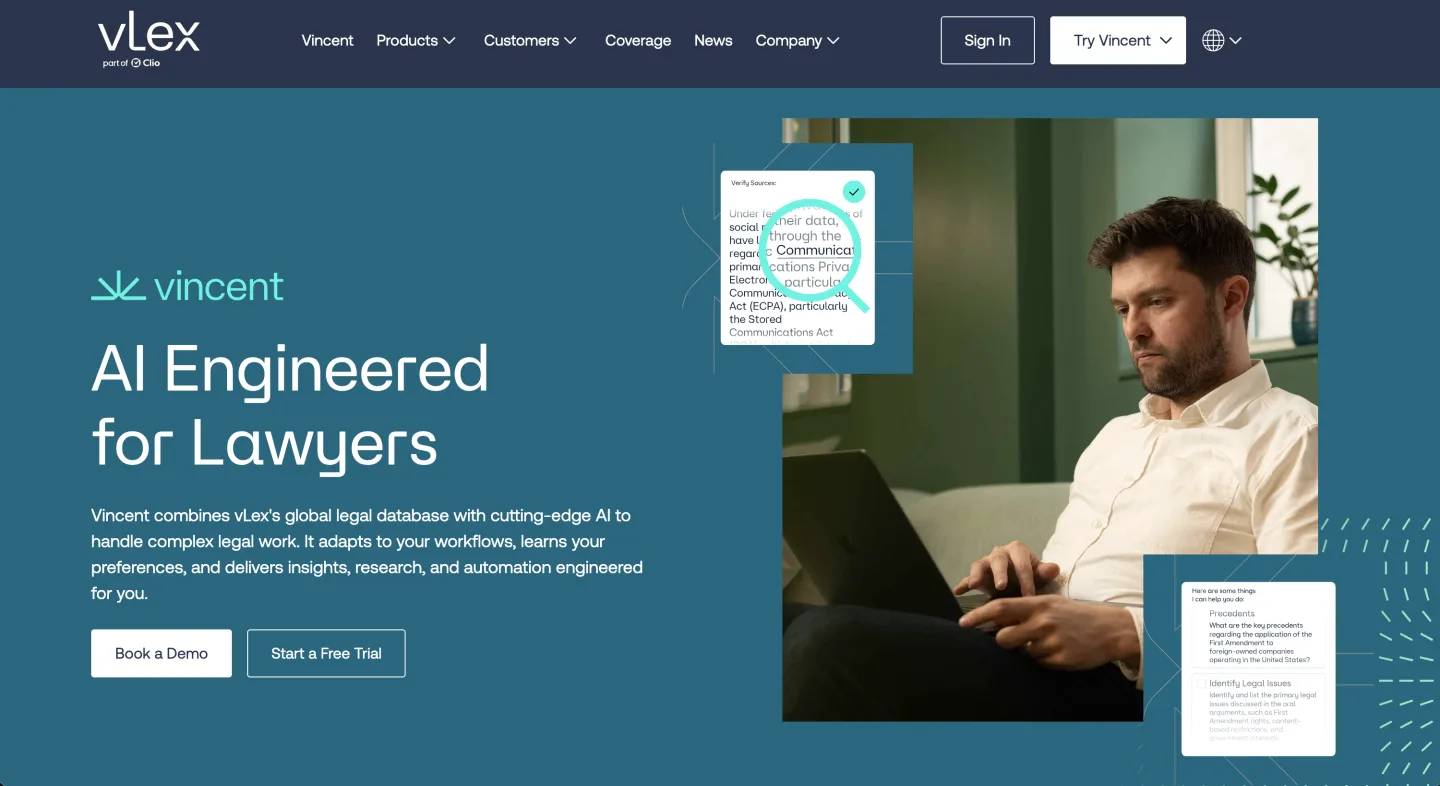
For most of its life, Fastcase was the scrappy bar-benefit alternative: solid primary-law coverage, a clean interface, and a price that was usually zero because your bar paid for it. After the vLex merger it picked up a much deeper international and secondary-source library, plus the AI features vLex has been pushing.
Then, on November 10, 2025, Clio closed its $1 billion acquisition of vLex, backed by a $500 million Series G that valued Clio at $5 billion (ABA Journal, Nov 2025). Read that again, because it matters more than any feature spec.
The budget pole of this comparison is now owned by the company that already runs the practice-management software, billing, and client intake for a huge slice of the solo and small-firm market.
If you have lived through legal tech for a few years, you have seen this movie. Thomson Reuters bought Casetext for $650 million in 2023. Casetext, the affordable AI-research upstart, was shut down as a standalone product in April 2025, its CoCounsel AI folded into Westlaw. The independent budget option became a feature of the premium incumbent.
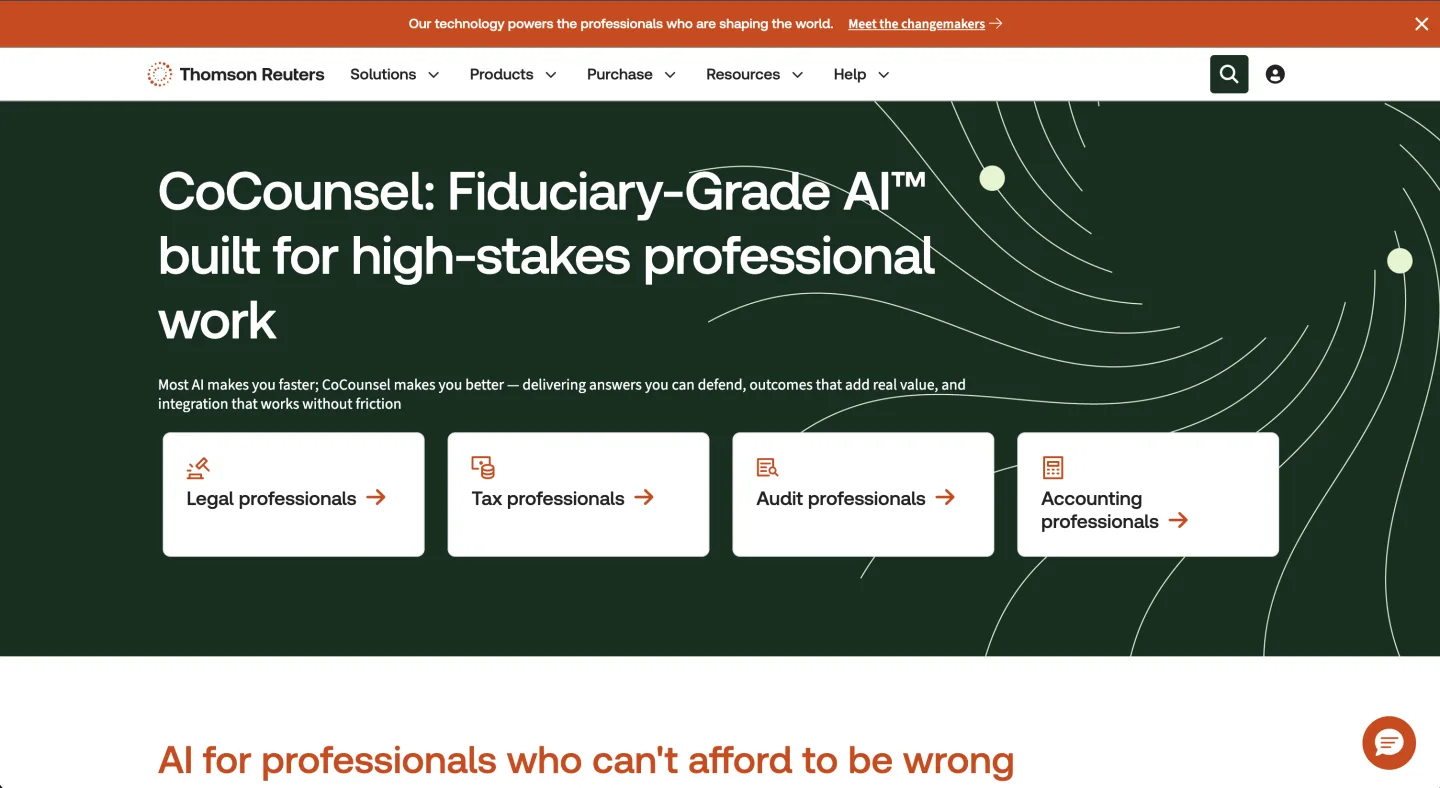
I am not predicting Clio kills Fastcase. The incentives are different; Clio wants Fastcase as a sticky add-on to its ecosystem, not as a sacrifice to a flagship.
But anyone telling you "buy the cheap one, it will stay cheap and independent forever" is ignoring the most consistent pattern in this industry. Consolidation has not historically lowered prices. It has bundled them.
For related vendor / pricing / buyer-guide coverage, see Is LexisNexis Worth It in 2026, or Are There Better Alternatives? and Best Westlaw Alternatives for Solo & Small Firms (2026).
What Lexis actually is (and why the price is a black box)

Lexis is the premium pole, and the defining feature of the premium pole in 2026 is that you cannot find out what it costs without talking to someone whose job is to make you pay more.
There is no published pricing for Lexis+ AI. Everything routes through sales. The reported figures that circulate, and I stress reported, put a solo Lexis+ base subscription somewhere around $175 to $400/month, with the Lexis+ AI layer adding a reported $50 to $125 per user per month, for a combined reported $275 to $525/month.
Your number depends on your jurisdiction, your headcount, your secondary-source needs, and frankly how hard your sales rep negotiates.
What are you actually buying at that price? Three things that Fastcase genuinely struggles to match:
- Depth of secondary sources. Treatises, practice guides, the editorial apparatus that lets you walk into an unfamiliar area of law and get oriented fast. This is the strongest argument for premium, and it is a real one.
- Shepard's. A mature, heavily-resourced citator with decades of editorial treatment behind the negative-treatment flags.
- Brand-name comfort. Worth less than people think, but not zero, especially when opposing counsel or a partner expects to see it.
For the deeper Lexis-versus-Westlaw question on the premium side, and where an AI-native suite fits against both, the Lexis AI vs Westlaw AI breakdown goes further than I will here. This piece is about the budget-versus-premium axis specifically.
The "premium equals safe" myth
The most expensive misconception in this whole comparison is that paying premium money buys you safety. It does not. Neither Fastcase's Cert citator nor Lexis's Shepard's removes your professional duty to verify what you cite.
Consider the most concrete possible example. In Loper Bright Enterprises v. Raimondo, 603 U.S. 369 (2024), the Supreme Court overruled Chevron U.S.A. Inc. v. Natural Resources Defense Council, 467 U.S. 837 (1984), discarding the deference framework that had governed agency-interpretation cases for forty years.
The arbitrary-and-capricious standard at 5 U.S.C. 706 is still the text, but the doctrine layered on top of it shifted fundamentally.
The Mata v. Avianca sanctions in 2023, where lawyers filed ChatGPT-hallucinated cases, were the loud version of the same lesson, but the quiet version, citing a case that was good law last year and is dead now, is far more common and just as sanctionable.
So when you weigh Fastcase's Cert against Lexis's Shepard's, do not treat either as insurance. Treat them as tools that make your own verification faster, and price the difference accordingly.
A more mature citator is worth paying for if your practice lives in fast-moving doctrine. It is worth much less if you mostly cite settled black-letter law in a stable area.
Who each one actually fits
After enough of these conversations, the pattern is clear. The decision sorts by practice shape, not by which marketing page is glossier.
| Dimension | Fastcase (vLex) | Lexis+ | Source |
|---|---|---|---|
| Cost for a solo | $0 via most state bars; ~$65/mo standalone | Reported $275 to $525/mo with AI add-on | Lawyerist 2026 (Fastcase); reported (Lexis) |
| Bar-association free access | Yes, ~1.1M lawyers via 80+ bars | No bar bundling | NYSBA / Duke Law Library list |
| Pricing transparency | Published ($65 entry) | Sales-rep gated, no public AI number | Capterra listing; LexisNexis (no public price) |
| Citator | Cert (algorithmic negative-treatment flags) | Shepard's (editorial, decades of treatment) | Vendor docs |
| AI layer | vLex Vincent / Fastcase AI | Lexis+ AI add-on | Vendor docs |
| Secondary sources | Lighter; vLex layer is growing | Deep, treatises and practice guides | Lawyerist 2026 |
| Owner since Nov 2025 | Clio ($1B acquisition, closed Nov 10 2025) | RELX (Lexis parent) | ABA Journal, Nov 2025 |
| Best fit | Primary-law-heavy solo or small firm | Practice spanning unfamiliar areas, doctrinally volatile work | This analysis |
Run Fastcase as your baseline if:
- You are a solo or a small firm and your bar membership already includes it. That is most of you.
- Your practice is primary-law heavy: you need to find, read, and cite cases, statutes, and regulations, and you do your own analysis.
- You are price-sensitive, which, if you are running a 2-to-15-lawyer shop, you almost certainly are. The economics of small-firm research are unforgiving; we walk through them in what firms actually pay for legal research in 2026.
Add or switch to Lexis if:
- You repeatedly hit walls that only deep secondary sources solve. You practice across unfamiliar areas and need treatises and practice guides to get oriented, not just the cases.
- You are in a doctrinally volatile practice where citator certainty on negative treatment is worth a real premium.
- You have a specific institutional reason: a client, a court, or a referral relationship that expects it.
The mistake I see most often is the inverse of frugality: a solo paying a reported $300-plus a month for Lexis+ AI to do work that Fastcase, already paid for through the bar, would have handled fine.
They bought the premium pole out of habit and brand comfort, then never used the secondary-source depth that was the only real justification for the price.
If you want the wider field, beyond just these two, the best Westlaw alternatives for solos and small firms covers six tools side by side on price, coverage, and AI. That roundup is the map. This article is one road on it: the budget-versus-premium decision, examined closely.
The 2026 wrinkle: both poles are bolting AI on top
Here is where the old comparison genuinely breaks down. Through 2025 and into 2026, both Fastcase (via vLex) and Lexis have been bolting generative AI onto research databases that were architected long before anyone thought about retrieval-augmented generation. The AI is a layer on top of a legacy stack.
That matters for two reasons. First, pricing. The Lexis AI add-on is the part with no published number, which tells you the vendor is still figuring out how to monetize a feature customers increasingly expect to be standard.
Second, trust. An AI answer is only as defensible as your ability to open the underlying source and confirm it says what the model claims. If the AI summarizes a holding but you cannot one-click to the opinion and read the paragraph yourself, you are back in Mata v. Avianca territory.
This is the seam where AI-native tools reset the math. The strongest modern US legal AI grounds its answers in a deep corpus of real court opinions, millions of federal and state decisions, rather than leaning on a legacy database with AI bolted on top.
Tools built that way ground every answer in real opinions a lawyer can open and verify, with retrieval rather than model memory doing the work. The peers there are AI-native suites like Harvey, Legora, and CoCounsel, not the legacy databases.
If you care about where the underlying data and your queries actually go, this breakdown of legal-AI data flows is worth your time before you sign anything.
A narrower but useful note for the developers and ops people reading: if you are building internal tooling and just need statutes and regulations programmatically, a US statutes API that exposes the U.S. Code, CFR, and 50-state codes directly removes a whole category of manual work. Note this is statutes and legislation only, not case-law search. For why building on retrieval rather than per-query licensing changes the cost structure, see the API call vs RAG pipeline cost comparison.
So which one
If you take one thing from this: stop asking which product is better and start asking which one you already own and what specific gap the other one fills.
For the large majority of solos and small firms, the answer is to run Fastcase as the primary-law baseline, because you already paid for it through your bar dues, and to buy Lexis only when you can name the exact gap (deep secondary sources, citator certainty in volatile doctrine, a client expectation) that justifies the reported few-hundred-dollars-a-month premium.
Buying premium out of habit, without that named gap, is just paying twice for primary-law access you already have.
And keep one eye on the structural shift. The budget pole now lives inside Clio. The premium pole still hides its AI price behind a sales call. Both are retrofitting AI onto databases built for a different era.
The lawyers who come out ahead in 2026 are the ones who treat research tooling as a deliberate cost decision, verify every citation regardless of which vendor's flag they trust, and stay open to the AI-native layer that is quietly resetting what this category should cost.
FAQ
Is Fastcase free through my bar association?
Very likely. As of mid-2025, every US state bar provides members free access to at least one low-cost research service, usually vLex Fastcase, and more than 80 bars bundle it as a member benefit (NYSBA, 2026). Duke's law library maintains the running list. The Florida Bar reports the non-member equivalent value at roughly $1,140 a year, and the California Lawyers Association cites around $995. If you have no bar access, standalone Fastcase starts around $65 per user per month (Lawyerist, 2026). So for most solos the comparison is "a tool I already own" versus a separate Lexis check.
Which is cheaper, Fastcase or Lexis?
Fastcase, by a wide margin. It is free for most lawyers through bar bundling, and starts around $65 per user per month standalone (Lawyerist, 2026; Capterra lists the same entry). Lexis has no published AI pricing; reported figures put a solo Lexis+ base subscription around $175 to $400 per month, plus a reported $50 to $125 per user for the AI add-on, for a reported combined $275 to $525 per month. Those Lexis numbers are reported, not published, because everything routes through sales.
How much does Lexis+ AI cost?
There is no public number. Lexis+ AI pricing is gated behind a sales conversation. The figures that circulate, and we stress they are reported, add roughly $50 to $125 per user per month on top of a Lexis+ base subscription, landing the combined cost in a reported $275 to $525 per month range for a solo. Your actual quote depends on jurisdiction, headcount, and negotiation.
What is the difference between Cert and Shepard's?
Cert is Fastcase's citator; Shepard's is the mature, heavily-resourced Lexis citator with decades of editorial treatment behind its negative-treatment flags. Shepard's is deeper, which matters most in fast-moving doctrine. Neither is insurance: both reduce risk but neither removes your duty to verify, as Loper Bright Enterprises v. Raimondo (2024), which overruled Chevron, made painfully clear.
Did Clio buy Fastcase?
Yes. Clio completed its $1 billion acquisition of vLex, which owns Fastcase, on November 10, 2025, backed by a $500 million Series G that reportedly valued Clio at $5 billion. The budget pole of this comparison now sits inside a practice-management giant, echoing the Casetext-into-Thomson-Reuters pattern.
Do I need both Fastcase and Lexis?
For most solos and small firms, no. The practical play is to run Fastcase as your primary-law baseline (you likely already paid for it through your bar) and add Lexis only when you can name a specific gap: deep secondary sources and treatises, citator certainty in volatile doctrine, or a client or court expectation. Buying premium out of habit means paying twice for primary-law access you already own.
Is Lexis worth the premium over free Fastcase?
Only for a named reason. Lexis genuinely beats Fastcase on depth of secondary sources, the maturity of Shepard's, and brand comfort. If your practice spans unfamiliar areas where treatises orient you fast, or lives in doctrinally volatile work, that depth can justify the cost. If you mostly cite settled black-letter law, the free Fastcase baseline usually covers it. A focused AI-native option like Vaquill AI offers self-serve, in-app research grounded in real opinions.
Fastcase vs LexisNexis: which is better for a solo or small firm?
For most solos and small firms, Fastcase wins on cost and Lexis wins on depth. Fastcase covers primary law (cases, statutes, regulations) well and is usually free through your bar, while LexisNexis adds deeper secondary sources, the Shepard's citator, and a heavier AI layer at a reported $275 to $525 per month. Pick Fastcase as your default and add Lexis only when a specific need (treatises, citator certainty in volatile doctrine, a client expectation) justifies the second check.
Who owns Fastcase now?
Clio. It closed its $1 billion acquisition of vLex, which owns Fastcase, on November 10, 2025 (ABA Journal, Nov 2025). That puts the budget research tool inside the same company that runs practice management and billing for much of the solo and small-firm market, so expect tighter bundling rather than a standalone price cut.
New legal AI guides, weekly.
Further Reading
Harvey AI Pricing 2026: Per-Seat Cost and the Renewal Increase
Read postLexis+ AI Pricing 2026: Per-Seat Costs, Hidden Add-Ons, Cheaper Suite Alternatives
Read postHow Much Does Westlaw Cost in 2026? Solo, Small-Firm, Westlaw Plus Pricing
Read postTop Legal Research Tools for Solo Family Law Attorneys
Read postHarvey AI Pricing: $1,200-$2,000/Seat vs Legora & CoCounsel
Read postLexis+ AI vs Westlaw AI 2026: Pricing + Which Hallucinates Less
Read post
Co-Founder & CEO · Attorney
Arshita leads product and strategy at Vaquill, building the legal AI suite that solo, small-firm, and in-house US lawyers use to run a matter end to end.