
Part of the complete guide to Legal AI for In-House Counsel.
Short answer: legal AI for media and entertainment in-house counsel is worth buying when it handles copyright clearance research, SAG-AFTRA and WGA aligned talent templates, and state right of publicity (California, New York, Tennessee), not just generic contract speed. No single 2026 product covers all of it, so most media legal teams run a research vendor plus a CLM plus a generalist suite. The six buyer criteria and the vendor map are below.
A deputy GC at a mid-sized streaming company described her last quarter this way: 240 talent agreements out the door, 17 sync licenses under negotiation, 4 cease-and-desists for a YouTube channel deepfaking one of her platform's voice talent, and a fifty-page memo for the CEO on whether the production arm could use a generative video model for background plates without triggering the SAG-AFTRA AI rider.
Department: 9 lawyers. Outside counsel spend already past plan in April.
That is the shape of media and entertainment in-house work in 2026. Copyright sits under almost everything.
AI sits on both sides: a litigation risk the company gets sued over, and a production tool the company is being asked to govern. The AI buy is not optional, but the criteria are not the same ones a fintech or healthcare GC is using.
Thesis in one sentence: a media in-house legal AI tool is evaluated on copyright depth, union-aware templates, and rights-tracking ergonomics, not on the generic criteria (commercial contracts speed, employment Q&A, board memos) that drive every other GC buyer guide.
A vendor that wins on the generic criteria and loses on the media-specific ones is the wrong buy.
TL;DR
- Media and entertainment in-house counsel are absorbing AI from two directions at once: as a litigation exposure (Andersen, NYT v. OpenAI, Getty v. Stability) and as a production tool governed by the 2023 SAG-AFTRA and WGA MBAs. A 2026 legal AI buy that does not handle both is the wrong buy.
- Five workstreams absorb the hours: talent and creator agreements, music and audiovisual licensing, copyright clearance and chain of title, AI training data and output rights, distribution and platform deals.
- Six evaluation criteria separate a media-fit tool from a generic one: copyright clearance research depth, music and sync licensing tracking, talent agreement templates aligned to SAG-AFTRA and WGA, AI training and output indemnification analysis, distribution and platform deal templates, state right of publicity research (especially California and New York).
- The 2026 vendor map: Westlaw Precision AI for copyright depth, Bloomberg Law for transactional and regulatory, specialty clearance tools (Disco, Veritone, Mira) for rights and music workflows, CLM (Ironclad, LinkSquares) for talent volume, generalist suites (Harvey, GC AI) for the rest of the GC office. No single product covers everything yet.
How many 2026 products cover all six media evaluation criteria?
Part of our in-house counsel guide series.
Why media in-house faces this workload
Three structural facts make media and entertainment law departments different from the in-house norm.
Copyright is not a peripheral compliance topic; it is the asset register. Every show, every song, every voiceover, every piece of stock footage is a license trail. A nine-lawyer streaming-company department can run 1,500 to 3,000 licensing or talent transactions a year, plus continuous clearance.
Closer to a busy M&A boutique's contract volume than a typical in-house caseload, and mostly bespoke, not template paper.
The AI question is bidirectional. Most law departments think about AI as something they use. Media departments think about AI as something the company gets sued over (training data, output similarity, voice cloning) and as something production wants to deploy (background generation, dubbing, dialogue replacement, marketing copy).
The same GC reviewing the SAG-AFTRA AI rider on Monday is reviewing a takedown for a deepfaked actor on Tuesday.
Third, the union layer is real and prescriptive. The 2023 SAG-AFTRA TV/Theatrical MBA, ratified December 5, 2023 after a 118-day strike, and the 2023 WGA MBA, ratified October 9, 2023 after a 148-day strike, both contain detailed AI provisions.
These are not aspirational. They are bargained contract terms that govern when a "digital replica" can be created, how training on writer or actor work is treated, and what consent and compensation look like. A generic AI policy that ignores those provisions is not survivable inside a unionized production environment.
The practical triage inside a department this shape: routine talent paper and standard sync requests run through the in-house team with AI-assisted redline; clearance memos and chain-of-title sign-off for greenlit projects stay in-house but pull in a specialist for documentary footage and music samples; fair use opinions for any AI-assisted production element go to outside counsel almost every time, because the E&O insurer wants a name on the letterhead.
The pain point everyone names first is not the prestige work; it is the long tail of platform-deal MFN comparison across a fifty-deal portfolio, which no one has time for and which is exactly the workstream a workbench tool earns its seat license on.
The federal and state map
The legal architecture media in-house counsel are working against is broader than any single statute. The shortlist:
Copyright Act. Title 17, U.S.C. § 101 et seq. Section 106 is the bundle of exclusive rights. Section 107 is fair use, the doctrine every major AI training case is being litigated under.
Section 201 governs initial ownership and work-for-hire, which is the doctrinal hook on whether AI-assisted output is copyrightable at all. The Copyright Office's March 2023 registration guidance and Part 2 of its Copyright and AI Report (January 2025) say what most counsel already assumed: human authorship required, AI-generated material disclaimed.
DMCA. 17 U.S.C. § 512 runs most platform-side enforcement. § 1201 is the anticircumvention layer that matters anywhere a deepfake tool is being deployed against DRM-protected content. At a major streamer, takedown notice volume runs to the tens of thousands a year.
Visual Artists Rights Act (VARA). 17 U.S.C. § 106A. Narrower than it looks (limited to works of visual art), but it surfaces in art licensing and museum deals and most generalist AI tools miss it.
The AI training litigation. Three cases anchor the GC's risk map.
- Andersen v. Stability AI Ltd., No. 3:23-cv-00201 (N.D. Cal.), filed January 2023 by Sarah Andersen, Kelly McKernan, and Karla Ortiz. Judge Orrick's October 30, 2023 order dismissed most claims with leave to amend; later orders kept the direct copyright infringement claim against Stability alive. Live as of mid-2026.
- The New York Times Co. v. Microsoft Corp. and OpenAI, Inc., No. 1:23-cv-11195 (S.D.N.Y.), filed December 27, 2023. The complaint pled verbatim regurgitation and named the model provider and the deployment partner together, which is the template every media plaintiff now copies.
- Getty Images (US), Inc. v. Stability AI, Inc., No. 1:23-cv-00135 (D. Del.), plus the parallel UK High Court action. The cleanest "trained on our watermarked images" record on the docket, and where counsel watch for fair use rulings that shape every other media exposure.
Right of publicity, state-by-state. California Civil Code § 3344 (living persons) and § 3344.1 (postmortem). New York Civil Rights Law §§ 50-51, substantially amended in 2024 to address digital replicas and AI-generated likenesses. Tennessee's ELVIS Act (Pub. Ch. No. 588, effective July 1, 2024) explicitly covers voice.
California went further on the talent-contract side in 2024. AB 2602 (Cal. Labor Code § 927) voids a contract provision that lets a producer create a digital replica of a performer's voice or likeness unless the use is described with specificity and the performer had legal or union representation in the bargaining. AB 1836 (Cal. Civil Code § 3344.1) bars commercial use of a deceased performer's digital replica in audiovisual work without estate consent. Both were signed September 17, 2024 and are live as of mid-2026. (AB 2602 text, AB 1836 text).
These three states drive the practical risk map because that is where most production, studios, and labels sit.
The union layer. The 2023 SAG-AFTRA Theatrical/TV MBA AI provisions define "Employment-Based Digital Replicas" and "Independently Created Digital Replicas," set consent and compensation rules, and prohibit using a synthetic performer to displace a covered performer.
The 2023 WGA MBA AI sideletter bars AI-generated material from being treated as literary or source material and prevents writer work from training AI without consent. The DGA's 2023 BA addresses AI more narrowly.
A media-fit legal AI tool has to understand all of these, not just the Copyright Act in isolation.
The five workstreams that absorb the hours
Talent and creator agreements. A modern talent or creator deal in 2026 carries AI clauses that did not exist in the 2018 form. Consent language for digital replicas, scope of training data use, residuals on AI-driven re-use, kill switches if the union renegotiates, voice and likeness carve-outs for trailers and marketing.
A nine-lawyer department signing 1,500 of these a year cannot custom draft each one. The job is template + playbook + redline review, which is exactly the shape AI handles well, if the templates are SAG-AFTRA and WGA aligned out of the box.
Here is what a media-fit redline pass looks like on a real clause type. A producer-side digital replica grant often reads like this:
"Artist hereby grants Producer the perpetual right to create and use a digital replica of Artist's voice and likeness in any media now known or hereafter devised."
A generic AI redline tool calls that broad and suggests a time limit. A media-fit tool flags the specific defect: under California AB 2602, that grant is void unless the use is described with specificity and Artist had union or legal representation in the bargaining. The one-line flag is "Add a use-specific description and a representation recital, or this digital-replica grant is unenforceable in California (Cal. Labor Code § 927)." That is the difference between a contract reviewer and an entertainment contract reviewer.
Music and audiovisual licensing. Mechanical licenses (compulsory under 17 U.S.C. § 115), sync licenses, master use licenses, PRO public performance. The MLC standardized blanket mechanical administration; sync and master use are still bespoke.
A workbench will not replace a music supervisor's relationships, but it can flag missing splits, surface controlled-composition language, and run quitclaim verification across hundreds of cues.
Copyright clearance and chain of title. The workstream that breaks generalist tools. Clearance traces every production element back to a license, assignment, or original creation; chain of title proves the producer actually owns what it claims at financing or distribution close.
Quitclaim deeds, E&O binder reviews, public domain analysis, fair use opinions for documentary footage, and the US Copyright Office Circulars that set out what the Office will and will not register. The corpus depth needed here is real, and most generalist legal AI tools do not have it.
AI training data and output rights. The workstream that did not exist in 2020. Negotiating AI vendor contracts (indemnity carve-outs are where the work is), analyzing whether training on the company's catalog is permitted under existing licenses, advising on output ownership and registrability, managing exposure when third-party AI shows up in production.
A 2026 form contract from a major model vendor includes an output indemnity, a training opt-out, and a synthetic-likeness carve-out. All three need a redline pass.
Distribution and platform deals. Streaming output deals, theatrical windowing, FAST placement, social licensing, podcast distribution. Each format has its own deal vocabulary, its own MFN exposure, and its own metadata spec. AI is useful on metadata, MFN comparison across portfolios, and playbook redline.
Six criteria for an entertainment law AI buy
If you are evaluating a tool in 2026, run every demo through this list. It is the one that separates serious vendors from ones who white-labeled a generic workbench.
- Copyright clearance research depth. Can the tool pull 17 U.S.C. § 107 analysis with reasoning that mirrors a real fair use memo (purpose, nature, amount, market effect), and can it cite the live AI training cases by docket and stage?
- Music and sync licensing tracking. Does it know the difference between a mechanical, a sync, and a master use? Can it parse a music cue sheet?
- Talent agreement templates. Are the SAG-AFTRA Article 65 and WGA Article 72 provisions baked into the playbook, with the consent and compensation triggers flagged?
- AI training and output indemnification analysis. Does the tool flag the typical carve-outs (prompt injection, user-supplied material, output that mirrors a registered work) in a vendor AI contract?
- Distribution and platform deal templates. Is there a real library for output deals, FAST distribution, and platform licensing, with MFN comparison across portfolios?
- State right of publicity research. Does it cover the actual operating states (California § 3344, New York Civil Rights Law § 51 as amended, Tennessee ELVIS Act) with current effective dates and amendment history you can check?
Notice what is not on this list. Generic ediscovery integration. Litigation hold workflow. Patent prosecution.
Those are good features for other in-house teams. They are not where a media department spends its hours.
Legal AI for media and entertainment: the five vendor categories in 2026
The honest 2026 read is that no single product covers all six criteria. The strongest media legal stacks are a combination of two or three of the following.
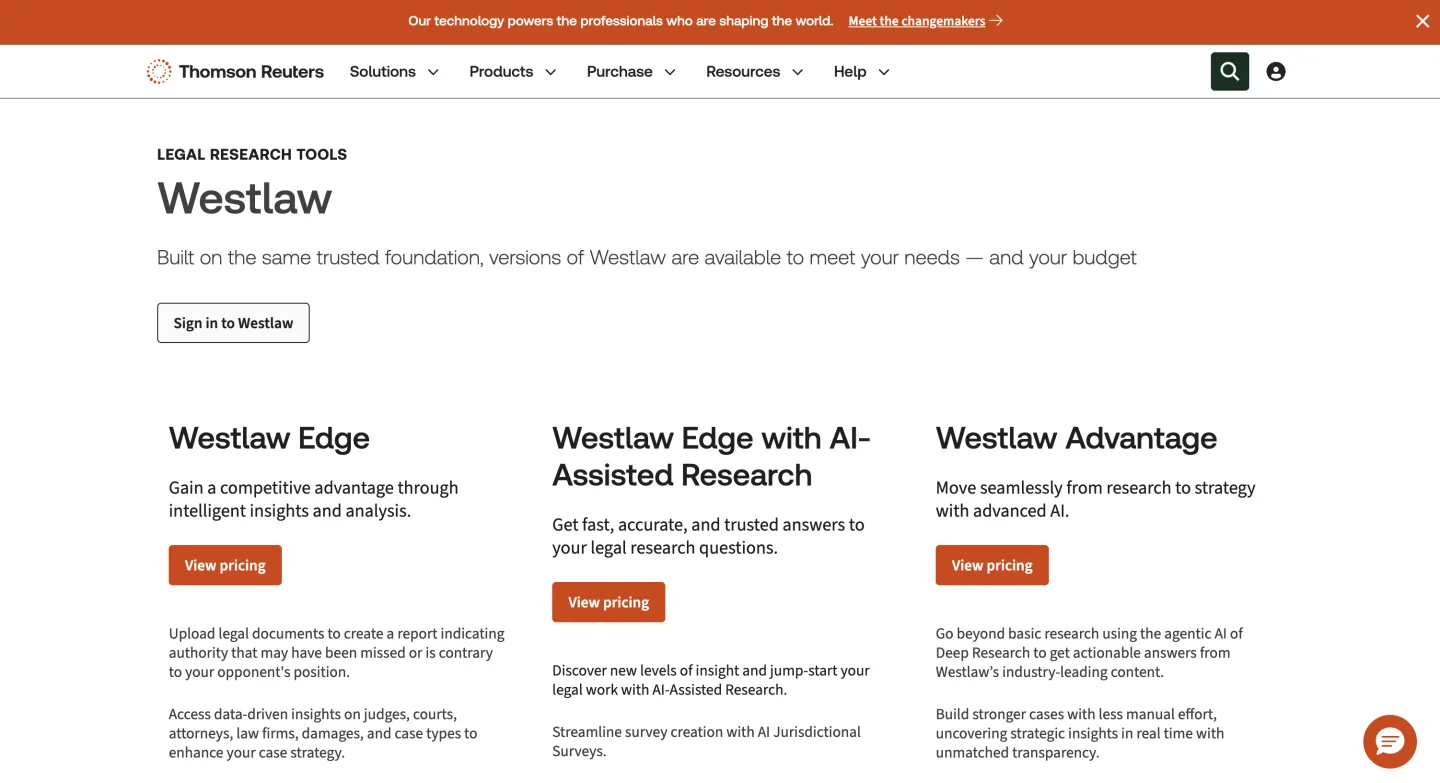
Westlaw Precision AI. Copyright corpus depth is real; Nimmer on Copyright and Patry on Copyright are bundled; the AI-assisted research has improved hard since the Casetext integration. Strong on research and memo-drafting. Weak on contracts and CLM. Fit: research and opinion letters.
Bloomberg Law. Strongest where media meets antitrust, FTC, FCC, and securities. Practical Guidance includes usable deal templates. Fit: transactional and regulatory tail.
Specialty entertainment tools. Disco, Veritone, and Mira have built clearance, rights, and music licensing workflows for studios, streamers, and labels. Not horizontal legal AI vendors; vertical workflow tools the legal team and production team share. Fit: music, clearance, rights.
CLM with talent and licensing modules. Ironclad and LinkSquares both have media-aware deployments. Volume and metadata, not legal research. If you sign 1,500 talent agreements a year, the CLM is the spine. Fit: talent and licensing volume.
Generalist legal AI suites for the rest of the GC office. Harvey, GC AI, and the other workbench plays handle employment, commercial contracts, board memos, M&A diligence. Asking a generalist suite to do copyright clearance at studio depth is the mistake.
Here is the same map as a fit table, scored against the six criteria above.
| Category | Best for | Strong on | Weak on | Access |
|---|---|---|---|---|
| Westlaw Precision AI | Research and opinion letters | Copyright corpus depth, fair use memos, live case cites | Contracts, CLM | Sales |
| Bloomberg Law | Transactional and regulatory tail | Antitrust, FTC, FCC, deal templates | Clearance, music | Sales |
| Specialty tools (Disco, Veritone, Mira) | Music, clearance, rights | Cue sheets, chain of title, rights tracking | General legal research | Sales |
| CLM (Ironclad, LinkSquares) | Talent and licensing volume | Template volume, metadata, redline at scale | Legal research, fair use | Sales |
| Generalist suites (Harvey, GC AI, Vaquill AI) | The rest of the GC office | Commercial contracts, employment, board memos | Studio-depth clearance | Self-serve or sales |
No single column scores on all six criteria, which is why the stacks are combinations.
A serious 2026 media legal department is running two or three of these in combination, not betting the budget on a single seat.
The market signal worth tracking: most studio-level legal AI RFPs we have seen in 2026 are getting split between a CLM vendor and a research vendor rather than awarded to a single workbench, and that bifurcation has been consistent enough that the "one tool for the entire media legal stack" pitch is the one to discount in any vendor conversation.
2026 priorities for AI for media in-house counsel
Four things for the next two quarters.
The AI training cases will produce material fair use rulings in the next twelve to eighteen months. Andersen, NYT v. OpenAI, and Getty are past motion-to-dismiss and into discovery and summary judgment. A ruling in any one reshapes the indemnity stance every AI vendor takes. Watch the dockets.
The SAG-AFTRA AI provisions are still tightening. Members ratified a new TV/Theatrical agreement in June 2026 that further restricts synthetic performers and digital replicas, building on the 2023 MBA rather than replacing the trajectory. The 2023 MBA was the first draft.
Each cycle is where digital replica consent, post-mortem rights, and training data carve-outs get sharper. Walk into a renewal with a clean template inventory and a defensible position on each clause, because the consent and compensation triggers in your existing talent paper move every time the union bargains.
State right of publicity keeps intensifying. Expect more states to follow Tennessee's ELVIS Act with voice-specific protections, and expect New York's amended statute to be tested in deepfake litigation. Update the operating-state exposure map quarterly.
Regulatory action against deepfakes. The DEFIANCE Act, the NO FAKES Act, and parallel state proposals are in motion. The FTC's Rule on Impersonation (16 C.F.R. Part 461, effective April 1, 2024) is already a federal hook for some non-consensual deepfake conduct. Build incident response now rather than waiting on a federal statute.
The legal AI tool is not the strategy. The operating model is the strategy.
The pattern across all four: the tool is the leverage that lets a nine-lawyer department close 1,500 talent deals a year without sending every clause to outside counsel.
Where Vaquill AI fits, honestly
Vaquill AI is a generalist legal AI suite (research, drafting, matter document management), so it sits in the last row of the table above. It is a good fit for the rest of the media GC office: commercial contracts, employment, board memos, and US case-law and statute research with checkable citations, including the right of publicity sections this post names. It is the wrong single buy for studio-depth music clearance or cue-sheet parsing, which is what the specialty tools exist for. If your stack already has a CLM for talent volume and a research vendor for opinion letters, Vaquill AI is the workbench that covers the long tail in between.
If you want to see the drafting and research surface against your own talent or licensing paper, see Vaquill AI plans and start. One honest caveat: treat any fair use opinion as a draft your E&O insurer still wants signed by a named lawyer.
Keep going in the cluster: the broader legal AI for in-house counsel pillar, the in-house contract review playbook, the AI contract review guide, the best legal AI tools for in-house counsel, and the AI governance policy template for the production-AI guardrails this work needs.
FAQ
What is the best legal AI for media and entertainment in-house counsel? There is no single best tool in 2026. Most media legal teams combine a research vendor (Westlaw Precision AI or Bloomberg Law) for copyright and fair use depth, a CLM (Ironclad or LinkSquares) for talent and licensing volume, a specialty tool (Disco, Veritone, Mira) for music and clearance, and a generalist suite (Harvey, GC AI, Vaquill AI) for the rest of the GC office. Score every demo against the six criteria above.
Can AI do copyright clearance and chain of title work? AI can speed parts of it: surfacing controlled-composition language, flagging missing splits across hundreds of cues, drafting fair use analysis, and organizing chain-of-title documents. It does not replace a clearance specialist or the named lawyer your E&O insurer wants on a fair use opinion. Treat AI output as a first pass, not the sign-off.
Does a media-fit legal AI tool need to know SAG-AFTRA and WGA terms? Yes. The 2023 SAG-AFTRA TV/Theatrical MBA and the 2023 WGA MBA both contain bargained AI provisions on digital replicas, consent, compensation, and training. A generalist tool that ignores them will redline a talent agreement without flagging the union and state-law defects that make a digital-replica grant unenforceable.
How does AI affect right of publicity in talent agreements? State law now reaches AI replicas directly. California AB 2602 voids an over-broad digital-replica grant unless the use is described with specificity and the performer had representation, AB 1836 protects deceased performers, New York amended its statute in 2024, and Tennessee's ELVIS Act covers voice. A media-fit tool checks a likeness clause against the operating state, not just generic contract logic.
What AI training lawsuits should media in-house counsel track? Three anchor the risk map: Andersen v. Stability AI (N.D. Cal.), The New York Times Co. v. Microsoft and OpenAI (S.D.N.Y.), and Getty Images v. Stability AI (D. Del., plus the UK action). All are past motion-to-dismiss as of mid-2026, and a fair use ruling in any one reshapes the indemnity stance every AI vendor takes.
Is generic legal AI good enough for an entertainment legal team? For commercial contracts, employment, and board work, yes. For copyright clearance at studio depth, music licensing, and union-aware talent paper, generic tools fall short, which is why studio-level RFPs in 2026 tend to split between a CLM vendor and a research vendor rather than going to a single workbench.
How much time can AI save a media legal department? Practitioner estimates vary and depend on volume. Outside analysis flags 5 to 20 hours of manual review on a single complex entertainment contract (Bind, February 2026), and ACC reporting cited in the same analysis put 52 percent of in-house teams already using or evaluating AI for contract review. Treat these as directional, not guarantees, and measure your own redline cycle time before and after.
New legal AI guides, weekly.
Further Reading
- Legal AI for Chief Legal Officers (CLOs) in 2026
- AI Compliance Check: CCPA, GDPR, and SOX for In-House Teams (2026)
- Rolling Out Legal AI to Your Team (Adoption Playbook)
- How to Reduce Outside Counsel Spend With AI in 2026
- How to Run a Legal AI Pilot in 30 Days (2026)
- Legal AI for In-House Counsel: The Complete 2026 Guide

Co-Founder & CEO · Attorney
Arshita leads product and strategy at Vaquill AI, the US primary law data API. As an attorney, she decides which law we carry, how each section is sourced and cited, and what legal AI and compliance teams need from the data.