The best AI tool for a procurement lawyer is the one that clears your inbound queue without a sales cycle. Your week is not one big deal. It is fifty small ones: vendor NDAs, MSAs, DPAs, and SaaS order forms, all needing a first-pass redline today, not next quarter.
So the tool that matters is the one that reads a counterparty paper against your standard positions and turns the redline around fast.
This roundup is for procurement and commercial-contract counsel: the lawyer who lives in the intake-to-signature pipeline. Not litigation. Not deep case-law research. High volume, repeatable paper, and a playbook you wish the software already knew.
TL;DR
- Match the tool to the bottleneck, not the brand. If first-pass redline is the jam, buy a playbook reviewer. If requests pile up before review, buy intake. If the post-signature mess is the problem, buy CLM. They are different products.
- Playbook depth is the whole game for procurement. A reviewer that does not enforce your fallbacks is a glorified summarizer. Time the manual playbook setup before you trust the price.
- Self-serve is rare at this end. Most playbook reviewers and every enterprise CLM are sales-led and gate pricing behind a demo. Only a handful publish numbers.
- CLM is not contract review. Ironclad and its peers manage the lifecycle (repository, approvals, e-sign, renewals). Some bolt AI review on top, but that is a six-figure platform, not a point fix.
- One honest workbench option covers the connected draft-review-matter week at a flat published price. It is not the pick if you need full CLM with approvals and signatures.
What does Vendr list as the median annual price for Ironclad?
Three deeper guides sit under this one. The best AI contract review tools, compared covers the review category. Cost-effective CLM platforms compared covers the lifecycle layer, and the in-house contract review playbook covers how to write the positions the AI enforces.
What procurement counsel actually needs
Procurement legal work has a shape, and most "legal AI" tools were built for a different one. Four jobs define the week.
- Volume. You are not reviewing one bet-the-company deal. You are clearing a queue of vendor paper where the marginal contract has to cost minutes, not hours.
- Playbooks. The same indemnity cap, the same data-processing terms, the same auto-renewal clause come up on every third agreement, and on federal paper the same FAR and DFARS clauses called out by number. The tool has to know your fallback positions and flag the deviations.
- Intake and triage. Half the pain is upstream of review: requests arriving by email and Slack with no contract attached, no context, and no priority. Sorting that is its own job.
- Turnaround speed. The business measures legal on how fast paper moves. A reviewer that is 95 percent accurate but needs a week of setup loses to one that is good enough today.
Hold those four against any demo. A tool can be excellent and still be wrong for procurement if it solves litigation research or first-draft creation instead.
How to choose: four tests that matter
Strip the feature grids down to what predicts fit for a vendor-contract desk.
- Playbook support. Can you load your own positions and fallbacks, beyond generic "risky clause" flags? Time how long the manual tagging takes. The gap between "an afternoon" and "a quarter" is the real setup cost, and it never shows up on the pricing page.
- Integration. Does it sit where the work already is: Microsoft Word for the redline, plus email, Slack, or your CLM for intake and storage? A tool that makes you copy text in and out adds friction on every contract.
- Throughput. Can one person clear a real queue, or does each contract still need heavy hand-holding? Run five back to back and watch where the minutes go.
- Security and data posture. Vendor contracts carry counterparty confidential terms. Ask where files are kept, for how long, who can read them, and whether the vendor trains on your data. Get the answer in the MSA, not a marketing FAQ.
Now the tools. Each entry names the category, an honest price (sourced or marked quote-based), what it does well, where it falls short, and who should skip it.
The best AI tools for procurement and commercial-contract lawyers
1. Ivo: best for fast, Word-native playbook review

At a glance: ~$500 per user/mo (reported; not publicly listed) · Sales-led, demo required · Best for teams reviewing vendor paper at volume.
Ivo is the lean, fast name in the playbook-review camp, and procurement queues are exactly what it was built for. It reads a counterparty contract against your playbook and proposes redlines inside Word, with a clean interface that reviewers pick up quickly.
What's good
- A genuine playbook reviewer: load your positions and fallbacks, and it flags the deviations instead of summarizing the obvious.
- Word-native redlines you can accept, reject, and send back to the vendor.
- Backed by a $55 million Series B at a valuation near $530 million, with customers including Uber and Shopify.
Where it falls short
- Onboarding leans on Ivo's team rather than a self-serve setup, so factor in ramp time.
- It is a review point tool. Intake, matters, and storage live elsewhere.
What users say: Reviewers describe a real playbook reviewer that is easy to pick up, while flagging team-led onboarding (G2, ivoai reviews).
Bottom line: Buy it if review volume is your dominant bottleneck and you have someone to run setup. Skip it if you want a self-serve trial or one place to run the whole intake-to-renewal pipeline.
2. Vaquill AI: best for the connected draft-review-matter week at a flat price
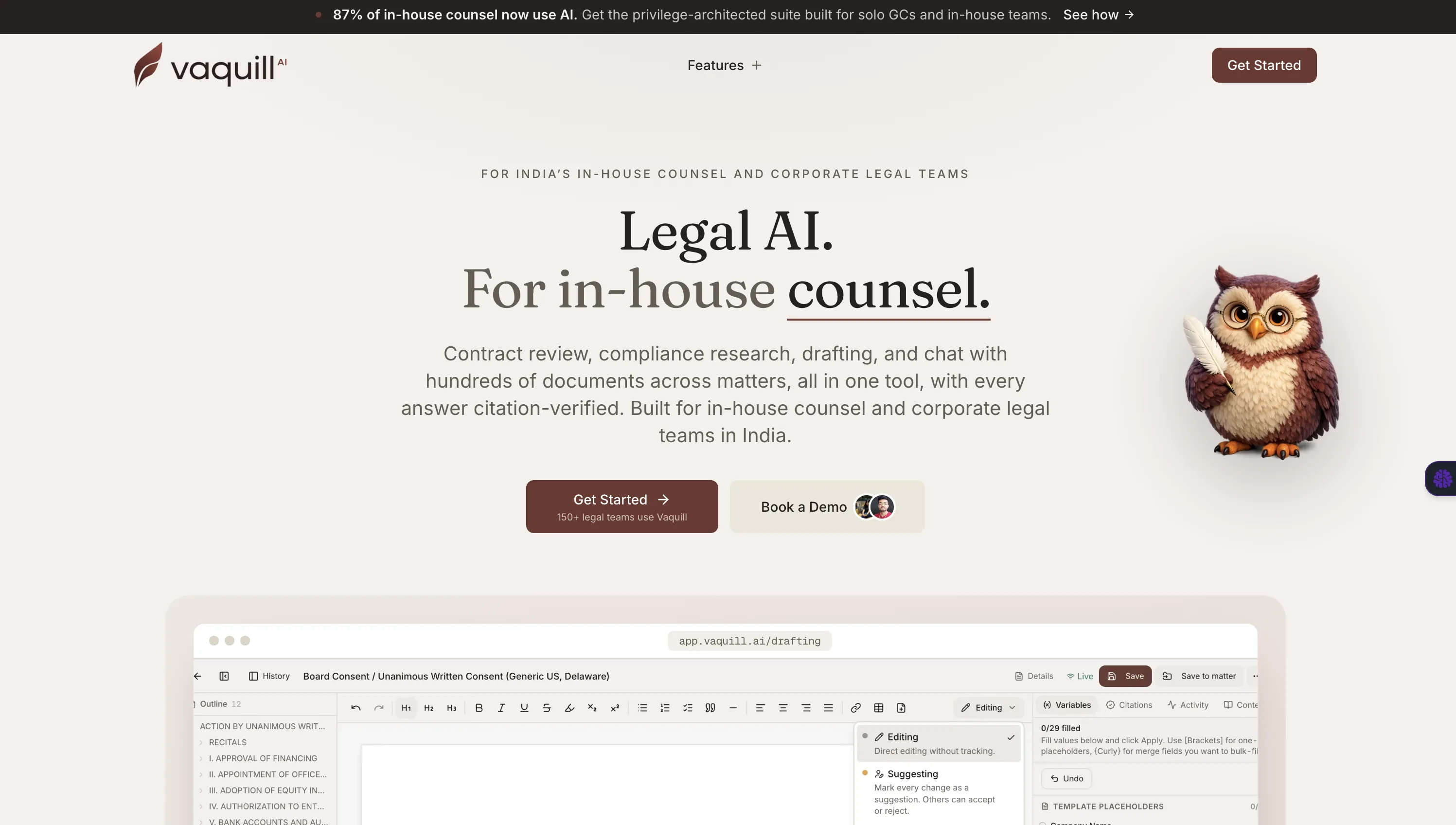
At a glance: Self-serve, published pricing (sign up to see the latest) · Self-serve, 7-day trial · Best for in-house teams that want one bill, not five.
Vaquill AI is a workbench, not a single point tool. It drafts, reviews, and redlines vendor paper in real Microsoft Word track changes. It also runs reusable playbooks and builds a document matrix across a stack of contracts. The work stays in matter context, all at one published price (vendor figures, checked June 2026).
What's good
- Playbook-driven review with Word-native redlines, each edit a discrete suggestion you accept or reject.
- A document matrix that compares the same clauses across many vendor agreements at once.
- Self-serve, published pricing, no seat minimum, a self-serve trial, and a do-not-train-on-your-data policy.
Where it falls short
- It is not a full CLM. There is no approvals engine, e-signature, or renewal-obligation tracking, so if that lifecycle is your need, a platform like Ironclad fits better.
- Lighter on deep primary-law and case-law research than the research-first tools.
When NOT to choose it: skip this one if your real problem is managing the post-signature lifecycle at scale. Approvals, signatures, renewals, and obligation tracking belong in a dedicated CLM. The same is true if you already run a mature CLM you like. It sits next to a CLM, not instead of one.
What users say: It is newer than the heavyweights, so there is little independent forum talk yet. We will not invent a verdict it has not earned.
Bottom line: Buy it if your week is the connected pipeline of draft, review, matter, and renewal at a price a small team can sign alone. Skip it if you need full CLM with approvals and signatures.
3. LegalOn: best for review skeptics who want the reasoning shown

At a glance: ~$550/mo (Individual, billed annually, reported; Teams custom) · Sales-led, demo required · Best for teams re-reading the same vendor clauses.
LegalOn has been at contract review longer than most, and its model pairs AI with attorney-authored guidance. The redlines arrive with a reasoning layer behind them. That is the part that wins over lawyers who distrust a black box on their vendor paper.
What's good
- Attorney-authored playbook guidance rather than raw model output, so the flags come with a stated why.
- A long track record at the review job specifically, with thousands of customers reported.
- Word-native redlining suited to repeat clauses like indemnity, liability caps, and data terms.
Where it falls short
- It is a review tool, not a workbench, so matters, intake, and broad drafting sit elsewhere.
- No self-serve path, and Teams pricing is custom.
What users say: We found mostly vendor testimonials rather than independent peer threads, so treat the buzz as marketing until your own pilot confirms it.
Bottom line: Buy it if your recurring pain is re-reading the same clauses and you want the reasoning visible. Skip it if you need intake and lifecycle handled in the same place.
4. Ironclad (with Jurist): best for teams that need full CLM, with AI review on top
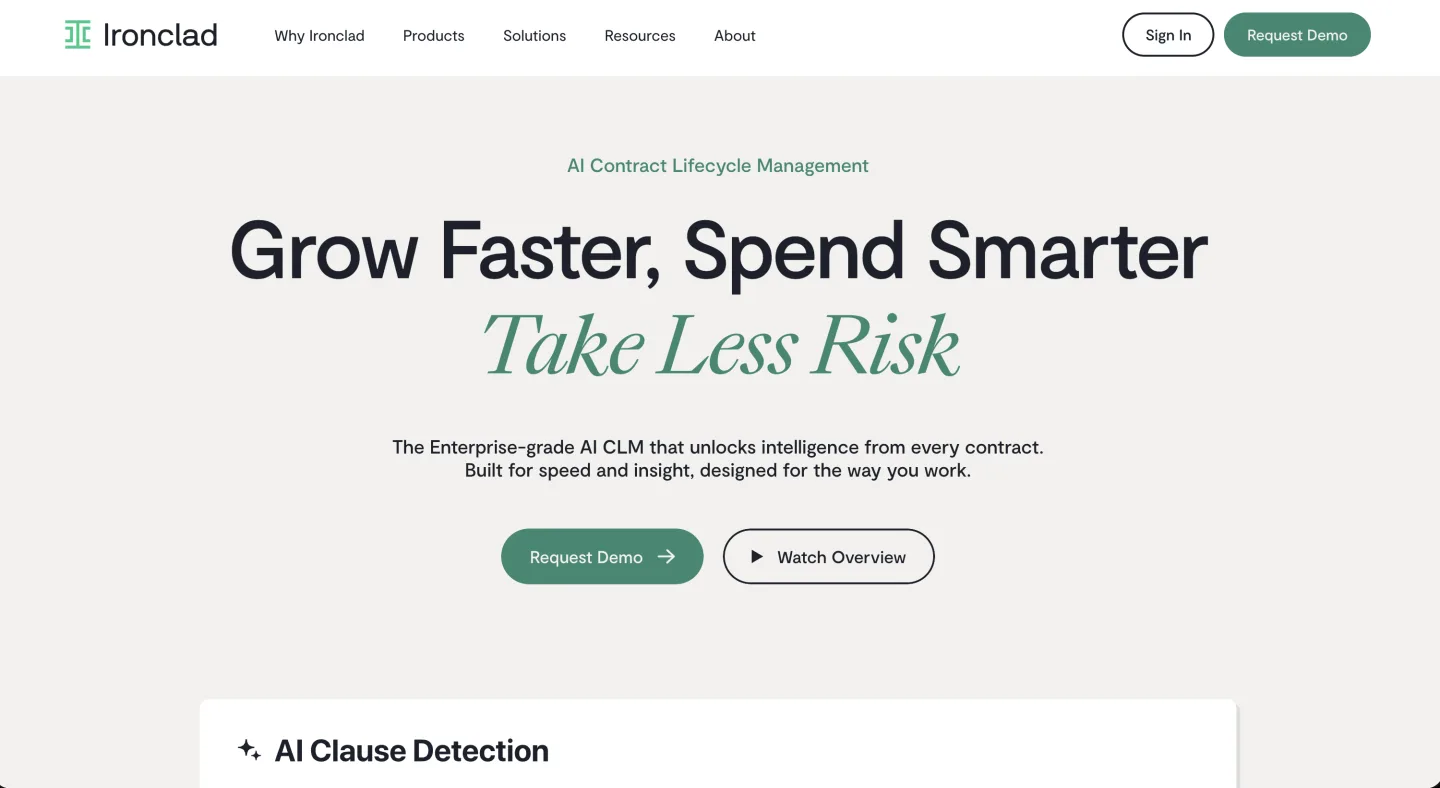
At a glance: Quote-based; ~$40k/yr median (Vendr, 354 purchases) · Sales-led, demo required · Best for high-volume programs that need the whole lifecycle.
Ironclad is a contract lifecycle platform first: repository, approvals, e-signature, and renewals, with AI review added on top. Its AI assistant, Ironclad Jurist, redlines against company playbooks and applies your predefined positions and fallbacks inside a Word interface (Ironclad).
What's good
- True CLM, so the contract, its approvals, its signature, and its renewal date all live in one system.
- Jurist brings playbook redlining into that lifecycle rather than as a separate point tool.
- Built for scale, the right shape when procurement runs a high-volume program with real workflow.
Where it falls short
- Enterprise pricing and a multi-month rollout. Vendr lists a median around $40,000 a year, climbing well into six figures at scale.
- It is a platform commitment. Overkill if you only need a faster first-pass redline.
What users say: Practitioners weigh CLM platforms against lighter review tools depending on whether the lifecycle or the redline is the real problem (r/legaltechAI).
Bottom line: Buy it if managing the post-signature lifecycle at scale is your actual problem. Skip it if your week is first-pass review and you do not need approvals, e-sign, and a repository.
5. Streamline AI: best for taming the intake queue before review starts
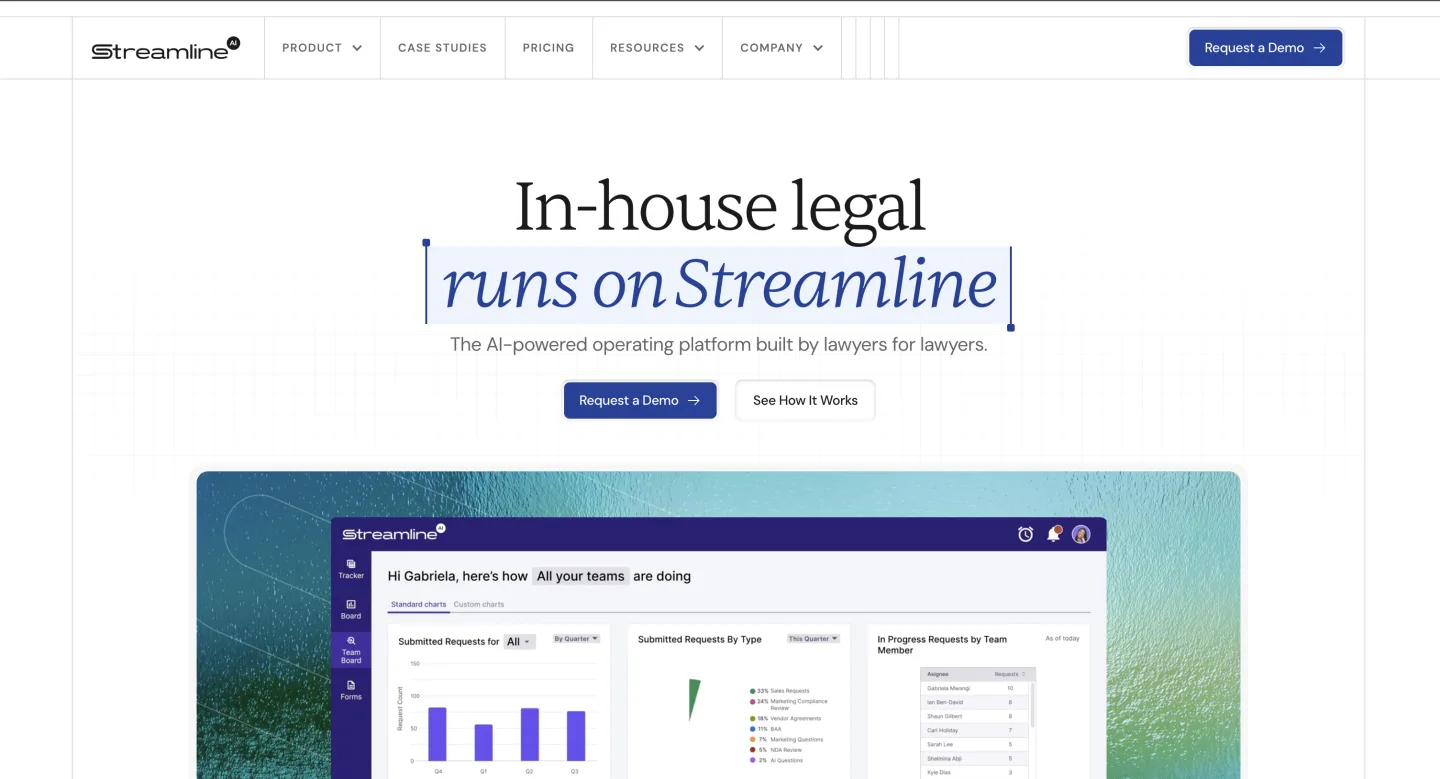
At a glance: Quote-based / on request · Sales-led, demo required · Best for legal teams drowning in unsorted requests.
Streamline AI solves the job upstream of review: legal intake and triage. It centralizes requests from Slack, email, and Salesforce. Guided forms collect the right details, then approval workflows route each request to the right reviewer (Streamline AI).
What's good
- Guided intake forms so requests arrive with the contract, context, and priority already attached.
- Automatic routing and approval workflows, which cuts the back-and-forth before a lawyer ever opens the file.
- Handles the request types procurement sees most: vendor agreements, NDAs, and compliance reviews.
Where it falls short
- It organizes and routes; it does not redline. You still need a review tool downstream.
- No published price, so budget a procurement cycle to learn the cost.
What users say: We found no substantial independent forum verdict yet, only vendor and launch material. Verify fit in a pilot rather than trusting the pitch.
Bottom line: Buy it if requests pile up unsorted before anyone can review them. Skip it if intake is already orderly and your bottleneck is the redline itself.
6. Harvey: best for large departments with budget and agentic needs

At a glance: ~$1,200 to $2,000+ per user/mo (reported; bundle plus add-ons, also a metered model) · Sales-led, demo required · Best for large firms and big legal departments.
Harvey is the generalist heavyweight, strong at deep, agentic document work across complex matters. For a large department where procurement is one stream among many, it can handle vendor review alongside everything else.
What's good
- Deep document work that holds up across complex, multi-step tasks.
- Integrations large departments rely on, including a Lexis tie-in for research.
- Serious vendor scale and funding, so runway is not the worry.
Where it falls short
- The value case is murkier for a lean procurement desk paying enterprise prices.
- Pricing is gated and the model is broad, so playbook-specific review may need configuration.
What users say: Buyers note that executives tend to champion it more than the daily reviewers do. Confirm the procurement workflow holds up in a pilot.
Bottom line: Buy it if you are a large department that needs agentic breadth and has the budget. Skip it if vendor-contract review is your whole job, where a focused reviewer costs far less.
7. CoCounsel: best for teams already living in Westlaw
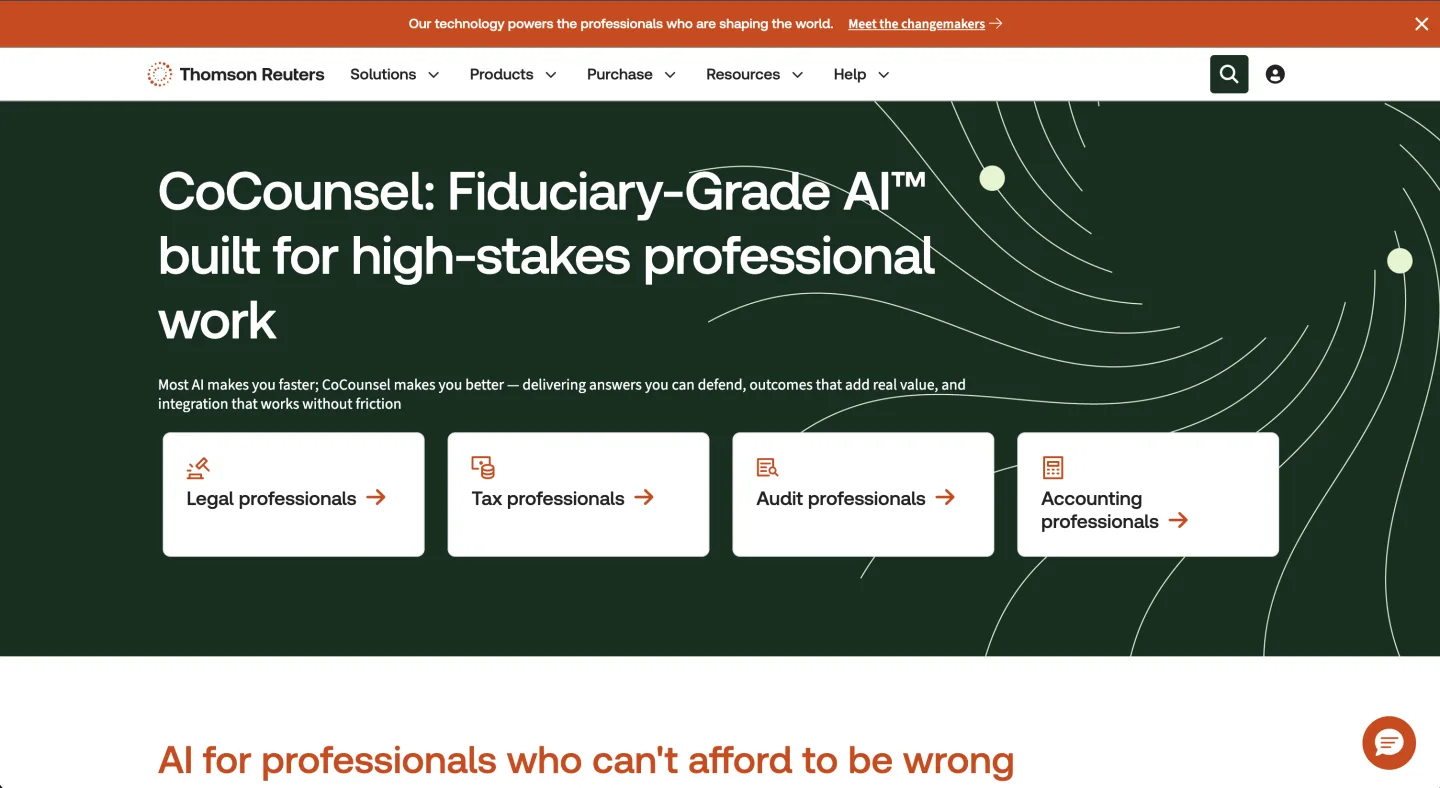
At a glance: ~$225 to $400+ per user/mo (reported; more once Westlaw sits underneath) · Sales-led, demo required · Best for teams already on Westlaw.
CoCounsel is Thomson Reuters' AI assistant, strongest as a research and analysis layer for teams already paying for Westlaw. It can summarize and analyze contracts, which helps a procurement desk that also does research-heavy work.
What's good
- Document review and analysis from an established vendor that is not going anywhere.
- A natural add-on if Westlaw is already your research home.
- Time savings on summarizing and extracting from long agreements.
Where it falls short
- It is research-leaning, not a playbook-first vendor reviewer, and it still fabricates citations, so verify.
- The all-in cost climbs once a Westlaw subscription sits underneath it.
What users say: Users like the ease and time savings but warn it still invents citations, so a human check stays non-negotiable.
Bottom line: Buy it if you already pay for Westlaw and want an assistant on top. Skip it if your week is pure vendor-paper review, where a dedicated playbook tool wins.
Comparison table
| Tool | Price (per user/mo unless noted) | Category | Access | Playbook review | Intake / triage | CLM (approvals, e-sign, renewals) | Best for |
|---|---|---|---|---|---|---|---|
| Ivo | ~$500 | Contract review | Sales-led | Yes | No | No | Word-native playbook review at volume |
| Vaquill AI | Self-serve | In-house suite | Self-serve | Yes | Light | No | Connected draft-review-matter week |
| LegalOn | ~$550 (annual) | Contract review | Sales-led | Yes (attorney-authored) | No | No | Review with the reasoning shown |
| Ironclad (+ Jurist) | Quote-based; ~$40k/yr median | CLM + AI review | Sales-led | Yes (Jurist) | Limited | Yes | Full lifecycle at scale |
| Streamline AI | Quote-based | Intake / triage | Sales-led | No | Yes | No | Taming the request queue |
| Harvey | ~$1,200 to $2,000+ | Generalist platform | Sales-led | Configurable | No | No | Large departments, agentic work |
| CoCounsel | ~$225 to $400+ | Research + AI | Sales-led | Limited | No | No | Teams already on Westlaw |
A note on the columns: "quote-based" means the vendor publishes no list price, so budget a procurement cycle to learn it. Where a number is a third-party estimate, the source is named inline. Treat any vendor that will not put a no-training clause in the MSA as a no.
How to actually decide
Name your bottleneck, then buy the matching category. It is the same move every time.
- First-pass redline is the jam: a playbook reviewer. Ivo or LegalOn for a dedicated point tool, or an all-in-one workbench if you want review plus matters at a flat price.
- Requests pile up before review: intake. Streamline AI sorts and routes the queue, then hands clean requests to your reviewer.
- The post-signature lifecycle is the mess: CLM. Ironclad and its peers own approvals, signatures, and renewals, at enterprise prices and timelines.
- Procurement is one stream in a big department: a generalist platform like Harvey, or CoCounsel if you already run Westlaw.
Then price to your real volume. The vendors quoting enterprise prices know who they built for, and a two-person procurement desk is usually not it. For the per-seat math across the heavyweights, see our legal AI pricing benchmark.
The fastest tool you can buy without a sales cycle usually beats the perfect one you cannot.
One more lever that costs nothing: a sharper playbook. The clearer your standard positions and fallbacks, the better any of these tools performs. You are giving the AI a rule to enforce instead of a vibe to guess. Our in-house contract review playbook walks through writing one, and you can browse standard positions in our clause library.
Want to see playbook review on your own vendor paper? Run a contract you already know cold, then check the redline in Word.
FAQ
What is the best AI tool for high-volume vendor contract review?
For pure review volume, a dedicated playbook reviewer like Ivo or LegalOn fits best, since both redline counterparty paper against your positions inside Word. If you want review plus matter tracking at a flat published price, an all-in-one workbench covers that connected week. Match the tool to whether review is your only job or one part of a wider pipeline.
Do I need a CLM or a contract review tool?
They solve different problems. A review tool gives you a faster first-pass redline; a CLM manages the whole lifecycle of repository, approvals, e-signature, and renewals. If your pain is turnaround speed, buy review. If it is losing track of signed contracts and renewal dates, buy CLM. Our CLM platform comparison breaks down the lifecycle options.
How much do AI tools for procurement lawyers cost?
It splits sharply. Self-serve workbench tools publish per-seat pricing well below the sales-led names, while dedicated review tools commonly run around $500 per seat. Full CLM platforms are quote-based and reach five figures a year, with Vendr listing an Ironclad median near $40,000 annually. Price to your real contract volume, not the brand.
Can AI enforce my contract playbook automatically?
Yes, that is the core feature of a playbook reviewer. Tools like Ivo, LegalOn, and Ironclad Jurist let you load your standard positions and fallbacks, then flag where a vendor's paper deviates. The catch is setup: time how long the manual playbook tagging takes before you trust the pricing, because that effort never shows on the pricing page.
What AI helps with legal intake and triage, beyond review?
Intake is its own category, handled by tools like Streamline AI. They centralize requests from Slack and email, collect details with guided forms, and route each one to the right reviewer. It organizes the queue but does not redline, so you still pair it with a review tool downstream. Fix intake first if requests arrive unsorted and without context.
Can I buy these tools without a sales call?
Only some. A few workbench and CLM-lite tools offer a self-serve trial you can start with a card. Most dedicated review tools (Ivo, LegalOn) and every enterprise CLM are sales-led. They gate pricing behind a demo, so factor that procurement time into the real cost.
Which clauses should procurement counsel watch most closely on vendor paper?
The recurring risk clusters are liability caps, indemnity, data processing and security, auto-renewal, and termination rights. A vendor-side draft will usually tilt each one in the counterparty's favor. A playbook should catch that on the first pass (GC AI, "Vendor Agreement Review," June 2026). Encode your fallback on each clause so the AI flags deviations instead of summarizing the obvious.
Is general-purpose AI like ChatGPT good enough for vendor contract review?
For producing redlines you will send to a counterparty, no. General models do not enforce your playbook, do not produce real Word track changes, and are not built around the confidentiality your vendor paper carries. Keep them for rough drafting and brainstorming, and route the work you sign your name to onto a grounded legal tool.
Last updated: June 2026.
New legal AI guides, weekly.
Further Reading
Best AI Tools for Banking and Finance Lawyers
Read postBest AI Tools for Employment Lawyers
Read postBest AI Tools for M&A Lawyers
Read postBest AI Tools for Real Estate Lawyers
Read postBest AI Tools for Startup and VC Lawyers
Read postWhat Lawyers Want From Legal AI in 2026: A 534-Lawyer Study
Read post
Co-Founder & CEO · Attorney
Arshita leads product and strategy at Vaquill, building the legal AI suite that solo, small-firm, and in-house US lawyers use to run a matter end to end.