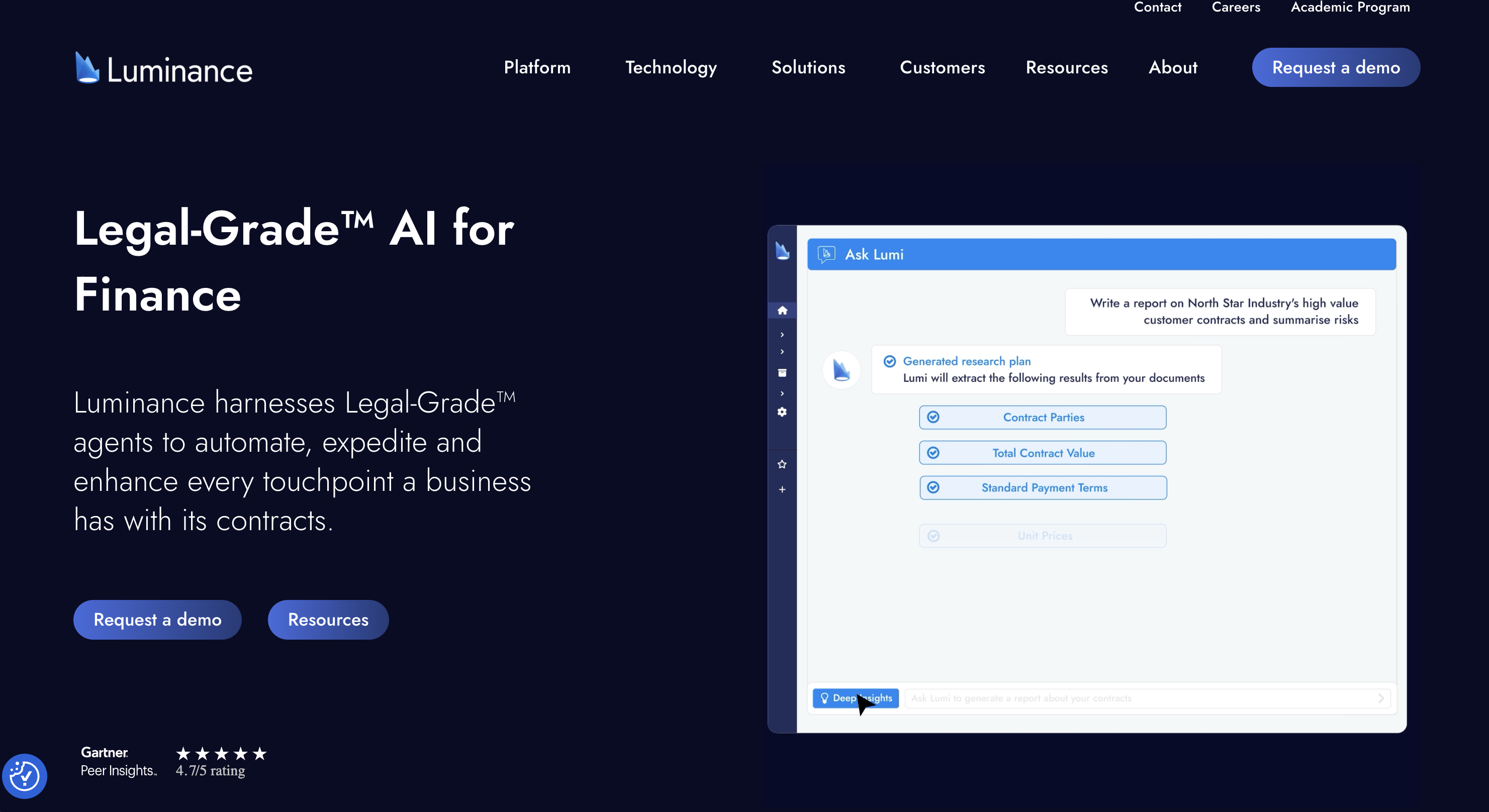
Most in-house teams do not need a Luminance replacement. They need a smaller contract-AI workflow that does not come with CLM-grade procurement. Luminance is a strong enterprise platform built for high-volume diligence and autonomous negotiation, so if you are a solo GC or a five-lawyer department, stop asking which tool most resembles it and ask which one gives you AI contract review without an enterprise contract and a multi-week rollout.
This guide ranks seven alternatives against that question, with a screenshot, honest pros and cons, and a price for each. The tools split into self-serve (self-serve) and enterprise (Luminance-class), and knowing your side decides the whole thing.
TL;DR
- In-house teams should go self-serve. Whatever your size, an in-house workbench, Spellbook, or Ivo beats an enterprise platform on price and rollout.
- Only go Luminance-class for real diligence at scale. Legora, Harvey, and CoCounsel earn their price at M&A-diligence volume, not on routine vendor paper.
- Pricing transparency is rare. Most tools here are quote-based; a published, self-serve option is the exception.
- Rollout is the hidden cost. Enterprise tools stall on document-management integration and clause-library mapping, which is why "weeks to months" is the honest timeline.
- The empty-seat trap is real. A five-lawyer team on a 10-seat-minimum tool pays for ten and uses five, so cost per active lawyer roughly doubles before add-ons.
- Match the tool to the week. Diligence at scale, Word-native drafting, Westlaw research, and CLM are different problems with different winners.
Which alternative is closest to Luminance for high-volume diligence?
How to choose a Luminance alternative
Score each tool on what actually decides the buy for a team leaving, or avoiding, Luminance:
- Fit for in-house teams: does the value show up self-serve for any in-house team, or only at enterprise scale with procurement.
- Rollout burden: self-serve and same-day, or a procurement cycle plus playbook build and DMS integration.
- Scope: review only, drafting, matters, research, or full contract lifecycle management.
- Data controls: a compliant DPA, and whether the vendor trains on your data.
- Pricing transparency: a published price you can read, or quote-only.
This ranking draws on vendors' public product and pricing pages, third-party pricing breakdowns, and hands-on use of the self-serve tools. We have not run paid enterprise pilots, so enterprise rollout and pricing are labeled as reported. Full per-tool detail and sources are in the legal AI pricing benchmark.
The 7 best Luminance alternatives
1. Spellbook: best for Word-native drafting and review
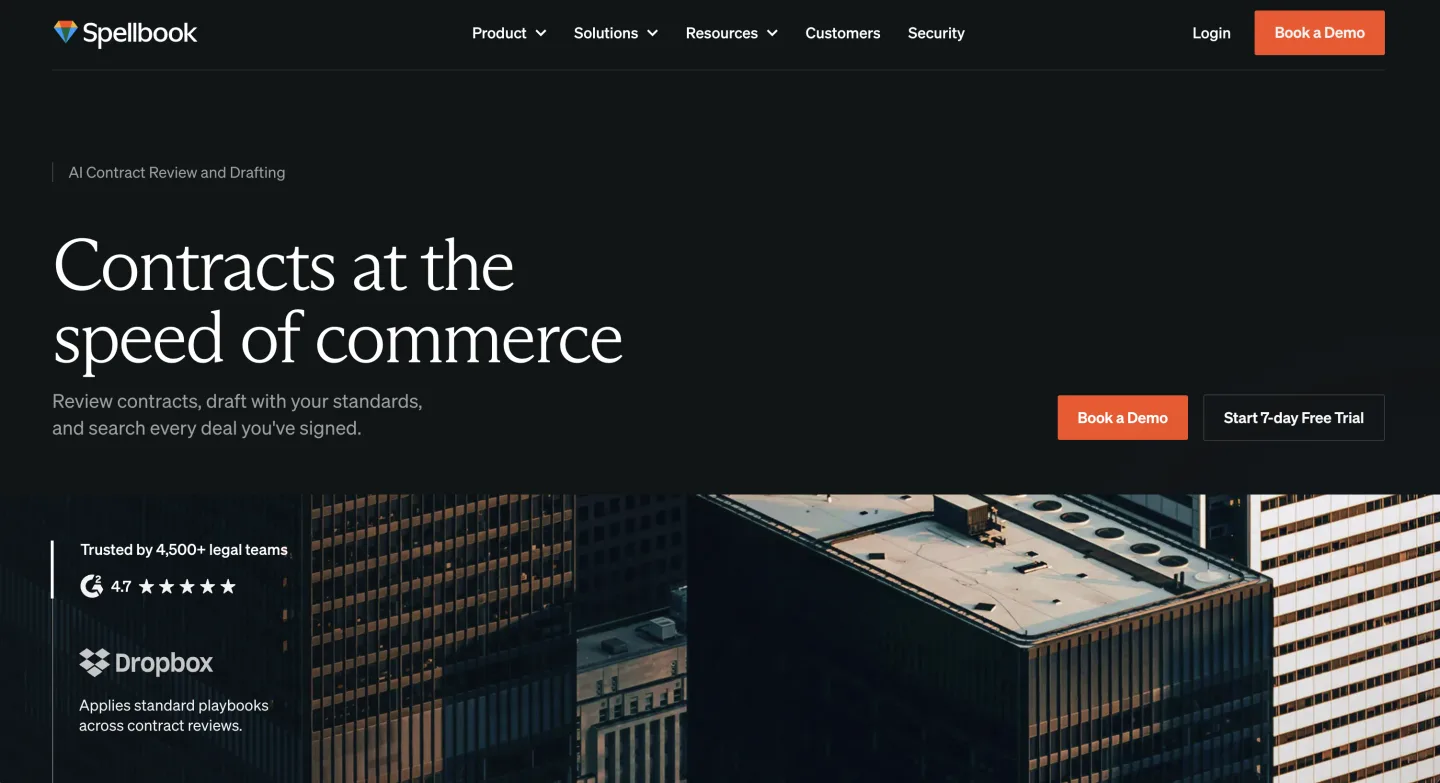
The pick for teams that live inside Microsoft Word.
At a glance: Quote-based, reported ~$500 per seat/mo base (quote-gated) · Sales-led, free trial · Best for transactional lawyers in Word
Spellbook puts AI where deal lawyers already work, in Word, with playbook deviation checks and clause benchmarks. It is a contract tool, not a suite.
What's good
- Native Microsoft Word workflow for drafting and review
- Playbook deviation checks and clause-level market data
- Familiar to transactional teams, low learning curve
Where it falls short
- Quote-based pricing with a reported minimum commitment before you can pilot
- No research, matter management, or API
- Word-only, so it does not cover the wider in-house week
Bottom line: Strong for deal and in-house lawyers who want AI in Word. Look elsewhere if you need research or matters alongside contracts.
2. An in-house workbench: best for in-house teams wanting one place
The self-serve, self-serve answer when Luminance is more platform than your volume needs.
At a glance: Published, self-serve · 7-day trial, no sales call · Best for in-house teams of any size
An in-house workbench covers the everyday week (contract review, drafting, compliance checks, matter management) self-serve, at a price you can read, with same-day setup. It is the opposite shape to Luminance: no procurement, no rollout project.
What's good
- Published per-seat price and a self-serve trial, no demo gate
- Contract review, drafting, compliance, and matters in one place
- Same-day start; a playbook is a few hours, not a scoped project
Where it falls short
- No autonomous NDA negotiation and no high-volume diligence grid
- Less enterprise depth than Luminance or Harvey
- Built for self-serve throughput, not autonomous M&A-diligence agents
Bottom line: If your week is a stream of NDAs, vendor MSAs, and matters, this fits better than a firm-first platform. See it for in-house counsel. Skip it if you run diligence agents across thousands of contracts.
3. Ivo: best for a lean, Word or Docs review tool

A lighter review tool for teams who found the incumbents heavy.
At a glance: Quote-based, reported ~$500 per user/mo · Sales-led, demo · Best for fast review in Word or Google Docs
Ivo focuses on fast, playbook-based contract review in Word and Google Docs, without heavy setup. Narrower than a suite, which is the point.
What's good
- Fast, focused review against a playbook
- Works in both Word and Google Docs
- Lighter setup than an enterprise platform
Where it falls short
- Quote-based pricing, so budget for a sales conversation
- Narrow scope: review, not research, matters, or diligence at scale
- Less depth than Luminance on large document sets
Bottom line: A leaner option for teams that mainly want faster review. Not a fit if you need a full suite or enterprise diligence.
4. Legora: best for high-volume tabular diligence
The closest match to Luminance's diligence-at-scale strength.
At a glance: Quote-based, reported ~$3,000/user/yr, ~10-seat minimum · Sales-led, demo · Best for high-volume diligence
Legora's tabular review grid across many documents is the alternative most like Luminance for diligence. The value shows up at volume.
What's good
- Spreadsheet-style review across hundreds of documents
- Multi-language and cross-jurisdiction strength
- Pay-as-you-go credit option alongside seats
Where it falls short
- Reported 10-seat minimum sets an enterprise floor
- Custom integration and dedicated onboarding on top of the seat price
- Overkill for a small team doing routine vendor paper
What users say: On Reddit, the running comparison praises Legora's grid but flags the gated sales motion and cost (r/legaltech).
Bottom line: A real Luminance alternative for diligence volume, still priced for larger teams. See the Legora alternatives guide for the self-serve angle.
5. Harvey: best for enterprise research and drafting
The enterprise heavyweight for large firms and well-funded departments.
At a glance: Quote-based, reported ~$1,200 to $2,000+ per user/mo, seat minimum · Sales-led, demo · Best for AmLaw firms and large in-house teams
Harvey is the broadest enterprise platform, with deep research, drafting, and agentic workflows. It reached roughly $190 million in ARR and an $11 billion valuation by early 2026, so it leads on raw scale.
What's good
- Deep research and drafting on strong US legal training data
- Agentic, multi-step workflows for large matters
- Enterprise integrations (iManage, SharePoint) and a content tie-in
Where it falls short
- Opaque, high pricing with a reported seat minimum, floor in six figures a year
- Demo-gated sales and a long procurement cycle
- Implementation and support billed well above the license in year one
What users say: On Reddit, the running pricing comparison respects Harvey's depth but keeps flagging the cost and the long sales cycle (r/legaltech).
Bottom line: Buy Harvey if you are a large team wanting the broadest platform. Skip it if you are lean; see the Harvey review.
6. CoCounsel: best for Westlaw-grounded research
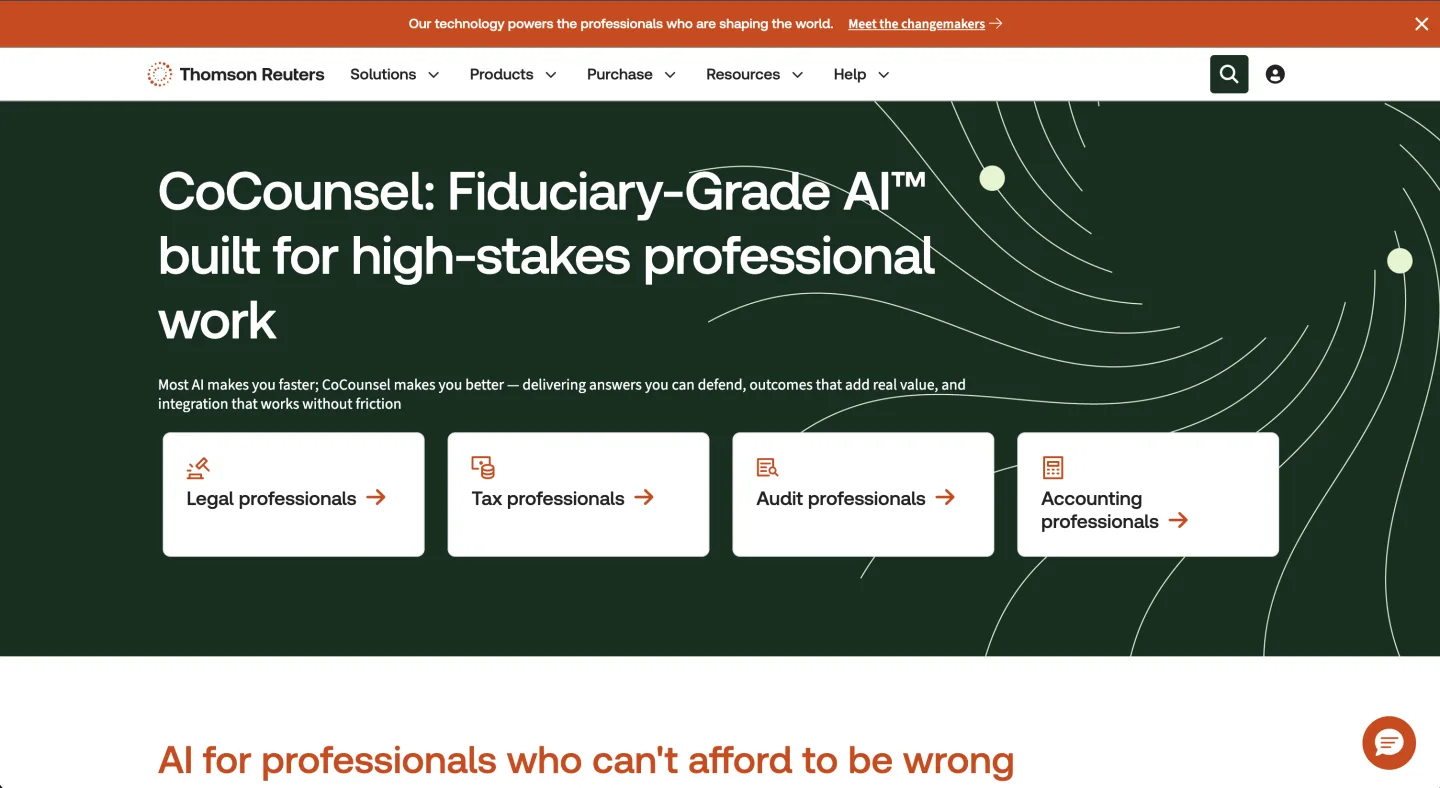
The pick for research-heavy teams already in the Thomson Reuters stack.
At a glance: Reported ~$225/mo Core, more with add-ons, usually Westlaw-tied · Sales-led, demo · Best for litigation-leaning teams
CoCounsel pairs AI with Westlaw research, so litigators and research-heavy teams weight it. Most buyers pay for the bundle, where CoCounsel rides on a Westlaw subscription.
What's good
- Answers grounded in Westlaw and Practical Law
- Tight Thomson Reuters integration for research workflows
- A known, enterprise-grade vendor for procurement
Where it falls short
- Quote-based and usually tied to a Westlaw subscription
- The real cost sits in the research subscription underneath, not the AI line
- Heavier than a in-house team needs for contract review
What users say: In the same r/legaltech thread, users weigh CoCounsel's Westlaw grounding against Harvey's workflow depth, and note the Westlaw subscription is where the cost hides.
Bottom line: The pick when your work leans on case-law research and you already live in Westlaw. See the CoCounsel review.
7. Ironclad: best for contract lifecycle management
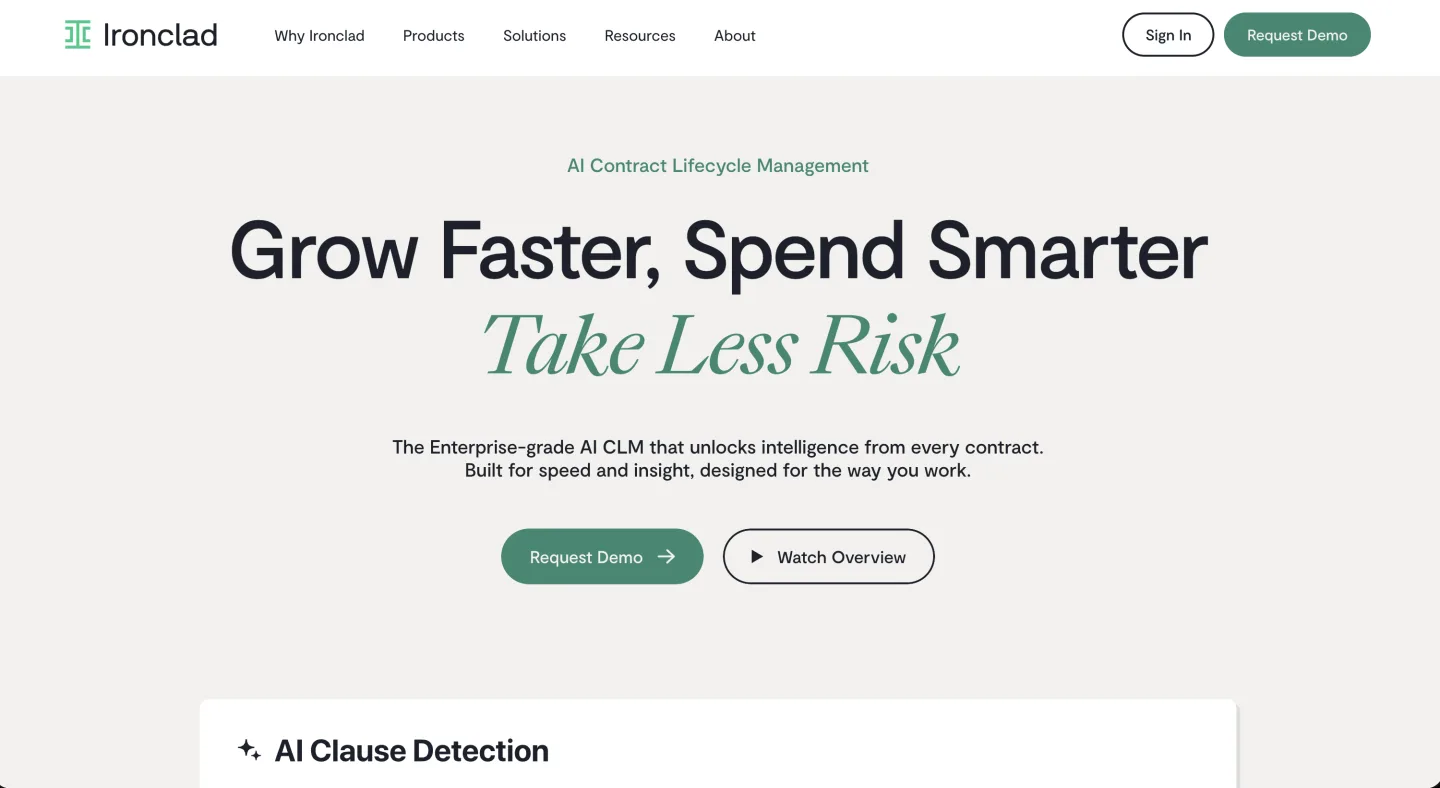
For teams whose gap is CLM, not AI review.
At a glance: Quote-based, priced by contract volume · Sales-led, demo · Best for high-throughput contract operations
Ironclad is contract lifecycle management (workflow, repository, obligations), not a review assistant. It fits teams whose problem is managing volume and process, not reading clauses.
What's good
- Workflow, repository, and obligation management at scale
- Strong for high-throughput contract operations
- Established enterprise CLM with broad integrations
Where it falls short
- Priced by contract volume as an enterprise annual contract
- Implementation runs into the tens of thousands
- Not an AI review or drafting assistant, so it solves a different problem
Bottom line: The right tool if your gap is lifecycle management rather than AI review. Wrong fit if you want clause-level review AI.
Comparison table
| # | Tool | Price (per user/mo, hedged) | Access | Best for |
|---|---|---|---|---|
| - | Luminance (baseline) | Quote-based, reported six figures/yr mid-size | Sales-led, demo | Enterprise diligence + autonomous negotiation |
| 1 | Spellbook | Quote-based, reported ~$500 base | Sales-led, free trial | Word-native drafting and review |
| 2 | In-house workbench | Published, self-serve | Self-serve trial | In-house teams wanting one place |
| 3 | Ivo | Quote-based, reported ~$500 | Sales-led, demo | Lean Word or Docs review |
| 4 | Legora | Quote-based, reported ~$3,000/yr, 10-seat min | Sales-led, demo | High-volume tabular diligence |
| 5 | Harvey | Quote-based, reported ~$1,200 to $2,000+ | Sales-led, demo | Enterprise research and drafting |
| 6 | CoCounsel | Reported ~$225 Core, Westlaw-tied | Sales-led, demo | Westlaw-grounded research |
| 7 | Ironclad | Quote-based, by contract volume | Sales-led, demo | Contract lifecycle management |
All figures checked June 2026. Vendors that publish nothing are marked quote-based. Sources are in the legal AI pricing benchmark.
The verdict
Luminance is genuinely strong at enterprise diligence and autonomous NDA negotiation. If that is your week (real M&A due diligence, high throughput, a procurement function), it earns its price and the lighter tools will not match it feature for feature.
The question is whether that is your week. A diligence-heavy team should weigh Legora first, then Luminance and Harvey. A litigation team in Westlaw should weigh CoCounsel. A transactional desk in Word should look at Spellbook or Ivo. And a in-house team whose week is a connected pipeline of NDAs, vendor paper, and matters, wanting a public price and a same-day start, fits an in-house workbench better than a firm-first platform. Getting the tier wrong has a specific price: a five-lawyer team on a 10-seat-minimum tool pays for ten seats and uses five, so cost per active lawyer roughly doubles, and the empty-seat waste alone can top the entire bill of a self-serve tool. Match the tool to the work, not to the headline valuation.
FAQ
What is the best Luminance alternative for a small in-house team? A self-serve contract-AI tool rather than another enterprise platform. Small teams want review and drafting against a playbook, a published price, and same-day setup, which the self-serve tier offers and an enterprise rollout does not.
How much does Luminance cost compared to alternatives? Luminance is quote-only enterprise pricing, reported around six figures a year for a mid-size deployment. Most alternatives are also quote-based; the exception is a published, self-serve option with published pricing. Sources are in the pricing benchmark.
Is there a Luminance alternative with autonomous contract negotiation? Autonomous, end-to-end NDA negotiation is Luminance's distinctive feature, and few tools match it directly today. Most alternatives focus on AI-assisted review and drafting with a human finalizing the negotiation, which covers the large majority of in-house workflows.
What is the best Luminance alternative for M&A diligence? Legora's tabular review grid is the closest for high-volume diligence, with Harvey suited to large firms running diligence workflows. Both are quote-based and priced for larger teams, so they sit on the enterprise side rather than with in-house teams.
Do I actually need an enterprise platform like Luminance? Only if you have the scale to use it: heavy M&A diligence, high contract volume, and a procurement function. A in-house team doing everyday NDAs, vendor MSAs, and compliance usually gets more value from a self-serve tool at a fraction of the cost and none of the rollout.
For more, see the Luminance review, the legal AI pricing benchmark, and the best legal AI tools for in-house counsel.
New legal AI guides, weekly.
Further Reading
Luminance Review 2026: An Honest Assessment for In-House Counsel
Read postHow to Verify a Legal AI Accuracy Claim (Before You Trust the Number)
Read postWhat Happened to Casetext? Acquisition, Shutdown & Best Alternatives
Read postCoCounsel Alternatives: 5 Options Compared
Read postIvo Alternatives: 7 AI Contract Review Options Compared
Read postLegora Alternatives: 6 Options Compared
Read post
Co-Founder & CEO · Attorney
Arshita leads product and strategy at Vaquill AI, the US primary law data API. As an attorney, she decides which law we carry, how each section is sourced and cited, and what legal AI and compliance teams need from the data.