Harvey is the strongest enterprise legal AI in 2026. It is also the wrong buy for most small firms. It earns its price with BigLaw partners and Fortune 500 in-house teams that have real procurement.
That is where its M&A diligence depth, cross-border research, and firm-specific grounding pay off. Harvey runs $1,200 to $2,000+ per user per month for unlimited use, sold as a bundle where the add-ons you pick set the per-seat price. There is also a pay-as-you-go plan that meters by credits.
If you are solo, a 2 to 15 lawyer firm, a scaleup legal team, or a developer buyer, look elsewhere. The rest of this review walks through who fits and who does not.
Picture a 90-lawyer regional firm with no procurement function. The managing partner reads the Series E coverage, sits through a 60-minute demo, and signs a three-year deal near $1.1M a year on a handshake with one partner champion.
Four months later that champion is buried in a billion-dollar deal. Adoption is flat. The firm bought seats nobody opens. Most Harvey reviews skip past that ending and point at the logo wall instead. This review is built to stop you from living it.
The funding is real, so let us get it on the table. Harvey raised $300M at a $5B valuation in June 2025 (co-led by Kleiner Perkins and Coatue), $160M at an $8B valuation in December 2025 (led by Andreessen Horowitz, alongside $190M in ARR per TechCrunch, February 2026), then $200M at an $11B valuation in March 2026 (co-led by GIC and Sequoia, per CNBC, March 2026). The valuation more than doubled in nine months.
The product behind the money is real too. The only question this review answers is whether your firm can actually deploy it.
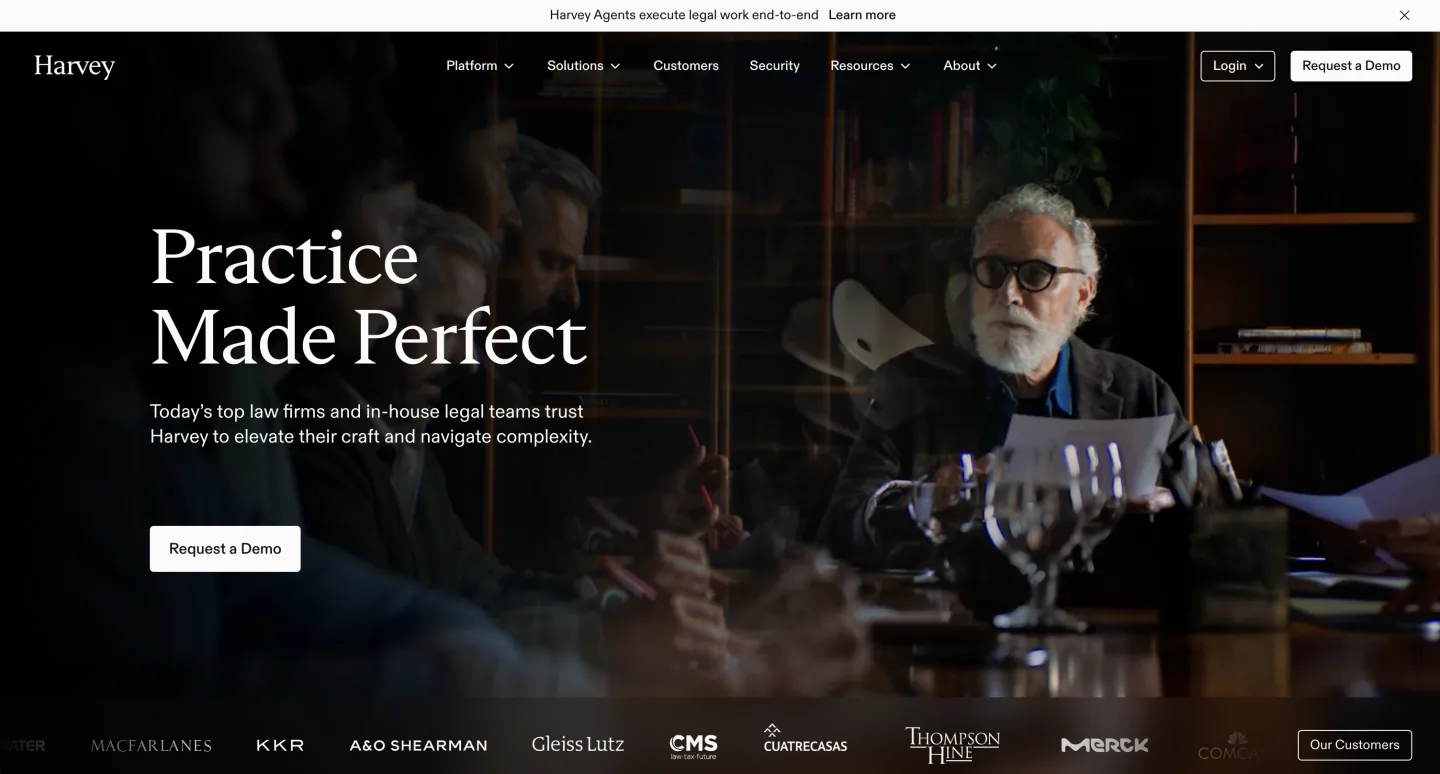
At a glance
| Harvey | |
|---|---|
| Price | $1,200 to $2,000+ per user/mo (bundle plus add-ons; also a metered credit plan) |
| Access | Sales-led, 30 to 90 day cycle |
| Best for | AmLaw firms and Fortune 500 in-house with procurement |
| Free trial | No (pilot via sales) |
| Word-native | Yes (Harvey for Word) |
| Trains on your data | Vault and Knowledge index firm files; custom models for top AmLaw |
TL;DR
- Harvey leads enterprise legal AI in 2026 (per Harvey's own materials and CNBC coverage of the March 2026 round). More than 1,000 customers across 60 countries. Most of the AmLaw 100. 500+ in-house legal teams. $300M at $5B in June 2025, $160M at $8B in December 2025, then $200M at $11B in March 2026.
- The product (Assistant, Workflows, Vault, Knowledge, Word) is at its best on M&A diligence, cross-border regulatory research, and firm-specific grounding.
- Price decides who can buy, not how good it is. Harvey runs $1,200 to $2,000+ per user per month for unlimited use, a bundle where the add-ons set the per-seat price. Operators quote a ~$1,200 per-seat base (r/legaltech, 2026). There is also a pay-as-you-go, credit-metered plan.
- Buy Harvey if you are a BigLaw partner with budget authority, or a Fortune 500 in-house lead with a real procurement function. Look elsewhere if you are solo, a 2-15 lawyer firm, a scaleup in-house team, or a developer who needs an API.
Part of our legal AI vendor comparison and pricing series.
Harvey's top per-seat tier runs about how much per month?
What Harvey actually is
Harvey started in 2022. Winston Weinberg (ex-O'Melveny litigator) and Gabe Pereyra (ex-Meta and DeepMind ML research) built it. The OpenAI Startup Fund led the November 2022 seed. Sequoia, Kleiner Perkins, Coatue, Conviction, Elad Gil, GV, and ICONIQ sit on the cap table after the later rounds.
Two design choices set the buyer profile. First, Harvey aims at buyers with budget authority and procurement. The pricing, the sales motion, the integrations (iManage, SharePoint, Box, Outlook), and the embedded legal-engineering teams all point one way. They assume a firm that can swallow a six-figure commit and a 90-day rollout.
Second, Harvey wraps frontier models in legal-specific scaffolding. That means workflow agents, search over the firm's own files, and outputs tuned to what a partner expects to see. Procurement is paying for the scaffolding. The model under it gets more commoditized by the month.
The product surface
Five surfaces carry the weight. Each maps to a job a BigLaw or in-house team does over and over.
Assistant is a chat surface for research, drafting, summaries, and document Q&A. On bounded questions ("Delaware rules for indemnification carve-outs in vendor MSAs") it is fast. On cross-border regulatory work it is among the best in the category. That depth is what earns the seat price for a regulatory practice.
Workflows is multi-step, matter-specific automation. A lawyer (or a Harvey legal engineer working with the firm) describes a recurring task, and Harvey builds the Workflow. This is where Harvey stops being a chat tool and starts being a platform.
Vault is a secure document store with Q&A grounded in the firm's files. Per Harvey's 2026 release notes, Vault now syncs folders straight from iManage, SharePoint, and Box. No more manual re-upload tax.
Knowledge is firm-specific grounding. Precedent banks, form files, partner-approved templates, and policy guidance get indexed and surfaced in Assistant and Workflows. The bet: the lasting BigLaw asset is accumulated know-how, and the tool that surfaces it wins partner trust.
Word and custom models. Harvey for Word does inline edits with formatting kept intact, and it handles batch updates across versioned documents in one prompt (release notes, 2026). Custom firm-trained models ship for the biggest AmLaw customers. The math only works at the very top of the market.
Pricing reality
Harvey runs $1,200 to $2,000+ per user per month for unlimited use. The range exists because Harvey is a bundle with per-feature add-ons. The tier you pick and the add-ons you bolt on set the per-seat price. Harvey also offers a pay-as-you-go, credit-metered plan for firms that would rather meter usage than commit to a flat per-seat rate.
How the price moves inside the band:
- Bottom ($1,200): a base feature set with a lighter agent mix. The seat that fits a smaller team running fewer of the deep workflows.
- Top ($2,000+): the full add-on stack, including the deep agentic workflows, content integrations, and custom-model work, with a LexisNexis-bundled seat reaching near $2,400. The seat AmLaw and serious in-house teams actually use.
- Pay-as-you-go: a credit-metered option instead of the flat per-seat rate, priced on what you consume.
- Implementation: onboarding, custom-model work, and training are a separate services line on top of the seat or metered price.
Harvey does not publish a pricing page (confirmed June 2026, no public price on harvey.ai; the pricing URL still returns a 404). Operators quote specific numbers near the top of the band. Multiple r/legaltech threads put the common base near ~$1,200 per seat per month, ~$2,400 per seat with the LexisNexis bundle, and one financial-enterprise quote near ~$2,500 per seat (LinkedIn, March 2026). Pair that with a common 25-seat minimum on a 12-month term and the typical floor lands near $360,000 a year before services. Treat these as sourced third-party estimates, not Harvey-published numbers.
What Harvey costs by seat count
Modeled at the commonly reported ~$1,200 per-seat base (r/legaltech, 2026). Harvey does not publish these figures, and a real quote swings with add-ons, term length, and negotiated discount.
| Seats | License at ~$1,200/seat/mo | Annual license (before services) |
|---|---|---|
| 25 (common minimum) | ~$30,000/mo | ~$360,000 |
| 50 | ~$60,000/mo | ~$720,000 |
| 100 | ~$120,000/mo | ~$1.44M |
| 200 (AmLaw-scale) | ~$240,000/mo | ~$2.88M |
The license is not the whole bill. Third-party pricing breakdowns put custom fine-tuning at ~$50,000 to $150,000, premium support near 18% of the annual license, and note that the largest bespoke model builds run into seven figures, with a renewal uplift of 10 to 25% and no standard cap (eesel AI pricing analysis, 2026). For how Harvey's real quotes stack up against Legora and CoCounsel, see what each one actually costs.
A typical quote is a three-year term with annual prepay. Expect a discount that grows in years two and three. Expect a services line for onboarding (commonly five figures, and up into six for custom-model work). Expect an overage charge for seats above your count, a renewal uplift in the 10 to 25% range with no standard cap, plus an MFN clause your team should push on.
The list price is rarely the closing price. Below the AmLaw 50 line, prepay buys more discount than seat count does. For the full per-seat breakdown and where the renewal increase comes from, see Harvey AI pricing in 2026.
Take a 75-lawyer mid-market firm at $1,200 per user per month over three years. The commitment lands near $3.2M before services.
That is not a try-it-and-see purchase. It is a strategic call. It runs through a managing partner, a CFO, an IT security review, and a partner champion who has agreed to sit through the rollout.
The 2026 in-house program
Harvey's in-house push is one of two big 2026 moves. The other is the agentic Workflows work that the $11B March round funded. There is a dedicated in-house page and an ROI calculator. An entry tier sits at the bottom of the $1,200 to $2,000+ band with fewer add-ons.
The April 2026 Axiom partnership bundles Harvey with Axiom's secondment-style legal talent. The January 2026 Hexus acquisition added product-demo tooling.
By March 2026 Harvey reported 500+ in-house teams alongside the AmLaw majority. NBCUniversal, HSBC, DLA Piper International, and McCann Fitzgerald are named as recent customers. The buyer here is Fortune 500 and late-stage tech, not the Series B with a fractional GC.
What users actually say in Harvey AI reviews
Partners love it. Associates are less sure. The honest read from practitioners is that Harvey is great brand, real product, and an open question on value.
The recurring gripes are price, aggressive sales, and NDAs attached to pricing. The sharpest line in the r/legaltech pricing thread is blunt:
"the associates hated Harvey, but the partners went with it because they think it's magic."
A second r/legaltech thread on Harvey and Legora pricing circles the same doubt. Users call it "basically GPT chat plus a vault." They ask whether it clears the bar over a $20 to $200 ChatGPT or Claude seat.
Third-party review sites land in the same place. Lawyerist scores Harvey 4.4 out of 5, strong on document analysis and legal-specific depth, dinged on no published pricing and cost (Lawyerist, 2026).
None of that means Harvey is bad. It means the value case is not automatic. Run the pilot below before you take the partner's word that it is magic.
Where Harvey clearly wins
Enterprise sales fit. Harvey has the customer-success engineering, the security posture, and the named-account discipline a 1,500-lawyer firm or a Fortune 500 procurement team expects. A partner-led firm with a $1B revenue line is not signing a self-serve SaaS contract.
M&A due diligence. Vault plus Workflows plus Word is the deepest M&A diligence setup in 2026. A worked example. A deal team runs diligence on a target with 12,000 contracts. They stand up a Vault and sync from the data room.
Then they write a Workflow. Step one, pull every change-of-control provision. Step two, tag each one as automatic, consent-required, or notice-only. Step three, flag the ones a 50%+ stock buy would trigger. Step four, match the consent-required ones against the target's reps on consents needed. Step five, draft that section of the diligence memo.
A senior associate gets a first-pass output that used to take a four-associate team a day. Harvey does miss change-of-control language buried inside "assignment" clauses in older vendor MSAs, which is the exact thing your pilot should test.
But cleanup is "verify forty flags," not "read 12,000 contracts." Older diligence tools could pull clauses. They could not chain the steps and draft the memo.
Cross-border regulatory research. Among the best in category for cross-border privacy, sanctions, and sector compliance. A global firm's regulatory practice will use that depth in a way a domestic mid-market firm never will.
Firm-specific grounding via Vault and Knowledge. The lasting BigLaw asset is the precedent bank and partner know-how. Harvey is one of the most credible 2026 answers to "make our knowledge usable for every associate."
OpenAI access. A real edge on frontier-model capability, but not a unique one. Anthropic and Google ship comparable enterprise models. Still worth a mention when a partner asks in the demo.
Where Harvey has gaps
Each gap is a segment Harvey's sales motion has priced out.
Solo and small-firm shutout. At $1,200 to $2,000+ per user per month, plus a 30 to 90 day buying cycle, Harvey is out of reach. That covers solos, 2-15 lawyer firms, and most scaleup in-house teams.
Tools built for that segment win because Harvey does not even compete there. Spellbook covers transactional ($500 per seat base, quote-based). GC AI covers in-house ($500 per seat, published). Gavel and others cover solo.
Buying timeline. A 30 to 90 day cycle (security review, pilot, partner-champion vote, MSA negotiation) is the cost of the enterprise motion. GC AI's 14-day no-credit-card trial and Spellbook's seven-day trial cut the same evaluation to a week.
Thin public API. It is enterprise-gated and light next to API-first legal data and AI platforms. For a legal-ops engineer wiring up a Slack bot, a Make.com flow, or an internal copilot, Harvey is a destination, not a building block. (See why MCP is becoming the 2026 integration plane.)
No public accuracy benchmark. Harvey has not published a third-party-audited accuracy number on par with LegalOn's 3,282-contract gold-set test, GC AI's December 2025 ROI study, or our own reproducible open accuracy benchmark. That is no worse than peers on transparency. At this price, though, a buyer should expect better.
Strengths and limits at a glance
| Strengths | Limits |
|---|---|
| Deepest M&A diligence stack in 2026 (Vault + Workflows + Word) | Priced out for solos and 2-15 lawyer firms at $1,200 to $2,000+/seat/mo |
| Best-in-class cross-border regulatory research | 30 to 90 day sales-led cycle, no self-serve free trial |
| Firm-specific grounding (Vault + Knowledge) surfaces precedent and know-how | Thin, enterprise-gated public API; weak for developer and legal-ops buyers |
| Enterprise security and named-account support (SOC 2 Type II, ISO 27001) | No third-party-audited accuracy benchmark at this price |
| Frontier-model access with a real legal scaffolding layer | Hidden pricing (404 page), 25-seat minimums, MFN and renewal-uplift terms to negotiate |
How to evaluate Harvey in two weeks
Here is a 20-artifact gold-set test a 75-lawyer firm can run before signing.
- Corpus: 5 NDAs, 5 vendor MSAs, 3 M&A diligence questions against a closed-deal data room, 3 cross-border regulatory questions your firm actually answered last quarter, 2 transactional drafts (an indemnification clause and a limitation-of-liability clause), 2 closing-checklist tasks.
- Gold output: a senior partner marks up each artifact the way the firm would deliver it.
- Run: two associates who have not seen the gold work each artifact against Harvey. Score three things. Does it match the gold. How much cleanup before the partner sends it. How many associate hours it saves against the partner's reference time.
- Pass bar: 85% accuracy on bounded questions, 70% on open ones, 40%+ time saved after cleanup. Below that, the seat math does not work even at AmLaw rates.
- Leverage: documented results are worth 10 to 20% off the first-year list quote.
Harvey against the field, by workload
A bake-off beats a feature chart.
- vs. Legora (Stockholm, $80M Series B 2025). Legora's tabular review beats Harvey on matrix jobs ("load 80 NDAs, flag the three that deviate"). Harvey narrows the gap on Workflows-driven repeats but does not match the grid as a primary UI. If matrix triage is your bottleneck, pilot Legora first.
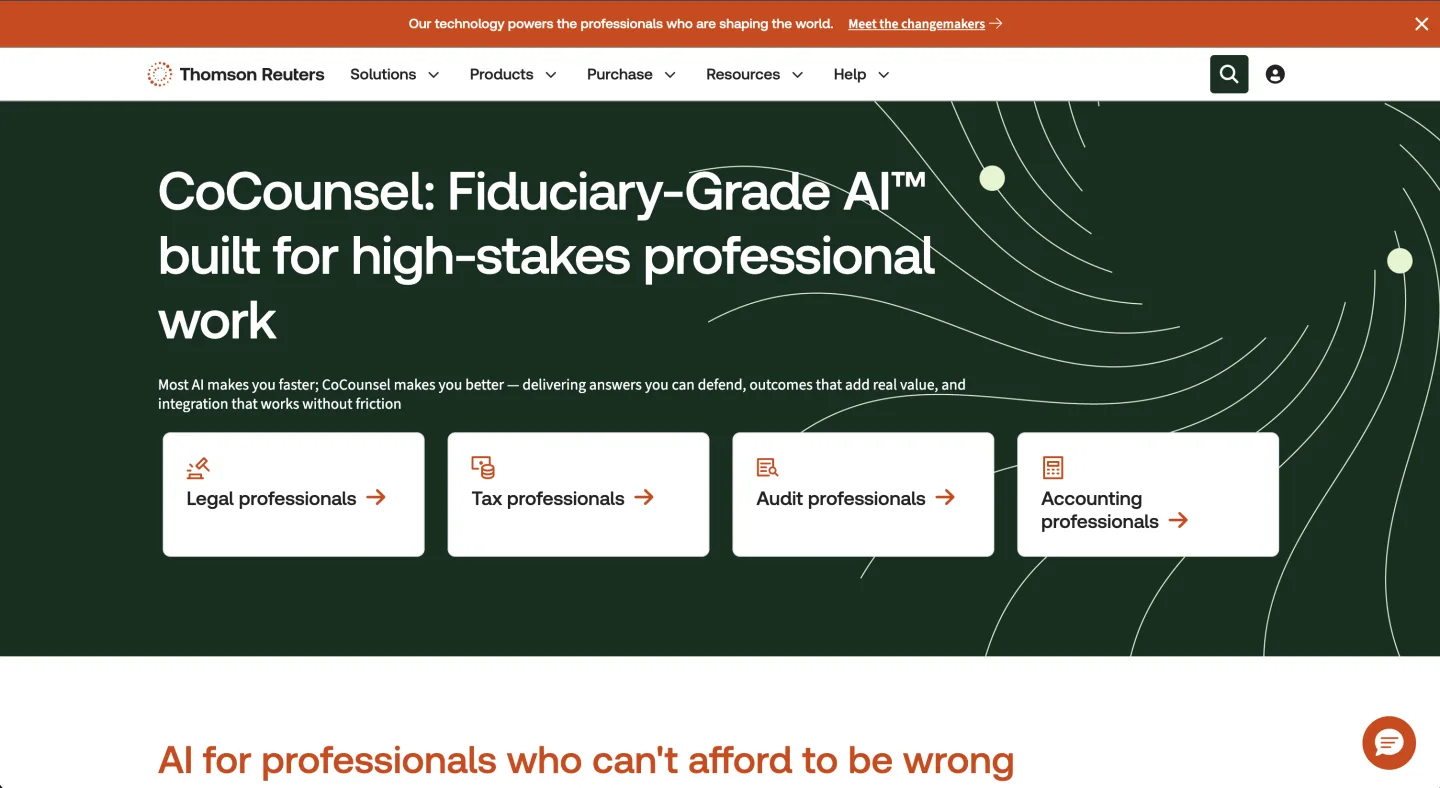
- vs. CoCounsel (Thomson Reuters, acquired Casetext 2023). CoCounsel ships with Westlaw-grounded research and tighter Thomson Reuters integration. Reviewers cite CoCounsel near ~$225/mo per seat (Claude for Lawyers, 2026). Harvey wins on Workflows and M&A diligence. CoCounsel wins on case-law density. Litigators weight Westlaw. Transactional partners weight Workflows.
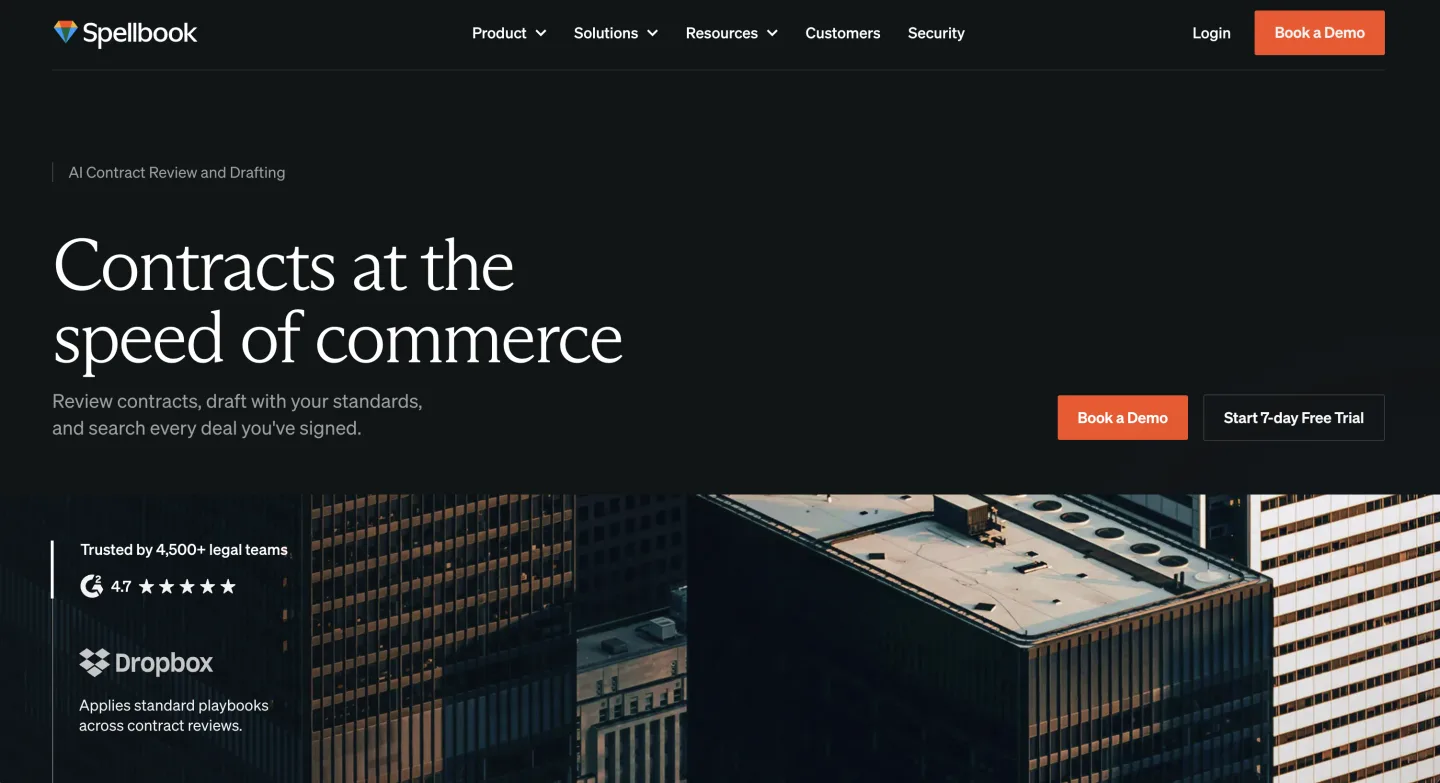
- vs. Spellbook (Toronto, $50M Series B October 2025). Word-native by design, ahead on inline tracked-change polish and clause-level market comparison. Harvey is broader but heavier. For a 5 to 30-lawyer transactional team, Spellbook wins on fit and price.
Pick the workload that decides the renewal call in year three, not the one the demo shows best.

What actually breaks in Harvey evaluations
Six failure modes a real pilot finds that the demo will not.
- Cross-jurisdiction research collapses to the first jurisdiction asked. "Compare data-localization across EU, California, and New York" comes back deep on the EU with the others tacked on. Reviewers have to re-prompt for parallel coverage. Test on the multi-state question your team asks most.
- Workflows wobble on contract types Vault has not seen much. Tuned to the firm's main precedent, they run well. Point them at regulated finance, specialty reinsurance, or healthcare provider agreements and the same Workflow miscategorizes. Pilot the painful deal type, not the polished one.
- Custom-model rollout runs slower than the deal sheet says. Training and validation take months and need curated data the firm may not have. Ask for a reference whose custom model is in production, not still in deployment.
- The champion's calendar is the rate-limiter, not the tech. Rollouts stall when the champion gets pulled into a deal. Budget their time as a real line item.
- Pricing leverage shrinks after year one. MFN clauses and renewal-discount escalators are negotiable on the first signature and near impossible to add later. Defer the pricing fight to renewal and you lose it.
Buy or skip, by criterion
Each segment leads with the criterion that actually decides the deal, not the label.
Buy if you are:
- AmLaw 100, with M&A and regulatory depth and a champion who has the bandwidth. Most are already customers. The holdouts are weighing Harvey against custom internal tooling or against Legora and CoCounsel. Harvey wins when M&A diligence and cross-border regulatory work decide it. It loses when drafting volume does.
- AmLaw 200 mid-market, with managing-partner conviction and three-year budget visibility. A 75 to 200-lawyer firm whose managing partner has decided legal AI is strategic can land Harvey. Without that conviction, rollouts stall and the firm churns.
- Fortune 500 in-house, with a real procurement function, a security baseline already in place, and an executive sponsor outside legal. The GC who can pull in a CIO and a procurement lead lands Harvey. The one driving it alone does not.
- A global regulatory practice with real cross-border volume. Aspirational regional expansion will not use the depth.
Skip and pick a tool sized for you if:
- Solo or 2-15 lawyer firm. Seat math breaks at $1,200 to $2,000+ per user per month. (The small-firm legal tech stack covers the fit.)
- Scaleup in-house. A Series B with a GC and one direct report does not sign a six-figure commit at AmLaw rates.
- Developer buyer. Legal-ops engineers and in-house tech leads who need an API, MCP, or programmatic data pulls hit the Harvey ceiling fast. (The 2026 legal data API roundup covers the stack.)
- No six-figure budget authority. Harvey is not a credit-card buy. Without a procurement function, the deal will not close in a useful window.
What to do if you are not that buyer
If you read this far and you are not AmLaw or Fortune 500, the segment mismatch is the finding. Harvey is built for firms with procurement, six-figure budget authority, and a partner champion, and the product reflects that buyer accurately.
Below that line, the self-serve workbench tier covers research, drafting, and matter documents without a three-year MSA or a 90-day procurement cycle. It will not match Harvey's agent depth, and for most teams at that size it does not need to.
The bottom line: is Harvey AI worth it
Harvey works when three things line up. You need procurement in place. You need six-figure budget authority. You need a partner champion with the calendar to drive year-one adoption.
That set is smaller than the logo wall suggests. If the three do not line up, pick a tool sized for the firm you actually have, and revisit when the budget looks different.
FAQ
What does Harvey AI actually do?
Harvey is an enterprise legal AI platform built on frontier models with legal-specific scaffolding. Five surfaces carry it: Assistant (research, drafting, document Q&A), Workflows (multi-step matter automation), Vault (secure document store with grounded Q&A), Knowledge (firm-specific precedent and templates), and Harvey for Word (inline edits). It is at its best on M&A diligence, cross-border regulatory research, and surfacing a firm's own know-how.
Which law firms use Harvey AI?
Harvey reports more than 1,000 customers across 60 countries, including most of the AmLaw 100 and 500+ in-house legal teams as of March 2026. Named customers include NBCUniversal, HSBC, DLA Piper International, and McCann Fitzgerald. The buyer profile skews to BigLaw and Fortune 500 in-house, not solos or scaleups.
How much does Harvey AI cost?
Harvey runs $1,200 to $2,000+ per user per month for unlimited use, sold as a bundle where the tier and add-ons you pick set the per-seat price. Specific operator quotes cluster near ~$1,200 per seat per month base and ~$2,400 with the LexisNexis bundle (r/legaltech, 2026), which puts a ~$360,000 annual floor at the common 25-seat minimum. There is also a pay-as-you-go, credit-metered plan. Pricing is quote-based and usually paired with a three-year term, annual prepay, and a separate services line for onboarding.
Is Harvey AI worth it?
It earns the price for AmLaw firms and Fortune 500 in-house teams that do real M&A diligence and cross-border regulatory work and have procurement to drive a 90-day rollout. Practitioners are split: in one r/legaltech pricing thread a user wrote that "the associates hated Harvey, but the partners went with it because they think it's magic." Run a gold-set pilot before you accept that the value is automatic.
Does Harvey AI hallucinate or invent citations?
Harvey grounds answers in firm files via Vault and Knowledge, but like every LLM tool it can surface incorrect citations or fabricated case references, a risk reviewers flag directly. It has not published a third-party-audited accuracy benchmark on par with the Stanford and Yale study of research tools. Treat every output as draft work to verify, especially on cross-jurisdiction questions where it tends to anchor on the first jurisdiction asked.
What AI model does Harvey AI use?
Harvey builds on frontier models from leading labs rather than training its own base model. OpenAI is its original foundation partner, and Harvey has said it uses a mix of leading frontier models under the hood. That is the point of the "you are paying for scaffolding, not the model" critique: the raw intelligence is the same you can license direct, and the premium is the legal layer on top (Vault, Workflows, firm-file grounding).
Is Harvey good for small firms and solos?
No. At $1,200 to $2,000+ per user per month plus a 30 to 90 day buying cycle, the seat math breaks for solos, 2-15 lawyer firms, and most scaleup in-house teams. Tools sized for that segment win because Harvey does not compete there.
Does Harvey AI have a free trial?
No self-serve free trial. Evaluation runs through a sales-led pilot. By contrast, GC AI offers a 14-day no-credit-card trial and Spellbook a seven-day trial.
Why is Harvey AI so expensive compared to ChatGPT or Claude?
You are paying for the legal-specific scaffolding, not the raw model: workflow agents, search grounded in the firm's own files, enterprise security and integrations (iManage, SharePoint, Box), and embedded legal-engineering support. Skeptics in the r/legaltech threads argue it is "basically GPT chat plus a vault" and question the premium over a ~$20/mo ChatGPT Plus or ~$30/seat Claude Team plan, roughly a 10x-plus markup for the legal layer. The premium is defensible for firms that will use Vault, Workflows, and firm grounding; it is hard to justify for general Q&A.
What is the minimum contract for Harvey AI?
Third-party reports cite a common 25-seat minimum on a 12-month term, which puts a typical floor near $360,000 a year before implementation and services. Harvey does not publish this; treat it as a sourced estimate from review sites and r/legaltech, and confirm your own quote in the sales process.
Does Harvey AI have an API?
Harvey's public API is enterprise-gated and thin next to API-first legal data platforms. If you are a legal-ops engineer who needs to wire legal AI into a Slack bot, an internal copilot, or an automation flow, Harvey is a destination app, not a building block. Teams that need programmatic access or MCP tend to reach for an API-first option instead.
What are the best Harvey alternatives?
For Word-native transactional work, Spellbook. For Westlaw-grounded research, CoCounsel. For tabular matrix review, Legora. For small firms and in-house teams that want research, drafting, and matter management in one workbench, the self-serve workbench tier is the segment to price. For a fuller list sized to in-house teams, see the best Harvey alternatives for in-house counsel.
Harvey vs CoCounsel: which is better?
CoCounsel ships with Westlaw-grounded research and tighter Thomson Reuters integration, so litigators tend to weight it. Harvey wins on multi-step Workflows and M&A diligence depth, so transactional partners tend to weight it. The right pick follows the workload that decides your year-three renewal.
If those three did not line up for you, that is a useful result rather than a dead end: it tells you to evaluate a tier down, where the trial is self-serve and the answer arrives in a week rather than a quarter.
For more on legal AI vendor comparisons, see /topics/vendor-comparisons.
New legal AI guides, weekly.
Further Reading
Luminance Review 2026: An Honest Assessment for In-House Counsel
Read postCoCounsel Review 2026: An Honest Assessment for In-House Counsel
Read postLegora Review: Who It's For, What It Costs, and Where It Falls Short
Read postBloomberg Law AI Review 2026: An Honest Assessment for Transactional and Litigation Teams
Read postGC AI Review 2026: An Honest Assessment for In-House Counsel
Read postIronclad Review 2026: An Honest Assessment for In-House Contract Teams
Read post
Co-Founder & CEO · Attorney
Arshita leads product and strategy at Vaquill, building the legal AI suite that solo, small-firm, and in-house US lawyers use to run a matter end to end.