Short answer: you replace Harvey by buying its layers separately. Claude Max ($100/seat/month) gives you the model and the reasoning, a statutes MCP server grounds the answers in real law, and the official Claude Legal plugin handles contract and NDA review. That is a working Harvey alternative built on Claude and MCP on self-serve pricing instead of four figures per seat. The rest of this post is the exact build, the cost math, and where the trade-offs are honest.
Harvey runs $1,200 to $2,000+ per user per month for unlimited AI usage (a bundled product where the tier and per-feature add-ons set the per-seat price), plus a newer pay-as-you-go credit-metered plan. Its base tier starts around $1,200 per seat and top tiers run past $2,400, with an annual seat minimum near 25 users, so entry deployments start around $360,000 a year (eesel AI, June 2026). A 5-lawyer firm at a representative $1,500 per seat is spending $90,000 per year on legal AI.
The same firm running Claude Max plus a legal MCP server is spending a small fraction of that and getting roughly the same workflow on the 80% of matters where the agentic depth does not actually move the needle.
The timing matters. On May 12, 2026, Anthropic shipped Claude for Legal with 12 practice-area plugins and 20 MCP connectors (iManage, NetDocuments, DocuSign, Thomson Reuters and more, per the ABA Journal, May 2026). The connective layer Harvey charged a premium for is now something you wire up yourself in an afternoon.
This is the pattern more solo and small-firm lawyers are converging on, including the top-voted contrarian voice in the r/legaltech pricing thread:
"Claude at $100 per month has been robust for us. You can use it with integrations and Anthropic released a suite recently that mods cowork for legal use cases."
This post is the long version of that comment. We will show what Harvey is actually doing under the hood, what you can replicate with off-the-shelf Claude features, where the gaps are honest, and the exact 15-minute setup to get there.
The point is the architecture, not any one tool.
TL;DR
- Harvey ($1,200 to $2,000+ per seat per month, a bundle plus a pay-as-you-go credit-metered plan) prices five layers (foundation model, RAG, agentic scaffolding, doc store, enterprise SaaS). For solo and 2-15-lawyer shops, layers 1 through 3 are now commoditized: Claude Max plus a statutes/legislation MCP (U.S. Code, CFR, federal rules, 49-state codes) and the Cowork Legal plugin handle them on self-serve pricing.
- Savings math against a representative $1,500 Harvey seat: on the order of $1,000+ per seat per month once you strip out the enterprise-SaaS layer. At a 5-lawyer firm, that is tens of thousands per year back to the P&L.
- Most "Harvey alternative" lists just swap one four-figure platform for another. GC AI, Spellbook, and CoCounsel are all managed products, and even the ones priced below Harvey still cost multiples of a self-assembled stack. The cheapest credible option is assembling the stack yourself, which is what this post details.
- The honest caveats: the DIY stack loses Harvey's polish, deep iManage integration, and partner-facing brand optics. It also moves the support layer onto you.
- Scope note: the MCP layer is statutes and legislation only (U.S. Code, CFR, federal rules, 49-state codes). Case-law research and citation graphs are in-product features in the workbench, not API endpoints. The DIY stack uses the workbench for the case-law lane.
Which layers of a Harvey-shaped platform have commoditized enough to self-assemble in 2026?
Part of our MCP and developer guide series. For the build-or-buy decision framed for in-house teams, see Build vs Buy: Legal AI for In-House Teams. For the per-seat price breakdown, see Harvey vs Legora vs CoCounsel: what each one costs and Top 10 Harvey alternatives for in-house counsel.
For the MCP wiring itself, see How to Use Claude for US Legal Research (with MCP) and Legal Research from Inside Cursor and Claude Code.
Harvey alternatives at a glance
Most "Harvey alternative" roundups point you at the next managed platform, and even the ones priced below Harvey still carry full managed-subscription economics. Here are the named options in-house and small-firm teams actually shortlist in 2026, with published or sourced prices where they exist. The DIY row is the one this post details.
| Alternative | Price (sourced) | Best for | Watch-out |
|---|---|---|---|
| DIY: Claude Max + statutes MCP | Claude Max published, Vaquill AI self-serve | Solo, 2-15 lawyer, and small in-house teams | You are the support layer |
| GC AI | ~$5,000/seat/yr solo, ~$7,000/seat/yr team (Spellbook, 2026) | In-house contract operations | Below Harvey, but still a four-figure annual seat |
| Spellbook | Quote-based, custom by team size (Spellbook, 2026) | Word-native contract drafting | No public rate card |
| CoCounsel (Thomson Reuters) | Quote-based, 30-day trial (Spellbook, 2026) | Firms already paying for Westlaw | Research-led, sits on top of existing spend |
| Iqidis | ~$329 to $399/seat/mo (Spellbook, 2026) | Litigation-heavy research | Newer, smaller footprint |
| Gavel | ~$160/user/mo (Spellbook, 2026) | Document automation and intake | Not a research engine |
| ibl.ai (self-hosted) | ~$5,000 to $8,000/mo all-in at AmLaw scale (ibl.ai, 2026) | 100+ lawyer firms that want data in-network | Real engineering to run |
The pattern in that table is the whole point: every off-the-shelf alternative is a managed subscription with managed-subscription economics. The one row that breaks the curve is the one where you own the assembly. For a longer roundup of the managed options, see our top Harvey alternatives for in-house counsel.
What you actually pay a Harvey seat for
Harvey's product is real. Strip away the marketing and there are roughly five layers that make up the platform:
1. The foundation model. Mostly OpenAI GPT-4 / GPT-5 series, with Anthropic Claude in newer workflows. Harvey was one of OpenAI's earliest partner customers and reportedly has some access to internal models, but the day-to-day workload runs on the same foundation models you can buy directly.
2. A retrieval-augmented generation (RAG) layer over legal precedents. Harvey has indexed major case law databases and pulls relevant precedents during reasoning. This is the actual legal research grounding.
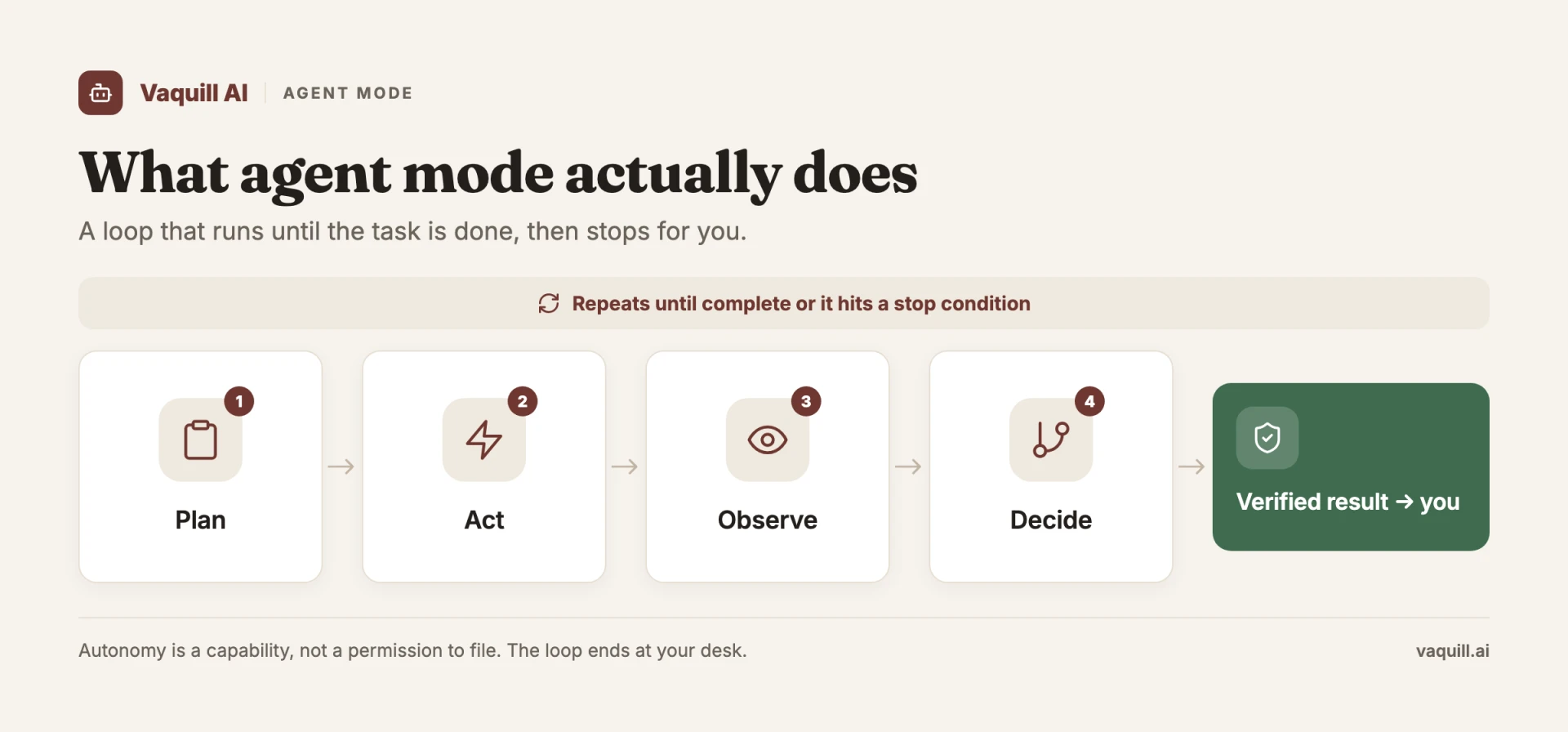
3. Agentic workflow scaffolding. Multi-step pipelines for due diligence, contract review, litigation drafting, etc. The AI plans, executes, and assembles a deliverable that a human reviews.
4. Document store and matter management. Upload documents, organize by matter, run analyses across the whole matter. iManage integration for firms that use it.
5. Enterprise SaaS overhead. SSO, audit logs, RBAC, support, the partner-facing brand polish, the SOC 2 Type II certification, the multi-year contract.
Of those five layers, layers 1 and 5 are paid for at any vendor (or directly to OpenAI / Anthropic + your own infra). Layer 2 is what a legal MCP server provides over a statutes/legislation API plus a separate case-law source.
Layer 3 is what Claude Cowork plugins, ChatGPT custom GPTs, and open-source MCP servers are commoditizing fast. Layer 4 is increasingly something firms keep on their existing iManage / NetDocuments / SharePoint setup rather than uploading to a third-party AI vendor.
What you are paying a Harvey seat for, in practice, is the integration of layers 1 through 5 in one product. What you can self-assemble for $200 per seat is the same set of capabilities with thinner connective tissue.
The DIY stack
Here is the stack we have seen work at solo, 2-15-lawyer, and small in-house teams in 2026. The exact tools are interchangeable; the pattern is what matters.
| Layer | Vendor | Cost/seat/month |
|---|---|---|
| Foundation AI | Claude Max | $100 published |
| Statute/legislation grounding (via MCP) plus an in-app workbench for case-law research | research-suite seat | Self-serve, published on the Vaquill AI site |
| Document storage | Existing iManage / NetDocs / SharePoint | $0 incremental |
| Citator (for filings) | Existing Westlaw or Lexis seat (keep one) | covered by existing contract |
Against a representative Harvey seat at $1,500 per user per month, the DIY stack comes in on the order of $1,000+ per seat per month cheaper once you strip out the enterprise-SaaS layer. For a 5-lawyer firm, that is tens of thousands of dollars per year staying with the firm; for a 15-lawyer firm, six figures.
The named benchmarks so you can check the direction of the math:
| Option | Per seat / month | Per seat / year | Source |
|---|---|---|---|
| Harvey (representative mid-market seat) | $1,500 | $18,000 | Base ~$1,200, top past $2,400; $1,200 to $2,000+ per seat typical, ~25-seat annual minimum (eesel AI, June 2026) |
| Claude Max | $100 | $1,200 | Claude pricing page |
| Statute grounding (MCP) + workbench seat | Self-serve, published | Self-serve, published | Vaquill AI self-serve, see the US primary law API |
| DIY stack savings | ~$1,000+ / seat / month | ~$12K+ / seat / year | vs a $1,500 Harvey seat, once the enterprise-SaaS layer is stripped out |
One more way to see it: per-seat pricing scales with your headcount, but the value scales with the matters you actually run. Those are different curves, and a managed seat bills against the first one whether or not you touch it that month.
Now the honest version of what you get and what you do not get.
What this stack does well
1. Statute-grounded research inside the chat. The MCP server exposes the USC and CFR, federal rules, and 49-state statute codes as tools inside Claude, backed by a statutes/legislation API. Ask "what does Florida's non-compete statute require for enforceability after 2023 amendments" and Claude calls the statute search and section tools, returns the cited section text, and synthesizes a plain-English summary.
For case-law work, the workbench layer runs against an 8M+ US federal and state opinion corpus. The MCP keeps the chat lane statute-only by design, and you flip to the workbench when you need a citation graph.
Harvey bundles both lanes into one product. Here they are two clicks apart, and the case-law lane is an in-product feature rather than an API.
2. Contract review and drafting. Claude Cowork plugins released in late 2025 include an official Legal plugin with contract triage and NDA review workflows. The May 12, 2026 Claude for Legal launch expanded this to 12 practice-area plugins (Commercial, Corporate, Employment, Privacy, IP, Litigation and more). Paste a draft contract into Claude, invoke the Legal plugin, and get a structured review with clause-by-clause analysis.
With the statutes MCP on, Claude can verify any clause references against the actual code section. This combination handles most of what Harvey does for contract review.
3. Document analysis. Claude's current models run a large context window (1M tokens on the Opus and Sonnet tiers as of mid-2026, per Anthropic's model docs). Drop in a 200-page deposition or a 100-page contract and ask analytical questions.
For larger documents or full matter analysis, Claude Projects gives you a persistent context window. Harvey's matter-level analysis is conceptually similar.
4. Multi-step research workflows. Tell Claude "find me the SDNY rule on partial summary judgment, then draft an outline." Claude with the statutes MCP and Cowork legal plugin will execute each step, citing sources for the statutory pieces and flagging where you need to switch to the case-law workbench for precedent. Harvey runs the same workflow with more guardrails and a more polished output document, but the case-law step is an in-product workbench call either way, not an API endpoint.
5. Privacy posture. Claude Enterprise (which Claude Max is the individual-tier equivalent of) has documented zero-data-retention with Anthropic. The statutes API holds equivalent ZDR with Anthropic and OpenAI for the foundation model layer.
Your client documents flow through fewer third-party hands than they would through Harvey, because you are calling the foundation model directly rather than through a wrapper.
What this stack does poorly
1. Polish. Harvey produces deliverables that look like a partner asked an associate to spend a few hours on it. The Claude + MCP stack produces deliverables that look like you and Claude are chatting.
For partner-facing output, you will spend an extra 10 to 20 minutes reformatting. For your own analysis or research notes, it does not matter.
2. Agentic scaffolding for niche workflows. Harvey has pre-built agents for specific verticals: M&A due diligence on a deal of 5,000 contracts, antitrust filings, drug labeling regulatory review.
If your practice involves these, building the equivalent agent stack on Claude + MCP takes engineering time you may not have. For everyday research, drafting, and contract review, you do not need it.
3. iManage / NetDocuments deep integration. Harvey's iManage integration is real and saves clicks. The Claude + MCP stack relies on you copy-pasting from your document store, or using Claude's Files API plus a small script that pulls from iManage.
For high-volume document review, this friction matters; for everyday work it does not.
4. Partner-facing optics. "We use Harvey" reads differently to clients than "we use Claude plus an open-source MCP server." For client pitches and firm marketing, the brand of the tool matters. For doing the actual work, it does not.
5. Support and contractual guarantees. Harvey gives you a Customer Success manager, a written SLA, and someone to call when things break. The DIY stack means you are the support layer.
Claude Enterprise support is real but generic; the MCP/API support side is engineering-led but smaller than Harvey's. For most small firms this trade-off is fine; for a 200-lawyer firm with a procurement team, the support layer is what they are actually paying for.
The 15-minute setup
Here is the exact path from "I have no AI legal stack" to "Claude + a legal MCP working." Total elapsed time is roughly 15 minutes if you already have a Claude account.
Step 1: Get a Claude Max subscription. Sign up at claude.ai, upgrade to Max ($100/month, per Claude's pricing page). Max gives you 5x to 20x the usage of Pro and access to the top Opus tier for deep research workflows.
Step 2: Install Claude Desktop. Download from claude.ai/download. The MCP integration lives in the desktop client, not the web client.
Step 3: Get an API key. Sign up with whichever statutes-API provider you choose. Most are self-serve, so you can start and see current pricing in the dashboard before you commit. Generate the API key from the provider's dashboard.
Step 4: Install the MCP server. In a terminal:
pip install vaquill-mcp
Step 5: Configure Claude Desktop to use it. Edit ~/Library/Application Support/Claude/claude_desktop_config.json (macOS) or the Windows equivalent:
{
  "mcpServers": {
    "vaquill": {
      "command": "vaquill-mcp",
      "env": {
        "VAQUILL_API_KEY": "vq_key_your_key_here"
      }
    }
  }
}
Save and restart Claude Desktop.
Step 6: Install the Cowork Legal plugin. In Claude Desktop, go to Settings → Plugins → browse and enable the official Legal plugin from Anthropic.
Step 7: Test the stack. Open a new chat and ask:
What does Florida's non-compete statute (Fla. Stat. § 542.335) require for enforceability, and how do the 2023 amendments change the analysis for B2B contracts?
Claude should call the MCP statute search and section tools and return the cited section text with a synthesized summary. For case-law follow-ups ("which cases interpret 'legitimate business interest' since 2023"), the in-product workbench layer handles that lane against the 8M+ US opinion corpus (this is an in-product feature, not an API).
If that works, you have replaced the statutory research layer of Harvey in the chat thread and have a known fallback for case law (the in-product workbench, not an API). The contract review and drafting workflows work the same way using the Cowork Legal plugin plus pasted documents.
When this stack is the wrong call
Three situations where you actually should pay for Harvey or a comparable platform:
1. You are AmLaw 100 or 200. At your scale, the per-seat cost is not the constraint. The constraints are procurement-approved vendors, SOC 2 Type II, multi-year contracts, and partner-facing optics.
The DIY stack does not satisfy any of those. Run a pilot anyway for the unit economics learning, but expect to land on Harvey or CoCounsel Legal for the firmwide rollout. If data-in-network is the driver at that scale, a self-hosted option like ibl.ai (~$5,000 to $8,000/month all-in, per ibl.ai, 2026) is the closer comparison than the DIY stack.
2. Your practice is high-volume M&A or regulatory. If you are running due diligence on 5,000 contracts per deal or analyzing 10,000-document FDA submissions, the agentic scaffolding Harvey has built for those specific workflows saves real time. The DIY stack can replicate it but you will spend engineering hours doing so.
3. You need iManage integration depth. If your firm runs on iManage and your associates would lose meaningful hours per week to copy-pasting between iManage and Claude, Harvey's native iManage integration is worth the premium. Time the friction before you decide.
For most other situations (solo practice, 2-15 lawyer firms, in-house at small-to-mid-size companies, non-AmLaw mid-size firms), the DIY stack is the right call.
The broader pattern
What is actually happening in legal AI in 2026 is what happened in every other vertical SaaS market in the prior decade. A new platform shows up, ships a working product, raises at a high multiple, and prices for the enterprise.
Then the underlying primitives (foundation models, retrieval frameworks, orchestration tools) commoditize, and a meaningful share of the market self-assembles the same workflow from cheaper components. The enterprise vendor stays in business because the largest customers still want the integrated product and the support layer, but the per-seat economics shift downward for everyone else.
Harvey, Legora, and CoCounsel Legal are not going away. But the price floor for the same workflow is moving from four figures per seat down by an order of magnitude over the next 18 to 24 months.
If you are buying in 2026, the question is whether your firm needs the integrated polish today (sign with Harvey) or whether you can wait 12 months and pocket the savings while the DIY stack matures (assemble it now).
For more on wiring the statutes MCP into Claude, see the Vaquill AI MCP server, or email contact@vaquill.ai.
FAQ
What is the best Harvey AI alternative? It depends on what you are replacing. For solo, small-firm, and in-house teams, the cheapest credible option is assembling the stack yourself: Claude Max plus a statutes MCP server and the Claude Legal plugin, on self-serve pricing. If you want a managed product with a support desk, GC AI (~$5,000 to $7,000 per seat per year, per Spellbook, 2026) is purpose-built for in-house work and sits well below Harvey, Spellbook leads on Word-native contract drafting, and CoCounsel fits firms already paying for Westlaw. The at-a-glance table above lays out the trade-offs.
Which Harvey alternative is best for in-house counsel? GC AI is the managed tool built specifically for in-house teams, at roughly $5,000 to $7,000 per seat per year (Spellbook, 2026), well below Harvey's four-figure monthly seat but still multiples of a self-assembled stack. The DIY Claude + MCP stack covers the same commercial-contract, employment, and compliance workflows on self-serve pricing, with the trade-off that you own the support layer. Pick the managed tool if you need someone to call; pick the DIY stack if you want the savings. See our Harvey alternatives roundup for the full comparison.
Can you replace Harvey AI with Claude? For most everyday legal work, yes. Claude Max plus a statutes MCP server and the official Claude Legal plugin covers statute-grounded research, contract and NDA review, and document analysis on self-serve pricing. You give up Harvey's polish, deep iManage integration, and the support layer, so high-volume M&A and AmLaw 100 firms are the exception.
How much does Harvey AI cost per seat? Harvey runs roughly $1,200 to $2,000+ per user per month for unlimited usage, with base tiers near $1,200 and top tiers past $2,400, plus a newer pay-as-you-go credit-metered plan (eesel AI, June 2026). Harvey does not publish a rate card, and annual contracts carry a seat minimum near 25 users, so entry deployments start around $360,000 a year.
What is the cheapest Harvey alternative? The cheapest credible option is building your own stack: Claude Max ($100/month) plus a legal MCP server and the Claude Legal plugin, on self-serve pricing. Among managed tools that disclose or leak a price, Gavel is the lowest at roughly $160 per user per month (Spellbook, 2026), though it is a document-automation tool rather than a research engine. See our Harvey alternatives roundup for the full list.
Does Claude have a legal AI product? Yes. Anthropic launched Claude for Legal on May 12, 2026 with 12 practice-area plugins and 20 MCP connectors (iManage, NetDocuments, DocuSign, Thomson Reuters and more, per the ABA Journal). It runs on top of a Claude subscription rather than as a separate four-figure platform.
Can Claude do legal research with citations? Claude on its own answers from training data and can be wrong on specifics. Wired to a statutes MCP server, it pulls the actual cited section text (for example, Fla. Stat. 542.335) and synthesizes from that. For case law, the DIY stack uses an 8M+ US opinion corpus through an in-product workbench, not a statutes API.
Is it safe to put client documents through Claude instead of Harvey? Claude Enterprise (the tier Claude Max mirrors for individuals) documents zero-data-retention with Anthropic. Calling the foundation model directly puts your documents through fewer third-party hands than a wrapper product does, which tends to make the ABA Model Rule 1.6 analysis simpler. Confirm the data-handling terms of each tool in your stack and run your own vendor review.
How long does it take to set up a Claude plus MCP legal stack? About 15 minutes if you already have a Claude account: subscribe to Max, install Claude Desktop, get an MCP API key, install the MCP server, edit the config file, enable the Legal plugin, and run a test query. Full steps are in the setup section above.
When should you still pay for Harvey? Three cases: you are AmLaw 100 or 200 and need procurement-approved vendors and SOC 2 Type II; your practice is high-volume M&A or regulatory where Harvey's pre-built agents save real time; or you depend on deep native iManage integration. For solo, small-firm, and in-house teams, the DIY stack is usually the better call.
Sources
- Anthropic launches Claude for Legal (ABA Journal, May 2026): 12 plugins, 20 MCP connectors
- Harvey AI pricing (eesel AI, June 2026): third-party seat-price tracking
- Harvey alternatives and competitor pricing (Spellbook, 2026): GC AI, Gavel, Iqidis, CoCounsel price points
- Self-hosted Harvey alternative cost math (ibl.ai, 2026): AmLaw-scale self-hosted economics and ABA Model Rule 1.6 posture
- Claude pricing page: Claude Max tier reference
- Claude model overview: context-window reference
- r/legaltech pricing thread (linked above): community signal on the Claude+MCP shift
- Claude Cowork Plugins launch post: Legal plugin context
- OpenAI Harvey case study (linked above): foundation-model stack
- MCP setup guide and API documentation
New legal AI guides, weekly.
Further Reading
How to Compose Legal MCPs: A Multi-Server Cross-Jurisdiction Workflow
Read postLegal AI Tools for Solo Practitioners: 7 Picks That Fit a One-Person Firm
Read postPersonal Injury AI in 2026: What It Actually Does for Plaintiff Lawyers
Read post7 Ways AI Helps Personal Injury Lawyers Win Cases Faster
Read postAI Law Search Engine vs Keyword Search: Find Case Law Faster
Read postWhat Is NDA Triage? How Lawyers Sort Inbound NDAs in Minutes With AI
Read post
Co-Founder & CTO
Priyansh leads engineering and AI at Vaquill, from the matter workbench to drafting, document comparison, document matrix, and citation-verified research.