

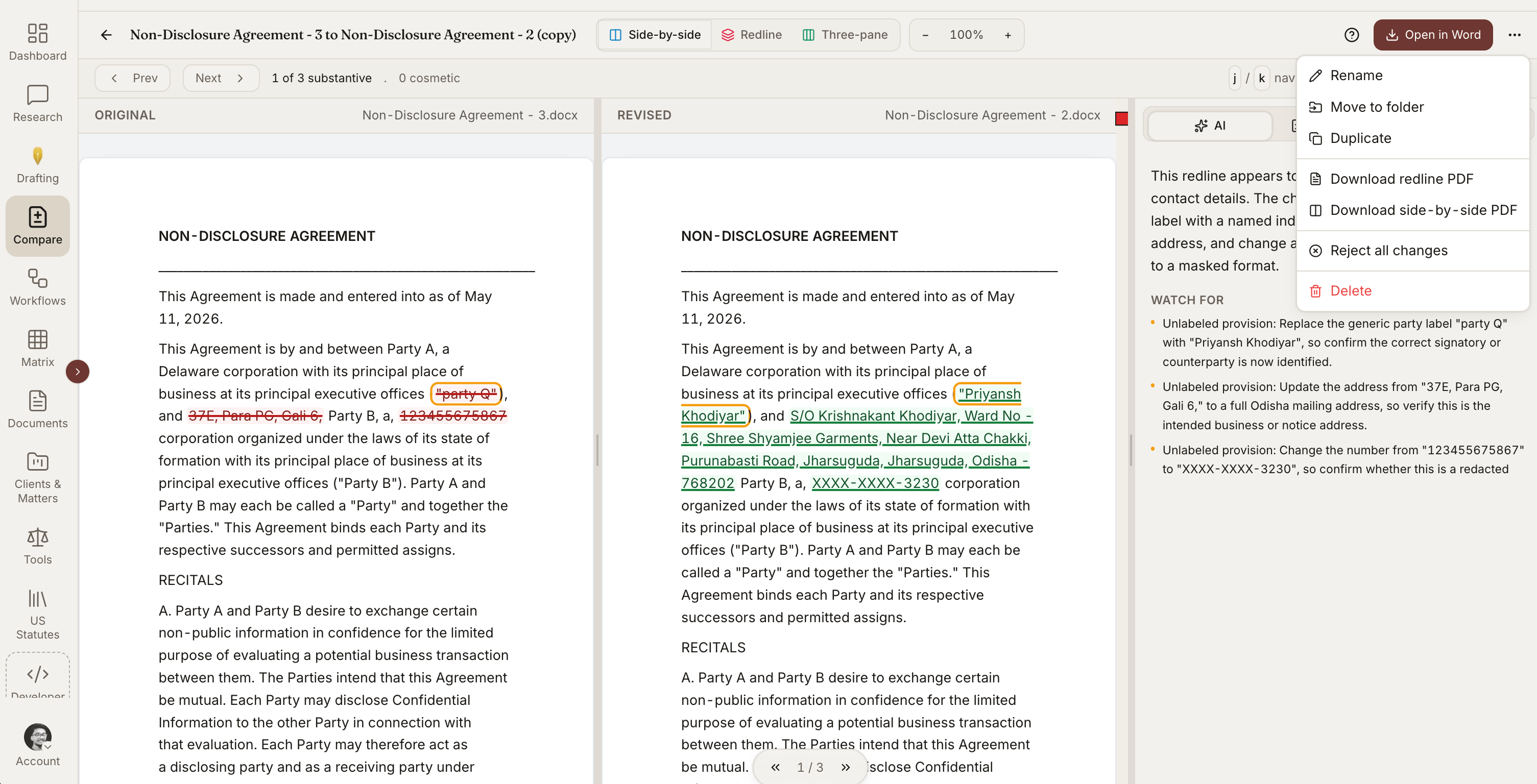
Redline analysis with tracked changes, original against revised
When To Use It
- Reviewing a counterparty’s redline before responding
- Briefing a partner or client on what changed in a markup
- Triaging which edits to accept, push back on, or escalate
- Comparing your sent draft to the version that came back
- Reviewing inherited markups when you join a deal mid-negotiation
How It Works
1
Upload the marked-up document
Use the native Word version with Track Changes on, or pick a clean version and compare it to your sent version using Compare Documents first.
2
Open Redline Analysis
Launch the tool from the tools menu.
3
Let the tool classify each change
Every tracked edit is bucketed (substantive, risk-shifting, clarifying, stylistic, typo) with significance scored.
4
Read the memo and counter
Review the change-by-change memo, the negotiation themes, and the drafted counter-language for pushback positions.
Ready-to-run prompt
Redline Analysis - change-by-change memo with negotiation themes and drafted counter-language.
What You Get For Each Change
Change Categorization
The tool labels each change so you can scan and prioritize:- Substantive - Changes that shift legal rights or obligations
- Risk-shifting - Changes that move risk to your client
- Risk-mitigating - Changes that reduce your client’s risk
- Clarifying - Changes that resolve ambiguity without shifting position
- Stylistic - Changes to wording without legal effect
- Typo / fix - Corrections that should just be accepted
Negotiation Themes
Beyond change-by-change analysis, the tool identifies negotiation themes that run across the markup:- “The counterparty is narrowing your indemnification rights in Sections 8, 11, and 14”
- “Three changes together extend payment terms by 30 days”
- “The non-compete and non-solicit edits track standard template language for their industry”
Recommended Counter
For changes you should push back on, the tool drafts counter-language:- A proposed compromise position
- A reasoned justification you can use in negotiation
- A fallback if the counterparty pushes back on the counter
Output
- Word memo - Structured analysis with one entry per change, organized by section
- Negotiation playbook - The themes and recommended counters, organized for a partner briefing
- Spreadsheet - Tracker showing every change with its disposition column for team-based review
Tips
Related
Compare Documents
Generate the redline if you only have two clean versions.
Contract Review
Full clause-by-clause review against your playbook.
Skills
Encode your firm’s standard negotiation positions as reusable playbooks.
Risk Assessment
Roll the surviving counterparty changes into a quantified risk register.