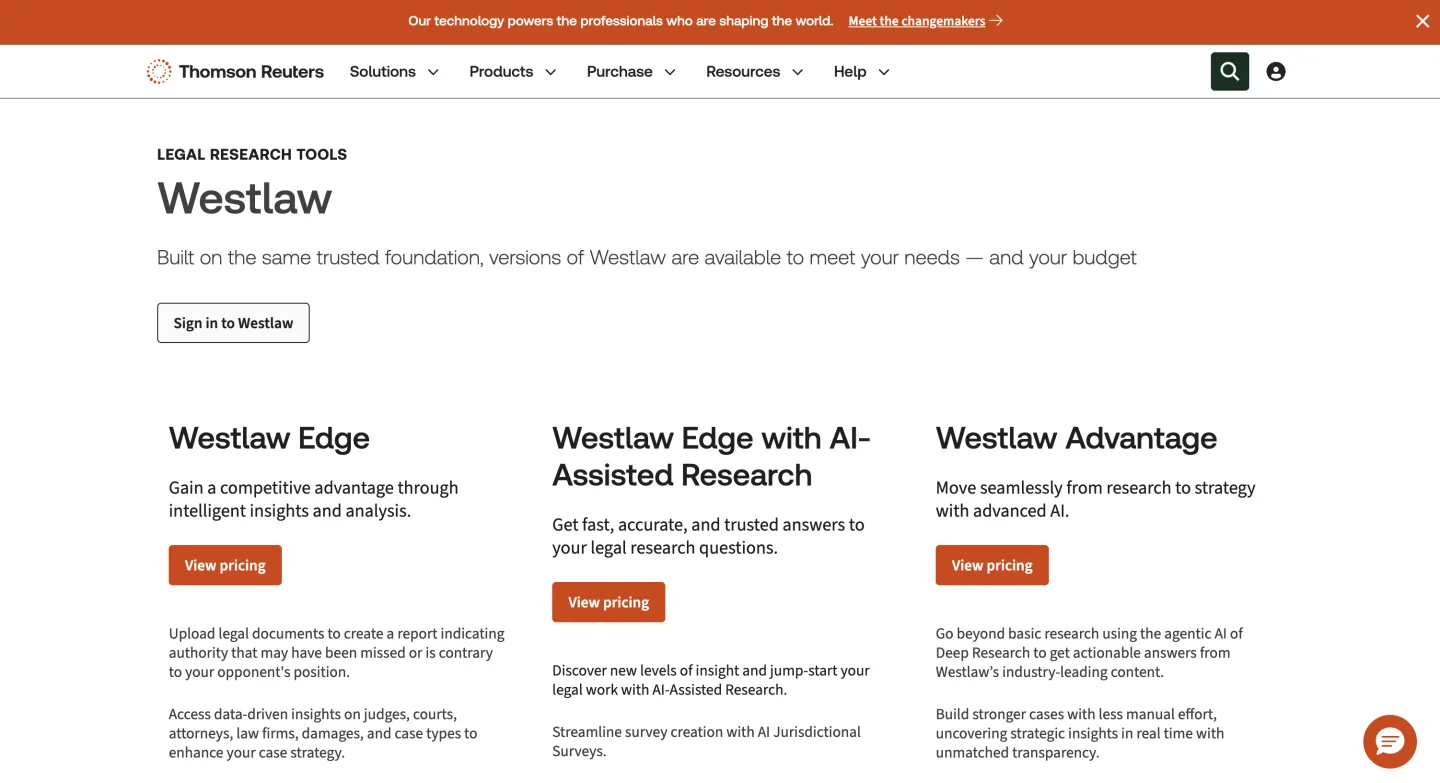
Short answer: Westlaw Precision AI (now sold as Westlaw Advantage) is worth it for litigation and BigLaw research teams that KeyCite daily, and it is hard to justify for solo, small-firm, and contract-heavy in-house teams. Thomson Reuters now publishes self-serve pricing for firms up to 10 attorneys: $256.75 per month for single-circuit coverage and $399.75 per month for all states and federal, AI research included (Thomson Reuters, June 2026). The KeyCite citator and West headnotes are the real moat; the AI chat box is not.
This Westlaw Precision AI review starts at the renewal moment, not the product tour. It is written for litigators, in-house counsel, and BigLaw research leads who have to decide whether the seat still earns its place.
One naming note before anything else. In 2026 Thomson Reuters folded the Westlaw Precision and CoCounsel branding into Westlaw Advantage, which adds Deep Research (agentic AI) and the Litigation Document Analyzer. The product people still search for as "Westlaw Precision AI" is what TR now sells as Westlaw Advantage, so this review covers both names.
Here is the thesis for the rest of the review. The AI chat box is not the moat. Every product has one, and they all run on the same handful of frontier models.
The raw case-law corpus is not the moat either. The open corpus has caught up. The moat is the editor layer Westlaw has built since the 1880s. That means KeyCite, West headnotes, the Topic and Key Number System, and the staff who keep it current.
If you treat Westlaw Precision AI as "Westlaw plus a chatbot," you are reading it wrong. The chatbot is the part rivals copy in 18 months. The citator and the headnotes are the part they cannot.
The renewal pain is not really the price. Switching means retraining a six-lawyer research team off KeyCite habits built over a decade. It means rebuilding brief templates that link out to Westlaw documents.
It means explaining to clients why a citator they recognize vanished from the work product. That is the real cost. The quote does not show it.
At a glance
| Westlaw Precision AI (Westlaw Advantage) | Vaquill AI | |
|---|---|---|
| Price | $256.75/mo single-circuit, $399.75/mo all states + federal (firms up to 10 attorneys, self-serve); 11+ attorneys quote-based (Thomson Reuters, Jun 2026) | Self-serve, published |
| Access | Self-serve up to 10 attorneys; sales-led, multi-year for larger firms | Self-serve |
| Best for | Litigation and BigLaw research teams that KeyCite daily | Solo GCs and small teams |
| Free trial | Self-serve signup up to 10 attorneys; sales-qualified above | Yes |
| Word-native | Brief Analysis, not a Word redline add-in | Editor plus comparison in-app |
| Reliability note | Hallucinated in ~1/3 of answers in the Stanford and Yale study | Verify cites either way |
TL;DR
- Westlaw Precision AI is Thomson Reuters' flagship AI research product. It launched in 2023 and got reshaped by the August 2023 Casetext deal that brought CoCounsel in-house for $650 million in cash.
- Where it wins: deep US case law, statutes, and rules. The editor layer backs it all up, with KeyCite, headnotes, and the West Topic and Key Number System. It adds a CoCounsel chat assistant for Q&A and brief checks.
- Pricing changed in 2026. Thomson Reuters now publishes self-serve Westlaw Advantage prices for firms up to 10 attorneys: $256.75 per month single-circuit, $399.75 per month all states plus federal, AI research included (Thomson Reuters, June 2026). Firms with 11 or more attorneys, or anyone adding the CoCounsel Essentials bundle, still get a sales quote.
- Reliability warning: a Stanford and Yale study found Westlaw's AI made things up in about one in three answers. That was the worst of the paid tools they tested. More on that below.
- Where the gaps are: thin developer API access and a CoCounsel that chats more than it acts. Add a sales cycle that punishes small firms and a price that skips the 2-15 lawyer crowd.
In the Stanford and Yale study, how often did Westlaw's AI-Assisted Research make things up?
Part of our legal AI vendor comparison and pricing series.
What Westlaw Precision AI actually is
Three things welded together. First, the Westlaw corpus and editor layer. That means federal and state case law back to the 1800s, marked-up statutes and rules, and secondary sources. It also means the West Topic and Key Number System, which sorts US case law by point of law.
Second, KeyCite, the citator. It marks how every case has been treated: overruled, distinguished, followed, criticized. It is the answer Westlaw gives when a lawyer asks "is this still good law."
Third, an AI layer. That covers AI-Assisted Research (chat grounded in Westlaw content with cites), Quick Check (brief checks), and the CoCounsel chat assistant from Casetext.
Thomson Reuters bought Casetext in June 2023 for $650 million in cash. The deal closed in August 2023. The next two years went into stitching CoCounsel into the research surface.
By 2026 the thing customers buy is "Westlaw Precision with CoCounsel," more bundle than separate SKUs. That deal bought Thomson Reuters time to ship an AI product that did not feel like a wrapper on a 50-year-old database.
Every AI answer is grounded against the Westlaw corpus. Case citations link into Westlaw, KeyCite flags show inline, and there is a path back to the driving headnote. The model does not run free.
The buyer surface split in 2026. Firms up to 10 attorneys can now buy Westlaw Advantage self-serve at a published price. Firms with 11 or more attorneys still buy through a sales rep and a content-scope talk. The enterprise motion fits BigLaw and large in-house teams; the new self-serve tier opens the door to smaller firms.
The product surface
Five surfaces carry the weight. The right way to judge them is to ask what each one does in a real work week, not what the demo shows.
CoCounsel chat (the Casetext inheritance). Legal Q&A inside Westlaw and as a standalone app. Strong on tight research questions. Weaker when the question wants a memo across three states with side-by-side treatment. The 2026 build lets a lawyer move from a KeyCite trail into CoCounsel without a context switch.
KeyCite. The citator: overruled, distinguished, followed, with depth-of-treatment markers and quotation tracking. The AI reads KeyCite under the hood, so answers come back with citator flags inline. If your brief leans on the citator, this surface pays for the seat by itself.
Headnotes and the Topic and Key Number System. A century-old editor layer that indexes US case law by legal issue. The AI uses it to pull cases, which is why Westlaw's answers cluster on the right ones instead of the most-cited ones. Lexis has Shepard's and its own taxonomy. The West system is the one most US litigators learned in law school.
Brief Analysis (Quick Check). Upload a draft brief. The tool pulls the cited authority, runs KeyCite, flags negative treatment, and suggests cases the brief should have caught. This is the surface that pays for a Precision seat in an appellate practice.
A generic chatbot does not know KeyCite. It cannot tell you the lead case in your draft was distinguished by the Ninth Circuit three months ago.
Statutes annotated and Practical Law. US Code, the CFR, and the 50 state codes annotated with judicial treatment. Practical Law for transactional how-to content. Practical Law depth varies by practice area, stronger on UK practice and US transactional than on US criminal defense.
The demo always runs a clean Delaware corporate-law question with a known answer and a clean citator trail. A real evaluator brings a current draft brief and asks Quick Check to chew on the cited authority. KeyCite flags show up inline against cases the partner already KeyCited that morning.
A senior reviewer can tell within ten minutes whether the AI surface saves time on a brief they have to ship that week. That is the moment Westlaw Precision earns or loses the seat.
On three-state questions ("compare California, Texas, and Florida summary judgment standards for premises liability"), CoCounsel anchors on the first state. The AI reads more like a research dump than a memo with a point of view. KeyCite stays the surface nobody beats.
How much does Westlaw Precision AI cost
This is the part that changed in 2026. Thomson Reuters now publishes self-serve prices for Westlaw Advantage (the rebranded Precision plus AI) for law firms with up to 10 attorneys (Thomson Reuters plans page, June 2026):
| Plan | Published price | Coverage | AI included |
|---|---|---|---|
| Westlaw Advantage, single-circuit | $256.75 / month | One federal circuit | Deep Research, Litigation Document Analyzer, Claims Explorer |
| Westlaw Advantage, all states + federal | $399.75 / month | 50 states plus federal | Same AI tools |
| 11+ attorneys, or with CoCounsel Essentials | Quote-based | Custom | Adds full CoCounsel agentic workflows |
A 2-year term cuts 12%, a 3-year term cuts 18%, per the same page. Those prices are for new customers; existing customers get a custom number. For an anchor on the older tiers, Westlaw Classic ran about $133 per user per month for single-state and Westlaw Edge about $194 (Lawyerist, 2026).
Two things the published price still hides. First, the full CoCounsel Essentials bundle (contract review, deposition prep, agentic Draft) is not on the self-serve sticker; that is a separate quote. Second, firms with 11 or more attorneys never see the published number at all and negotiate from scratch. For context, Vaquill AI is published and self-serve, no quote call. Our Westlaw cost breakdown for solo and small firms walks the full ladder.
Here is what tends to happen. A solo or small firm now self-serves the $256.75 or $399.75 tier and skips the call. A 15-lawyer boutique sits just over the 10-attorney self-serve cap and lands back in a sales quote with a multi-year discount.
A BigLaw firm with 800 seats lands a flat number nobody publishes. Above 10 attorneys, the line-by-line bundling on the quote matters more than any band you read online.
Here is a pattern from real evaluations. A regional litigation boutique runs a parallel pilot. Westlaw Precision with CoCounsel on one side, a workbench rival on the other.
Precision wins the brief test. Quick Check catches a distinguished case the senior associate missed on a draft motion. Precision loses the document-comparison test, since it is not built for clean redline export. So the buy is Precision plus a separate redline tool, not Precision alone.
The takeaway is not which product won. It is that the real question is "where does this seat live in the stack," and a single-product answer is rarely right in 2026.
When the bundle is worth it: a litigation practice where three or more lawyers KeyCite every day and Practical Law maps to the work.
When it is not: a deals-focused in-house team that renewed "because we always have." They open it three times a quarter and pay top dollar for a tool the rest of the team never touches.
The CoCounsel integration story
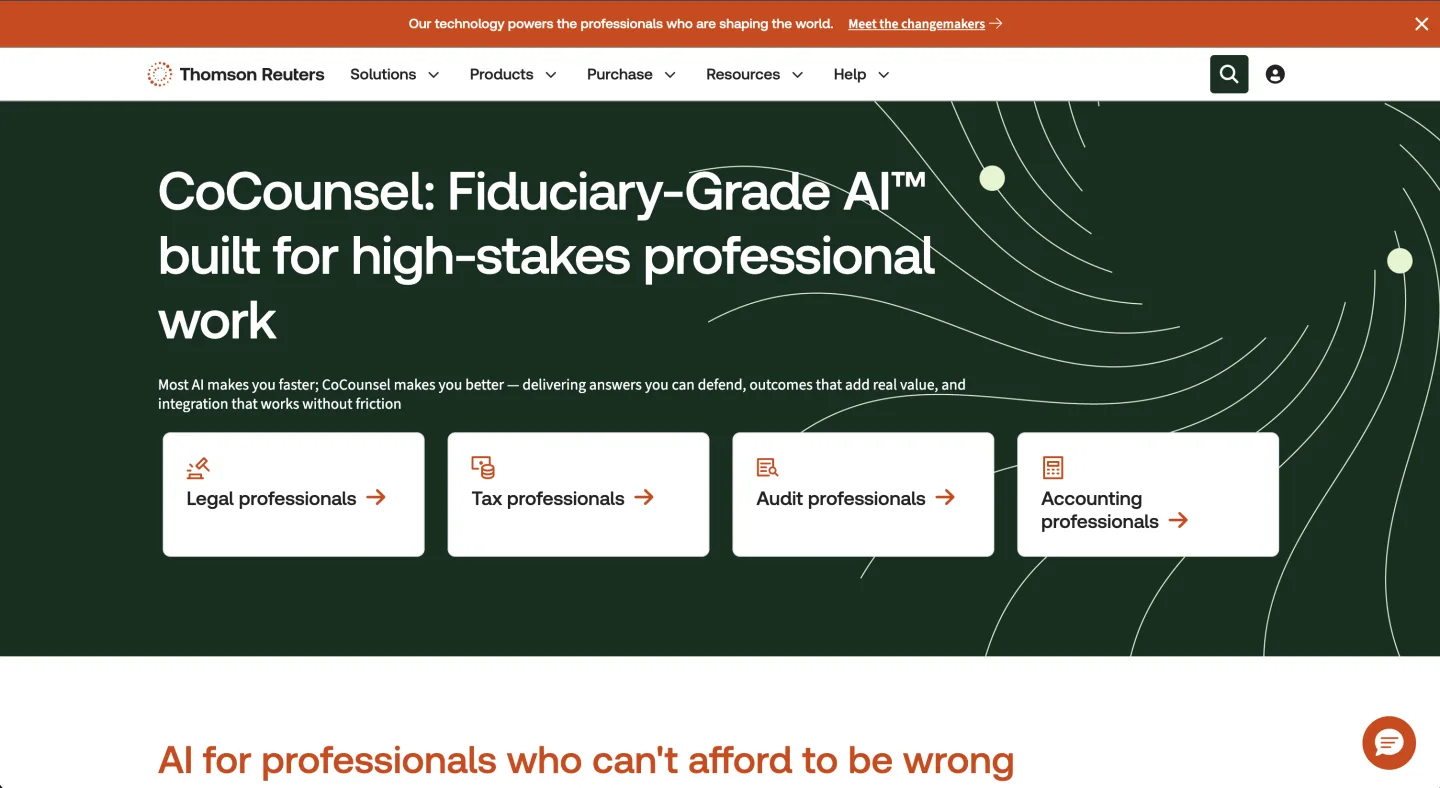
The June 2023 deal was the largest pure legal-AI acquisition to that point and reset the category. Thomson Reuters paid $650 million in cash for a Y Combinator company that had shipped CoCounsel earlier that year.
Westlaw had the corpus, the editor layer, and the installed base. Casetext had the AI product lawyers were already using. Welding them together saved Westlaw two years of engineering and gave CoCounsel a distribution channel it could not have built alone.
The 2024-2025 merge was rougher than the press releases let on. Casetext-era users griped about feature lag and pricing changes. Westlaw users griped that the AI felt bolted on.
By mid-2026 it hangs together. CoCounsel inside Westlaw uses KeyCite, the AI search, and the headnote layer natively. Thomson Reuters has publicly framed CoCounsel as crossing a million users. Treat that as vendor-sourced.
What users actually say about reliability
This is the part the demo skips. A Stanford and Yale study put the paid legal-research tools through a hallucination test. Westlaw's AI-Assisted Research made things up in about one in three answers, the worst score of the paid tools they checked. Lexis came out better in the same study, though not clean either.
The point is not that Westlaw is uniquely bad. It is that "grounded in our corpus" does not mean "always right." A partner who trusts the AI summary without reading the cited case is taking a risk the marketing does not flag. You can read the study writeup and the Yale summary.
So verify every cite. That advice is boring and it is also the whole job.
Where Westlaw Precision AI clearly wins
KeyCite depth. Decades of citator engineering and judicial-treatment classification with quotation tracking. Lexis ships Shepard's, other workbenches ship their own citators, and free citator efforts exist. KeyCite's edge in 2026 is the trust your bench already has in it, not a unique technical trick. If your work product leans on a citator your team trusts, this surface pays for the seat.
Headnotes and the Topic and Key Number System. A century-old editor layer that sorts case law by point of law. The AI uses it to pull cases, which is why answers cluster on the right ones rather than the loudest ones.
Federal and state case-law depth. A commercial US case-law corpus with editor work on top, deep on federal trial and appellate work and on the major state reporters. Corpus depth is not the moat it was in 1990. The editor layer on top still is.
CoCounsel chat for fast Q&A. The Casetext deal handed Westlaw the AI surface it needed without two years of in-house work. By 2026 the chat works, the citations link out, and bounded Q&A happens without leaving the research environment.
Enterprise procurement fit. A BigLaw firm with 800 lawyers and a buying team can sign a Westlaw Precision deal in about two months. Thomson Reuters has run that motion for decades.
New AI vendors cannot match it, and that matters in BigLaw.
Brand recognition. Most US lawyers learned Westlaw in law school. Training cost on a new researcher is near zero. The trust signal is real. The partner asking "did you check the citator" gets an answer they recognize.
Where Westlaw Precision AI has gaps
Public API access. The product is built for lawyers in a browser, not for a legal-ops engineer wiring up a Slack bot or a CLM integration. A team that wants code-level access to citation treatment or case-law search ends up in big-ticket licensing.
The answer is often "talk to your account rep." Compare that to platforms with open APIs and documented MCP servers, and the gap is built in. (See the developer-API roundup post.)
Agentic workflows. CoCounsel is a chat assistant. It is not an agent that chains research, drafting, citation verification, and matter context in one session without the lawyer minding each step. The 2026 frontier is agent mode (see the autonomous research agent post), and Westlaw Precision is a step behind there.
Solo and small-firm pricing. The 2026 self-serve tier helps, but $256.75 to $399.75 a month for one circuit or one researcher is still real money for a 2-15 lawyer firm with a couple hundred dollars a month for AI tooling. The published price is per the firm plan, and the full CoCounsel bundle still needs a quote. (See the small-firm legal tech stack.)
Procurement timeline above 10 attorneys. The self-serve tier signs up in about a business day. Above 10 attorneys, enterprise contracts at this price band take weeks to months from intro call to signed paper, so a mid-size firm trying five AI products lands on the credit-card ones first.
Bug and reliability complaints. On top of the study above, 2024-2025 user reports flagged CoCounsel feature lag during the merge. They also flagged the odd AI outage and shaky answers on rarely cited statutes.
Most are reported as fixed by mid-2026. A buyer should check with current customer references, not the vendor's status page.
Suite breadth versus the workbench shape. Westlaw Precision is research-first by design. Document comparison, matrix workflows across forty contracts, and matter-folder collaboration sit outside the core product. (See the suite-wars post.)
Who should buy Westlaw Precision AI
The fit is clearest for a litigation practice where case-law research and citator checks are the daily bottleneck. Think federal trial work, appeals, or multi-state cases.
A BigLaw research team serving the rest of the firm fits too. So does an in-house team at a public company with a heavy court docket. So does a boutique appellate firm where KeyCite is not optional.
You are the buyer if your week is 60% or more research. You KeyCite three or more cases a day. Your partner reads the citator before the argument.
Who should look elsewhere
Four buyer types should look elsewhere.
Transactional in-house teams. If your week is 80% contracts and 20% research, Westlaw Precision is the wrong center of gravity. Look at in-house specific platforms instead.
Developer shops and legal-ops engineers. A team building programmatic legal workflows hits the API ceiling right away. Look at platforms with generally available APIs and MCP servers. (See add legal research to your AI agent via MCP.)
Solo and 2-15 lawyer firms on a tight budget. Enterprise per-seat pricing is not the right shape for a 5-lawyer plaintiff firm. Look at workbenches priced for small firms.
Teams that want agentic workflows. Maybe you want a system that researches, drafts, checks cites, and hands you a full first pass without babysitting. CoCounsel chat is not yet that product.
Verdict, by segment
Westlaw Precision AI is the real category leader for AI case-law research. The CoCounsel deal closed the AI gap that hurt Westlaw in 2023.
It wins where case-law depth, citator checks, and the editor layer carry the work. It loses where the buyer needs a workbench, an API, or solo-friendly pricing. And whatever you buy, verify the cites yourself.
The chatbot is the part rivals copy in 18 months. The citator and the headnotes are the part they cannot.
- Litigation firm, 10+ lawyers, research-heavy. Renew or sign. The KeyCite, headnote, and CoCounsel stack is the right shape, and the procurement pain spreads across the firm.
- In-house team, contract-heavy. Skip the standalone Precision seat. Pilot a workbench first. Revisit Westlaw Precision when a major litigation matter creates the need.
- Solo or 2-15 lawyer firm. The 2026 self-serve tier ($256.75 to $399.75 a month, up to 10 attorneys) is now an option, but compare it against lower-cost workbenches and free public-data tools first. The price-to-volume ratio still rarely justifies it for light research users.
- Developer or legal-ops engineer. Skip until Thomson Reuters ships a self-serve API. The new self-serve pricing covers seats, not programmatic access. Build on platforms with generally available API and MCP surfaces today.
FAQ
How much does Westlaw Precision AI cost?
As of 2026, Thomson Reuters publishes self-serve Westlaw Advantage prices for firms up to 10 attorneys: $256.75 per month for single-circuit coverage and $399.75 per month for all states plus federal, with AI research included (Thomson Reuters, June 2026). A 2-year term saves 12% and a 3-year term saves 18%.
Firms with 11 or more attorneys, and anyone adding the full CoCounsel Essentials bundle, still get a custom quote.
Is Westlaw Precision AI (Westlaw Advantage) worth it?
For a litigation practice where three or more lawyers KeyCite every day, the AI layer earns the seat, and the new $256.75 to $399.75 self-serve tier makes that math easier for small firms than the old quote-only model did. For a deals-focused in-house team that renews out of habit and opens it three times a quarter, it does not.
The KeyCite citator and the West headnote layer are the parts rivals cannot copy quickly; the AI chat box is not the moat.
Is Westlaw Precision the same as Westlaw Advantage?
Effectively yes for buyers searching in 2026. Thomson Reuters rolled the Westlaw Precision and CoCounsel AI features into a tier it now sells as Westlaw Advantage, which adds Deep Research (agentic AI) and the Litigation Document Analyzer. If a rep or a page says Advantage, that is the current home of what people still call Westlaw Precision AI.
Westlaw Edge vs Westlaw Precision: what is the difference?
Westlaw Edge was the prior AI-assisted tier (KeyCite Overruling Risk, litigation analytics) and ran about $194 per user per month (Lawyerist, 2026). Precision added the guided Precision Research filters and the generative AI layer from CoCounsel; in 2026 that bundle is what TR sells as Westlaw Advantage. Edge is the older, cheaper, less AI-forward tier.
Does Westlaw Precision AI hallucinate or make up cases?
Yes, at a measurable rate. A Stanford and Yale study found Westlaw's AI-Assisted Research hallucinated in about one in three answers, the worst score of the paid tools tested (Yale summary). "Grounded in our corpus" does not mean "always right," so verify every cite before it goes in a filing.
Is Westlaw Precision AI good for solo and small firms?
The 2026 self-serve tier (up to 10 attorneys) finally gives small firms a published price, but $256.75 to $399.75 a month is still a stretch for a 2-15 lawyer firm with a couple hundred dollars a month for AI tooling, and the full CoCounsel bundle is extra.
Compare lower-cost workbenches and free public-data tools before signing. Our solo and small-firm Westlaw cost breakdown lays out the tiers.
Does Westlaw Precision AI have a free trial?
Firms up to 10 attorneys can now sign up self-serve and get online access in about a business day, so the friction is much lower than the old sales-qualified-trial model. Larger firms still go through a rep, and any pilot there is sales-qualified rather than a credit-card test.
What are the best Westlaw Precision AI alternatives?
Lexis+ AI is the direct research incumbent and scored better in the same hallucination study (see our Lexis+ AI review). For a side-by-side, our Westlaw vs Lexis vs Vaquill AI pricing and AI comparison covers all three. For contract-heavy in-house work, GC AI or Spellbook. For research, drafting, and matter management in one self-serve workbench at a published price, Vaquill AI.
Westlaw vs Lexis: which AI is more reliable?
In the Stanford and Yale study, Lexis+ AI hallucinated in roughly 17% of answers against Westlaw's ~33%, so Lexis came out better, though neither was clean. Both still require you to read the cited authority yourself.
For more on legal AI vendor comparisons, see /topics/vendor-comparisons.
New legal AI guides, weekly.
Further Reading
Luminance Review 2026: An Honest Assessment for In-House Counsel
Read postCoCounsel Review 2026: An Honest Assessment for In-House Counsel
Read postLegora Review: Who It's For, What It Costs, and Where It Falls Short
Read postBloomberg Law AI Review 2026: An Honest Assessment for Transactional and Litigation Teams
Read postGC AI Review 2026: An Honest Assessment for In-House Counsel
Read postHarvey AI Review 2026: Honest Take + What It Really Costs
Read post
Co-Founder & CEO · Attorney
Arshita leads product and strategy at Vaquill, building the legal AI suite that solo, small-firm, and in-house US lawyers use to run a matter end to end.