A general counsel (GC) is the most senior lawyer in a company, the head of its in-house legal team, and usually a member of the executive group that runs the business. The GC owns legal strategy, manages risk, and answers to the CEO and the board. In many companies the same person carries the title chief legal officer (CLO).
The job used to be simple to describe. The GC was the top lawyer, the person who said yes or no on the legal questions. That description is now out of date.
The modern GC is a business-risk executive first and a lawyer second. The best ones are measured on whether they help the company move, not on lawsuits avoided.
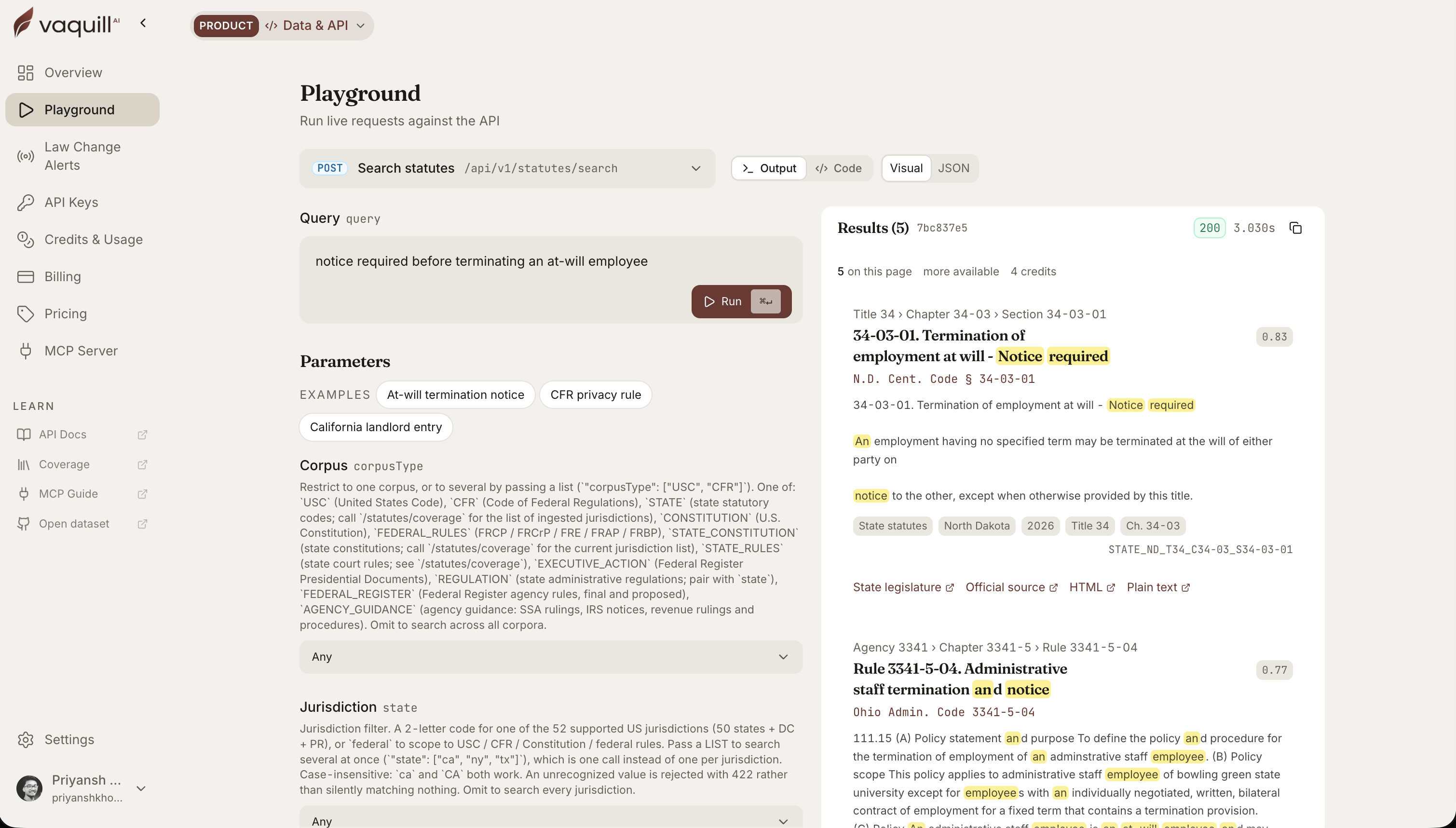 The same corpus behind this article, queried live. Every result carries its citation and a link to the official source.
TL;DR
- A general counsel is a company's top in-house lawyer and a senior executive, accountable for legal strategy, risk, compliance, contracts, and the board relationship.
- The role has shifted from "top lawyer who says no" to business-risk executive who helps the company move safely. Enabling the business is now part of the job, not a nice-to-have.
- GC pay spans a very wide band by company stage. Salary aggregators put a typical US base around $200,000 to $280,000, while total compensation at large public companies runs into the millions, mostly equity (sources below).
- A GC is not the same as outside counsel (a law firm you hire by the matter) or a junior in-house lawyer (who works inside the function the GC leads).
- Below a GC sits an org: deputy GC, associate or assistant GCs, specialist counsel, and a legal operations team.
- A fractional GC delivers most of the GC role part-time, across several companies, for a monthly retainer instead of a full-time salary. It fits startups that have outgrown ad hoc legal help but cannot justify a full-time hire.
Per the Robert Half 2026 Salary Guide cited in this post, what base-salary range does it project for a US general counsel?
This is the definitional hub for the GC role. If you want the tooling side, we have separate guides on AI tools for general counsel and legal AI for a fractional GC. This post is about the role, the pay, and the path.
What a general counsel does
The GC sits at the point where law, business, and risk meet. On any given week the job moves between the boardroom, the deal table, and the legal team's own backlog. Six responsibilities define the role.
Legal strategy. The GC sets how legal supports the company's goals. That means choosing which risks are worth taking, which deals get green-lit, and where the company should plant its flag before a regulator forces the question. Deloitte frames this as the CLO acting as a strategist and catalyst, not only a guardian, in its four faces of the chief legal officer framework.
Risk and compliance. The GC identifies the legal risks across the business and builds the controls that keep them in check. This covers regulatory compliance, litigation exposure, data and privacy obligations, and the company's overall risk profile. In a downturn or a crisis, the GC is often the person who has to call the risk straight.
Contracts. Most of the day-to-day legal volume is contracts: NDAs, vendor agreements, customer MSAs, employment paperwork, and partnership deals. The GC owns the contract function, sets the playbooks, and decides which terms the company will and will not accept.
The board and governance. The GC advises the board and the executive team, often doubles as corporate secretary, and runs corporate governance. They make sure the board has the legal picture before it votes, and that the company's public statements are accurate and defensible.
Managing outside counsel. No in-house team does everything itself. The GC decides which work stays in-house and which goes to law firms, then manages those firms, the legal budget, and the spend. Controlling outside-counsel cost is a core part of the job, which is why teams push to reduce outside-counsel spend where they can.
Leading the function. The GC hires the legal team, sets its priorities, and decides how it is structured and resourced. As the company grows, so does the question of process and technology, including matter management.
GC vs outside counsel vs in-house counsel
These three terms get used loosely, so here is the clean split. The difference is about who employs the lawyer and what they own.
| Role | Who employs them | What they do | How they are paid |
|---|---|---|---|
| General counsel | The company (employee, executive) | Leads the whole legal function, sets strategy, owns risk and the board relationship | Salary, bonus, and equity |
| In-house counsel | The company (employee) | Handles legal work inside the function the GC leads | Salary and bonus |
| Outside counsel | A law firm (the company is a client) | Specialist or surge work hired matter by matter | Hourly or fixed fee per matter |
A general counsel is an in-house lawyer, but not every in-house lawyer is a GC. The GC leads the function and sits at the leadership table. Other in-house lawyers (often titled counsel, senior counsel, or associate GC) do legal work within that structure and report up to the GC.
Outside counsel is different in kind. These are law firms the company hires, usually for specialist work (a securities offering, a bet-the-company lawsuit) or for surge capacity when the in-house team is underwater. Outside counsel works reactively, matter by matter, and bills by the hour. The GC is the buyer who hires and manages them.
The simplest test: the GC is on the company payroll and owns the outcome. Outside counsel is on a different payroll and owns a matter.
The GC org: who sits below the general counsel
In a one-person legal department, the GC is the org. As the company grows, the function builds out underneath them. The common structure looks like this.
Deputy general counsel is the GC's second in command. They often run the function's day-to-day so the GC can focus on the board and strategy. In larger companies the deputy GC is the heir apparent and a GC role in waiting.
Associate or assistant general counsel lead specific areas: commercial contracts, litigation, employment, intellectual property, or a business unit. The two titles mean roughly the same thing, and usage varies by company. These are senior lawyers who own a domain but not the whole function.
Senior counsel and counsel are the working layer of in-house lawyers who handle matters within an area. They are the equivalent of the team that gets the contracts drafted and the questions answered.
Legal operations is the newer addition. Legal ops people are not always lawyers. They run the function like a business: tooling, vendor management, spend, metrics, and process. In a in-house department, the GC does legal ops themselves, usually at night.
General counsel salary
GC pay does not have one number, and any source that gives you a single figure is hiding the spread. Compensation swings hard on company stage, ownership, revenue, and industry. The honest answer is a set of ranges with the source attached.
A few anchors, each labeled with where it comes from and what it measures.
| Measure | Reported figure | Source (checked July 2026) |
|---|---|---|
| US GC base salary, mid-point range | $222,750 to $270,500 | Robert Half 2026 Salary Guide (low/mid/high projection) |
| US GC national median base | ~$280,000 (25th to 75th: $218k to $364k) | Orbyt salary aggregator, 2026 (modeled from BLS, SEC, and job-posting data) |
| US GC average base salary | ~$203,631 (range $125k to $300k) | PayScale, 2026 (1,019 self-reported profiles) |
| Chief executives, median annual wage | $206,420 (May 2024) | US Bureau of Labor Statistics, OEWS (proxy occupation, not GC-specific) |
| Total comp, top public-company GCs (high end) | up to $5.4 million (90th percentile, >$5B revenue) | BarkerGilmore 2026 In-House Counsel Compensation Report |
Read those carefully. The base-salary aggregators (Robert Half, PayScale, Orbyt) cluster a typical US GC base somewhere in the low-to-mid $200,000s. The Bureau of Labor Statistics does not track "general counsel" as its own occupation, so the chief-executives median ($206,420, May 2024) is a rough proxy, not a GC figure. Treat all of these as reported or estimated, not gospel.
The million-dollar numbers are a different animal. They are total compensation at large public companies, and most of that total is long-term equity, not salary. BarkerGilmore's 2026 report found GCs at companies above $5 billion in revenue earn a median around $2.5 million, reaching $5.41 million at the 90th percentile, with equity increasingly exceeding base salary at that scale, per Law.com's coverage of the report. Private-company GCs top out lower, near $3.2 million at the high end.
Where you land depends mostly on company stage. As a directional read, base pay climbs roughly like this:
- Startup, first legal hire: base often around $160,000 to $240,000, plus meaningful equity. The GC is frequently the only lawyer.
- Growth-stage company: base often $240,000 to $340,000, building a small legal and compliance function.
- Late-stage private or mid-market public: base often $320,000 to $600,000, with bonus and equity adding materially on top.
- Large-cap CLO: base $600,000 and up, with total compensation reaching several million, mostly equity.
Those stage bands are illustrative 2026 ranges drawn from published surveys, not quotes. For hard numbers, the authoritative references are the BarkerGilmore In-House Counsel Compensation Report, the ACC Chief Legal Officer survey, and Equilar's General Counsel Pay Trends. Use those to benchmark a specific role.
How to become a general counsel
There is no single route, but the common paths rhyme. The GC seat sits at the top of an in-house career, and getting there is about sequencing experiences, not collecting one credential.
The typical arc looks like this:
- Build a foundation at a law firm. Most GCs start with several years of solid private-practice training, often in corporate, commercial, or transactional work. This is where you learn to do the legal work cold.
- Move in-house, and do it early. Recruiters advise leaving the firm before about year six. Wait too long and you compete with peers who already have in-house experience, which most hiring companies prefer, per a Major, Lindsey & Africa recruiter cited by Legal Dive.
- Work up the in-house ladder. Counsel, senior counsel, associate or assistant GC, deputy GC. Each step adds leadership, business exposure, and ownership of a domain.
- Develop business judgment on top of legal skill. The jump to GC is the jump from issue-spotting to value creation. You stop doing all the legal work yourself and start owning strategy and the function.
- Take the seat. Either by internal promotion (the company knows you) or a lateral move to a GC role at another company (you bring tested credentials).
The non-obvious part: once you are GC, the job is less about being the best lawyer in the room. It is about leadership, business fluency, and judgment under pressure. Many strong lawyers never make the jump because they cannot let go of doing the legal work themselves.
A first GC hire at a small company is also a different role than a Fortune 500 CLO. If you are advising a company on its first legal hire, the person you want is a generalist who can do the work and run the function, not a deep specialist.
The fractional GC model
A fractional general counsel delivers most of the GC role on a part-time basis, usually across several client companies at once, for a fixed monthly retainer. Think of a former GC who runs legal for six startups, two days a month each, embedded in each business but employed by none.
The model exists because of an arbitrage. A full-time GC is a six-figure hire with benefits, equity, and a recruiting cycle on top. A fractional GC sells the same seniority for a retainer in the low thousands per month, with no headcount and no equity grant. For a company that has outgrown "ask the founder's lawyer friend" but cannot justify a full-time salary, that math is the whole pitch.
A fractional GC fits a company that:
- Has real, recurring legal volume (fundraising, enterprise contracts, hiring) but not enough to fill a full-time seat.
- Wants senior judgment, not a junior contractor to push paper.
- Needs someone embedded in the business and proactive, which is what separates a fractional GC from traditional outside counsel.
The difference from outside counsel is posture. A fractional GC embeds and works ahead of problems, on a predictable retainer. Outside counsel is reactive and billed by the matter. The difference from a full-time GC is the employment relationship: a fractional GC is an independent contractor serving several companies, not an employee of one.
We cover this model in depth, including client segregation and the economics, in our guide to legal AI for a fractional general counsel.
How the modern GC uses AI
The shift to business-risk executive runs straight into a headcount problem. The GC is supposed to be a strategist, but most in-house teams are tiny, and the contract queue does not clear itself. Something has to give on the volume side so the GC can spend time where the title says they should.
That is where legal AI earns its place for a GC. The point is not to replace judgment. It is to clear the repetitive work (first-pass contract review, drafting from playbooks, organizing matters) so the human hours go to risk, the board, and strategy. A tool like Vaquill AI is built around that in-house week, keeping drafting, review, and matter context in one place. The deeper tooling discussion lives in our roundup of AI tools for general counsel and the broader best legal AI tools for in-house counsel.
One honest caveat that applies to every legal AI tool: general-purpose chatbots can fabricate citations, so a grounded, in-house-built tool plus a human check is the only safe way to use AI on work you sign your name to.
The verdict
A general counsel is the top in-house lawyer and a senior business executive, accountable for legal strategy, risk, contracts, compliance, and the board. The role has outgrown its old description. A GC who only avoids risk does half the job, and it is increasingly the half that gets passed over.
Pay reflects that weight, but it spans a huge range: a typical US base in the low-to-mid $200,000s by the aggregators, climbing to multi-million-dollar total packages at large public companies, mostly in equity. The path runs from law firm to in-house and up the ladder, with the hardest step being the shift from doing the legal work to leading the function. And for companies not ready for a full-time hire, the fractional GC model delivers most of the role for a fraction of the cost.
If you run a lean legal function and want one workbench for the drafting, review, and matter work that fills your week, you can try Vaquill AI free.
FAQ
What is a general counsel?
A general counsel is the most senior lawyer in a company and the head of its in-house legal team. They own legal strategy, manage risk and compliance, advise the board, and lead the legal function. In many companies the same role carries the title chief legal officer (CLO).
How much does a general counsel make?
It depends heavily on company stage and size. Salary aggregators put a typical US GC base in the low-to-mid $200,000s (Robert Half projects $222,750 to $270,500; PayScale reports an average near $203,631, both 2026). Total compensation at large public companies runs into the millions, mostly long-term equity, with BarkerGilmore's 2026 report showing up to $5.41 million at the 90th percentile for the biggest companies.
What is the difference between a general counsel and a chief legal officer?
In most companies they are the same role with two titles. Some larger organizations use chief legal officer (CLO) for the top legal executive and general counsel for a slightly more legal-operational role beneath it, but the distinction is not consistent across companies.
What is the difference between a general counsel and outside counsel?
A general counsel is an employee and an executive of the company who leads its legal function. Outside counsel is a law firm the company hires by the matter, usually for specialist or surge work, and bills by the hour. The GC is the buyer who manages outside counsel.
What is a fractional general counsel?
A fractional general counsel delivers most of the GC role on a part-time basis, often across several companies at once, for a fixed monthly retainer instead of a full-time salary. It fits companies with real legal volume that cannot yet justify a full-time hire.
How do you become a general counsel?
The common path is a few years of law-firm training, a move in-house before about year six, then working up the ladder from counsel to senior counsel, associate GC, and deputy GC. The hardest step is shifting from doing the legal work yourself to leading the function and owning business strategy.
Does a general counsel need to be a lawyer?
Yes. A general counsel must be a licensed attorney, since the role involves giving legal advice and representing the company on legal matters. Many states have a specific in-house or corporate counsel registration path for lawyers admitted in another state.
Who does a general counsel report to?
Most general counsel report directly to the CEO, and they typically have a direct line to the board of directors. In a 2023 survey cited by Deloitte, a large majority of US CLOs reported to the chief executive, which reflects how central the role has become to running the business.
Last updated: July 2026.
New legal AI guides, weekly.
Further Reading
How Big Should an In-House Legal Team Be? Benchmarks by Company Size
Read postThe State of In-House Legal Teams: Size, Budget, and AI in 2026
Read postHow to Find and Cite New Hampshire Law
Read postHow to Find and Cite Iowa Law
Read postHow to Find and Cite Minnesota Law
Read postHow to Find and Cite Idaho Law
Read post
Co-Founder & CEO · Attorney
Arshita leads product and strategy at Vaquill AI, the US primary law data API. As an attorney, she decides which law we carry, how each section is sourced and cited, and what legal AI and compliance teams need from the data.