No, AI will not replace paralegals. It automates a set of document-heavy tasks inside the week, raises the accuracy bar on the rest, and pushes the role toward judgment, supervision, and owning the process around the tooling.
That is the honest version. The scary version ("a bot does the whole job by next quarter") sells headlines and software. It does not match what is happening inside real legal teams, where the paralegal who used to spend a day on first-pass document review now spends an hour checking the machine's version of it.
TL;DR
- AI automates tasks, not the role. First-pass document review, cite-checking, intake forms, summaries, and discovery support are the exposed work. Judgment, accountability, and client contact are not.
- The role shifts, it does not vanish. The paralegal who used to produce the first draft now checks the machine's first draft, manages the process, and owns the quality bar.
- Accuracy keeps a human in the loop. Legal AI still hallucinates on a meaningful share of queries, so someone has to verify every output. That verification is itself skilled paralegal work.
- The work that stays human: signing for the filing, calling the client, supervising the workflow, reading the room, and catching what the model quietly got wrong.
- Most exposed are narrow seats defined by one repetitive task. The protection is range: process ownership plus the skill of directing and checking AI.
- The skill shift is real and learnable. Paralegals who treat AI like a capable but unreliable assistant, brief it, check it, stay accountable, get more valuable, not less.
Per the post, what share of legal tasks did Goldman Sachs estimate could be automated by current AI?
How we think about this
"Will AI replace paralegals" is the wrong unit. Paralegals do not have one job, they do a bundle of tasks. Some are document and pattern work that AI is genuinely good at. Many are not.
So the useful question is narrower. Which tasks in a paralegal's week are exposed to automation, and which are not? Sort that, and the headcount question mostly answers itself.
We hold one rule throughout: AI does not carry responsibility. When a filing is late or a privilege log leaks a document, a person answers for it, not the model. That single fact keeps a human in the loop no matter how good the tooling gets. The same logic applies one level up, which we covered in will AI replace in-house lawyers.
What paralegal work AI genuinely automates
Modern legal AI is strong at the document-heavy, pattern-based parts of the job. For a in-house team, that is real hours back every week. The work that used to eat a full day now starts as a draft you check instead of a blank page you build.
The clearest wins, ranked by how reliably AI handles them today:
- First-pass document review. AI reads long documents, pulls out clauses and obligations, and flags deviations against a standard. The mechanical read collapses from hours to minutes.
- Cite-checking and citation formatting. AI can pull citations from a brief and check format, though a human still has to confirm each authority is real and says what the draft claims. More on that gap below, and in our guide to verifying AI legal citations before filing.
- Client and matter intake. AI can turn an intake form or email into a structured matter record, extract names, dates, and amounts, and route it.
- Summaries and digests. Long deposition transcripts, case law, and discovery productions get summarized into something a lawyer can read in minutes.
- Discovery and document-production support. AI clusters and tags documents, surfaces likely-responsive material, and helps build privilege logs for human review.
Thomson Reuters estimates AI could free up around 240 hours per professional per year on routine work like this (Thomson Reuters, 2024). Most of that time lands on the highest-volume, lowest-judgment tasks, which is exactly where a lot of traditional paralegal work sits.
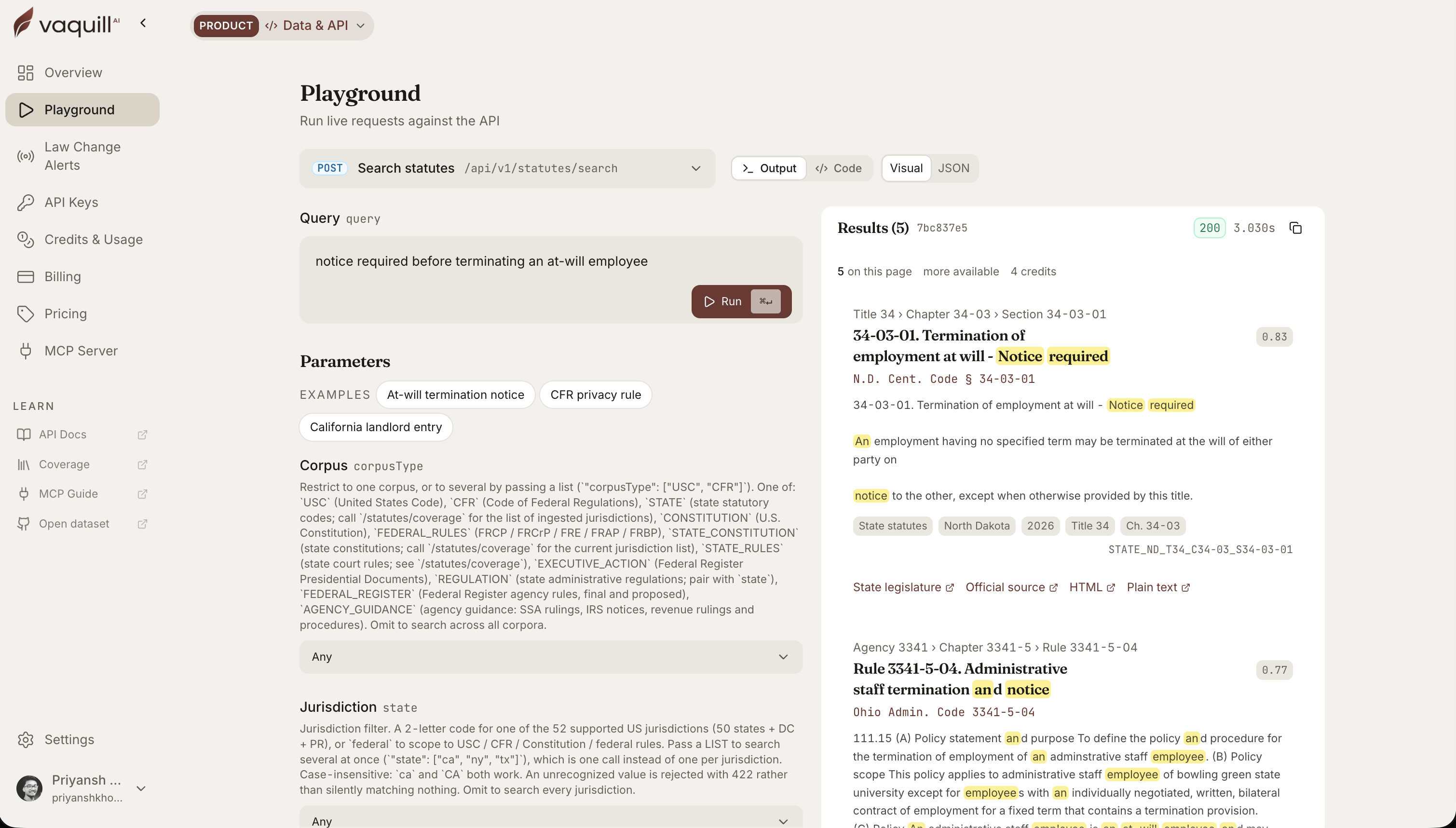 The same corpus behind this article, queried live. Every result carries its citation and a link to the official source.
Adoption is real but uneven. Generative AI use in corporate law departments more than doubled in a year, from 23 percent in 2024 to 52 percent in 2025, per the ACC "Generative AI's Growing Strategic Value" survey of 657 in-house professionals (2025). Plenty of teams have the tools, far fewer have rebuilt the workflow around them.
What stays human
The exposed column is document-heavy and pattern-based. The human column carries judgment, accountability, and the relationships. The change is not which tasks exist, it is where the paralegal's hours land.
| Exposed to AI (task gets automated or sped up) | Stays human (AI assists, does not own) |
|---|---|
| First-pass document review and clause extraction | Judgment on what a flag actually means for the matter |
| Cite formatting and first-pass cite-checking | Confirming every authority is real and on point |
| Intake form processing and matter setup | Direct client contact and reading the situation |
| Summaries and deposition digests | Supervising the workflow and the people in it |
| Discovery tagging and privilege-log drafts | Accountability for the filing and the deadline |
AI eats the work where the right answer is mostly in the documents. It does not touch the work where the right answer depends on judgment, a relationship, or who signs.
Goldman Sachs estimated in 2023 that around 44 percent of legal tasks could be automated by current AI (Goldman Sachs, 2023). That number counts tasks, not jobs. The other 56 percent is where paralegals earn their seat, and it is the half that does not shrink when the tooling improves.
Why accuracy keeps a paralegal in the loop
The tools are not accurate enough to run unsupervised, and the gap is wide enough that "let the model do it" is not yet a safe instruction.
A Stanford HAI study benchmarked the legal research tools lawyers actually buy. It found leading products hallucinate on a meaningful share of queries, with the headline finding that errors show up in one out of six queries or more. Per the underlying paper, one tool was accurate on about 65 percent of queries with roughly 17 percent hallucinations, and another on about 42 percent with roughly 33 percent hallucinations.
So someone has to check the output. In most legal teams, that someone is a paralegal. Checking AI work for hallucinated cites, dropped obligations, and invented defined terms is itself skilled work, and the verification job grows as the drafting job shrinks.
How the role shifts, with one task walked through
The change is not "fewer paralegals." It is the same person absorbing more work at a higher level. The clearest way to see it is to walk one task through both eras.
A 300-document discovery review, 2022. It lands on a paralegal. They open each document, tag it for responsiveness and privilege, log the privileged ones, and build a summary memo. Call it several days of mostly mechanical reading, with the real value in catching the handful of documents that matter and the ones that should never leave the building.
The same review, 2026. The paralegal runs the set through a tool that clusters documents, proposes responsiveness and privilege tags, and drafts the log. In hours there is a first pass. The job is now the check, not the read: confirm the privilege calls on the close ones, spot-check the tags the model was unsure about, catch the document it mislabeled, and own the final log that goes out. The saved days go to higher-judgment work.
(Those time figures are illustrative ranges from how in-house teams describe the shift, not a measured benchmark. The mechanical pass collapses, the judgment pass does not.)
The role moves up the stack. Less time producing the first draft, more time owning its quality, supervising the workflow, and handling the parts that need a person. A new skill shows up in job descriptions: the AI-literate paralegal who can build a review checklist a model follows, prompt the tool, and catch its mistakes.
Who is actually at risk
Not the paralegal who owns a process. The exposure sits on the narrow seat.
The clearest risk is the role defined by a single repeatable task: a seat whose whole day is first-pass document review, or pure cite-formatting, or manual intake typing. That work sits right on top of what AI does best and cheapest.
The more interesting story is the hire that does not happen. The extra paralegal a growing team would have added to absorb document volume is the one most often replaced by a tool, because that hire existed to soak up volume, and volume is what AI now soaks up. (In my experience with in-house teams, the deferred hire is the pattern, not layoffs of existing staff. Treat that as a field observation, not a statistic.)
There is a quieter shift the other way too. Work that used to go to outside vendors or contract reviewers, routine document review, first-pass discovery, basic research support, gets pulled back in-house once a small team can clear it with AI. That raises the value of the paralegals who stay.
The protection is range. A paralegal who only does first-pass review is exposed. A paralegal who does review, manages a process, talks to clients, and directs the tooling is not. The narrow role is the risk, not the person.
What paralegals should learn
You do not need to become a developer. You need to treat AI like a capable but unreliable assistant you are responsible for.
- Learn to brief it. Give the tool your checklist, your standard positions, and your firm's format, the same way you would brief a new hire. A specific instruction beats a vague one every time.
- Always verify, on a fixed checklist. Do not eyeball it. Run the same pass every time: open every cited authority and confirm it exists and is on point, count extracted obligations against the document so nothing was dropped, and confirm each defined term is used consistently.
- Own a process, not a task. The durable value is running the workflow: setting the standard, deciding what AI handles first-pass versus what stays human, and owning the output that goes out the door.
- Get comfortable with the tools. Practice prompting, learn where each tool is strong and where it quietly fails, and build a few reusable checklists. The prompts in 100 generative AI prompts for in-house lawyers are a good starting point, and they apply to paralegal work just as well.
- Move your hours up the value chain. Spend the time AI gives you on the judgment calls, the client contact, and the supervision, not on redoing the tasks the tool already handled.
Adapting takes effort, but it is not out of reach. The paralegals who lose ground are the ones who refuse to touch the tools, not the ones who get replaced by them. If you want to see what playbook-driven review looks like in practice, our clause library shows the standard positions a tool checks against, and our best legal AI tools for in-house counsel roundup covers the tooling.
FAQ
Will AI replace paralegals entirely? No. AI automates document-heavy tasks like first-pass review, cite-checking, intake, and summaries. It does not replace the part of the job that applies judgment, talks to clients, supervises the workflow, and is accountable for the filing.
Which paralegal tasks are most exposed to AI? First-pass document review, clause and obligation extraction, citation formatting, intake processing, document summaries, and discovery tagging are the most exposed, because the right answer is mostly in the documents and the work is pattern-based.
What paralegal work stays human? Judgment on what a flag means for the matter, confirming citations are real and on point, direct client contact, supervising the workflow, and accountability for deadlines and filings. AI assists with these, it does not own them.
Will firms hire fewer paralegals? They are more likely to slow hiring than to cut existing staff. The change usually shows up as a deferred next hire: the additional paralegal who would have been added to absorb document volume is the one a tool now displaces, while the current team stays.
What skills should paralegals learn for the AI era? Learn to brief and direct AI tools, verify their output on a fixed checklist, and own a process rather than a single task. The AI-literate paralegal who pairs document skill with tooling fluency and good judgment is the durable role.
Is AI accurate enough for paralegals to rely on? Not without a human check. A Stanford HAI study found leading legal AI tools hallucinate on a meaningful share of queries, with one tool accurate on about 42 percent and another on about 65 percent. Every output has to be verified before anyone relies on it, and that verification is part of the job.
How should a paralegal start using AI at work? Start with one high-volume, low-judgment task like first-pass document review or NDA triage, build a checklist the tool follows, and verify every result. Expand to other tasks once you have calibrated where the tool helps and where it quietly fails.
New legal AI guides, weekly.
Further Reading
What Vaquill AI Can Actually Do: Agentic Workflows, Verification Depth, and Open Benchmarks
Read postLegal AI in Microsoft Word: Contract Review, Redlining, and Research in a Word Add-In
Read postBuilt-In Legal AI Skills: Which One to Run for Each Task
Read postWhat a Legal AI Agent Actually Does: One In-House Task, Start to Finish
Read postHow Legal AI Memory Works: Stop Re-Explaining Yourself Every Session
Read postAI Contract Negotiation (2026): How In-House Teams Negotiate Faster
Read post
Co-Founder & CEO · Attorney
Arshita leads product and strategy at Vaquill, building the legal AI suite that solo, small-firm, and in-house US lawyers use to run a matter end to end.