AI helps in-house counsel negotiate, not just review. It builds your position playbook, drafts fallback language at three tiers, plans the redline, tracks concessions across rounds, and preps counter-arguments before the call. The strategy, the trades, and the final call stay with you.
Most coverage stops at review: AI reads the contract and flags the off-market terms. Useful, but review ends where negotiation begins. The harder question is what to do with each flag, which fight to pick, what to concede to win the one that matters, and how to phrase the counter so it lands. This guide is about that second half.
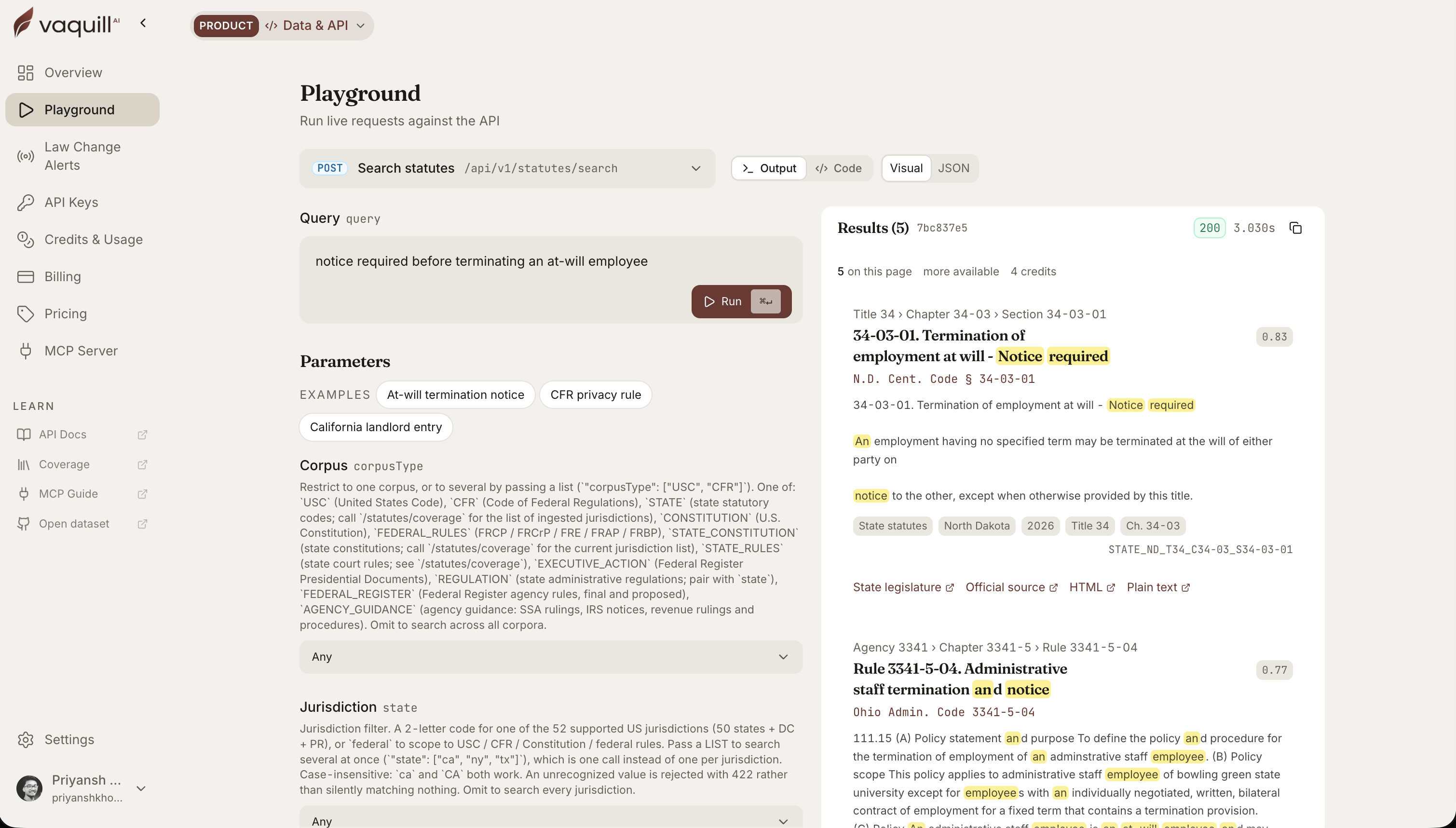 The same corpus behind this article, queried live. Every result carries its citation and a link to the official source.
TL;DR
- AI turns review into a negotiation plan. It maps each flagged term to your standard position, your fallback, and your walk-away, so you walk into the call with tiers, not a single line in the sand.
- Fallback language is the highest-value output. Drafting tier-1, tier-2, and tier-3 wording for a clause in advance means you counter in seconds instead of stalling the deal for a redraft.
- Concession tracking is where deals get won. AI keeps a running ledger of what each side gave up across rounds, so you trade deliberately instead of conceding the same point twice.
- Counter-argument prep is real leverage. Ask the model for the counterparty's likely objections to your position and your responses, then pressure-test your own logic before they do.
- Human judgment leads. Which fight is worth the relationship, what the business will actually accept, and when to walk, none of that is a language task. AI drafts and tracks; you decide.
Per this guide, what is the highest-value AI output in contract negotiation?
Why review-only stops short
A review tool flags that the liability cap is 3 months of fees when your playbook says 12. Good. Now what? You still have to decide whether the cap is worth a fight on this deal, draft a counter, anticipate the vendor's pushback, and figure out what you would give up to move them.
That second half is where deals stall. The flag takes a minute. Drafting the counter, checking it against your standard, and prepping for the back-and-forth takes the afternoon. AI compresses that afternoon, which is the actual point of using it in negotiation. For the review foundation this builds on, see our AI contract review guide and in-house contract review playbook.
The AI-assisted negotiation workflow
Negotiation with AI is five steps, and a human leads at every one. The model produces drafts and ledgers; you make the calls.
| Step | What AI does | What you decide |
|---|---|---|
| 1. Build the playbook | Drafts standard, fallback, and walk-away positions per clause from your past deals | Whether each position matches the company's real risk appetite |
| 2. Generate fallback language | Writes tier-1/2/3 wording for each key clause in advance | Which tier to open with and which to hold back |
| 3. Plan the redline | Proposes edits, prioritizes by severity, drafts margin comments | Which flags are worth raising and which to let go |
| 4. Track concessions | Keeps a running ledger of every give and take across rounds | What to trade for what, and when you have given enough |
| 5. Prep counters | Lists the counterparty's likely objections and your responses | Which argument to lead with and when to walk |
1. Build the position playbook
A playbook is your standard position, your fallback, and your walk-away for each clause that matters. AI helps build it fast: feed it your last 20 signed vendor agreements and ask it to extract the actual liability caps, indemnity scopes, and termination terms you have accepted. That gives you a real picture of your market, not a guess.
Then you set the lines. The model can draft a starting playbook, but only you know that the business will swallow a weaker cap for a vendor it cannot replace. Our clause library lays out standard and off-market positions for the clauses that come up most.
2. Generate fallback language in advance
This is the highest-leverage AI output in negotiation. For each key clause, have the model draft three tiers of language before the call:
- Tier 1 (your open): the position you would love to get.
- Tier 2 (your realistic landing): what you expect to settle on.
- Tier 3 (your walk-away line): the weakest wording you can sign.
When the vendor pushes back, you do not stall for a redraft. You already have the next tier drafted, checked against your standard, and ready to paste. That speed is what closes the gap between "we will get back to you" and signing this week.
3. Plan the redline strategy
A redline is a negotiation move, not a markup. AI helps you sequence it: flag every deviation, rank by severity, and separate the deal-breakers from the nice-to-haves. The mistake is marking up everything at tier 1 and burying the two terms that actually matter under twenty cosmetic edits.
Have the model draft the redline and the margin comments, then you cut it down. Lead with the high-severity terms, soften the language on the ones you will trade away, and drop the ones not worth the friction.
4. Track concessions across rounds
By round three, it is easy to lose track of who gave what. AI keeps the ledger: every term, where each side opened, what each conceded, and what is still open. That lets you trade deliberately. If you are about to give on the indemnity cap, the ledger reminds you that you already conceded on the audit-rights clause, so the next give should buy you something back.
5. Prep counter-arguments
Before the call, ask the model: "What are the strongest objections the vendor will raise to a 12-month liability cap, and how do I respond to each?" You get the counterparty's likely script and your responses, which lets you pressure-test your own position before they do. The judgment, which argument to lead with and when to stop pushing, stays yours.
A worked example: negotiating the liability cap and the indemnity
Here is the workflow on one real vendor SaaS agreement. Our playbook: liability capped at 12 months of fees, mutual indemnification, and indemnity claims carved out from the general cap.
What the vendor's draft said. Two clauses broke the playbook.
The limitation of liability:
"In no event shall Vendor's aggregate liability arising out of or related to this Agreement exceed the fees paid by Customer in the three (3) months preceding the event giving rise to the claim."
The indemnification:
"Customer shall indemnify and hold harmless Vendor from any and all claims arising out of Customer's use of the Services."
The positions they break. The cap is set at 3 months, not 12, and it is one-directional: it limits the vendor, not the customer. A failure that surfaces in month 10 of an annual deal recovers a quarter of what you paid. The indemnity is one-way (you indemnify them, not the reverse) and uncapped, and it sits inside the general cap so an indemnity claim is squeezed by the same 3-month number. For the standard positions here, see limitation of liability and indemnification.
The flags AI produced, severity-ranked:
| Severity | Clause | Issue | Standard | Suggested move |
|---|---|---|---|---|
| High | Limitation of Liability (9.2) | Cap at 3 months of fees, one-directional | 12-month mutual cap is the common in-house fallback; sub-6-month is off-market | Counter to 12 months, make mutual |
| High | Indemnification (10.1) | One-way, uncapped, inside the general cap | Mutual indemnity, with indemnity carved out from the cap | Make mutual; carve indemnity from the cap |
| Medium | Cap interaction | Indemnity squeezed by the 3-month cap | Indemnity obligations usually sit outside the general cap | Add a carve-out so indemnity is not capped at 3 months |
The fallback language AI drafted for the cap:
- Tier 1: "...exceed the total fees paid by Customer in the twelve (12) months preceding the event," made mutual for both parties.
- Tier 2: "...exceed the greater of the fees paid in the prior twelve (12) months or the annual contract value," mutual.
- Tier 3 (walk-away): a 12-month mutual cap with a carve-out for indemnity, confidentiality, and IP claims, which must survive uncapped.
The concession ledger after round two. The vendor agreed to make the cap mutual and move it to 9 months but refused to carve indemnity fully out of the cap. The ledger flagged that you had already conceded on a shorter notice period for termination (see termination), so the deliberate trade was: accept the 9-month cap if they carve indemnity, confidentiality, and IP out of it entirely. That carve-out matters more than the extra three months on the cap, and the ledger made the trade obvious instead of accidental.
Where human judgment led. The model drafted every tier and tracked every give. But the call to accept 9 months in exchange for the carve-out was a business judgment: this vendor was the only viable provider, the relationship mattered, and the uncapped carve-out for the claims that actually go big (indemnity, IP, confidentiality) was worth more than three months on a cap that would rarely bind. AI gave the options; the lawyer picked the trade.
Where AI helps and where you lead
A clean split keeps you fast without outsourcing the judgment.
| AI handles | You lead |
|---|---|
| Drafting standard, fallback, and walk-away language | Deciding which fight is worth the relationship |
| Ranking flags by severity | Knowing what the business will actually accept |
| Tracking concessions across rounds | Choosing what to trade for what |
| Listing likely counterparty objections | Reading the room and the timing |
| Comparing terms against your playbook and market | Owning the final call and the signature |
The one rule that does not move: AI does not carry liability. When a deal goes sideways, the in-house counsel answers for it, not the model. That keeps a human leading the negotiation no matter how good the drafting gets.
A note on the tooling. General chatbots can draft a clause, but they do not remember your 12-month cap rule, can hallucinate on legal specifics, and may retain what you paste. Purpose-built contract AI encodes your playbook so the same standard applies every round, and offers data protections a consumer tool does not. For how the tools compare, see best AI contract review tools compared, and for the NDA case specifically, the NDA playbook template. Other clauses worth a standard position before you negotiate: payment terms and non-compete.
FAQ
Can AI actually negotiate contracts, or just review them? AI does not run the negotiation for you, but it does far more than review. It drafts fallback language at multiple tiers, plans the redline, tracks concessions across rounds, and preps counter-arguments. You make the strategic calls and the trades; AI handles the drafting and the tracking that make you faster.
What is a negotiation playbook and how does AI build one? A playbook is your standard position, fallback, and walk-away for each key clause. AI builds a draft fast by extracting the terms you have actually accepted across past signed deals, so your positions reflect your real market. You then set the lines based on the business's risk appetite.
How does AI help with fallback language? For each key clause, AI drafts three tiers in advance: your opening position, your realistic landing, and your walk-away line. When the counterparty pushes back, you paste the next tier instead of stalling the deal for a redraft, which is what keeps the deal moving.
Can AI track concessions during a negotiation? Yes. AI keeps a running ledger of every term, where each side opened, what each conceded, and what is still open. That lets you trade deliberately, so you avoid conceding the same point twice and you know what to ask for in return for your next give.
Is it safe to use AI for live contract negotiation? It can be, with the right tool: a written commitment not to train on your data, encryption, defined retention, and your playbook encoded so the same standard applies every round. Avoid pasting live deal terms into consumer chatbots, which may retain inputs and have no memory of your positions.
Where should human judgment lead in AI-assisted negotiation? On which fight is worth the relationship, what the business will actually accept, what to trade for what, and when to walk away. AI drafts and tracks; none of those decisions are language tasks a model can own, and the liability for the deal stays with the lawyer.
How is AI negotiation different from AI contract review? Review flags that a clause is off-market. Negotiation decides what to do with each flag: whether to push, what counter to offer, what to trade, and how to phrase it. Review runs largely on autopilot; negotiation uses AI for drafting and tracking while a human leads the strategy.
New legal AI guides, weekly.
Further Reading
What Vaquill AI Can Actually Do: Agentic Workflows, Verification Depth, and Open Benchmarks
Read postLegal AI in Microsoft Word: Contract Review, Redlining, and Research in a Word Add-In
Read postBuilt-In Legal AI Skills: Which One to Run for Each Task
Read postWhat a Legal AI Agent Actually Does: One In-House Task, Start to Finish
Read postHow Legal AI Memory Works: Stop Re-Explaining Yourself Every Session
Read postAI Legal Drafting (2026): A Practical Guide for In-House Counsel
Read post
Co-Founder & CEO · Attorney
Arshita leads product and strategy at Vaquill, building the legal AI suite that solo, small-firm, and in-house US lawyers use to run a matter end to end.