Claude, the assistant from Anthropic, is a strong choice for an in-house lawyer who wants help drafting, summarizing, and reasoning through long documents. It writes carefully, holds a lot of context at once, and tends to hedge rather than bluff. What it cannot do is tell you what the law is. It has no grounding in your matter or in verified authority, so it will invent citations that look real. This guide covers where Claude earns its keep, the plan tiers that decide whether you can paste a client matter, the two ways lawyers actually use it, and where a grounded legal tool beats it.
TL;DR
- Claude is a drafting and analysis assistant, not a source of law. It is excellent at long-document work, summaries, and careful prose. It is unreliable at finding authority and confirming a holding.
- It fabricates citations confidently. Like any large language model, Claude predicts plausible text, so a made-up case reads exactly like a real one. That is how lawyers get sanctioned.
- Consumer and business tiers are different products for confidentiality. Anthropic states it does not use inputs or outputs from its commercial products (Team, Enterprise, API) to train models by default. Consumer tiers (Free, Pro, Max) are different: since an August 2025 policy change, Anthropic trains on your chats by default unless you opt out, with retention up to five years. Opt out, or better, do not paste client matters into a consumer account.
- ABA Formal Opinion 512 already sets the duty. Understand how the tool can fail, get informed client consent before entering confidences, and verify every output.
- There are two ways lawyers use Claude. The chat assistant at claude.ai for drafting and analysis, and the power-user path (Claude Code plus legal MCP servers) for grounded research.
- A grounded legal tool wins for anything you file. Retrieval over real opinions and statutes turns verification from a research project into a click.
Per this post, why can't raw Claude reliably tell you what the law is?
What Claude is, and the tiers that matter for confidentiality
Claude is a family of large language models built by Anthropic, reached through the chat app at claude.ai, desktop and mobile apps, and an API. Like every model in this class, it predicts the most plausible next words. That one fact explains both its strengths and its failure modes.
For a lawyer, the practical question before any of that is which plan you are on, because the plan decides whether you can put a client matter into the box. Anthropic sells two broad categories with different data handling: consumer plans (Free, Pro, Max) and business plans (Team, Enterprise, plus the developer API).
The distinction that governs your confidentiality duty is training. Anthropic's privacy center states that for commercial products, "by default, we will not use your inputs or outputs from our commercial products to train our models" (Anthropic Privacy Center, 2026), with an exception for content you explicitly submit as feedback or a bug report. Consumer plans changed in August 2025: Anthropic now trains on Free, Pro, and Max chats by default unless you opt out, and may retain that data for up to five years. Toggling the opt-out is a setting, not a contract, so read the current policy yourself rather than trust a blog's snapshot.
| Plan | Category | Training on your content (default) | Built for client-confidential work? |
|---|---|---|---|
| Free / Pro / Max | Consumer | Trained on by default unless you opt out (Aug 2025 change); up to 5-yr retention | No, not by default |
| Team | Business | Not used to train models by default (Anthropic, 2026) | Closer, with admin controls |
| Enterprise | Business | Not used to train models by default (Anthropic, 2026) | Yes, with admin controls and a data agreement |
A few practical notes. The Max plan is a consumer contract even though it costs more than Team per month, so price does not buy you business data terms. Toggling a setting off in a consumer account is not the same as a contractual no-train commitment. And a data agreement (a DPA), zero-retention options, and admin visibility live on the business tiers, which is why a legal team handling real client data should be on Team or Enterprise, not a personal Pro seat. For current numbers and tier features, see Anthropic's own pricing page, since plans shift.
We unpack the broader data question, where your inputs actually travel and what to ask a vendor, in we do not train on your data: how to verify it. The same confidentiality logic applies across assistants; our is ChatGPT confidential for legal work piece walks the consumer-versus-business split for the other big chatbot.
Where Claude is strong for legal work
These are the tasks where Claude saves real time, and the verification burden stays low because you supply the substance.
- Long-document analysis. Claude handles a large context window well, so you can paste a full lease, a credit agreement, or a long deposition transcript and ask for the key dates, the obligations, or a summary of one party's risk. It is working from your text, not its memory.
- Careful first drafts. Hand it a fact pattern and ask for a demand letter, an internal policy memo, a deposition outline, or a board update. You get a coherent structure in seconds, then you edit and source it.
- Summarizing and reorganizing. Turn a sprawling email thread into a timeline, condense a 40-page report into a one-pager, or restructure a rambling clause into something readable.
- Reasoning through a problem you frame. Counterarguments, issue-spotting checklists, negotiation angles, a list of questions to ask a vendor. You are using it to think, not to cite.
- Tone and plain-language work. Soften a blunt note for a client, or explain a concept in plain English that you will confirm elsewhere before relying on it.
Lawyers often prefer Claude's tone for memos and its handling of long context, and it tends to hedge rather than assert authority it does not have. For a head-to-head on the drafting tier specifically, see our best AI chatbot for legal writing comparison.
Where Claude is risky, and why it matters
The failure modes are not random. They cluster around exactly the work that goes to a court or a client.
Citation hallucination
This is the headline risk. Asked for authority that supports a point, Claude generates a citation-shaped string: a plausible case name, a real-sounding court, a reporter cite in the correct format. Sometimes that string is a real case. Sometimes it is not, and the model cannot tell the difference. Careful hedging can make this worse, because measured phrasing reads like authority the model does not actually have.
The result has been a steady stream of sanctions across every general chatbot, because fabricated cites are convincing and the deadline is real. The fix is a discipline, not a hope that the next model is smarter. We lay out the checking workflow in how to verify AI legal citations before filing.
No grounding in your matter or in verified law
Claude does not have access to your matter files unless you paste them, and it has no live connection to a verified corpus of opinions and statutes. When it answers a question about the law, it is reasoning from training data, not retrieving a source you can open. That is the structural difference between a chatbot and a legal research tool.
Jurisdiction and currency gaps
A general assistant does not know whether you mean Delaware, California, or federal law unless you say so, and even then it blends training data across states and years. Statutes and case law also move, and the model reasons from a fixed snapshot. It will answer confidently either way, without flagging the ambiguity or the staleness.
Safe vs unsafe uses for lawyers
The line tracks one question: are you asking Claude to write from law you supplied, or to supply the law itself? The first is usually safe with editing. The second triggers your full verification duty under ABA Formal Opinion 512, the ABA's July 2024 ethics guidance applying the Model Rules to generative AI.
| Safe with normal editing | Unsafe without independent sourcing |
|---|---|
| First drafts where you supply the facts and the law | Finding supporting authority for a proposition |
| Summarizing a document you have rights to | Quoting or paraphrasing a holding Claude surfaced on its own |
| Rewriting, tightening, and tone-shifting your own text | Confirming a statute's text or a case's procedural posture |
| Brainstorming arguments, checklists, and questions | Generating anything you will file without sourcing every cited claim |
| Plain-language explanations you will verify elsewhere | Relying on a jurisdiction-specific rule it stated from memory |
Opinion 512 names three duties that bear directly on this. Competence (Rule 1.1): you must understand the tool well enough to grasp how it hallucinates, and keep that understanding current. Confidentiality (Rule 1.6): you must know how the tool handles your data and generally get informed client consent before entering client confidences, and boilerplate consent in an engagement letter is not enough. Verification and candor: you stay responsible for everything you file, with more scrutiny for drafting and research than for brainstorming.
We translate the full opinion into plain English in our ABA Formal Opinion 512 guide. This article is general information, not legal advice; check your state bar, since several have issued their own guidance.
The two ways lawyers use Claude
There is a beginner path and a power-user path, and they solve different problems.
1. The chat assistant at claude.ai
This is what most lawyers mean by "using Claude." You open the app, paste your text, and draft or analyze in a conversation. It is fast, it handles long documents, and it needs no setup. Use it for the safe tasks above: scaffolding, summaries of your own text, rewrites, and reasoning you frame. Just remember it has no grounding, so treat every legal proposition it produces as a claim to verify, not a fact.
2. The power-user path: Claude plus legal MCP servers
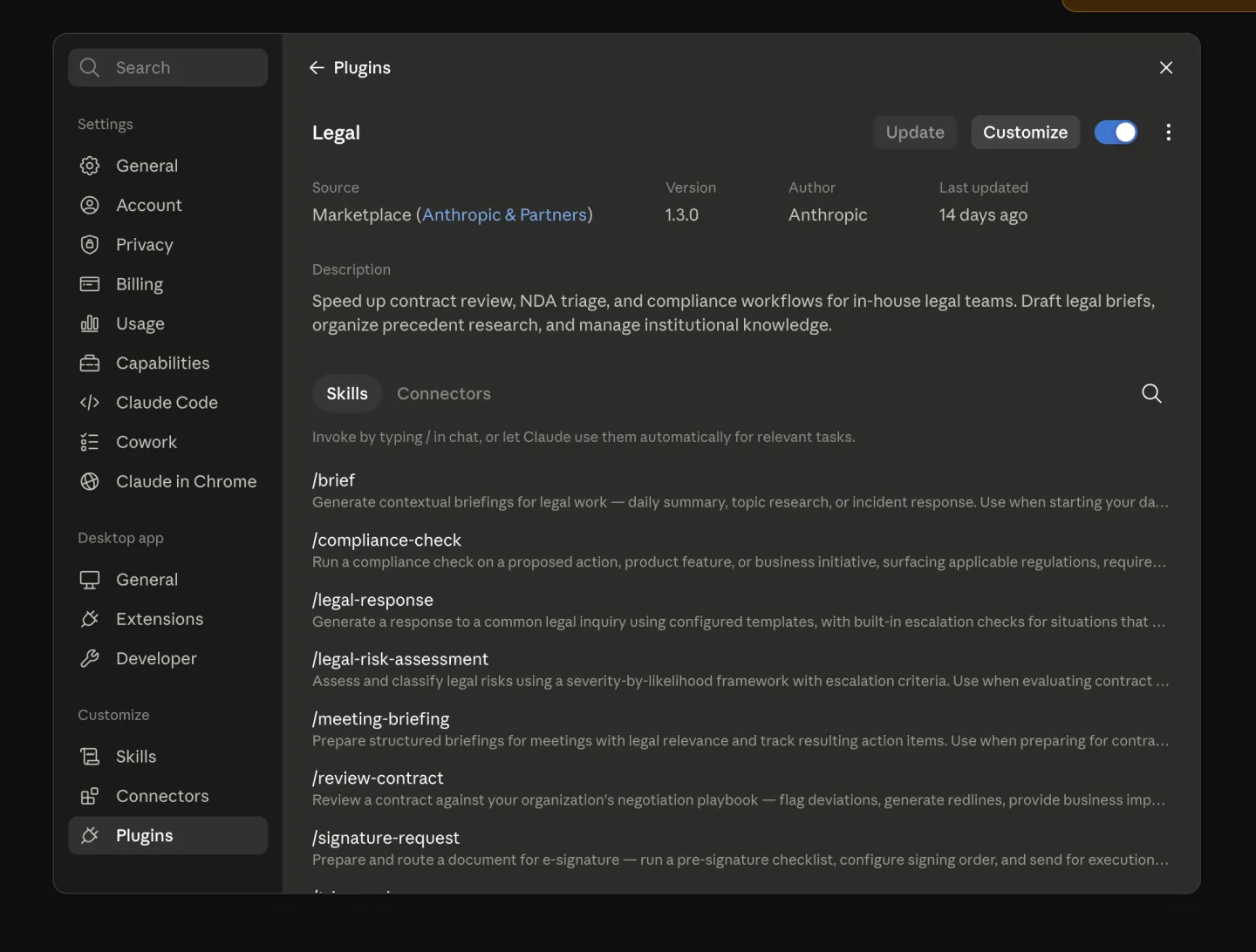
The bigger unlock for grounded research is connecting Claude (through Claude Code or the desktop app) to legal MCP servers. The Model Context Protocol lets Claude call out to real tools and corpora during a chat, so instead of free-associating a citation, it can retrieve from an actual source and answer over it. That closes a large part of the grounding gap for the research half of the job.
If you want to set this up, we have walkthroughs: use Claude for US legal research with MCP covers the connection end to end, the broader legal research in Cursor and Claude Code MCP guide shows the developer-tool setup, and replace Harvey with a Claude plus Vaquill AI MCP stack walks the cost-conscious version of the workflow. This post is about the everyday chat assistant; those posts are the path for when you want grounded retrieval inside Claude.
Claude vs a purpose-built legal tool
A general chatbot and a grounded legal tool can look identical from the outside. Both are a text box. The difference is what happens before the answer appears, and it comes down to three things.
Grounding. A grounded tool retrieves real source documents, opinions and statutes, then answers on top of them. Raw Claude predicts an answer from training data with no retrieval step. Grounding lowers hallucination risk because the model has something real to anchor to.
Citations you can check. When a grounded tool cites a section of the US Code, you click and read the actual text. With raw Claude, the cite is a prediction, so verifying it means rebuilding the research from scratch, which is the step most people skip under deadline. Grounding does not make verification unnecessary; it makes it cheap.
Matter segregation. A purpose-built tool keeps your matters separate, under a data agreement, with controls a personal chatbot account does not offer. That is a confidentiality posture you do not get from a personal chatbot account.
So the honest division of labor:
- Claude (the chat assistant): first drafts where you supply the law, rewrites, summaries of your own text, brainstorming, long-document analysis.
- Grounded legal tool: anything that asserts what the law is and needs a citation a court can check, comparing how a doctrine evolved across opinions, or confirming statutory text.
Vaquill AI sits on the grounded side: a legal AI suite for in-house counsel that retrieves over real US opinions and statutes, so each cite links back to a source you can open. One note on scope: our public API is statutes-only (US Code, CFR, and 50-state codes), and our case-law research lives inside the product, not as an API. You can also generate first-draft contract language from a library of reviewed clauses and check it against primary sources. For the fuller roundup, see our best legal AI tools for in-house counsel, and for the category basics, what a legal AI assistant actually is.
A workflow that keeps you safe
You do not have to pick one tool. Most in-house lawyers run both, with a clear handoff.
- Draft and analyze in Claude, supplying the facts and the law yourself, on a plan whose data terms fit the sensitivity of the matter.
- Strip or anonymize anything client-identifying before pasting if you are on a consumer tier.
- Pull and verify every legal proposition in a grounded tool or against the primary source, never from the model's memory.
- Treat Claude's output as scaffolding, not authority. You own every cited claim in the final document.
FAQ
Is Claude good for legal work? Yes, for the right tasks. Claude is strong at long-document analysis, careful first drafts, summaries of text you provide, and reasoning you frame. It is not a source of law, because it fabricates citations and has no grounding in verified authority. Use it for drafting and analysis, then verify the law elsewhere.
Can Claude do legal research? The chat assistant on its own cannot do reliable legal research, because it predicts citations rather than retrieving them, including cases that do not exist. The power-user path, connecting Claude to legal MCP servers, adds real retrieval and closes much of that gap. Either way, you verify every cite before filing.
Does Anthropic train Claude on my data? Anthropic states it does not use inputs or outputs from its commercial products (Team, Enterprise, API) to train models by default (Anthropic Privacy Center, 2026). Consumer plans (Free, Pro, Max) are different: since August 2025, Anthropic trains on those chats by default unless you opt out, with retention up to five years. Opt out and avoid pasting client confidences into a consumer account.
Is Claude confidential enough for client matters? Only on a business tier with the right setup. A consumer account is not built for client-confidential work by default. For client data, use Team or Enterprise with a data agreement and the appropriate retention controls, and verify the current terms yourself.
Claude or ChatGPT for legal work? Both write well at the same $20/mo consumer tier, so pick by feel. Claude is often preferred for long documents and a measured tone; ChatGPT has a larger ecosystem. Neither is grounded in verified law, so use either for scaffolding and supply the law yourself. We compare them in ChatGPT for lawyers.
Why does Claude make up cases? Because it predicts plausible text rather than retrieving real documents. Asked for supporting authority, it generates a citation-shaped string that looks correct, with no underlying source and no way to know whether the case exists. Careful phrasing can make a fabrication read even more convincing.
Claude or a purpose-built legal tool for in-house work? Use both. Claude for drafting and analysis where you own the facts and the law, a grounded legal tool for anything that has to cite the law accurately or keep matters segregated under a data agreement. The split is whether the task needs a checkable source or just good prose.
New legal AI guides, weekly.
Further Reading
What Vaquill AI Can Actually Do: Agentic Workflows, Verification Depth, and Open Benchmarks
Read postLegal AI in Microsoft Word: Contract Review, Redlining, and Research in a Word Add-In
Read postBuilt-In Legal AI Skills: Which One to Run for Each Task
Read postWhat a Legal AI Agent Actually Does: One In-House Task, Start to Finish
Read postHow Legal AI Memory Works: Stop Re-Explaining Yourself Every Session
Read postClaude Fable 5 and Legal AI: What Its Benchmark Records Actually Mean
Read post
Co-Founder & CEO · Attorney
Arshita leads product and strategy at Vaquill, building the legal AI suite that solo, small-firm, and in-house US lawyers use to run a matter end to end.