

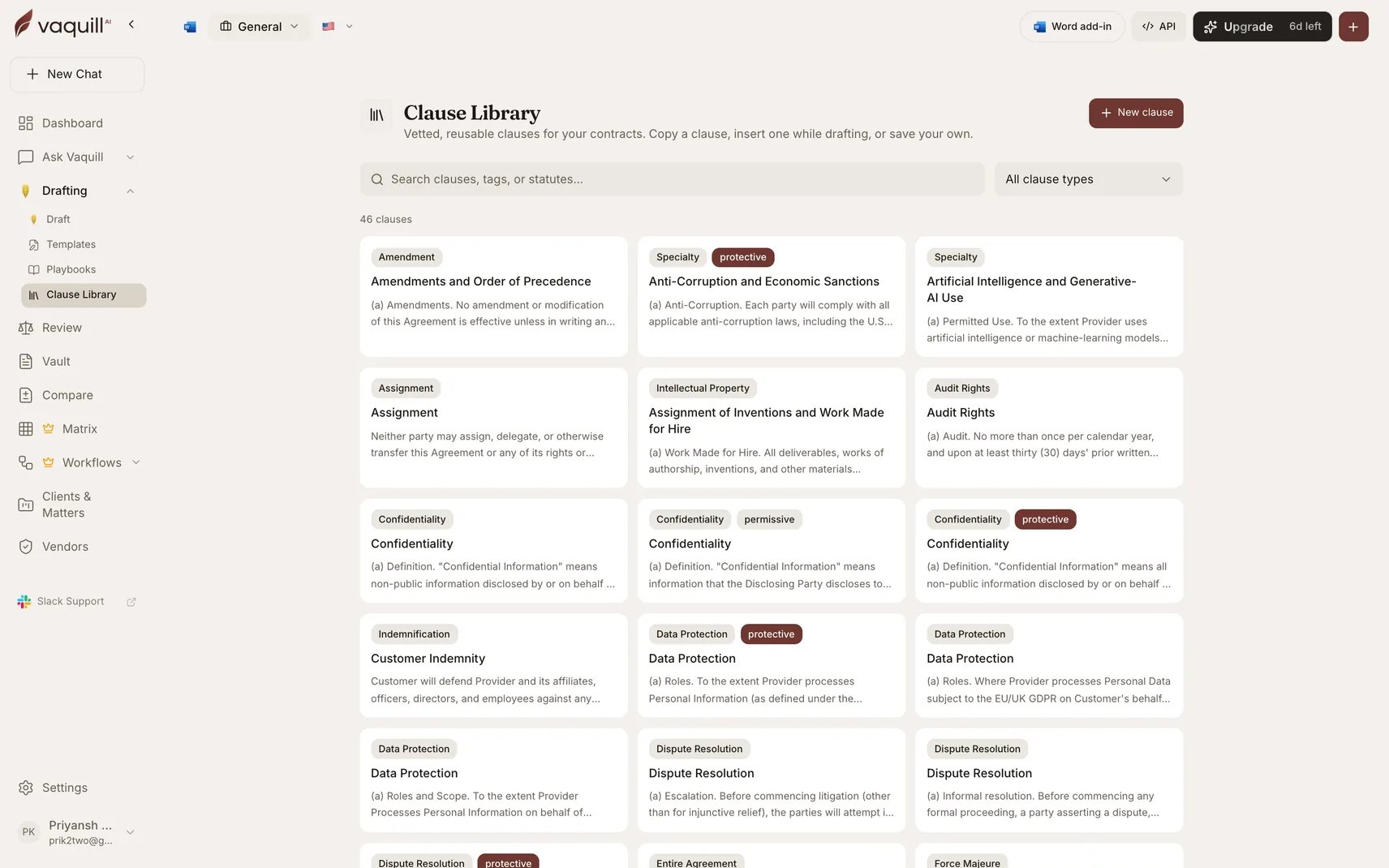
The clause library, filterable by clause type and tone
When to use it
- Drafting and needing a solid starting clause rather than writing from scratch
- Standardizing on one version of a clause across the team
- Capturing a clause you negotiated hard for, so it is reusable next time
- Seeing how the same clause reads at different tones, from protective to permissive
Searching
Filter by clause type and tone. Tone is one of protective, balanced, or permissive, and it matters more than people expect: the same indemnification clause drafted protective versus permissive is a genuinely different negotiating position, and picking the wrong one wastes a round. Clause types are kept aligned with the Playbooks taxonomy, so a clause type in the library is the same clause type your playbook takes a position on. Review and drafting speak the same vocabulary.Where clauses come from
The library has three sources, and the distinction matters.System
Vaquill-authored starter clauses. Jurisdiction-specific and reviewed, but not a substitute for your own legal review.
Your own
Clauses you created, or that were learned from your precedents. These are the ones that encode how your firm actually drafts.
Adding your own
Create a custom clause and it joins the library for future searches. This is how the library becomes genuinely useful: the shipped clauses are a reasonable start, but your negotiated language is what you actually want to reuse.AI rewrite
Any clause can be rewritten by AI: shift its tone, adapt it to a jurisdiction, or narrow its scope, without leaving the library. Treat the output as a draft. A rewritten clause has not been reviewed by anyone, and a small wording change in an indemnity or a liability cap can move real money.How it fits with drafting
The Clause Library is clause-level reuse. Its neighbors:
A common pattern: the playbook says what your position is, the clause library holds the language that expresses it, and drafting is where it lands.
Limitations
- System clauses are starting points, not vetted precedent for your matter.
- A clause that fits one jurisdiction may be unenforceable in another. Check the governing law.
- AI rewrites are unreviewed output.
- The library holds clauses, not context. It cannot tell you whether the clause is the right one for this counterparty.
Related
Drafting
Where clauses get assembled into documents.
Playbooks
Positions and fallbacks per clause type.
Templates
Whole-document reuse.
Contract Review
The review side of the same clause taxonomy.