

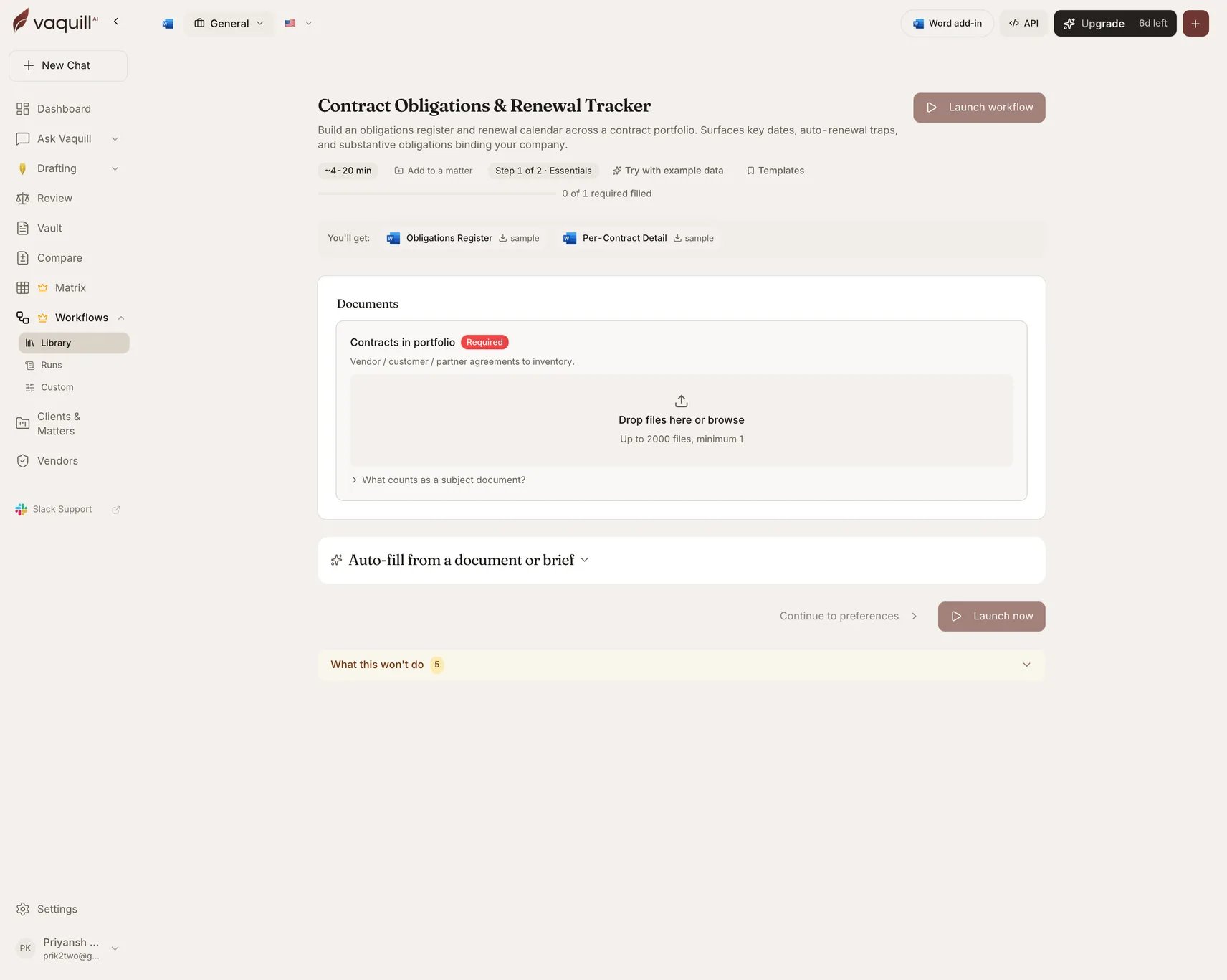
The Contract Obligations and Renewal Tracker launcher: document slots, inputs, and what you get
What you need
Inputs
How it runs
A matrix-review pipeline with a calendar-building render stage.1
Prepare, extract, wait
Builds an extraction matrix over the portfolio: counterparty, effective and expiration dates, auto-renewal mechanics, notice windows, and the obligation types you selected. Every cell is answered against one contract.
2
Normalize and score
Resolves dates, applies the default notice period where a contract is silent, and drops obligations below the materiality floor.
3
Synthesize
Rolls up the portfolio view and runs the synthesis verifier.
4
Render register and calendar
Writes the two DOCX artifacts and builds an RFC 5545 iCalendar feed with one
VEVENT per renewal window and a VALARM at each reminder offset you chose.What you get
What this will not do
- Send notice-of-non-renewal or termination letters to counterparties on your behalf.
- Sync directly with your contract-management system, calendar, or finance ERP for live reminders. The ICS is an export, not a live connection.
- Track amendments or side letters that were not part of the upload, or notice your counterparty has sent.
- Replace counsel review for the final decision to terminate, renegotiate, or let an agreement auto-renew.
- Confirm whether a missed notice deadline has waived your termination right under the contract’s exact wording.
Related
MSA and Vendor Review
Review the agreements before they are signed and tracked.
Chronology builder
Dated events across a matter rather than obligations across a portfolio.