The best AI tool for lawyers in 2026 depends on what eats your week: research, drafting, contract review, litigation, or running an in-house function. No single tool wins all five. This list maps the 19 that matter, by category, so you buy for the job in front of you.
Real prices where we could source them, one named tradeoff per tool, and what users actually say. You can check the math.
This is the broad, cross-practice map. If you want the role-specific deep-dives, read the best legal AI tools for in-house counsel and the best legal AI for general counsel. Both go deeper for those buyers than a broad list can.
TL;DR
- Best all-in-one workbench: Vaquill AI. Research, drafting, redlines, and matter docs in one place, priced for solos and small teams.
- Best for BigLaw budgets: Harvey and Legora. Powerful, but $300 to $2,000+ per user per month and sold by a sales team.
- Best for contract review: Spellbook, Ivo, LegalOn, and Gavel Exec, depending on your stack and price ceiling.
- Best for research incumbents: Westlaw, Lexis+ AI, vLex Vincent, Bloomberg Law. Deep libraries, quote-based pricing, and uneven AI reliability.
- Best free starting point: general chat assistants are free, but cite-check everything; purpose-built legal tools cost money for a reason.
- The honest caveat: every tool on this list can produce a wrong citation. Verify before you file.
Which research tool had the lowest hallucination rate in the Stanford and Yale study?
How we picked
We looked at the tools US lawyers actually shortlist across solo, small-firm, litigation, transactional, and in-house work. We considered more than 30 and kept 19 that have a real product, a real US user base, and a screenshot you can see. AI is no longer fringe in this profession: 79% of legal professionals report using it at their firm in some capacity (Clio Legal Trends Report).
For each tool we list price as a fact only when the vendor publishes it or a named source confirms it. Incumbents that hide pricing are marked quote-based. The "what users say" lines come from real forums, reviews, and studies we read and link where the source returns a live page.
We put Harvey at the top because it is the enterprise benchmark most buyers here measure everything else against. Vaquill AI is our own product, so we rank it second and give it a real tradeoff rather than hand ourselves the top slot. Read past our entry if research depth is your only job.
The 19 best AI tools for lawyers at a glance
| # | Tool | Category | Price (per user/mo unless noted) | Access | Best for | Source |
|---|---|---|---|---|---|---|
| 1 | Harvey | Enterprise assistant | $1,200 to $2,000+ | Sales | BigLaw and large in-house | Founder-confirmed |
| 2 | Vaquill AI | All-in-one workbench | Self-serve, see pricing | Self-serve | Solo and small-team lawyers | Vaquill AI |
| 3 | CoCounsel | Enterprise assistant | $225 to $400+ | Sales | Thomson Reuters shops | Founder-confirmed |
| 4 | Legora | Enterprise assistant | $300 to $800 | Sales | Mid-to-large firms | Founder-confirmed |
| 5 | Spellbook | Contract drafting | $500 | Self-serve / sales | Transactional lawyers in Word | Founder-confirmed |
| 6 | Ivo | Contract review | $500 | Sales | In-house contract teams | Founder-confirmed |
| 7 | LegalOn | Contract review | $550 (billed annually) | Self-serve / sales | Playbook-driven review | legalontech.com |
| 8 | Robin AI | Contract review | $500 | Sales | Negotiation-heavy teams | Founder-confirmed |
| 9 | GC AI | In-house assistant | $500 | Self-serve / sales | Solo in-house and GCs | gc.ai/pricing |
| 10 | Gavel | Drafting + automation | $83 to $417 (Workflows) | Self-serve | Document automation | gavel.io |
| 11 | Paxton AI | Research + drafting | $499, or $2,999/yr | Self-serve | Solo and small firms | paxton.ai/pricing |
| 12 | Westlaw | Research incumbent | Quote-based | Sales | Litigation research | Quote-based |
| 13 | Lexis+ AI | Research incumbent | Quote-based | Sales | Lexis libraries | Quote-based |
| 14 | vLex Vincent | Research incumbent | Quote-based | Sales | Cross-jurisdiction research | Quote-based |
| 15 | Bloomberg Law | Research incumbent | Quote-based | Sales | Transactional and dockets | Quote-based |
| 16 | Kira | Contract analysis | Quote-based | Sales | Due-diligence at scale | Quote-based |
| 17 | Evisort | CLM + analysis | Quote-based | Sales | Enterprise CLM | Quote-based |
| 18 | Luminance | Contract analysis | Quote-based | Sales | Large-volume review | Quote-based |
| 19 | Ironclad | CLM | Quote-based | Sales | Enterprise contract ops | Quote-based |
Read the list by category. Each job points to a different shortlist, and a workbench is the one tool that spans more than one lane.
How to choose an AI tool for your practice
Five questions separate a tool that sticks from a demo that impresses and then gathers dust.
- Match the tool to the job that eats your week. Research, drafting, contract review, in-house ops, and CLM each point to a different shortlist. A workbench is the only category that spans more than one lane, so buy narrow if your week is one job and broad if it is five.
- Check citation discipline. A legal tool should link every case and statute to source text you can open in one click. If it cannot show its work, treat every cite it gives you as unverified.
- Confirm the Word integration holds up. Transactional lawyers live in Microsoft Word, and a redline that mangles your formatting or numbering is worse than no tool at all. Test it on a real contract, not a demo doc.
- Read the data-processing agreement before the demo. Client data is privileged, so the vendor's DPA, its no-training-on-your-matters clause, and a SOC 2 Type II report matter more than any feature list.
- Prefer a published price and a real trial. Self-serve pricing lets you test on your own work the same day; a quote-based sales cycle costs weeks before you see a single output.
1. Harvey: best for BigLaw and large in-house teams
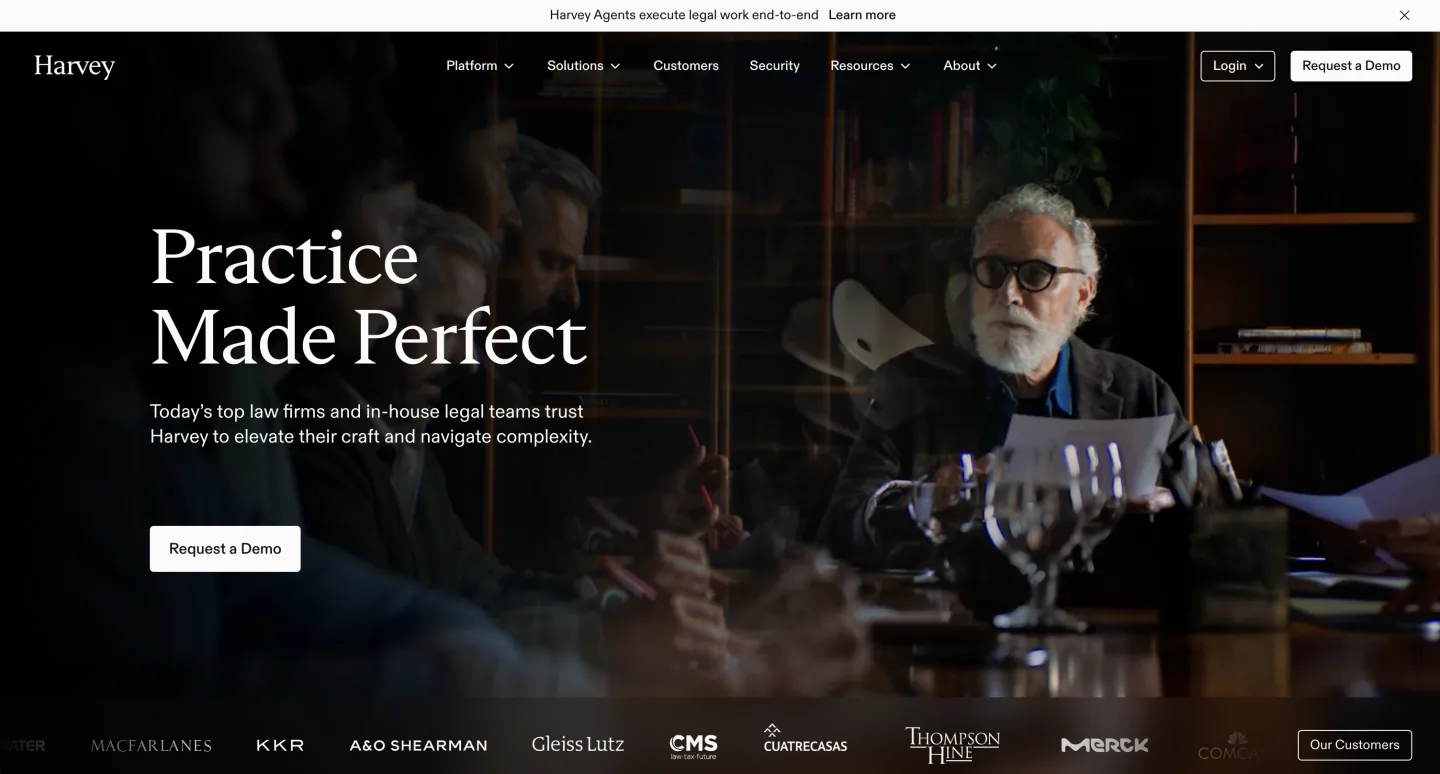
At a glance: $1,200 to $2,000+ per user per month on a roughly 25-seat annual minimum, plus a newer pay-as-you-go credit model (founder-confirmed) · sales-led · best for large firms and enterprise legal.
Harvey is the enterprise default that partners brag about, with a polished assistant and a document vault. The price and the sales motion put it out of reach for most solos.
What's good
- Strong general drafting and document analysis backed by frontier models and a deep enterprise feature set.
- Built for scale: vaults, workflows, and the security review that big firms demand.
- Heavy investment and momentum, so the roadmap moves fast.
Where it falls short
- Pricing runs $1,200 to $2,000+ per user per month and is gated behind NDAs and a sales team, which stings for smaller buyers.
What users say: practitioners are split on value even when partners love it. One Reddit thread put it bluntly: "the associates hated Harvey, but the partners went with it because they think it's magic." (r/legaltech)
Bottom line: buy Harvey if you are a large firm with the budget and a security team to vet it. Skip it if you are a solo who would rather not expense a luxury car each month.
2. Vaquill AI: best for solo and small-team lawyers who need one workbench
At a glance: self-serve pricing on app.vaquill.ai · self-serve signup · best for solos, small firms, and in-house teams.
Vaquill AI puts research, drafting, redline comparison, and matter document management in one place, priced for people who do not have a procurement team. It is the workbench, not a single-trick tool.
What's good
- One login covers US case-law research, drafting, document compare, and per-matter memory, so you stop stitching four tools together.
- Verified-citation research over US opinions, plus US Code, CFR, and 50-state statutes, with links back to the source text.
- Self-serve pricing and signup, so a solo can start the same day without a sales call.
Where it falls short
- We are newer than the incumbents, so we do not match Westlaw's decades of secondary sources and headnotes. If exhaustive treatise research is your whole job, pair us with a library or test us first.
What users say: Vaquill AI is a newer entrant, so independent forum discussion is thin. We point you to the sourced lines below for the better-covered tools rather than invent praise for ourselves.
Bottom line: if you want one tool for the whole legal week instead of five subscriptions, start here. If you only need deep litigation research, read the research section first.
What sets Vaquill AI apart
The rest of this list sorts cleanly by job: research in one column, contract review in another, CLM in a third. Vaquill AI earns the workbench label because it covers several of those columns under one login, at $120 per user per month, self-serve. For an in-house team weighing it against the single-lane tools here, this is the concrete version, capability by capability.
| Capability | What it means for an in-house team |
|---|---|
| Document Matrix for bulk review | Review a full stack of contracts in one grid and pull the same field from every file at once, instead of opening them one at a time. |
| Open-source Word add-in | The Microsoft Word add-in is open source with no per-seat add-on fee, so a whole department can draft in Word without an extra charge. |
| Full matter management | Each matter holds its facts, a chronology, and a per-file summary in one workspace, so context stops living in your inbox. |
| Its own US statute and regulation database | Vaquill AI runs US Code, CFR, and 50-state statutes and regulations in-house, alongside case-law research, rather than reselling a single third-party feed. |
| Templated and custom workflows | Start from prebuilt workflows or build your own multi-step automation for the tasks your team repeats. |
| Built to your needs | Custom workflow development is on the table, and the features your team asks for can move up the queue. |
| Privacy and security by design | PII anonymization, a zero-data-retention option, an architecture built around privilege, and no training on your data. |
| Team layer with RBAC | Vendor management, shared drafting, and multi-user collaboration with role-based access control. |
| Integrations | An MCP integration lets you run Vaquill AI from inside Claude, and email-to-platform sync pulls documents straight in. |
None of that erases the tradeoff in the entry above: Vaquill AI is newer than the incumbents. It does explain why a solo or a lean in-house team can run the week from one tool rather than four.
3. CoCounsel: best for Thomson Reuters shops
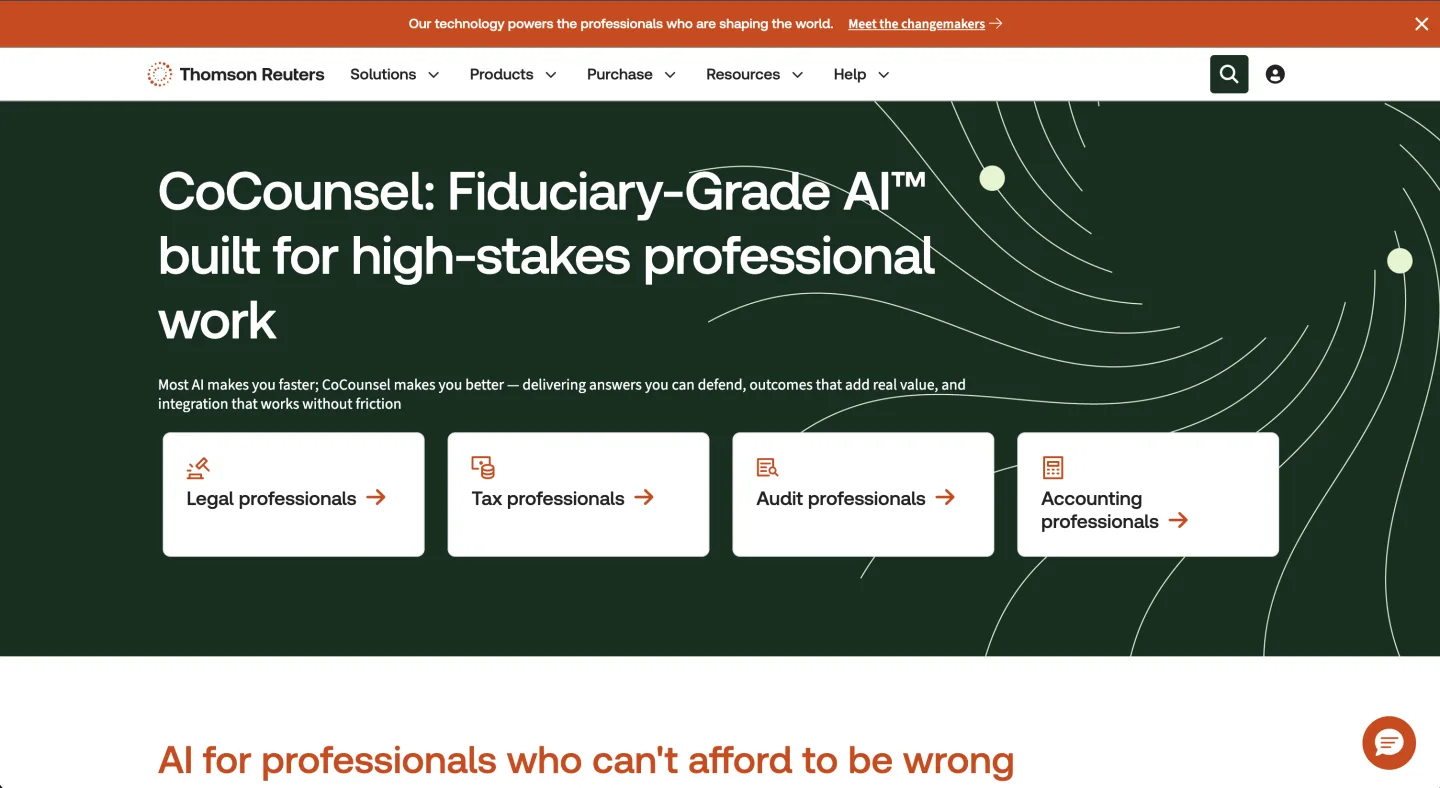
At a glance: $225 to $400+ per user per month depending on capabilities (founder-confirmed) · sales-led · best for firms already in the Thomson Reuters stack.
CoCounsel (formerly Casetext) is the Thomson Reuters AI assistant, tightly tied to Westlaw content. It fits firms already paying for that ecosystem.
What's good
- Parallel Search and document review tools that users find genuinely time-saving.
- Backed by Thomson Reuters, so it plugs into Westlaw content and existing contracts.
- Easier to adopt if your firm already lives in TR products.
Where it falls short
- Users warn it still fabricates citations and is thin on appellate material, so you cannot skip verification.
What users say: lawyers like the ease and time savings but flag that it still invents citations, with the takeaway being "verify everything." (Michigan Law legal-tech series)
Bottom line: a sensible pick if you already pay Thomson Reuters and want AI in that stack. Look elsewhere if you want an independent tool or self-serve pricing.
4. Legora: best for mid-to-large firms wanting a Harvey alternative

At a glance: $300 to $800 per user per month, plus a newer credit-based model, with consumption-based pricing on Agent Pro since June 2026 (founder-confirmed; source: legora.com) · sales-led · best for mid-to-large firms.
Legora is the well-funded European challenger to Harvey, cheaper at the low end and aggressive on growth. Reliability complaints have followed the fast scaling.
What's good
- Cheaper entry point than Harvey for similar collaborative drafting and review.
- Strong funding and momentum, with a Series D that put it at a multibillion-dollar valuation.
- Solid for collaborative review across a team.
Where it falls short
- Reliability complaints dominate the forums, from a botched rollout to answer quality degrading on long documents.
What users say: reviewers describe a rough rollout some nicknamed the "Letgora" team and note answer quality slipping past roughly 200 pages. (r/legaltech)
Bottom line: worth a pilot if you want Harvey-class features at a lower price and can stress-test reliability first. Skip if you cannot afford a rocky rollout.
5. Spellbook: best for transactional lawyers who live in Word
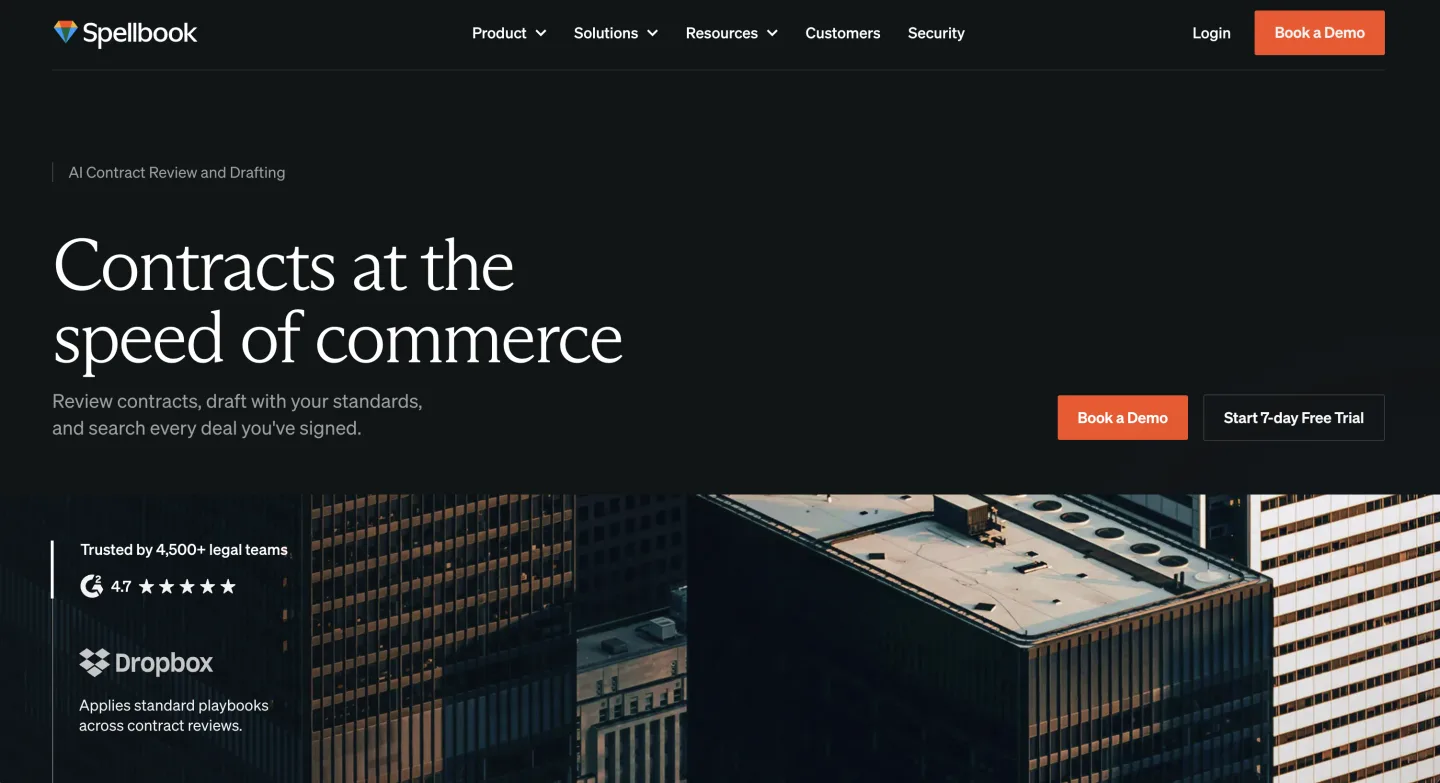
At a glance: $500 per seat per month (founder-confirmed; not published) · self-serve and sales · best for transactional lawyers drafting in Microsoft Word.
Spellbook is a Word add-in that drafts and reviews contract language where transactional lawyers already work. It is the best-liked option among deal lawyers.
What's good
- Lives inside Word, so there is no new app to learn.
- Strong at drafting and benchmarking contract clauses.
- Well reviewed by transactional lawyers, around 4.1 out of 5 on Lawyerist.
Where it falls short
- It still inserts wrong citations at times and is transactional-only, so it is weak for litigation work.
What users say: transactional lawyers rate the Word add-in highly while warning it can still surface wrong citations. (Lawyerist review)
Bottom line: a strong buy for deal lawyers who draft in Word all day. Skip it if your work is litigation or research-heavy.
6. Ivo: best for in-house contract review teams

At a glance: $500 per user per month (founder-confirmed) · sales-led · best for in-house teams running playbook redlines.
Ivo is a contract review tool with a genuine AI reviewer and playbook-based redlining. In-house teams find it easy to use once it is set up.
What's good
- Real AI reviewer that applies your playbook and suggests redlines.
- Reviewers call it easy to use day to day.
- Fits in-house contract teams handling steady review volume.
Where it falls short
- It is enterprise-scoped, onboarding leans on Ivo's team, and users report occasional inaccuracies.
What users say: Ivo holds a 4.9 out of 5 on G2, where the recurring praise is the redline quality and how little training it takes; the same reviews flag the occasional AI inaccuracy you would expect (G2, live but bot-blocked to us). Ivo also published a benchmark claiming it beat Claude for Word on contract-review accuracy, which is its own test, so read it as a vendor claim. (Ivo benchmark, PR Newswire)
Bottom line: a good fit for an in-house team that wants playbook-driven review and can do a guided onboarding. Skip if you want a self-serve tool today.
7. LegalOn: best for playbook-driven contract review

At a glance: $550 per month billed annually for Individual; Teams custom (legalontech.com) · self-serve and sales · best for standardized, playbook-based review.
LegalOn brings lawyer-built playbooks to contract review, so the suggestions reflect drafting standards, not just model guesses. The published Individual price is rare clarity in this category.
What's good
- Lawyer-authored playbooks and standards behind the AI suggestions.
- Published Individual pricing, which most rivals hide.
- Fits teams that want consistent, standards-based review.
Where it falls short
- It is review-focused, so it will not replace a research or full drafting tool.
What users say: we found no genuine peer forum discussion, only vendor testimonials, so we will not manufacture buzz. Treat the playbook quality as the thing to test yourself.
Bottom line: worth a look if standardized contract review is the job and you want a known price. Skip if you need broad research or litigation features.
8. Robin AI: best for negotiation-heavy contract teams (with caution)
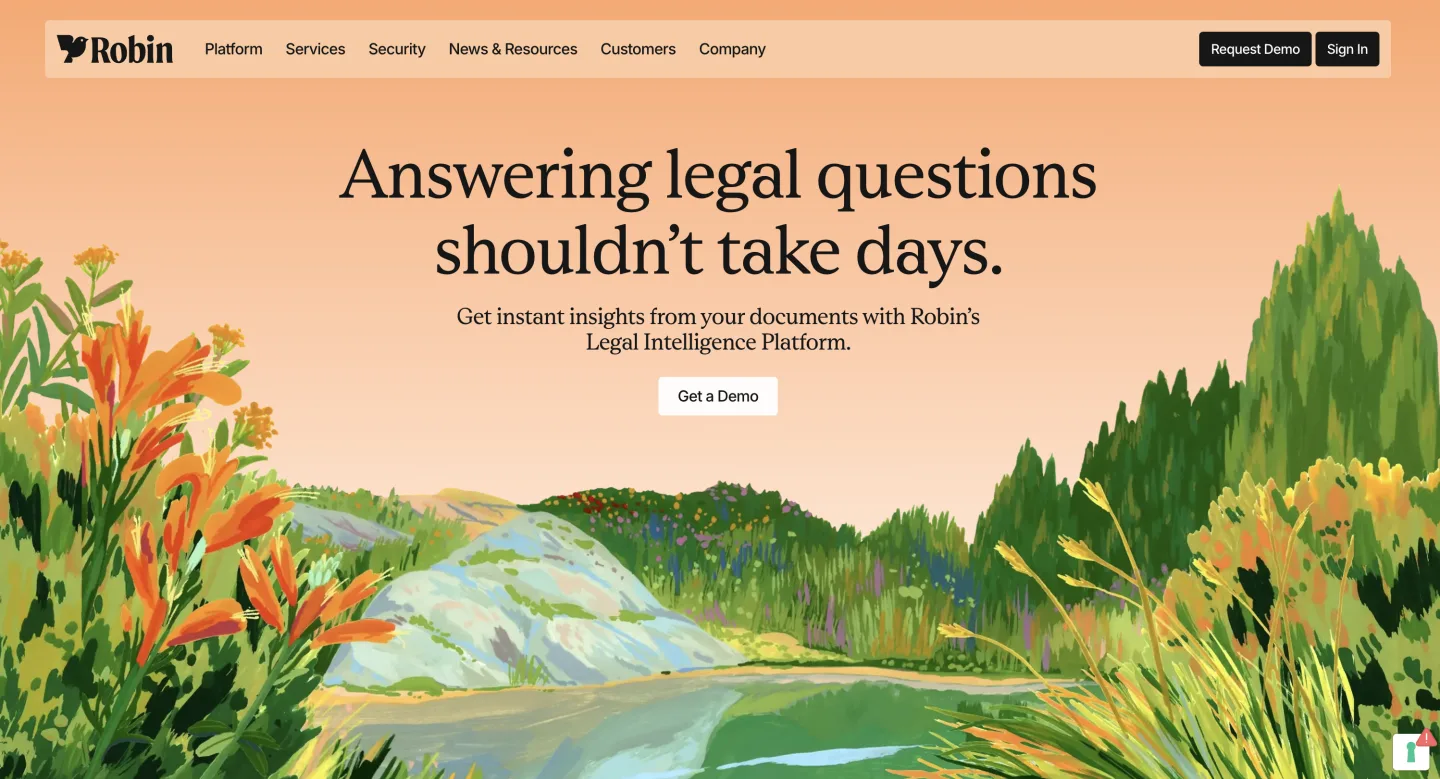
At a glance: $500 per user per month (founder-confirmed) · sales-led · best for negotiation-heavy contract work.
Robin AI is a contract negotiation and review tool that drew real users, then made headlines for the wrong reasons in 2025. Check its footing before you commit.
What's good
- Built for contract negotiation and markup at volume.
- Established product with a real enterprise user base.
- Suited to teams that negotiate the same contract types often.
Where it falls short
- 2025 brought layoffs and a winding-up petition, so vendor stability is a real question right now.
What users say: recent forum talk is about the company's financial trouble, not the product, with layoffs and a winding-up petition widely cited. (Artificial Lawyer)
Bottom line: consider it only if the product fits a narrow need and you accept the vendor risk. Most teams should wait for the dust to settle.
9. GC AI: best for solo in-house lawyers and general counsel
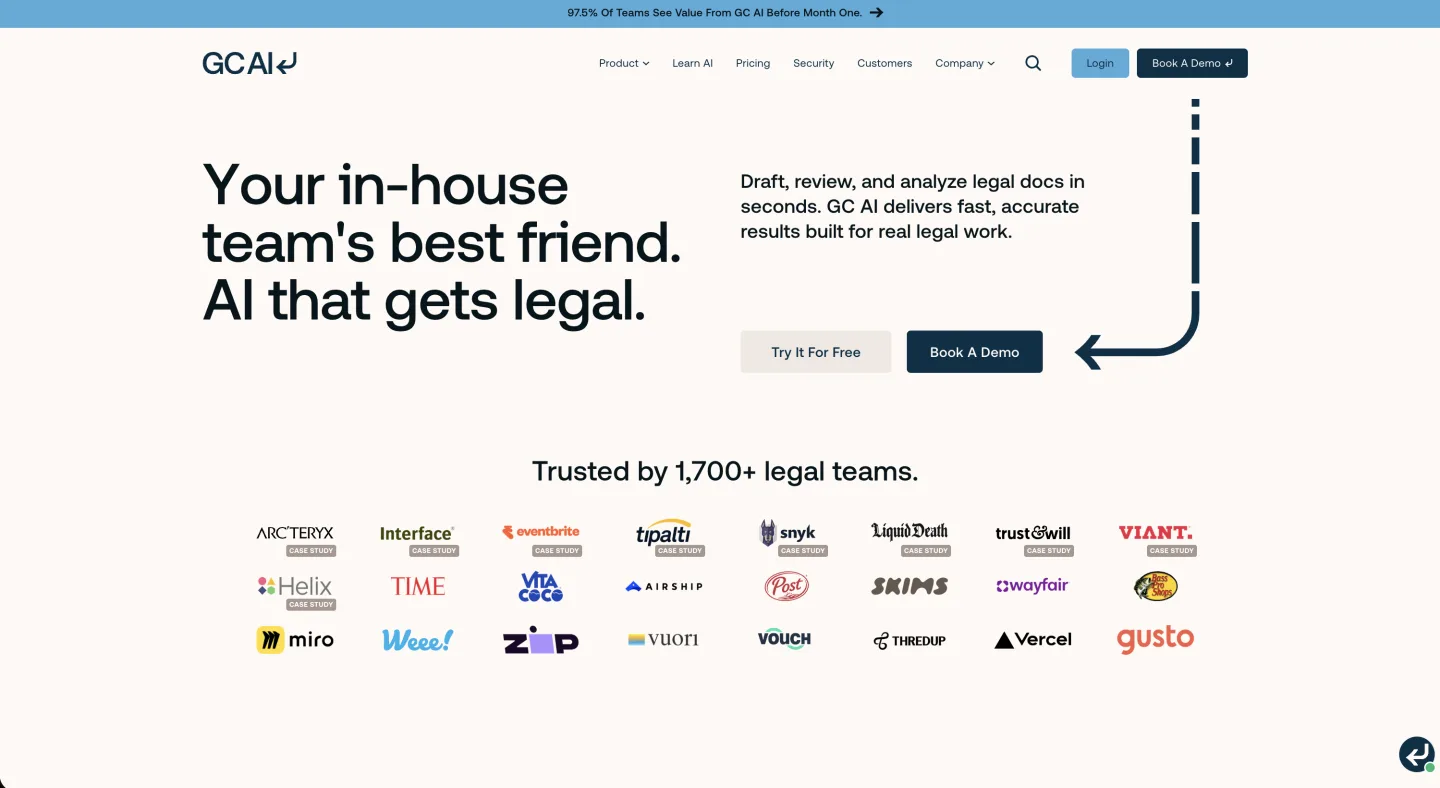
At a glance: $500 per seat per month for Individual (gc.ai/pricing); Team and Enterprise on request · self-serve and sales · best for solo in-house and GCs.
GC AI is an assistant aimed squarely at in-house counsel, and it publishes its price openly. That transparency is unusual in this market.
What's good
- Built for the in-house workflow, not retrofitted from a firm tool.
- Publishes its $500 per seat price while Harvey and Legora hide theirs.
- Self-serve entry for a single in-house lawyer.
Where it falls short
- There is little genuine forum discussion yet, so independent proof of value is thin.
What users say: real peer forum discussion is sparse and mostly PR; the standout fact is the open $500 price. GC AI also publishes its own "In-House Legal Bench" claiming its model scores 86.8% on 100 in-house tasks, ahead of GPT-5.5 at 79.8% and Claude, but that is a vendor-run test on a vendor-built benchmark, so weigh it as a marketing claim, not an independent result. (Legal Technology Hub, GC AI)
Bottom line: a fair pick for a solo in-house lawyer who values published pricing and an in-house-first design. For a deeper comparison, see our in-house counsel roundup.
10. Gavel: best for document automation and intake
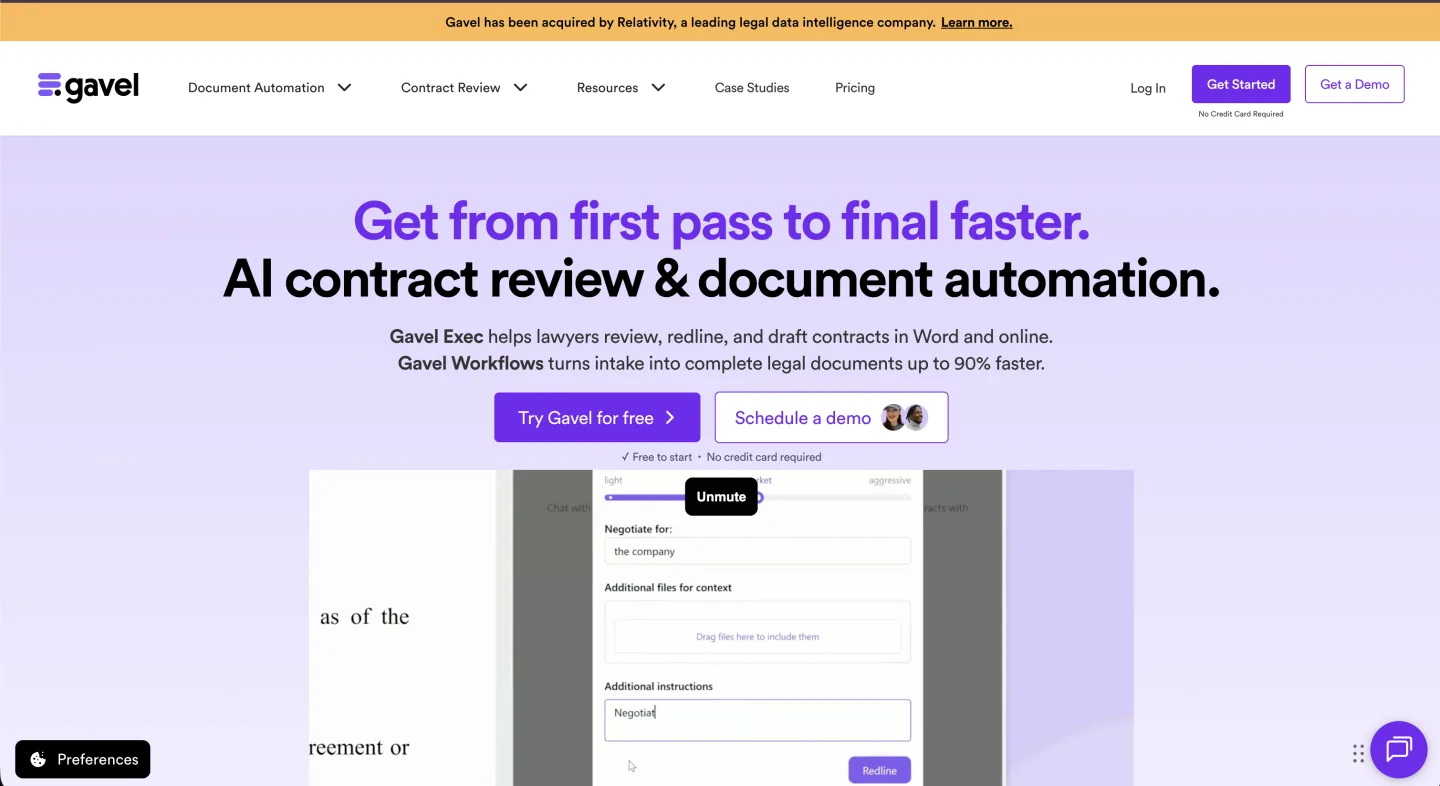
At a glance: Gavel Workflows $83 to $417 per month; Gavel Exec (contract review) quote-based (gavel.io) · self-serve · best for document automation.
Gavel automates document generation and client intake, and its newer Exec product adds AI contract review. It is one of the more affordable on-ramps here.
What's good
- Affordable, published Workflows tiers starting around $83 per month.
- Strong document automation and intake for repeatable paperwork.
- Gavel Exec adds targeted AI redlines for contracts.
Where it falls short
- Workflows is automation-first, so it is not a research or general legal assistant.
What users say: Reddit praise centers on Gavel Exec for "surgical" redlines that do not turn the whole document red and for fast shipping. (r/legaltechAI)
Bottom line: great for firms that generate the same documents repeatedly and want automation plus optional AI review. Skip if you need legal research.
11. Paxton AI: best for solo and small firms on a single price
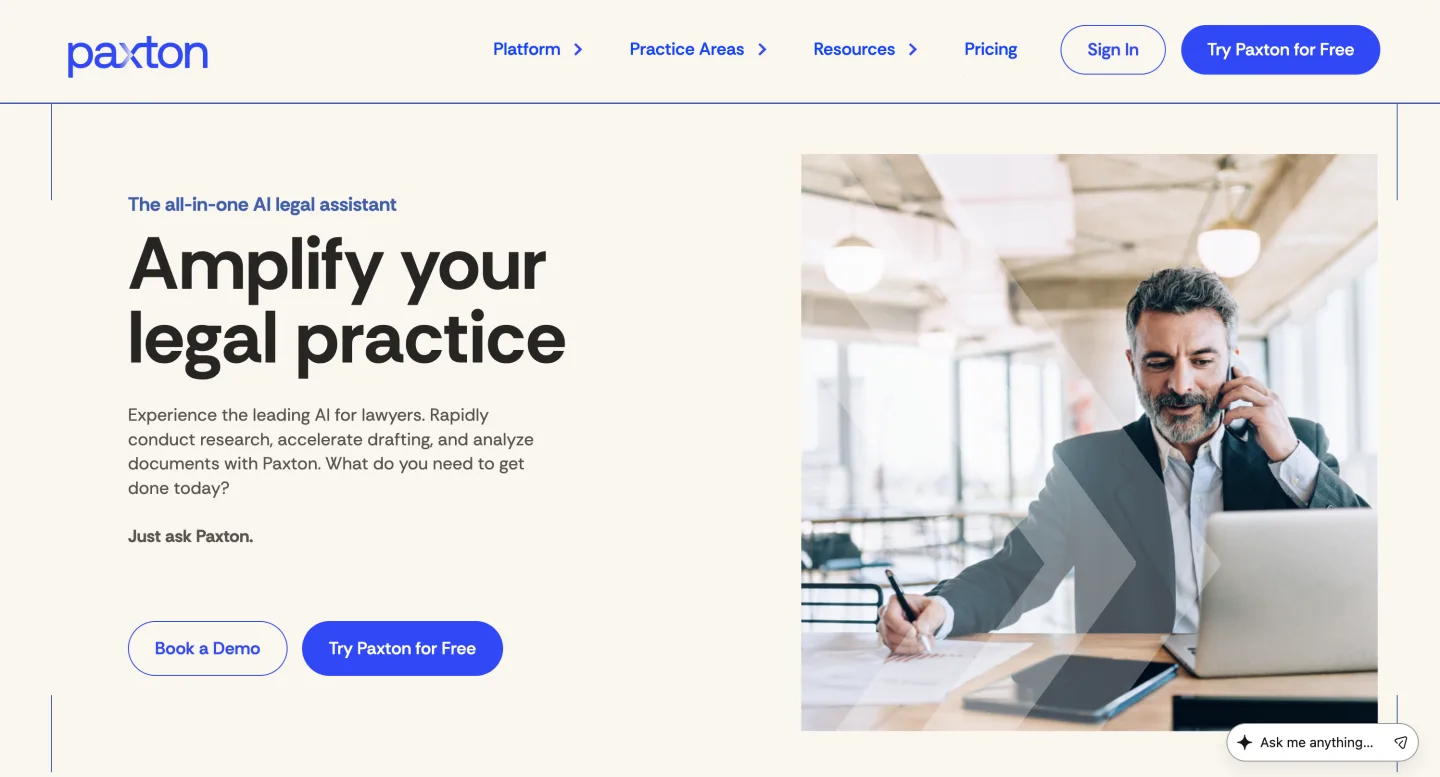
At a glance: $499 per user per month, or $2,999 per year (50% off annual), 7-day trial (paxton.ai/pricing) · self-serve · best for solo and small firms.
Paxton AI bundles research and drafting at a published price with a free trial. Solos like the self-serve simplicity.
What's good
- Published pricing and a 7-day trial, so you can test before paying.
- Combines research and drafting in one self-serve tool.
- Real enthusiasm from solo and small-firm users.
Where it falls short
- It is US-only, has no independent hallucination benchmark, and lacks practice-management integration.
What users say: solo and small-firm users call it a "game-changer," while flagging the price for solos and the lack of an independent accuracy benchmark. (Lawyerist review)
Bottom line: a solid self-serve option for a solo who wants research plus drafting at a known price. Skip if you need deep integrations or independent accuracy proof.
12. Westlaw: best for deep litigation research
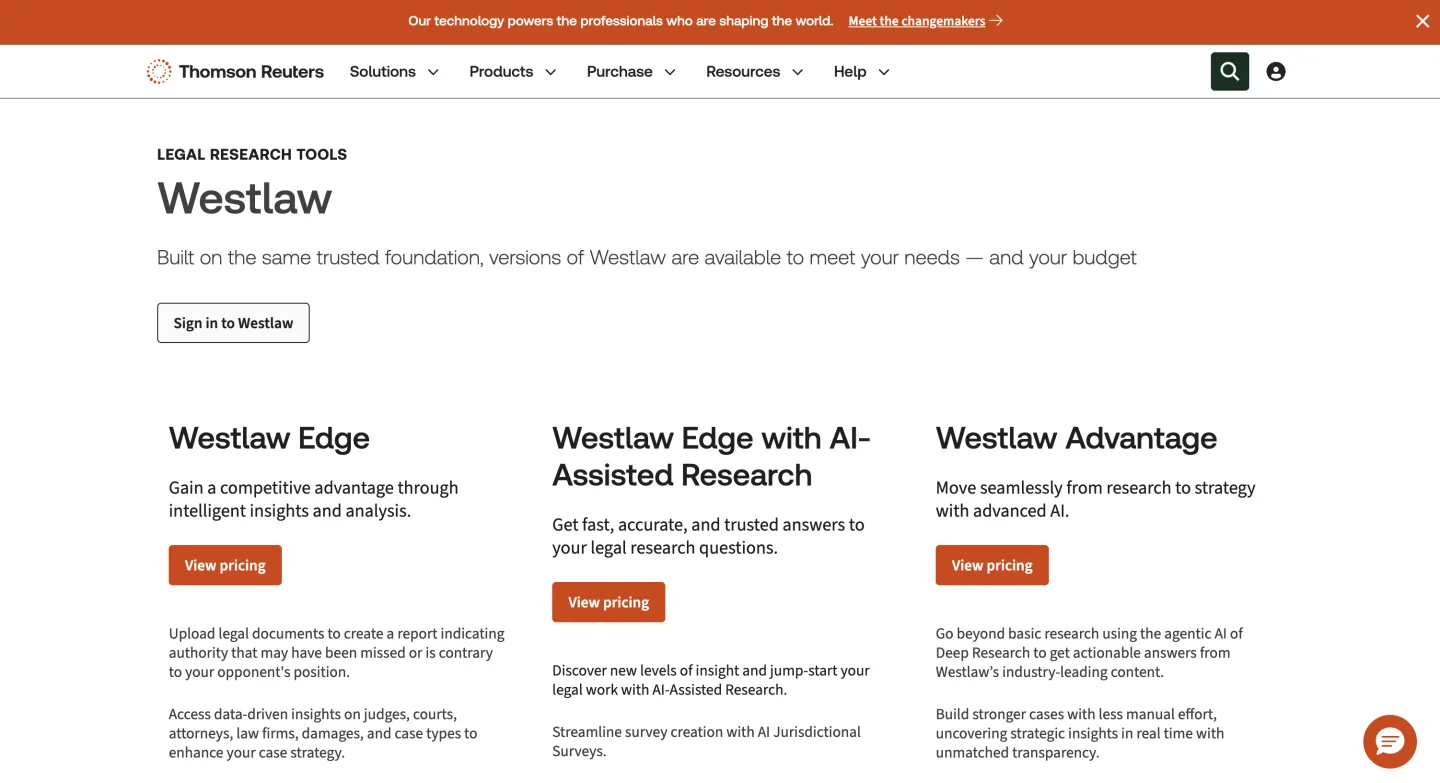
At a glance: quote-based pricing, sales-led · best for litigators who need a deep research library.
Westlaw is the incumbent research library with headnotes, KeyCite, and decades of secondary sources. Its AI layer is the newer, weaker part.
What's good
- Unmatched depth in case law, secondary sources, and editorial tools.
- KeyCite and headnotes that litigators rely on.
- Trusted by courts and large firms for citation work.
Where it falls short
- Pricing is quote-based and steep, and its AI research drew the worst reliability score in a major study. See Westlaw alternatives for solo and small firms.
What users say: the Stanford and Yale study found Westlaw's AI-Assisted Research hallucinated in about one-third of responses, the worst of the paid tools tested. (arXiv preprint)
Bottom line: still the deepest research library for litigators who can pay for it. Use the AI features with care and verify cites.
13. Lexis+ AI: best for teams committed to the Lexis library

At a glance: quote-based pricing, sales-led · best for teams already on LexisNexis.
Lexis+ AI is the AI layer over the LexisNexis library, with research, drafting, and summarization. It scored better than Westlaw on reliability but not perfectly.
What's good
- Deep Lexis content behind the AI features.
- Better reliability than Westlaw in the same independent study.
- Familiar if your firm already uses Lexis.
Where it falls short
- Its "hallucination-free linked citations" marketing is overstated, and it can be overly cautious and costly.
What users say: the same Stanford and Yale study measured about 17% hallucination, the least bad of the paid tools, undercutting the "hallucination-free" marketing. (arXiv preprint)
Bottom line: reasonable for teams already committed to Lexis who want AI in that library. Verify citations and budget for quote-based pricing.
14. vLex Vincent: best for cross-jurisdiction research
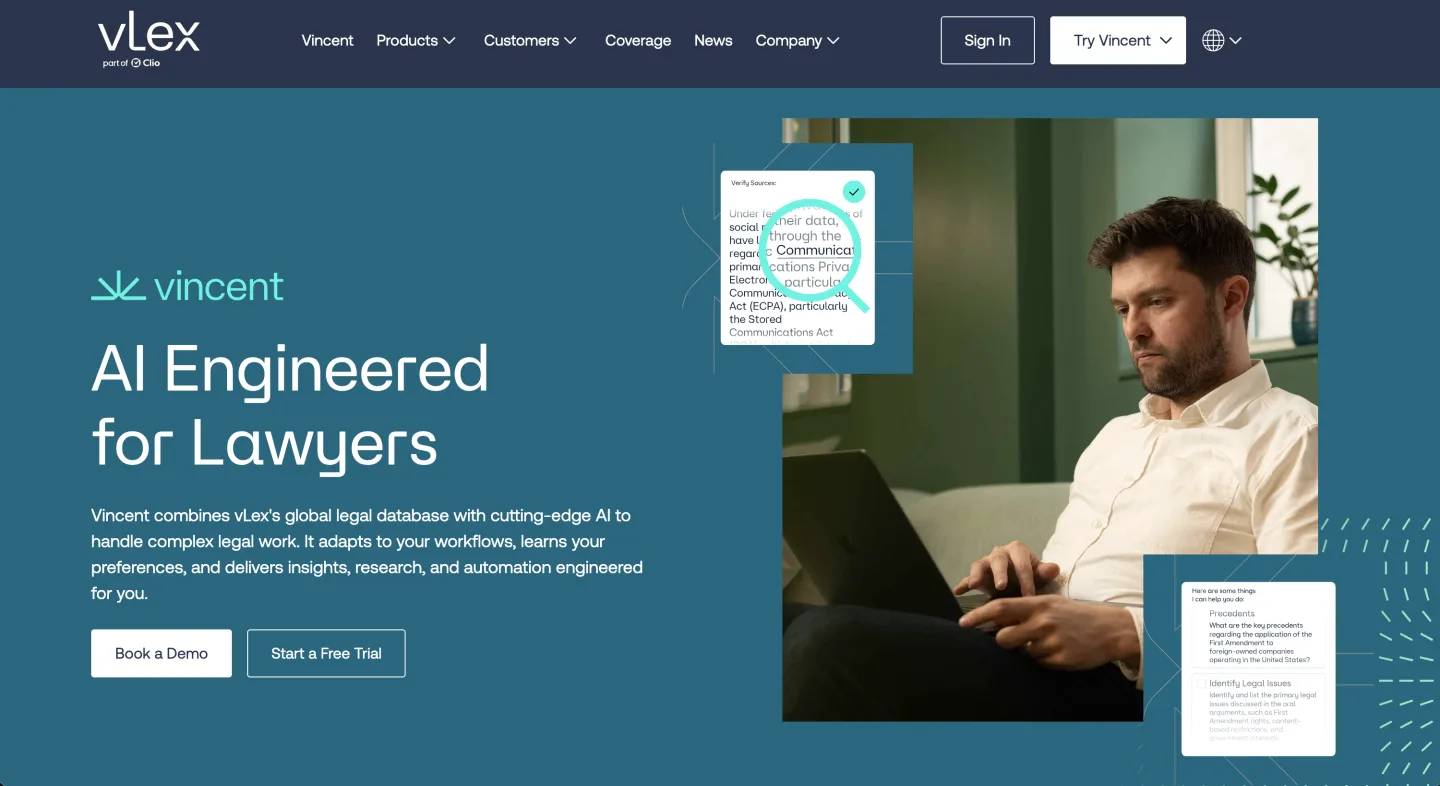
At a glance: quote-based pricing, sales-led · best for cross-jurisdiction and international research.
vLex's Vincent assistant sits on a legal database that spans 100+ countries, the one thing Westlaw and Lexis make you pay extra for and still cover less of. If your matters touch foreign law, this is the deepest single corpus on the list.
What's good
- Vincent runs natural-language research across 100+ jurisdictions in one place, where Westlaw and Lexis sell international coverage as a premium add-on for fewer countries. For comparative or cross-border work that is a real edge.
- Content in multiple languages with on-the-fly translation, so a foreign judgment is readable without a separate vendor.
Where it falls short
- You are paying for global coverage that a US-only practice never opens. If every matter you handle is domestic, most of the corpus is dead weight you still fund.
What users say: see our Westlaw vs vLex coverage and pricing breakdown for the side-by-side; independent reliability scoring for Vincent specifically is not public, so test it on the jurisdictions you actually file in.
Bottom line: the clear pick when your research crosses borders. A US-only solo gets more value, for less, from a self-serve domestic tool.
15. Bloomberg Law: best for transactional research and dockets
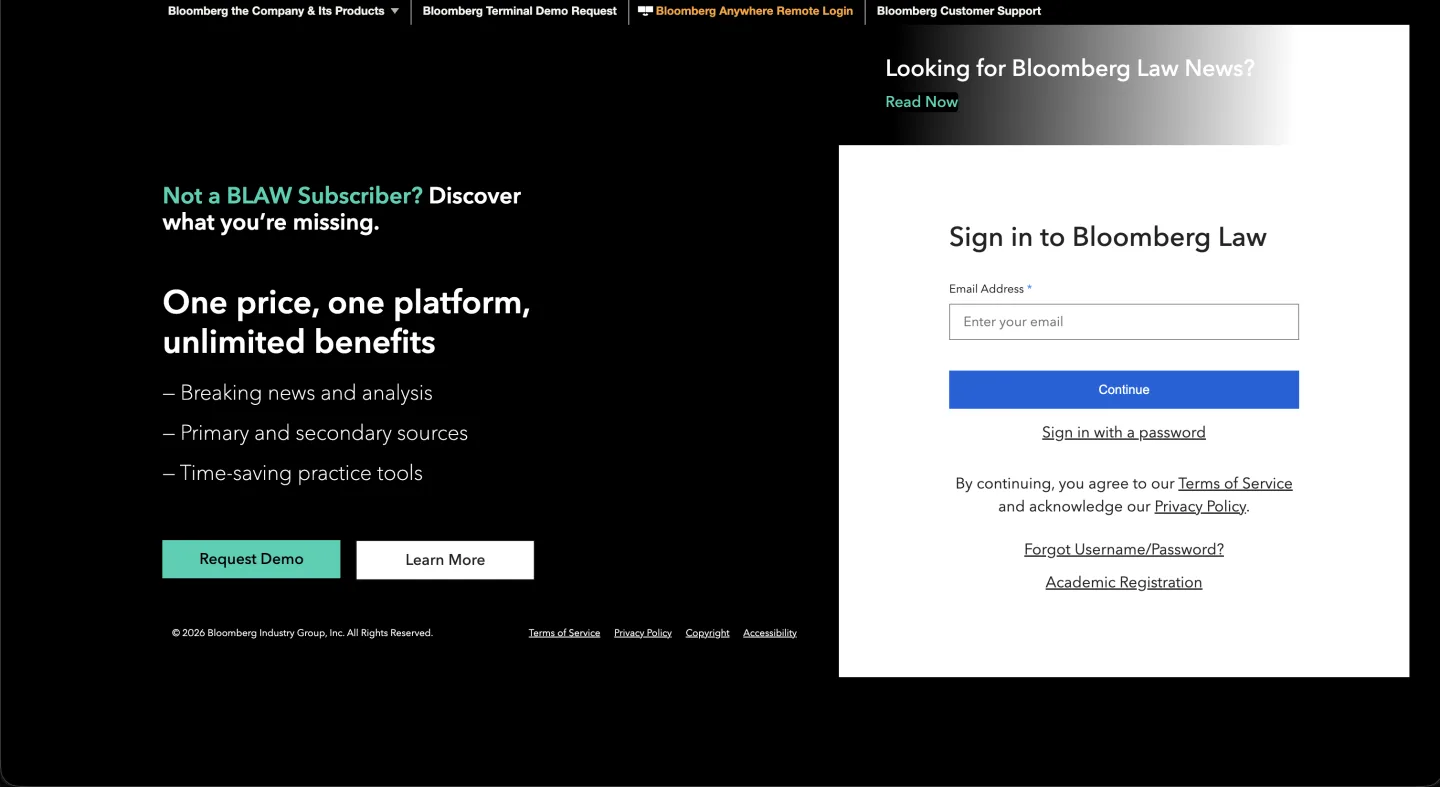
At a glance: quote-based pricing, sales-led · best for transactional research, dockets, and business intelligence.
You are buying Bloomberg Law for the Bloomberg data: dockets, company filings, market intelligence, and the terminal-grade business feed wired into the legal product. The AI is an afterthought bolted on top, so do not pick this for its assistant.
What's good
- The docket coverage and litigation analytics are the real draw, fed by the same Bloomberg pipeline that corporate lawyers already trust for market context.
- Tying a contract or a deal to live company and market data, in one place, is something a pure research tool cannot match.
Where it falls short
- The AI layer trails the research incumbents that have spent years on it. If a sharp legal assistant is what you want, you are overpaying for data you may not use to get a weaker one.
Bottom line: strong for transactional and corporate teams that live on dockets and market data. Litigation-only solos who just want good AI research will find cheaper, sharper fits.
16. Kira: best for due-diligence at scale
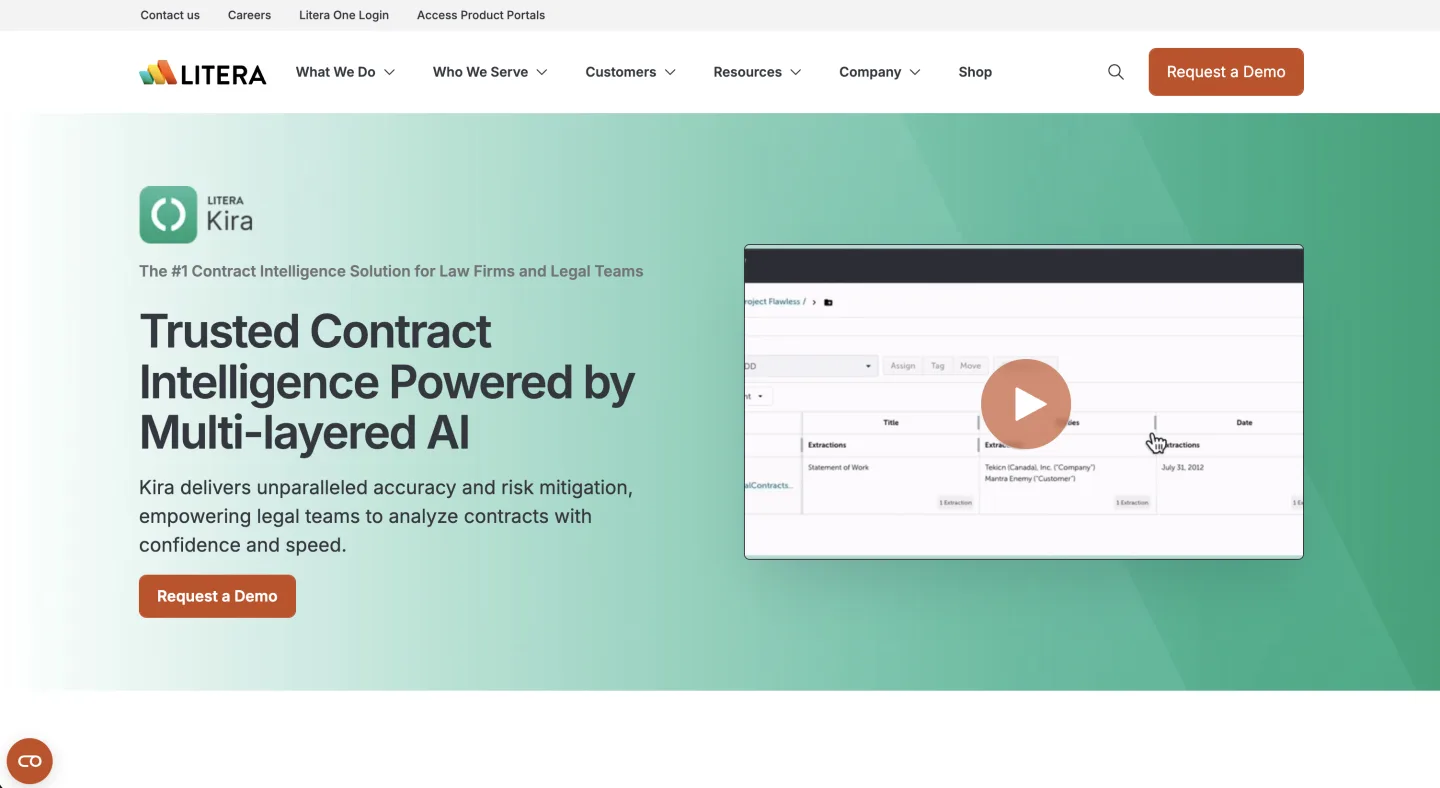
At a glance: quote-based pricing, sales-led · best for large-volume due-diligence and contract analysis.
Kira's clause-extraction models predate the LLM wave, with a decade of trained provision models behind them, so on pure M&A diligence accuracy it has a track record the newer tools are still building. Litera acquired it in 2021.
What's good
- The extraction is battle-tested on real diligence, with 1,000-plus pre-built provision models trained long before everyone bolted an LLM onto contract review. For repetitive deal review at scale, maturity counts.
- It earned its place in large-firm M&A workflows, so the playbooks and integrations are well-worn rather than v1.
Where it falls short
- The open question is investment under Litera, which folded Kira into its transaction-management suite and spun the underlying tech into a separate company (Zuva). Before you commit, ask the roadmap question: is this still a flagship or a maintained line. (Litera-Kira deal, Businesswire, Aug 2021)
Bottom line: a fit for firms doing heavy M&A diligence that value a proven extraction engine. Press hard on post-acquisition roadmap before signing.
17. Evisort: best for enterprise CLM with AI analysis
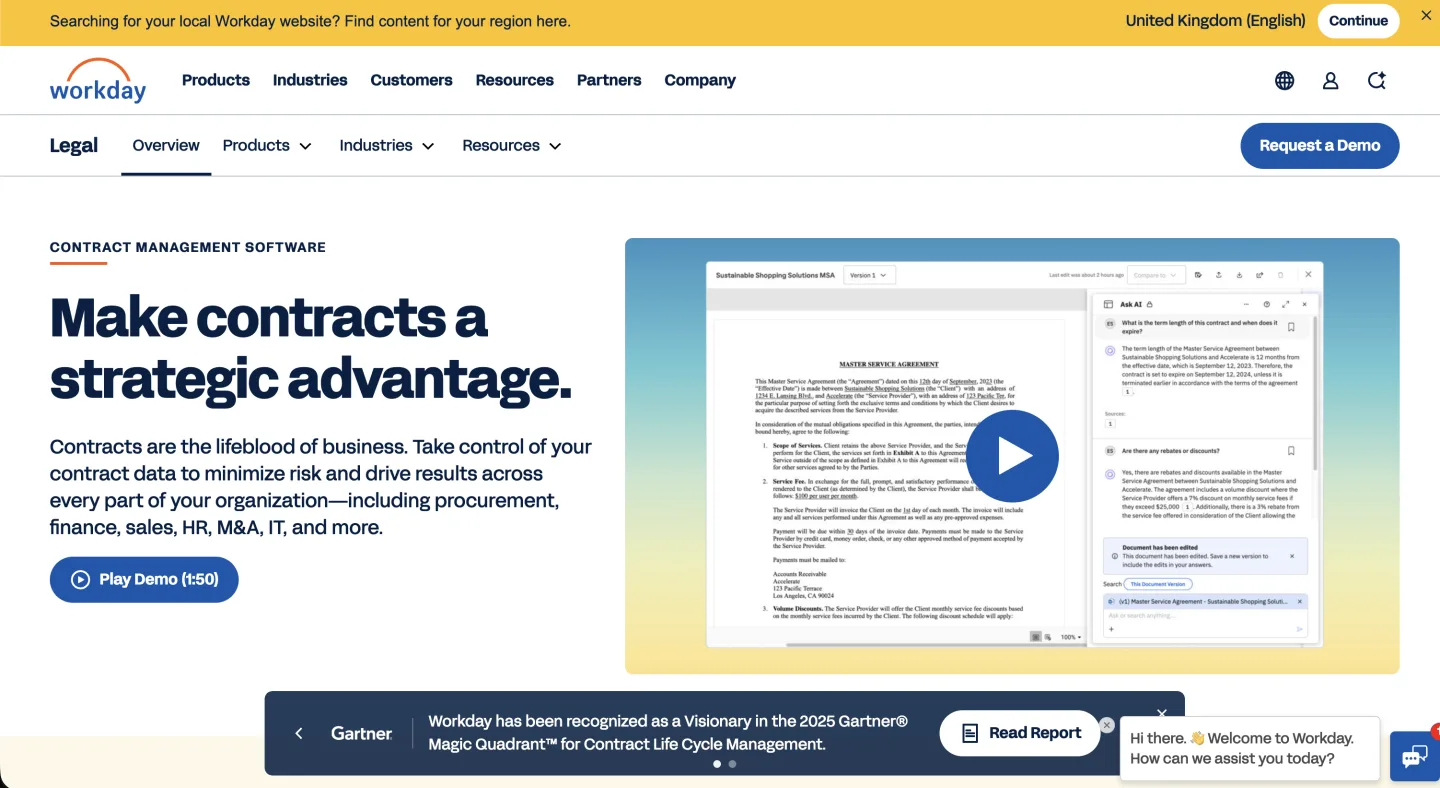
At a glance: quote-based pricing, sales-led · best for enterprise contract lifecycle management.
Evisort is AI-native extraction, built around an LLM trained on contracts rather than workflow with AI added later, which is the opposite design choice from Ironclad below. If reading and structuring contract data is the job, this is the one that started there.
What's good
- The extraction and the data model are the product, not a feature, so reporting across a contract portfolio (renewal dates, liability caps, obligations) is where it shines over workflow-first CLMs.
- It pioneered a contract-specific language model early, so the AI is core to how it works rather than a recent bolt-on.
Where it falls short
- Workday acquired Evisort in September 2024 and rebranded it as Workday Contract Intelligence and CLM. The real note is roadmap gravity: it is now steered toward Workday finance and HR buyers, so a standalone legal team should ask where legal sits in that priority order. (Workday-Evisort agreement, Sep 2024)
Bottom line: worth evaluating if contract data extraction and analytics are the core need, especially if you already run Workday. A standalone small legal team should weigh the Workday-first roadmap.
18. Luminance: best for large-volume contract analysis
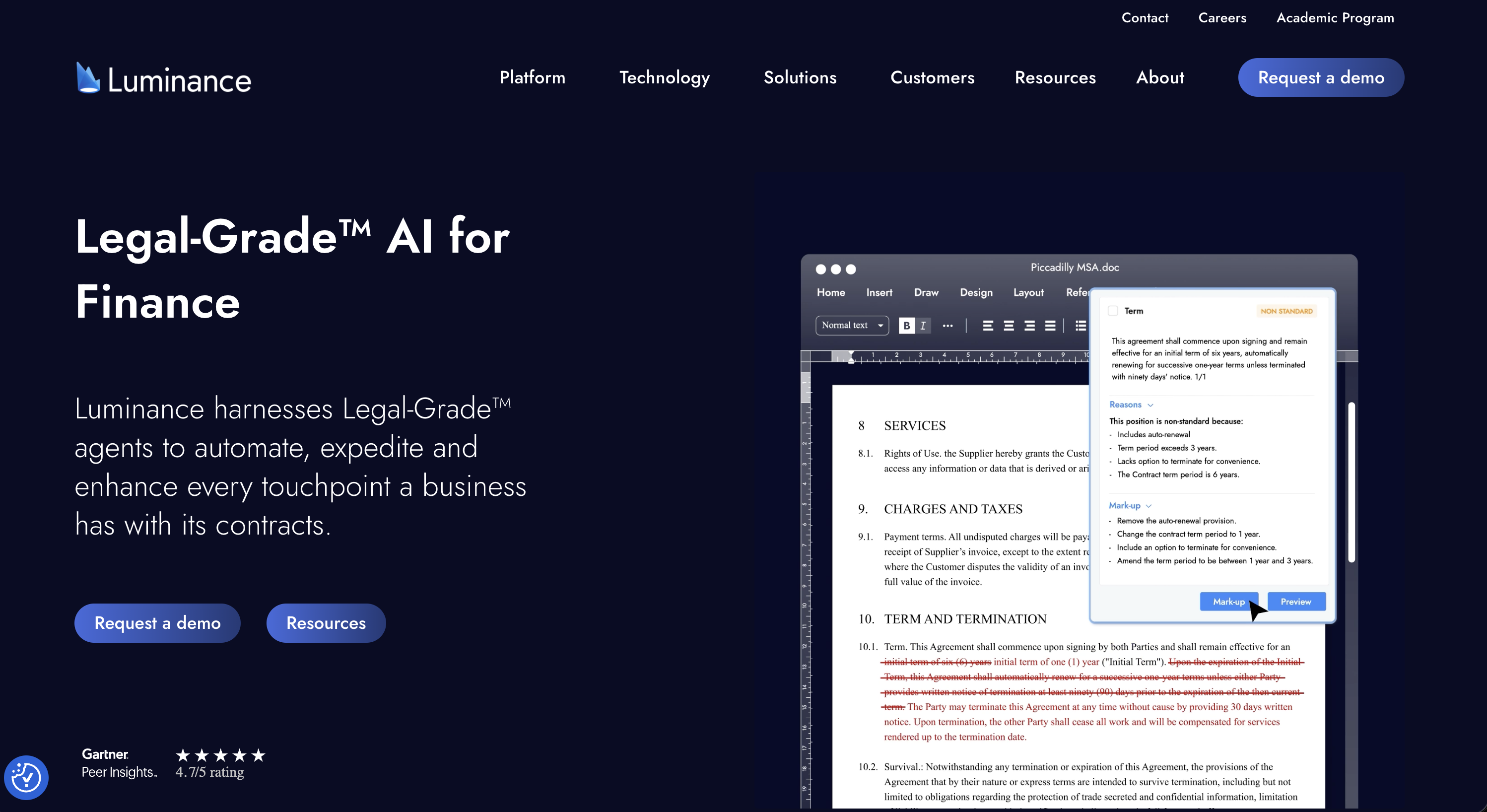
At a glance: quote-based pricing, sales-led · best for large-volume contract review and analysis.
Luminance's pitch is that it runs its own legal-trained models instead of wrapping GPT, using a multi-model "Panel of Judges" setup where models check each other. If you distrust general-purpose-LLM contract review, this is the tool built to answer that objection.
What's good
- The company says its proprietary legal transformer was trained on 150 million-plus verified legal documents, many never publicly released, which is a genuinely different architecture from the GPT wrappers most rivals ship. (Luminance AI technology)
- The "Panel of Judges" cross-checking is aimed squarely at the hallucination problem that dogs single-model tools, a real concern for bulk review.
Where it falls short
- The proprietary-model edge is mostly a vendor claim. There is no independent benchmark proving the in-house models beat a well-prompted frontier LLM on your contracts, so treat the differentiator as a thing to test, not a settled fact.
Bottom line: a fit for teams reviewing contracts in bulk who specifically want models built for law. Make the pilot a head-to-head against a frontier-model tool so the proprietary claim has to earn it.
19. Ironclad: best for enterprise contract operations
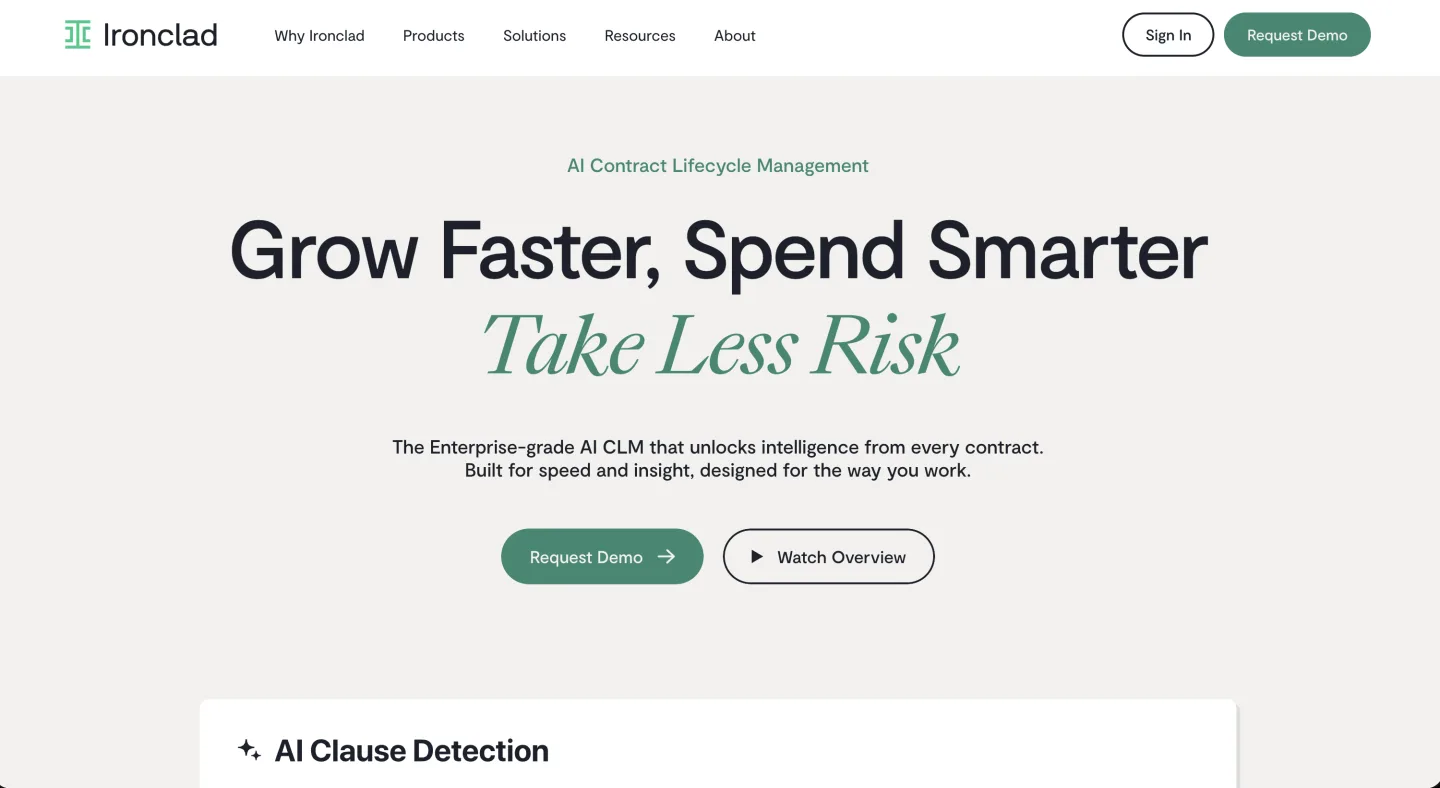
At a glance: quote-based pricing, sales-led · best for enterprise CLM and contract workflow.
Ironclad is a contract-operations platform first, the system of record that routes, approves, signs, and stores contracts for a whole company. The AI was bolted onto that workflow engine later, the reverse of Evisort's AI-native build, so you are not buying Ironclad for the AI.
What's good
- The workflow and approval automation is the product: intake forms, routing rules, e-signature, and a searchable repository that becomes the contract backbone for legal plus sales plus procurement.
- It scales to high contract throughput across departments, which is exactly the operational job a pure review tool does not touch.
Where it falls short
- If your actual need is sharp AI drafting or review, the AI here is the secondary layer, not the reason the platform exists. Teams chasing the best assistant should not start with a CLM that happens to include one.
Bottom line: a strong CLM for enterprises that need the contract workflow backbone and treat AI as a bonus. A small team that just wants good AI review will find it far more platform than they need.
FAQ
What is the best AI tool for lawyers?
There is no single best tool for every lawyer. For an all-in-one workbench at a self-serve price, Vaquill AI fits solos and small teams. For BigLaw budgets, Harvey and Legora lead; for contract review, look at Spellbook, Ivo, LegalOn, and Gavel Exec.
Are AI tools safe and accurate for legal work?
They help, but none is fully reliable on citations. A Stanford and Yale study found even paid research tools hallucinated, from about 17% for Lexis+ AI to roughly one-third for Westlaw. Always verify every citation and quote before you file.
Are AI tools secure enough for client data?
Purpose-built legal tools can be, but you have to check. Look for a signed data-processing agreement, a written clause that the vendor does not train models on your matters, and a SOC 2 Type II report; consumer chatbot tiers usually offer none of the three. Your confidentiality duty under ABA Model Rule 1.6 stays with you, so vet the vendor's data handling before you upload a client matter.
What is the difference between legal AI and a general chatbot like ChatGPT?
General chatbots draft and summarize but do not connect to verified law, so they can invent case citations that look real. Purpose-built legal AI links its answers to actual cases and statutes, adds legal-specific safeguards, and offers enterprise data terms a consumer tool does not. Use general chat to brainstorm and legal tools to produce work you will file.
What is the best free AI for lawyers?
General chat assistants are free and useful for first drafts and summaries, but they cite unreliably and lack legal-grade sourcing. Purpose-built legal tools charge money because they connect to verified law. Use free tools to brainstorm, not to file.
What is the best AI tool for solo lawyers?
Solos do best with self-serve tools that publish a price. Vaquill AI, Paxton AI, and Gavel all let a single lawyer start without a sales call. Pick by job: a full workbench, research plus drafting, or document automation.
What is the best AI for contract review?
Spellbook is the favorite for transactional lawyers in Word, Ivo and LegalOn suit playbook-driven in-house teams, and Gavel Exec gets praise for precise redlines. For a deeper breakdown, read our contract review tools comparison.
What is the best AI tool for in-house counsel?
GC AI and Vaquill AI are both built with in-house work in mind, and a workbench that covers research, drafting, and matter docs tends to fit in-house teams. See our in-house counsel roundup for the full picture.
How much do AI tools for lawyers cost?
It ranges widely. Self-serve tools run from about $83 per month (Gavel Workflows) to $500 per seat, while enterprise assistants like Harvey reach $2,000 or more per user per month. Research incumbents and most CLM platforms are quote-based.
Which AI legal research tool is most accurate?
In the Stanford and Yale study, Lexis+ AI had the lowest hallucination rate of the paid tools tested at about 17%, with Westlaw the worst at roughly one-third. No tool was hallucination-free, so verification is still required.
The short version
Buy for the job in front of you, not the biggest funding round. If your week is one job, buy the best single tool for it. If it is five jobs, a workbench saves you four logins and four invoices.
That is where Vaquill AI fits: research, drafting, redlines, and matter docs in one place, with self-serve pricing a solo can start today. Try it on your own work at app.vaquill.ai.
New legal AI guides, weekly.
Further Reading
Harvey AI Pricing 2026: Per-Seat Cost and the Renewal Increase
Read postHarvey AI Pricing: $1,200-$2,000/Seat vs Legora & CoCounsel
Read postLexis+ AI vs Westlaw AI 2026: Pricing + Which Hallucinates Less
Read postLexis+ AI vs Westlaw AI vs Vaquill AI: The Honest AI Legal Research Comparison
Read postTop AI Legal Research for Solo Attorneys on a Budget
Read postBest AI Software for Plaintiff Law Firms (2026): 11 Tools Compared
Read post
Co-Founder & CEO · Attorney
Arshita leads product and strategy at Vaquill, building the legal AI suite that solo, small-firm, and in-house US lawyers use to run a matter end to end.