The best legal redline software for most in-house teams is an AI tool that proposes edits and writes them back as real Word track changes. For a forensic two-version blackline, a dedicated compare engine like Litera or Draftable still wins. This guide ranks thirteen tools against that split.
You have two versions of a 40-page agreement and a deadline. You need a clean redline that shows every changed word, handles the PDF opposing counsel sent back, and exports as real Word track changes you can hand off.
This is a ranked list of thirteen tools that ship a usable redline. It runs from an AI workbench down to free built-in compare.
It is about the redline act itself: which engine catches the changes, across which file formats, at what price.
Short answer: The best legal redline software splits into two camps. For an AI that proposes edits and exports them as real Word track changes, Spellbook leads for playbook markup inside Word, with Vaquill AI, Gavel, and LegalOn as strong picks. For an exact two-version blackline, Litera Compare (quote-based) is the firm standard and Draftable Legal ($261/user/yr) is the cross-format value pick. Free? Microsoft Word Compare, if both files are clean Word.
TL;DR
- Best for in-house teams: Vaquill AI. AI redline that exports real Word track changes, plus matter context and a multi-doc extraction grid in one suite.
- Playbook markup in Word: Spellbook (base plan $500 per seat). It drafts track-changes edits against your standard positions.
- Automation plus review: Gavel pairs contract review with doc automation.
- Firm-grade compare standard: Litera Compare. Most large firms run it.
- Cross-format compare: Draftable Legal compares Word, PDF, Excel, and slides ($261/user/yr).
- DMS-native: iManage compare wins when files already live in iManage.
- Free baseline: Microsoft Word Compare makes a tracked-changes redline from two Word files.
What does Vaquill AI's AI redline hand back after it proposes edits?
Part of our document tools, redline, and matrix guide series. For the broader buyer's view, see our legal AI for in-house counsel pillar.
How we picked
We ranked these for buyers whose real job is marking up contracts, not only diffing clean files. We checked three things: does it export native Word track changes, does it handle a PDF return, and does it choke on tables and defined-term numbering.
The real test is clean output you can hand off, not a read-only diff stuck in a viewer.
Prices here are vendor-published or founder-confirmed, stated as a number where we have one. Traditional compare tools like Litera are quote-based, so we say so instead of guessing. Sentiment lines come from real forums, linked where the page returns a live response.
How AI redline software actually works
An AI redline tool reads a draft, compares it against your standard positions or a prior version, and writes the edits back as tracked changes you accept or reject. The mechanics are the same four steps across every AI tool on this list.
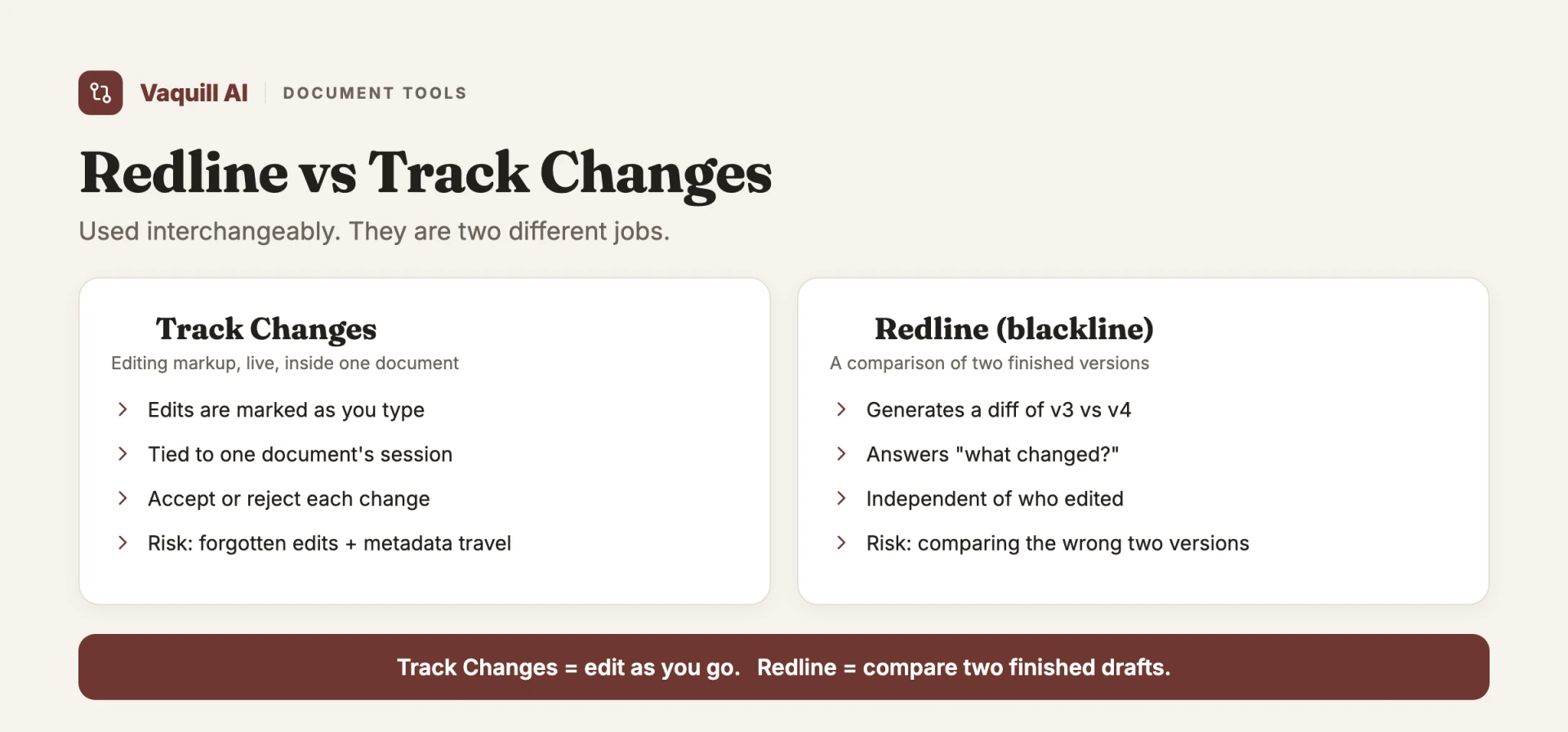
Redline and track changes are not the same thing. Track changes is the Word feature that records each edit as you type. A redline, or blackline, is the marked-up output that shows what moved between two versions. Redline software builds that output for you, and the AI tools go one step further by drafting the edits against a playbook instead of only diffing two files. For the version-by-version mechanics, see our guide to AI tools for comparing document versions.
1. Spellbook: best for playbook markup inside Word
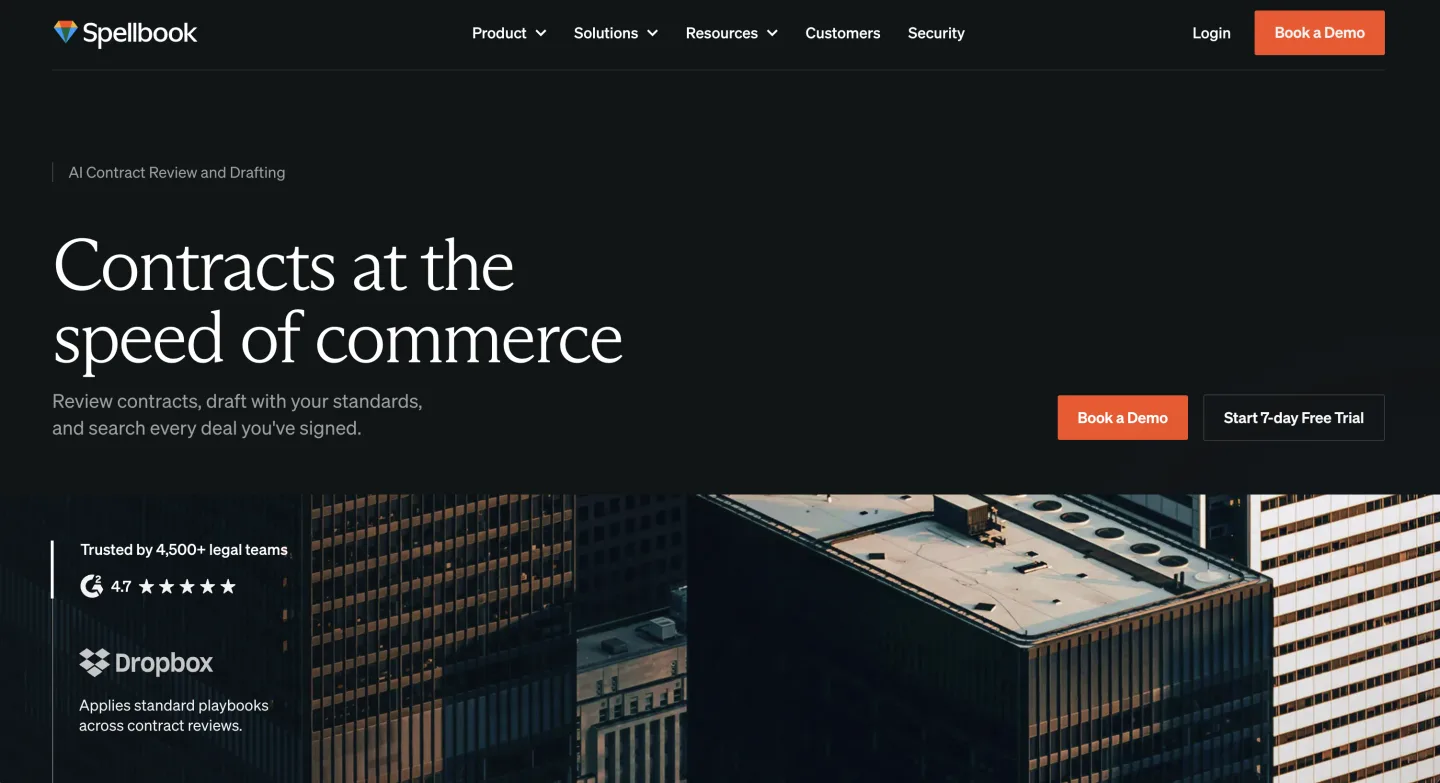
Spellbook is a Word-native add-in that marks up drafts against your playbook.
At a glance: Base plan $500 per seat (site does not publish; quote-based) · Sales-led, demo · Best for transactional lawyers who live in Word
Spellbook is a Word-native AI assistant for transactional lawyers. It does not compare two versions; it generates track-changes edits that pull a draft toward your firm's standard positions, right inside Word.
What's good
- Strong for first-pass review where the comparison is draft-versus-standard
- Edits land as track changes inside Word, no new app to learn
- Best-liked tool in this category among transactional lawyers
Where it falls short
- Not a precision two-version blackline engine
- Built for transactional work, weak for litigation
What users say: Transactional lawyers rate it around 4.1/5 on Lawyerist, with the common gripe that it still inserts wrong citations now and then.
Bottom line: Buy it if your work is drafting and marking up transactional contracts in Word. Skip it if you need an exact diff of what changed between v3 and v4.
See our Spellbook breakdown for the full picture.
2. Vaquill AI: best for in-house teams that want redline plus extraction in one suite
Vaquill AI's AI redline produces real Word track changes against your matter context.
At a glance: Self-serve, published pricing (sign up to see the latest) · Self-serve, trial · Best for in-house teams who want redline, extraction, and research under one price
Vaquill AI is an in-house legal AI workbench, and redline is one feature inside it. The AI reads a document against your matter context and proposes edits.
Those edits export as real Word track changes you accept or reject in the file you already know.
What's good
- Output is native Word track changes, not a read-only diff view
- A multi-document extraction grid pulls the same field across dozens of contracts at once
- One flat per-user price covers redline, extraction, and grounded research
Where it falls short
- It is not a DMS, so pair it with one if you need a version vault
- It is not a forensic two-version blackline engine the way Litera is
What users say: This is our own product. We do not claim buzz we cannot source.
Bottom line: If you want redline, extraction, and research from one tool at a flat per-user price, the suite math works. If you only ever need an exact two-version diff, a dedicated engine is the cleaner buy.
Start at app.vaquill.ai or read the document comparison feature.
3. Gavel: best for teams that review and generate contracts
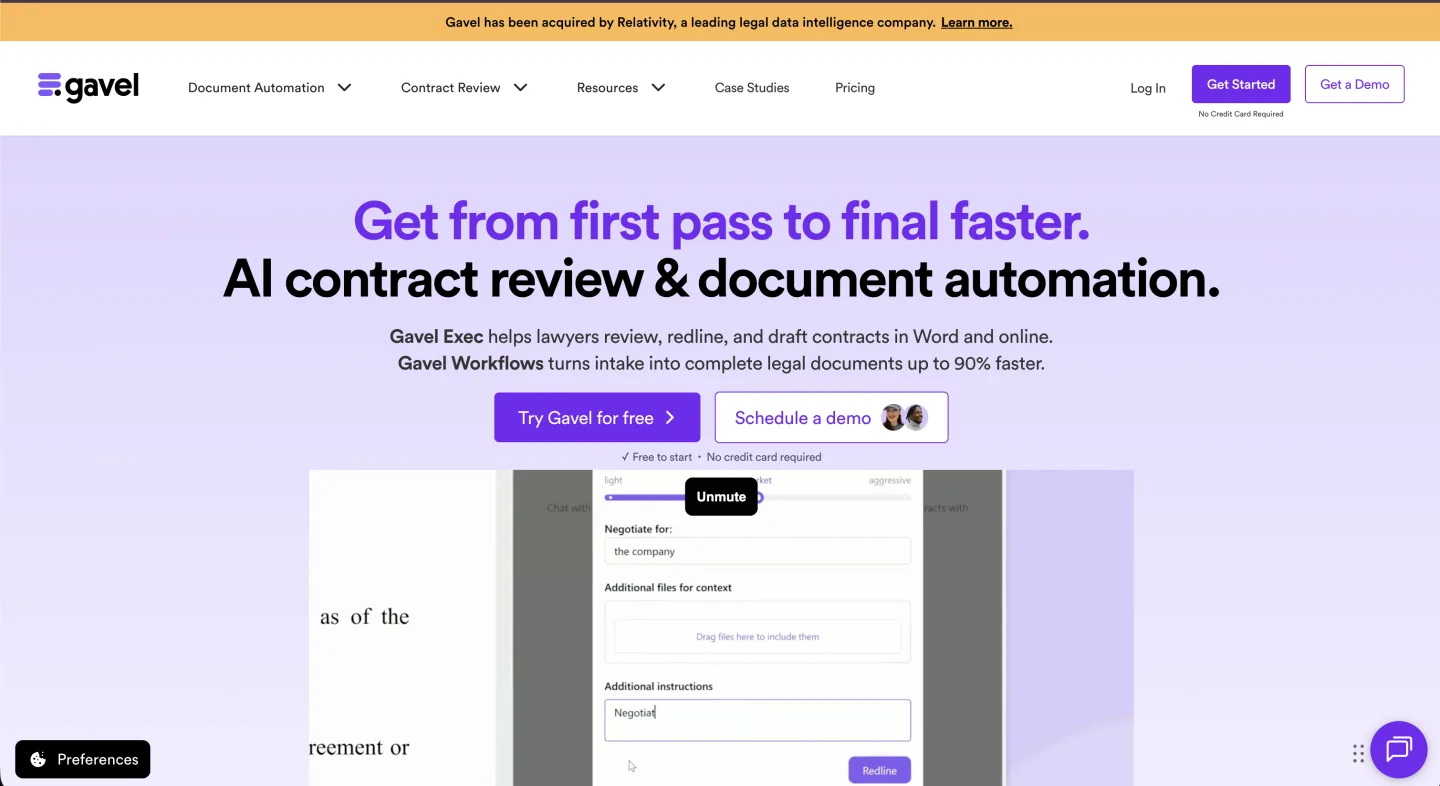
Gavel pairs AI contract review with document automation workflows.
At a glance: Gavel Workflows $83 to $417/mo (annual = 2 months free); Gavel Exec quote-based · Self-serve plus sales-led · Best for teams that both review inbound contracts and generate their own
Gavel pairs AI contract review and markup with a document automation engine. The review side proposes track-changes edits in Word; the automation side handles intake-to-document generation.
What's good
- Covers both inbound review and outbound document generation
- Review edits land as track changes in Word
- Projects feature trains on your own clauses
Where it falls short
- Broader than a pure redline tool, so you pay for automation you may not use
- Two products to learn if you only wanted the diff
What users say: Reddit users praise Gavel Exec for "surgical" redlines that do not turn the whole document red, per a legaltechAI thread.
Bottom line: Buy it if you both review and generate contracts and want one vendor for both. Skip it if all you need is a two-version diff.
4. DraftWise: best for markup drawn from your own past deals
DraftWise drafts and redlines in Word against your firm's precedent library.
At a glance: Quote-based / on request · Sales-led, demo · Best for transactional teams with a deep deal archive
DraftWise is a Word add-in that drafts and redlines from your firm's past deals. It reads an inbound markup, then suggests replies based on how your deals settled before.
Edits land as Word track changes you accept or reject.
What's good
- Markup is grounded in your real precedent, not a generic model
- Playbook Studio builds a negotiation playbook from your repository
- Connects to iManage, NetDocuments, and SharePoint for clause search
Where it falls short
- It needs a sizable precedent library to earn its keep
- Aimed at draft-versus-precedent markup, not exact two-version diffs
What users say: Coverage frames it as a precedent-driven contract tool that applies patterns from past deals. We found vendor and press write-ups rather than deep peer forum threads, so weigh the buzz lightly (source: Artificial Lawyer).
Bottom line: Buy it if you have a rich precedent library and want markup that mirrors your own positions. Skip it if you mostly need a clean version-to-version diff.
5. Definely: best for defined terms and cross-references in Word
Definely surfaces definitions and cross-references inside the clause you are editing.
At a glance: Quote-based / on request · Sales-led, demo · Best for drafters who lose time chasing definitions in long drafts
Definely is a Word add-in built for reading dense contracts. It surfaces defined terms, provisions, and cross-references without making you scroll.
Its Cascade tool flags how one change ripples across clauses, definitions, and schedules.
What's good
- Reads defined terms and cross-references in place, no jumping around
- Cascade catches downstream effects an eye scan would miss
- Exports tracked changes, redlines, and comments into a clean issues list
Where it falls short
- Review and navigation come first, so it is not a two-version compare engine
- Value is highest on long, definition-heavy agreements
What users say: Public discussion is light, and the page lists features rather than independent reviews. Treat the claims as vendor-stated until you trial it (source: Definely).
Bottom line: Buy it if your drafts are long and definition-heavy and you keep losing the thread between clauses. Skip it if you mainly need an exact diff of two versions.
6. Henchman: best for reusing clauses from your past contracts
Henchman pulls clauses and definitions from your contract database into Word.
At a glance: Quote-based / on request · Sales-led, demo · Best for teams sitting on an archive they cannot search well
Henchman, now part of LexisNexis, adds a clause layer over your contract database. It surfaces past clauses and definitions inside Word and Outlook while you draft.
It can also tweak wording, such as switching a clause from singular to plural.
What's good
- Turns your contract archive into a searchable clause bank
- Lives inside Word, Outlook, and Copilot, no new app
- Speeds first-draft assembly from language you have used before
Where it falls short
- It is a drafting and clause tool, not a two-version compare engine
- Value depends on having a real archive to mine
What users say: It won industry awards and was acquired by LexisNexis, which signals traction more than peer-tested quality. Independent forum review is thin, so trial it on your own archive (source: LawNext Directory).
Bottom line: Buy it if you have a large contract archive and want to reuse its language fast inside Word. Skip it if your need is an exact diff rather than clause reuse.
7. Litera Compare: best for firm-wide compare at scale
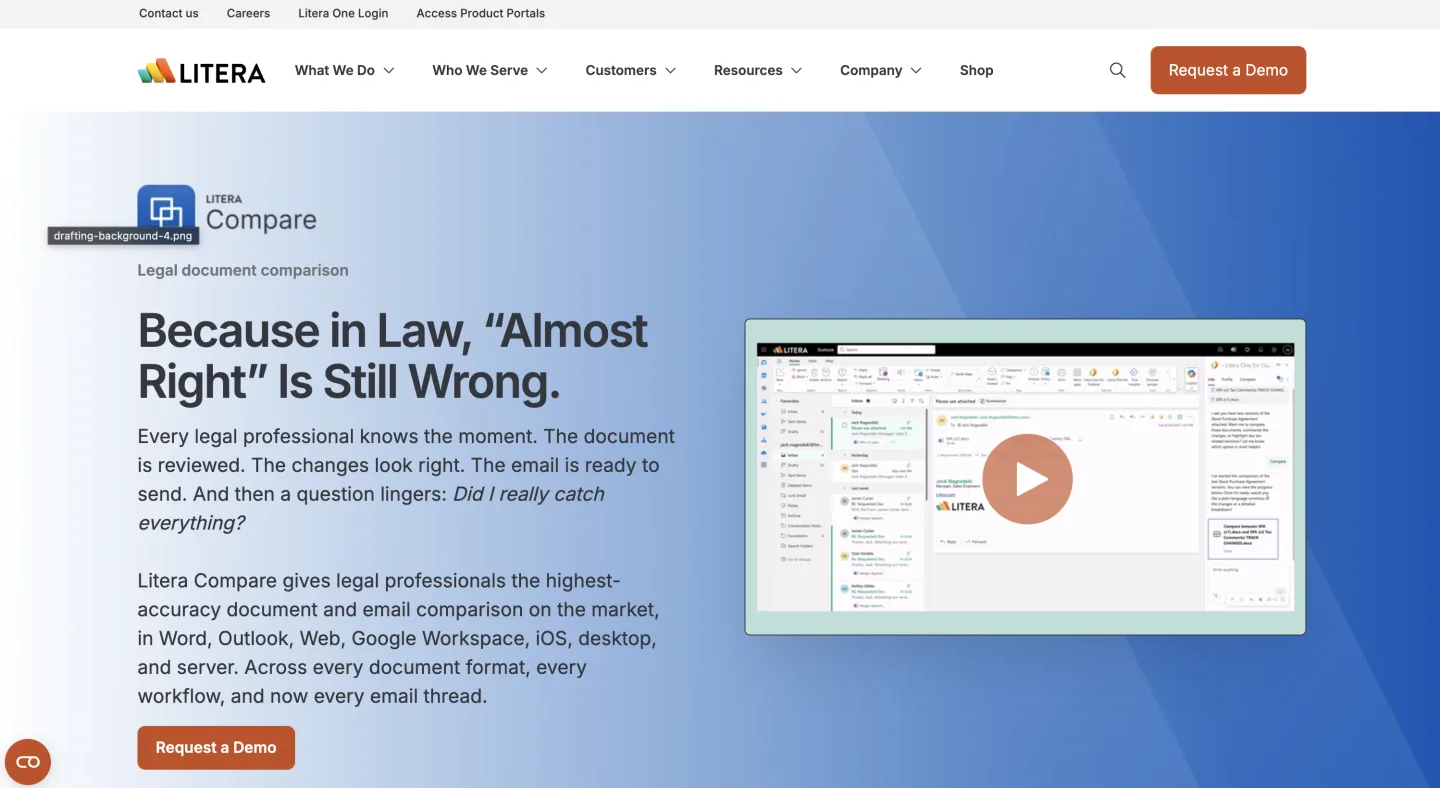
Litera Compare (reviewed June 2026).
At a glance: Quote-based / on request · Sales-led, demo required · Best for firms with a DMS and IT support
Litera Compare (formerly Workshare) is the firm-grade comparison standard. Litera markets it as trusted by a large share of the legal industry, and the engine is mature and built for legal formatting (source: Litera Compare, reviewed July 2026).
What's good
- Handles tables, numbering, and footnotes far better than anything generative
- Compares across Word, PDF, email, and scanned documents
- Ties deep into DMS and Outlook
Where it falls short
- Enterprise posture and ecosystem lock-in
- Procurement is a project, not an afternoon
What users say: Little independent forum discussion exists. It shows up mostly as the assumed default in firm IT stacks, not a debated purchase.
Bottom line: Buy it if you run a firm with a DMS and IT support and want one compare standard. Skip it if you are a small team that needs the occasional diff.
8. Draftable (Draftable Legal): best for cross-format compare
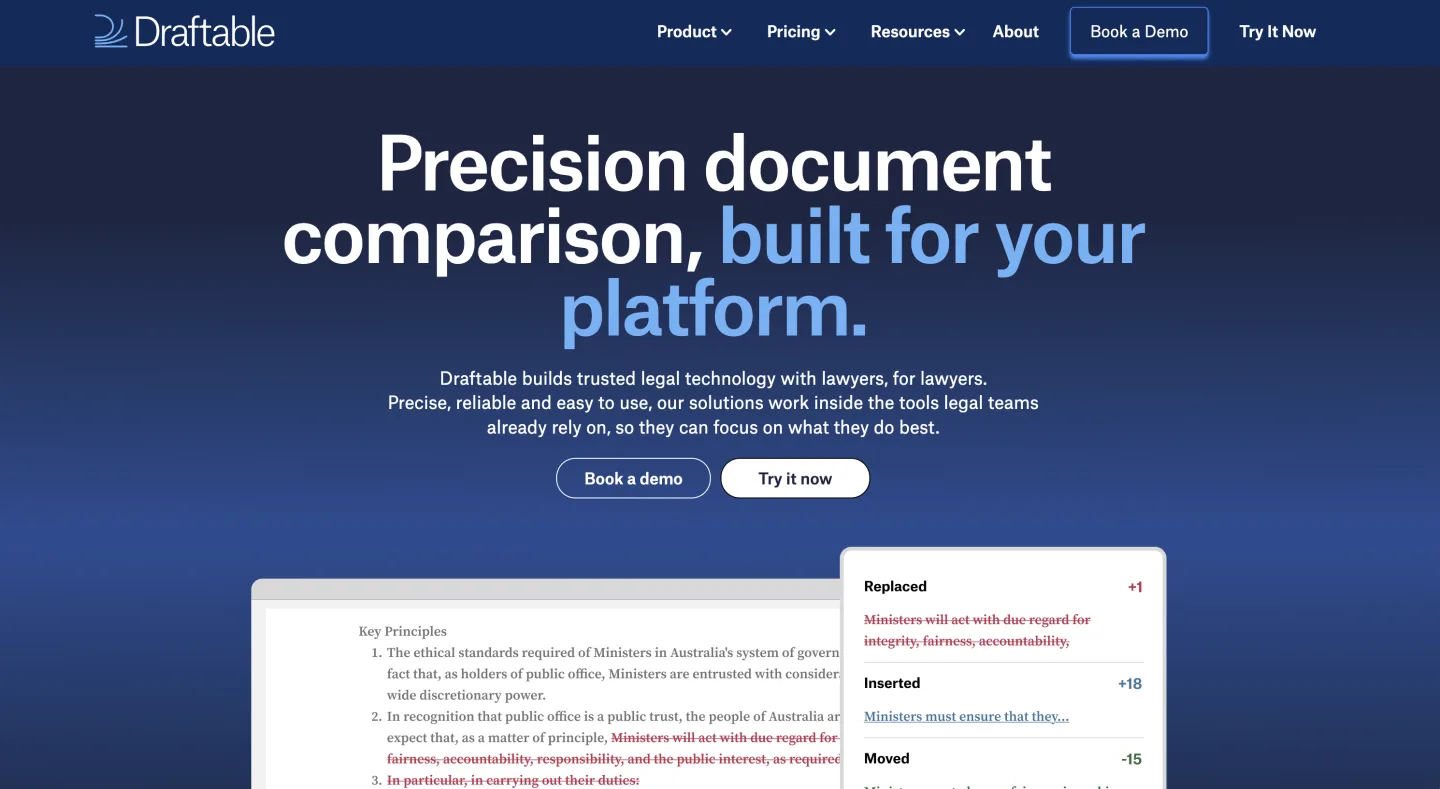
Draftable (reviewed July 2026).
At a glance: Draftable Legal $261 per user/yr, Business $129 per user/yr; Enterprise custom · Self-serve, install and trial the desktop app · Best for teams that get returns as PDFs
Draftable is the cross-format specialist. It compares Word, PDF, Excel, and PowerPoint, and shows changes side by side and as a single redline.
What's good
- Solves the "they sent it back as a PDF" problem
- Single redline view across formats
- Lighter overhead than Litera
Where it falls short
- Narrowly a comparison tool, no drafting or review
- Sits beside your workflow rather than inside a DMS
What users say: Discussion is thin; it tends to come up as the lightweight cross-format pick when Litera feels like too much.
Bottom line: Buy it if cross-format comparison is the specific problem and you want a clean, single-purpose tool. Skip it if you need markup or review on top of the diff.
9. iManage Compare: best for teams already on iManage
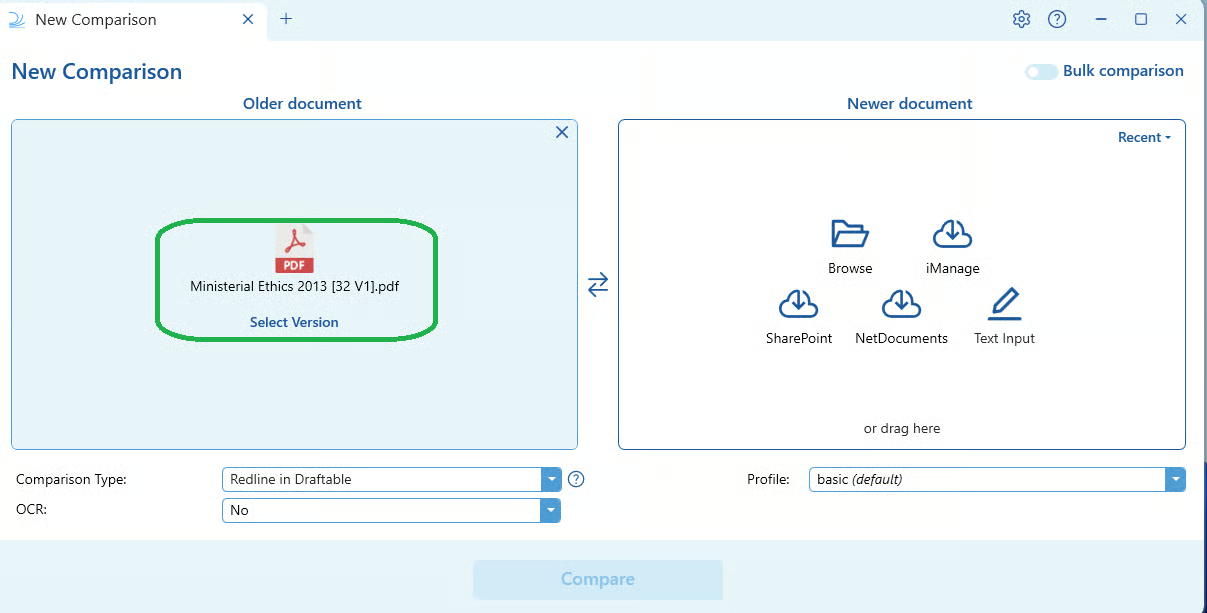
iManage Compare (reviewed June 2026).
At a glance: Quote-based / on request (bundled in the iManage platform) · Sales-led · Best for firms already committed to iManage
iManage is a document management system first, and its comparison capability is a workflow feature, not a separate product.
What's good
- If every version lives in iManage, comparing two is one right-click
- Redlines file back into the matter automatically
- Native version history
Where it falls short
- You buy iManage for the DMS, not the diff
- No reason to adopt it for comparison alone
What users say: Forum talk centers on iManage as a DMS, not its compare feature. Most users treat the compare as a convenience that ships with the platform.
Bottom line: Buy it if iManage is already your system of record. Skip it if you do not run iManage.
10. Microsoft Word (Track Changes / Compare): best for two clean Word files on no budget
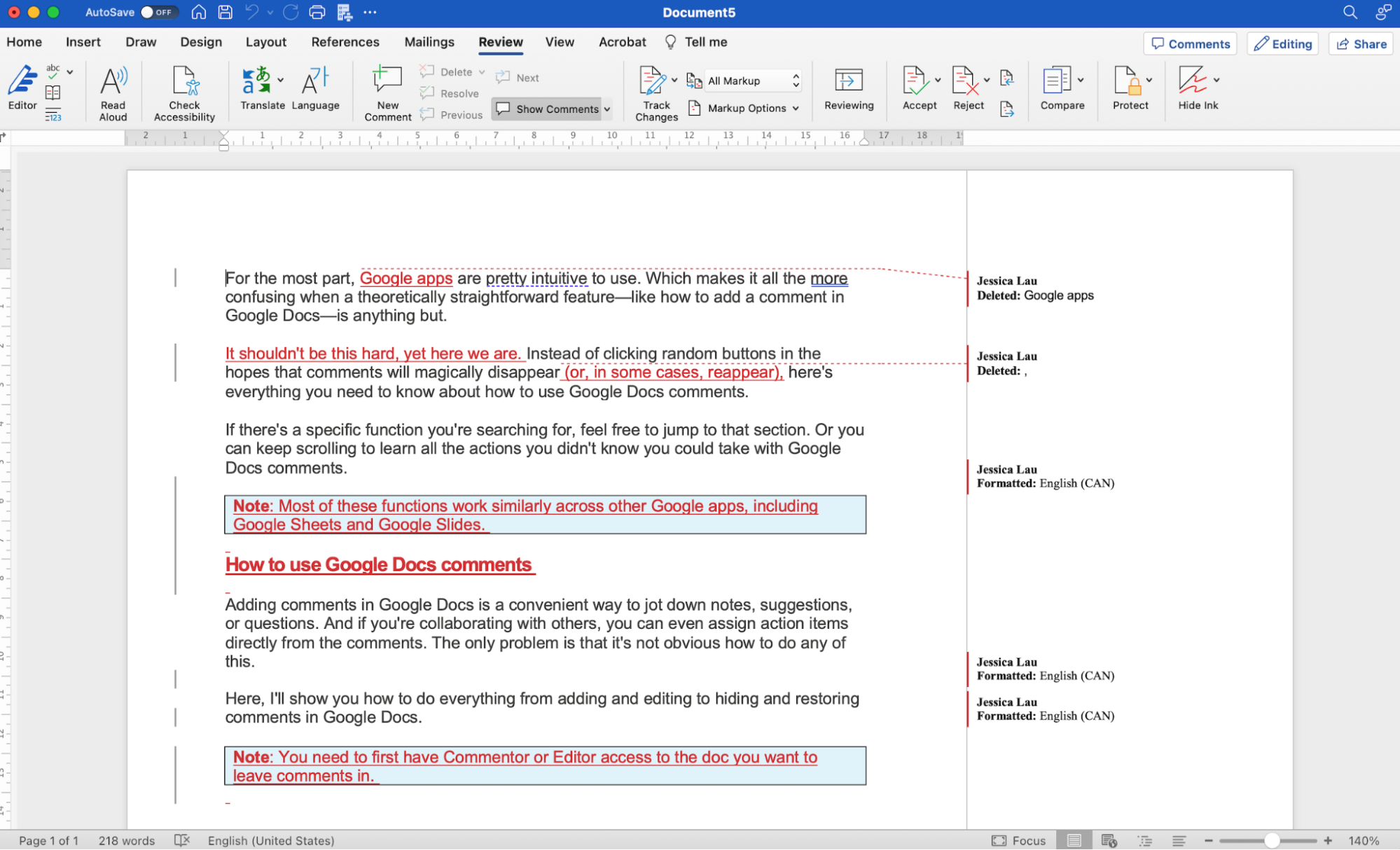
Microsoft Word Compare (reviewed June 2026).
At a glance: Bundled with any Microsoft 365 or Office license · Already installed · Best for clean Word-to-Word diffs
Word's Review > Compare feature takes an original and a revised document and builds a third file. It shows insertions, deletions, and moves as native tracked changes, the output older lawyers call a "legal blackline."
What's good
- Free and already installed
- Output is editable in the tool you know
- Nothing leaves your machine
Where it falls short
- Compares two Word documents only, so a PDF means a conversion and false redlines
- Stumbles on complex numbering, defined-term tables, and multi-column schedules
What users say: Lawyers treat it as the reliable floor for clean Word files. They reach for a paid engine the moment PDFs or heavy formatting show up.
Bottom line: Use it when both versions are clean Word files and you want no extra vendor. Move up the list once opposing counsel starts returning PDFs.
11. Ironclad: best for redline folded into a full CLM
Ironclad (reviewed June 2026).
At a glance: Quote-based / on request, plus implementation · Sales-led, demo required · Best for large teams that want comparison inside a system of record
Ironclad is a full contract lifecycle management platform. Its AI handles redline and review as one part of a flow that runs from intake through signature and storage.
What's good
- Redline lives inside the same system that routes, approves, and archives
- Built for enterprise scale
- One platform for the whole contract lifecycle
Where it falls short
- You buy CLM, not a diff tool, at CLM prices
- Requires a real implementation
What users say: Ironclad comes up in CLM conversations as a heavyweight platform buy. Redline is a footnote next to workflow and approvals.
Bottom line: Buy it if you want comparison folded into a system of record at enterprise scale. Skip it if redline is all you need.
12. LegalOn: best for curated playbooks out of the box

LegalOn is a dedicated AI contract review platform with pre-built playbooks.
At a glance: Individual $550/mo billed annually; Teams custom · Sales-led · Best for teams that want attorney-built playbooks
LegalOn is a dedicated AI contract review platform. It ships with attorney-built playbooks across common contract types, so its markup is grounded in standards its legal team maintains, not only your own. LegalOn markets 50+ pre-built playbooks and a Word add-in it says installs in about 15 minutes (source: LegalOn, reviewed July 2026).
What's good
- Pre-built playbooks across common contract types
- Markup aimed at risk and standard positions
- Standards maintained by LegalOn's own legal team
Where it falls short
- Review-focused, not a precision two-version blackline engine
- Dedicated-platform budget for a single job
What users say: We could not find genuine peer forum discussion, only vendor testimonials, so take the buzz with a grain of salt.
Bottom line: Buy it if you want curated playbooks out of the box and have the budget for a dedicated review platform. Skip it if you need an exact version-to-version diff.
13. Ivo: best for custom-playbook markup in Word and Google Docs

Ivo is an AI contract review tool that marks up agreements against custom playbooks.
At a glance: $500 per user/mo (not published; volume discounts for teams of 10+) · Sales-led · Best for teams building their own playbooks
Ivo is an AI contract review tool that marks up agreements against playbooks you build. It works inside Word and Google Docs and proposes track-changes edits against your positions.
What's good
- Works in both Word and Google Docs
- Fee bundles playbook creation, onboarding, and support
- Lower setup burden than rolling your own
Where it falls short
- Per-seat cost lands well above the entry AI tools
- Targets draft-versus-playbook markup, not exact diffs
What users say: G2 reviewers call it a real AI reviewer that is easy to use. They note onboarding leans on Ivo's team and the output is not always right (source: G2, page blocked automated fetch).
Bottom line: Buy it if you want custom playbooks across Word and Google Docs with hands-on onboarding. Skip it if budget is tight or you need version-to-version diffs.
See our Ivo breakdown for where it fits an in-house stack.
Others worth knowing
These come up on most "best redline software" lists. They did not make the main thirteen because each is narrower or harder to verify, but they fit specific stacks.
- BlackBoiler: AI that auto-applies redlines to third-party paper against your playbook and returns a fully redlined Word file with track changes, inside Word. Pricing is quote-based; the site offers a 7-day trial (source: BlackBoiler, reviewed June 2026). Tradeoff: it is built for high-volume third-party-paper markup, not exact two-version diffs.
- Mitratech DeltaView: a dedicated forensic compare engine (the old Workshare DeltaView lineage) that handles tables, footnotes, and numbering across Word and PDF, and ties into iManage and SharePoint. Pricing is quote-based via Mitratech (reviewed June 2026). Tradeoff: like Litera, it is a firm-IT purchase, not a self-serve buy.
- Adobe Acrobat Pro: its built-in Compare Files marks differences between two PDFs and is bundled with an Acrobat Pro subscription. Tradeoff: the output is a PDF change report, not editable Word track changes you can hand off.
- DocJuris: playbook-driven review that handles both PDFs and Word with plain-language explanations of each suggested edit. Pricing is quote-based via DocJuris (reviewed June 2026). Tradeoff: it is review-and-negotiation tooling, not a full CLM or an exact diff engine.
Comparison table
| Tool | Price | Buying motion | Best for |
|---|---|---|---|
| Spellbook | Base $500/seat (quote-based) | Sales-led | Playbook markup in Word |
| Vaquill AI | Published | Self-serve, trial | Redline plus extraction in one suite |
| Gavel | $83 to $417/mo; Exec quote-based | Self-serve plus sales | Review and generate contracts |
| DraftWise | Quote-based | Sales-led | Markup from your own past deals |
| Definely | Quote-based | Sales-led | Defined terms and cross-references in Word |
| Henchman | Quote-based | Sales-led | Reusing clauses from past contracts |
| Litera Compare | Quote-based | Sales-led | Firm-wide compare at scale |
| Draftable | $261/user/yr (Legal) | Self-serve | Cross-format compare |
| iManage Compare | Quote-based (bundled) | Sales-led | Teams already on iManage |
| Microsoft Word | Bundled with Microsoft 365 | Already installed | Clean Word-to-Word diffs |
| Ironclad | Quote-based plus implementation | Sales-led | Redline inside a CLM |
| LegalOn | $550/mo billed annually | Sales-led | Curated playbooks out of the box |
| Ivo | $500/user/mo (quote-based) | Sales-led | Custom-playbook markup |
The ethics line on any AI-assisted redline
Some of these tools use generative AI to propose edits. ABA Formal Opinion 512 (July 2024) is the relevant guidance, the bar's first formal ethics opinion on generative AI.
It covers competence, confidentiality, communication, candor, supervision, and fees.
Two practical takeaways. Verify the output before it leaves your office. And know whether the document you upload is processed in a way that keeps it confidential.
Picking one
- In-house team that wants redline plus extraction plus research in one suite, real Word track changes: Vaquill AI.
- Playbook markup of a single draft in Word: Spellbook, Gavel, LegalOn, or Ivo, depending on budget and how much you want pre-built.
- Markup drawn from your own past deals or clause archive: DraftWise or Henchman, if you have a deep precedent library.
- Reading defined terms and cross-references in long drafts: Definely.
- Firm-wide compare standard with a DMS and IT support: Litera Compare or iManage.
- Cross-format comparison, single-purpose tool: Draftable.
- Two clean Word files, no budget: Microsoft Word Compare.
- Redline folded into a full CLM system of record: Ironclad.
There is no single winner. The free option is good for its narrow case, and the compare engines earn their price at firm scale.
The AI suites pay off when redline is one of several things you need from one tool.
For redlining with AI inside Microsoft Word specifically, see legal AI Word add-ins compared.
FAQ
What is legal redline software? It is software that shows the differences between two versions of a contract or marks up a draft against your standard positions. The good ones export native Word track changes you can accept or reject.
The weaker ones give you a read-only diff stuck in a viewer.
What is contract redlining software, and how is it different from track changes? Track changes is the Word feature that records each edit. Redlining software is the layer on top: it either builds the blackline between two versions automatically, or, in the AI tools, drafts the edits for you against a playbook. For the deeper version-by-version mechanics, see our guide to AI tools for comparing document versions.
Do compare tools like Litera and Draftable publish prices? Draftable does: $261 per user/yr for Legal (Draftable Legal page, July 2026) and $129 for Business (June 2026). Litera is quote-based, so you request a price. Among the AI tools, Vaquill AI is self-serve and published, and Gavel publishes its Workflows tiers.
Which tool handles a PDF from opposing counsel? Draftable compares Word, PDF, Excel, and slides directly. Litera also compares across formats including scanned PDFs. Word's built-in compare needs a clean Word-to-Word pair, so a PDF means a conversion and that produces false redlines.
How accurate is AI redlining? Vendors self-report high numbers (Dioptra, for example, claims 90%+ accuracy in redline generation and issue detection, per Spellbook's 2026 roundup), but these are marketing figures, not independent benchmarks. Treat any AI redline as a strong first pass a lawyer still reviews line by line. Accuracy is highest on standardized paper like NDAs and weakest on bespoke, judgment-heavy deals.
Is it safe to use AI redlining on legally binding documents? Treat AI edits as a first pass a lawyer signs off on, not a final answer. ABA Formal Opinion 512 (July 2024) puts the duties of competence, confidentiality, and candor on you, so verify every suggested change and confirm how the vendor handles your upload. Our ABA Opinion 512 guide walks through what that means in practice.
What is the difference between AI redlining and a full CLM? AI redlining tools focus on the review-and-markup step: read a draft, propose edits, export track changes. A contract lifecycle management platform like Ironclad wraps that in intake, routing, approvals, signature, and storage. If you only need the diff and the markup, a redline tool is cheaper and faster; if you need the whole pipeline, see our CLM and AI contract review breakdown.
Can AI redlining tools work on third-party paper? Yes. Tools like Spellbook, Gavel, LegalOn, Ivo, and BlackBoiler are built to mark up the other side's draft against your standard positions, which is the common in-house use case. For a wider look at the review category, see our roundup of the best AI contract review tools.
Can AI redline a contract? Yes. An AI redlining tool reads a draft, compares it against your standard positions or playbook, and inserts suggested edits as tracked changes the way a junior associate would, leaving a human to accept or reject each one. The AI proposes, you decide. It is fastest on high-volume standardized paper like NDAs and vendor agreements, and weakest on bespoke deals where the judgment calls outnumber the mechanical ones.
What is the best free legal redline software? Microsoft Word's Review > Compare builds a tracked-changes blackline from two clean Word files at no extra cost. It falls down the moment a PDF or heavy formatting shows up, which is when a paid engine earns its price.
A closing takeaway
Is compare one piece of a larger workbench you would rather not build vendor by vendor? Then the suite layer is worth a demo. Try Vaquill AI's AI redline at app.vaquill.ai, or read more on the document comparison feature.
New legal AI guides, weekly.
Further Reading
Top Contract Management Vendors for Fortune 500 Legal Teams
Read postHow to Build an NDA Playbook Your AI Can Actually Enforce
Read postLegal AI Workflows: How Law Firms Chain Multi-Step AI Tasks in 2026
Read postHow to Build a Document Matrix to Compare Contracts, Leases, and Filings
Read postHow to Compare Documents and Export Clean Redlines (Step-by-Step)
Read postBulk Contract Review: How to Review Many Contracts at Once With a Document Matrix
Read post
Product & Content
Legal AI suite for US working lawyers: research, drafting, document comparison, document matrix, matters, and citation-verified answers, in one tool.