Short answer: The big general-AI companies are entering legal, but at very different stages. Two have shipped: Anthropic released Claude for Legal, and Microsoft put a legal agent inside Word. One is only announced: OpenAI has said it is building "Codex for Legal" and hired Ironclad co-founder Jason Boehmig to lead it, with no product live yet. One is rolling out: Perplexity unveiled "Computer for Counsel" and is bringing legal features to market. For an in-house team this is good news and a trap at once. The shipped tools give you reach and drafting speed across the systems you already run. None of them includes a governed workbench: verbatim-cited verification, matter segregation, playbook enforcement, and an audit log. Use the general tools for research and first drafts. Keep a governed layer for anything matter-scoped or privileged.
TL;DR
- The wave, sorted by stage (May to June 2026): Shipped and live today are Claude for Legal and Microsoft's Word agent. Announced but not shipped is OpenAI's "Codex for Legal": OpenAI stated the plan and hired Jason Boehmig, per Artificial Lawyer (May 18) and LawSites (June 1), with no product available yet. Rolling out is Perplexity's Computer for Counsel, unveiled June 24, per its own product blog and LawSites.
- What they are good at: pulling scattered documents, email, and law into one context, then drafting fast. The model reasoning was rarely the bottleneck. Reach was.
- What they do not do: enforce your negotiation playbook, keep two matters for the same client apart, log who ran what, or verify every citation before it reaches a filing.
- The buyer test: if the work is research or a first draft, a general legal mode is often enough. If the work touches a live matter, privileged data, or a signed position, you need a governed layer on top.
- The honest play: these tools and a purpose-built in-house suite compose. Run general models for speed and breadth. Route matter-bound work through a system built to control it.
As of mid-2026, which legal AI product has actually shipped?
The wave: four general-AI giants are entering legal, at different stages
Six weeks in the spring of 2026 reset the legal AI market. Here is the timeline, each item tied to a source we read.
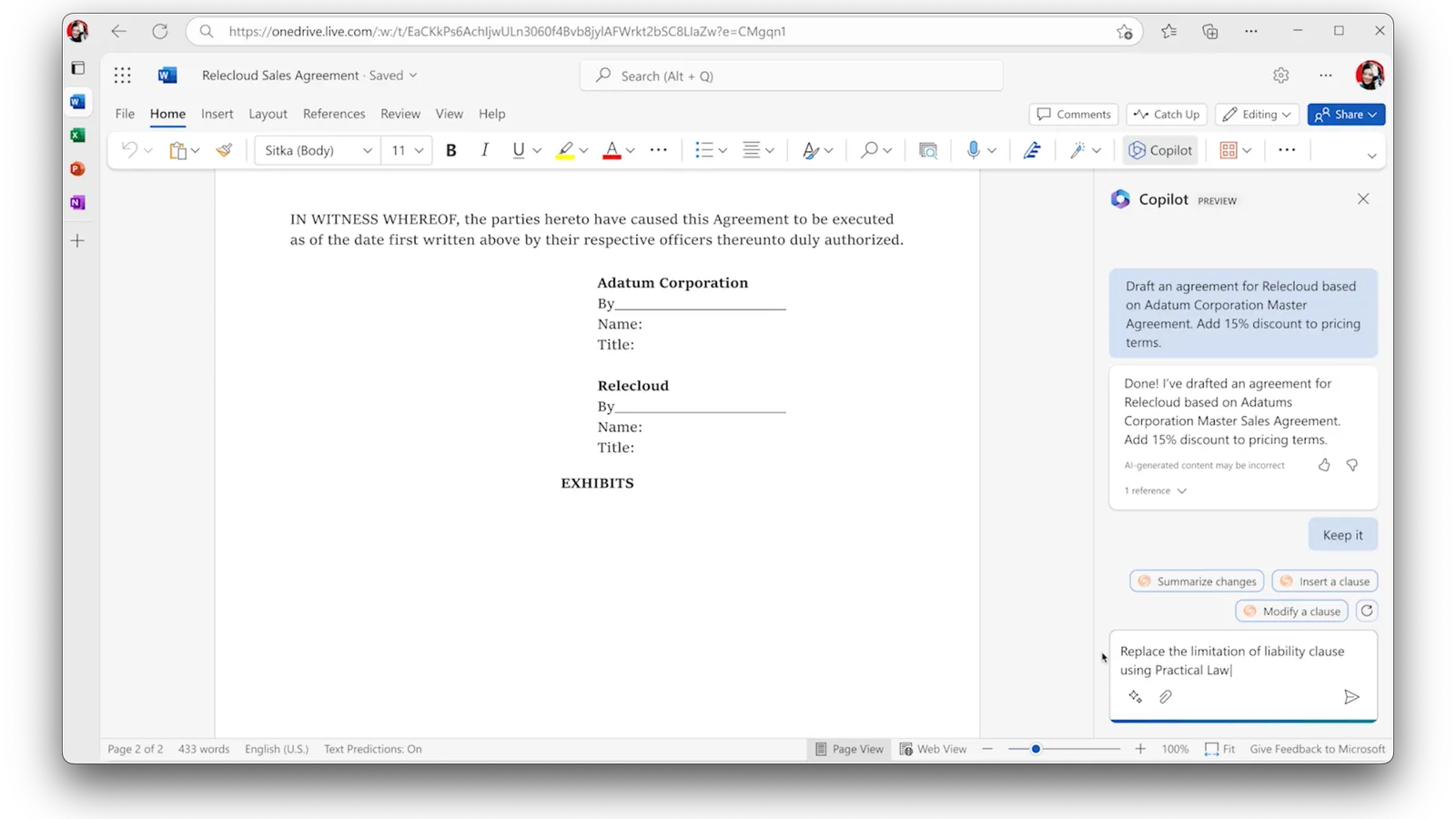
Microsoft moved first at the everyday level. It put an AI agent for legal work inside Word in April 2026, per LawSites' reporting on the sector. For most lawyers Word is where the day happens, so this reaches more desks than any standalone app.
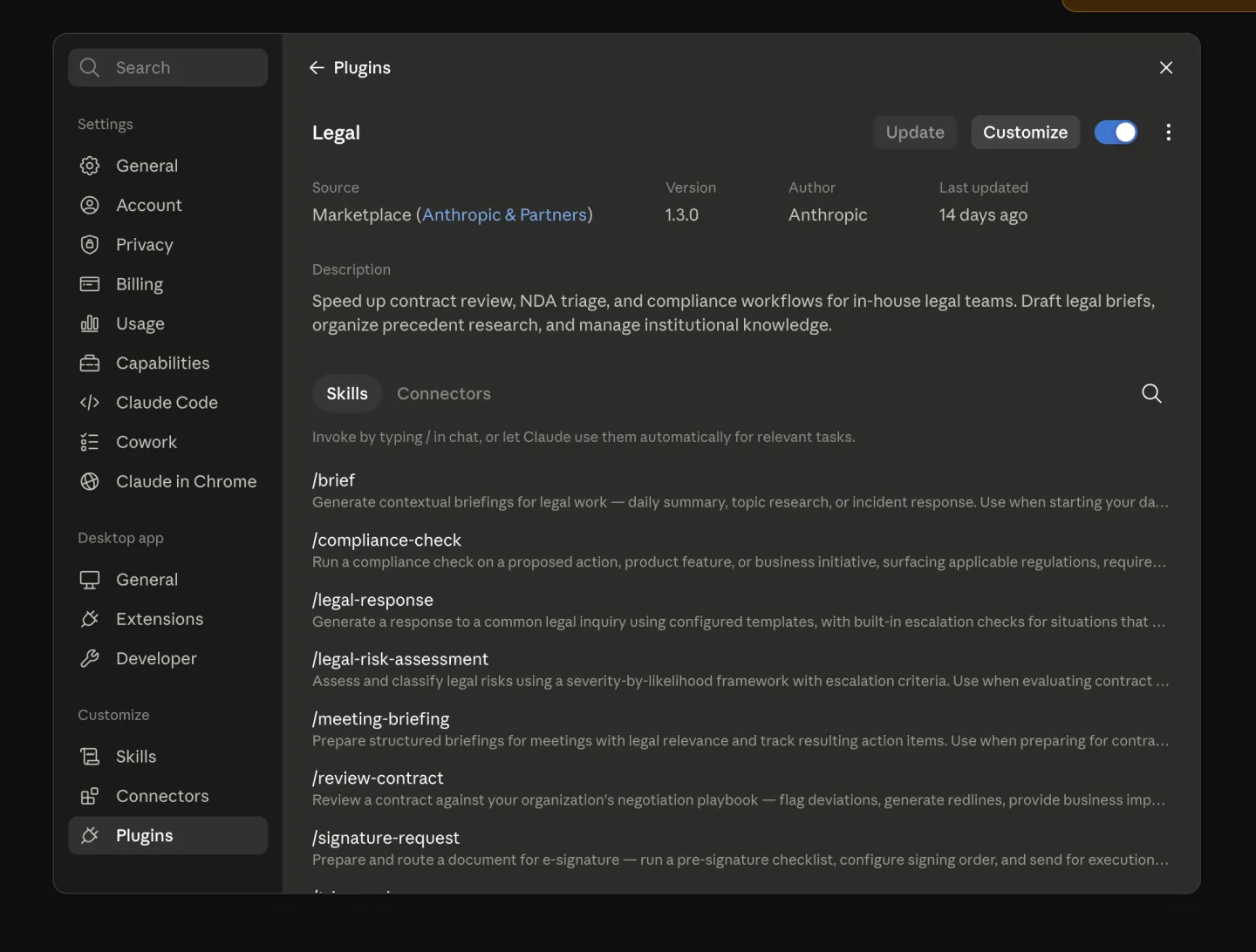
Anthropic went wide in May. Claude for Legal shipped 12 practice-area plugins and more than 20 connectors to tools like iManage, DocuSign, and Thomson Reuters, plus a Microsoft 365 embed that carries one context across Word, Outlook, and Excel. We covered the details in our Claude for Legal breakdown.
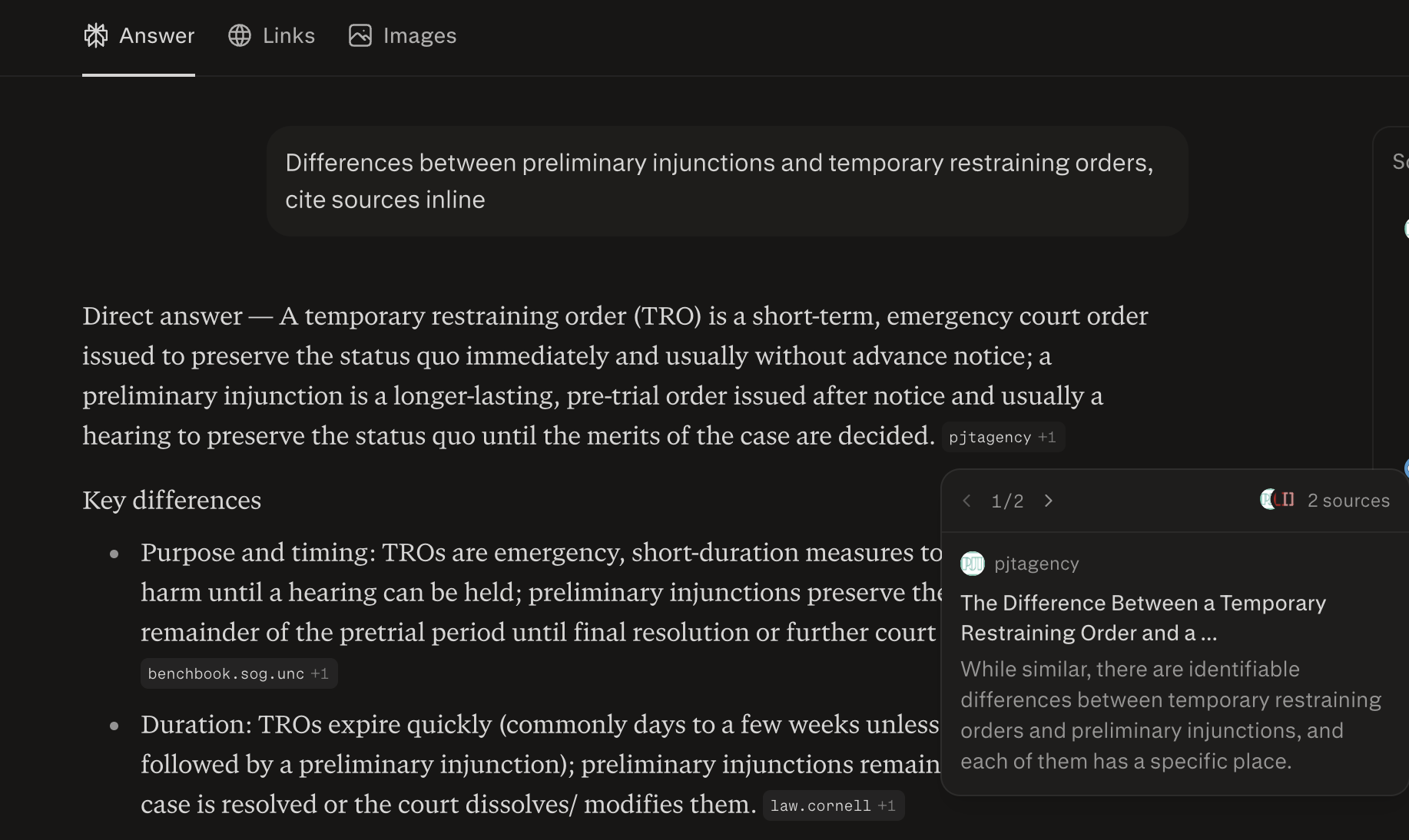
OpenAI announced its plan on May 18. Artificial Lawyer reported that OpenAI is building a range of "Codex for..." verticals across sales, finance, and legal, with legal shaping up as plugins much like Claude's. On June 1 OpenAI confirmed the seriousness of the move by hiring Jason Boehmig, co-founder of contract-management company Ironclad, to lead product for the legal vertical. Boehmig grew Ironclad to a reported $3.2 billion valuation before stepping down as CEO in 2025, so this is a domain hire, not a side project.
Perplexity unveiled Computer for Counsel on June 24 at an invitation-only in-house counsel event in New York and is now rolling its legal features out to market. It connects research databases, document repositories, and matter systems, and it says it routes each subtask across more than 20 frontier models with no single-vendor lock-in. Perplexity was also clear it is not trying to build a Westlaw or LexisNexis style database. It calls itself a research, drafting, and workflow layer that sits on top of the web and connected systems.
Read those four together and one pattern jumps out. None of these companies is selling a legal database. They are selling a workflow layer that reaches into the systems you already pay for.
General-purpose AI legal tools: what the wave actually delivers
Strip the launch copy and every one of these products is the same shape: a strong frontier model, plus a connector layer, plus some legal-flavored prompting or plugins. That shape is genuinely useful, and it is worth being precise about why.
For a lot of legal work the model was never the weak link. A modern frontier model can already summarize a 60-page master services agreement, draft a clean first-pass NDA, or explain a regulation in plain terms. The friction was getting the right documents, emails, and law into one place. That is exactly what the connector layer fixes. Pull the counterparty's redline from NetDocuments, the signature status from DocuSign, and the deal history from email into one thread, then draft.
So on speed and reach, this wave is a real gift to lean legal teams. Here is how the four compare on the facts we could source.
| Tool | Launched | Shape | Explicit positioning |
|---|---|---|---|
| Microsoft (Word agent) | April 2026 | Agent inside Word | Meets lawyers where they draft |
| Claude for Legal | May 12, 2026 | Model + 20+ connectors + 12 plugins | Reach across legal tools |
| OpenAI Codex for Legal | Announced May 18, 2026 | Vertical + plugins (Boehmig hired June 1) | One of several business verticals |
| Perplexity Computer for Counsel | June 24, 2026 | Multi-model agentic layer | Workflow layer, not a database |
Where a general legal mode stops and a workbench begins
Here is the part the launch coverage keeps skipping. Reach and governance are different problems, and in-house work lives on the governance side.
A general legal mode gives you horizontal reach across tools. An in-house workbench gives you vertical control over how a single matter gets handled. You want both. The mistake is assuming the first one covers the second.
Walk through what an in-house team actually needs before AI touches a live matter:
- Matter segregation. The Acme acquisition and the Acme wrongful-termination suit cannot share a context window. A general model with connectors will happily read across both unless you remember, every time, to keep them apart.
- Playbook enforcement. Your fallback positions, your approved clause library, your hard rule against uncapped indemnity. A plugin drafts a handbook. It does not hold your negotiation playbook and refuse to cross it.
- An audit log. When the GC asks who ran what against which document and what the model returned, "it was in a thread somewhere" is not an answer a regulator or a board will accept.
- Verification on by default. A general model will write a confident citation. Whether that citation is real is a separate step, and it has to be on automatically, not something an associate remembers to check at 11pm. We wrote about why this matters in how to keep legal AI from hallucinating cases.
Make it concrete. A lean legal team is redlining a renewal MSA for Acme, a customer the company also sold a separate product to last year under a different paper. Counsel asks the general legal mode to mark up the indemnity section. The connectors pull "the Acme contract" into context, but the model grabs the older sales agreement, a matter with a far more generous liability cap the company never wants to repeat. It drafts a redline anchored to the wrong prior, so it never proposes the mutual-indemnity fallback the negotiation playbook reserves for renewals, and it quietly accepts an uncapped carve-out the playbook forbids. Six weeks later the deal is signed and the GC asks a simple question: who approved deviating from the standard cap? The answer lives in a chat thread nobody can find, with no record of which document the model read or why it deviated.
A governed layer breaks that failure at each step. Matter segregation scopes the context to this renewal only, so the wrong Acme agreement never enters the window. Playbook enforcement holds the mutual-indemnity fallback and the hard rule against uncapped liability, and it flags any clause that crosses them rather than drafting past them. The audit log records which document was read, what the model proposed, and who signed off on the deviation, so the GC's question has an answer before it is asked. The general model was fast. The governed layer is the one you can defend.
None of this is a knock on OpenAI, Perplexity, or Anthropic. It is a category line. Their tools make the risky move the easy move: one click pulls a privileged document into a general model's context. That is a call your risk function should make on purpose, not a default you back into because the connector made it frictionless.
A framework: when general is enough, and when you need a governed layer
You do not have to pick one tool for everything. Sort the work by risk instead. The test is simple. Ask whether the output touches a live matter, privileged data, or a position you will sign your name to.
The left branch is where general-purpose AI legal tools shine. Cross-jurisdiction research, a first-pass memo, a plain-English read of a new rule, a monthly regulatory digest. Fast, broad, low-stakes if a human checks it. That is Perplexity's and Claude's sweet spot, and you should use them there without guilt.
The right branch is where a governed suite earns its seat. Contract review against your own playbook, redlines you will send to a counterparty, anything that pulls privileged files. This is the agentic, matter-bound work we compared across vendors in which legal AI suite is best, and it is the reason in-house teams still buy a purpose-built layer even when they already pay for ChatGPT and Claude.
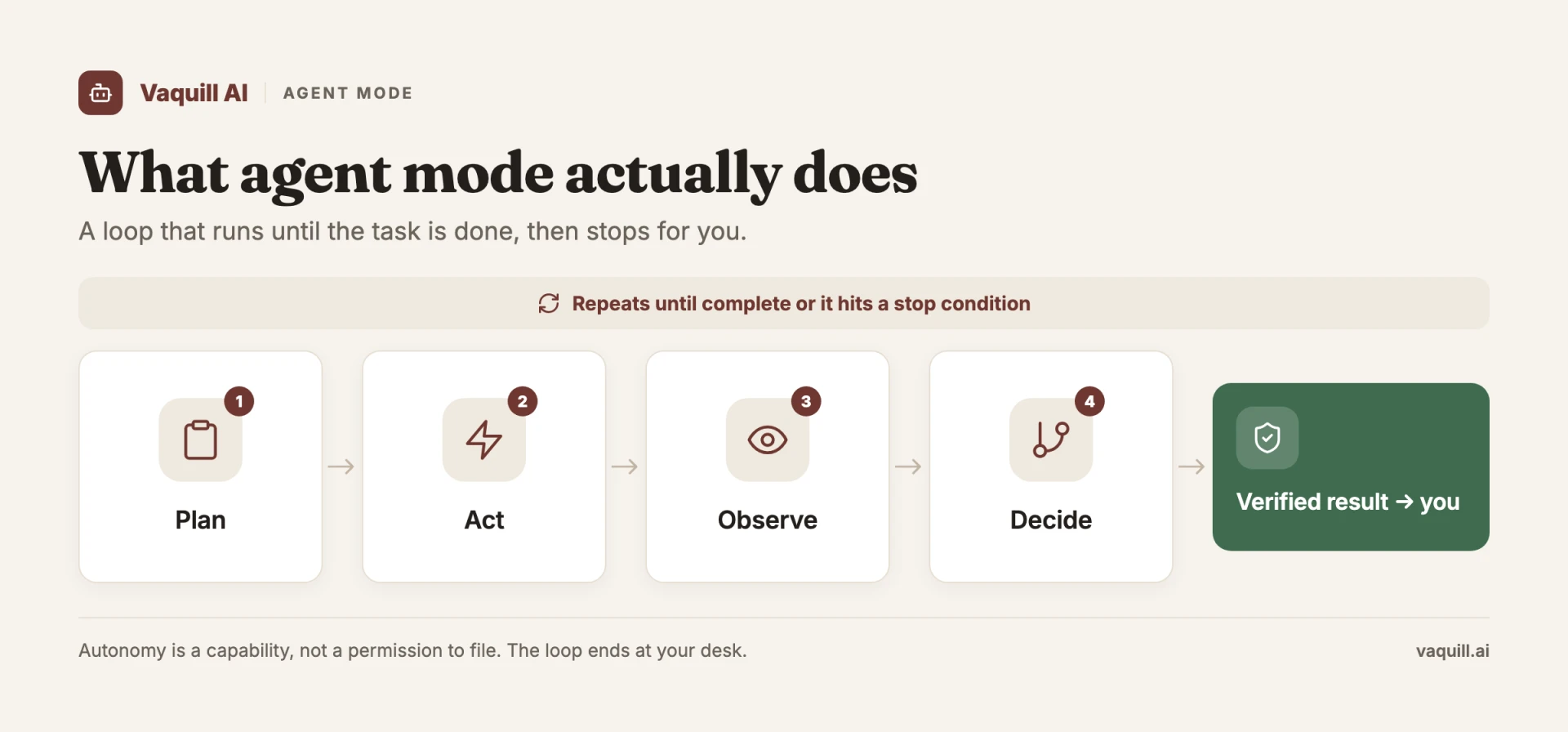
At Vaquill AI we built our suite for that right branch: matter-scoped context, playbook enforcement, and a verification pass that cites primary law verbatim before an answer reaches you. That is the governed layer the general tools leave out. The split worth planning around is simple. Use general models for reach and speed, and a governed workbench for anything a court or a board might read.
Ready to test the governed layer?
If your team already runs a general legal mode and keeps hitting the wall on privileged or matter-bound work, that gap is exactly what a purpose-built suite fills. See how Vaquill AI handles in-house drafting, review, and verification, and bring your hardest matter as the test.
FAQ
Is OpenAI's Codex for Legal available now? No. As of early July 2026 it is announced, not shipped. Artificial Lawyer reported the plan on May 18, and OpenAI hired Ironclad co-founder Jason Boehmig to lead the legal vertical on June 1. Expect a plugin-style product, but do not plan around a live release yet.
What is Perplexity Computer for Counsel? It is Perplexity's legal offering, launched June 24, 2026. It connects research databases, document stores, and matter systems, then runs research, document gathering, and contract triage across them. Perplexity says it is a workflow layer, not a Westlaw or Lexis style database.
Do these general tools replace a dedicated legal AI platform? For research and first drafts, often yes. For live-matter work, privileged data, or positions you will sign, no. General models lack matter segregation, playbook enforcement, an audit log, and verification on by default. Those are the reasons in-house teams still buy a governed layer.
Is it safe to put privileged documents into ChatGPT, Claude, or Perplexity? Treat it as a deliberate risk decision, not a default. Enterprise plans offer data controls, but the connectors make it easy to pull privileged files into a general context without matter scoping or an audit trail. Set policy on which repositories each tool may touch before you enable it.
How is a general legal mode different from a legal research database? A database like Westlaw or Lexis owns proprietary content and citation tools. The new general modes explicitly do not. Perplexity said so directly. They are drafting and workflow layers that sit on top of the web and your connected systems, so they still depend on the underlying sources for authority.
What should a small in-house team do right now? Sort your work by risk. Use a general legal mode for research, summaries, and first-pass drafts. Route contract review, redlines, and anything privileged through a system with matter segregation, playbook enforcement, and verified citations. Write the connector policy before you switch anything on.
Why did OpenAI hire an Ironclad founder for this? Jason Boehmig built Ironclad into a contract-management company reportedly valued at $3.2 billion. Contracts are the highest-volume, most-connectable legal workflow, so hiring a contracts leader signals OpenAI is aiming at everyday, high-volume contract work, well beyond headline research.
New legal AI guides, weekly.
Further Reading
Claude Fable 5 and Legal AI: What Its Benchmark Records Actually Mean
Read postThe AI Value Gap: In-House Counsel Want AI Results Their Outside Counsel Are Not Delivering
Read postClaude for Legal: What In-House Teams Need to Know
Read postWhat Lawyers Really Think of Legal AI in 2026 (Reddit + Reviews)
Read postSpellbook's Autonomous Contract Management: What It Means for In-House Teams
Read postMost In-House Legal Work Is Not Legal Risk (and AI Is Proving It)
Read post
Co-Founder & CEO · Attorney
Arshita leads product and strategy at Vaquill AI, the US primary law data API. As an attorney, she decides which law we carry, how each section is sourced and cited, and what legal AI and compliance teams need from the data.