Most lawyers now use legal AI, and most do not fully trust it. That gap, wide adoption sitting on top of thin trust, is the single clearest signal in everything practitioners say about these tools in 2026. They are not asking whether AI belongs in legal work anymore. They are arguing about which tools are worth the money and which are, in the words that come up over and over on Reddit, "just a wrapper."
This is a synthesis of what working lawyers actually say, pulled from legal subreddits, software review sites, and the 2026 survey data, not from vendor decks.
TL;DR
- Trust is the real bottleneck, not adoption. Only about 22% of legal AI users report high trust in the output (2026 GenAI in Legal Benchmarking Report, via Legaltech News), and only 23% of in-house lawyers use AI daily (Bloomberg Law, State of Practice 2026).
- Hallucinated case law is the number-one complaint, and it now shows up in opposing counsel's filings, not just demos. Even purpose-built research tools hallucinate 17% to 33% of the time (Stanford RegLab, peer-reviewed 2025).
- The loudest structural gripe is price versus substance. Four-figure-per-seat tools get called "comedy" when practitioners believe the engine underneath is a general model with a legal label.
- Lawyers praise the same few things: time saved on routine high-volume work, answers grounded in sources they already trust, and AI that lives inside the tool they already use. They abandon anything that adds a verification step instead of removing one.
- In-house buyers and BigLaw buy differently. In-house shops evaluate on ROI and price and unbundle into cheaper point tools. BigLaw often buys on brand and partner politics, then watches the seats go unused.
- The tools with the strongest real reputations are the ones grounded in trusted data (Westlaw and Lexis content) or embedded in the daily workflow (Word). Standalone "chat" wrappers get the most skepticism.
Per the 2026 data, roughly what share of legal AI users report high trust in the output?
How we sourced this
We read active 2025 and 2026 threads across r/legaltech, r/LawFirm, and r/paralegal, product pages on G2, Capterra, and Lawyerist, and the year's named surveys (Bloomberg Law, ACC and Everlaw, the Stanford RegLab hallucination study). Reddit quotes are paraphrased, not reproduced verbatim, and no rating or figure appears here unless it traces to a named, dated source. Review-site star ratings vary widely by page and date, so we describe reputation in words rather than pin a single number that is wrong the moment a vendor page updates.
Trust, not adoption, is the story
Ask a survey "do you use AI" and the number is high. Ask "do you trust it" and it collapses.
A 2026 benchmarking report summarized by Legaltech News found only 22.1% of legal users have high trust in generative AI output, and the payoff splits hard on that trust: teams with high confidence reported positive returns 89.5% of the time, versus 27.8% for teams that did not trust the tool. Bloomberg Law's 2026 State of Practice survey found only 23% of in-house lawyers use AI daily, while 27% had not touched it in six months.
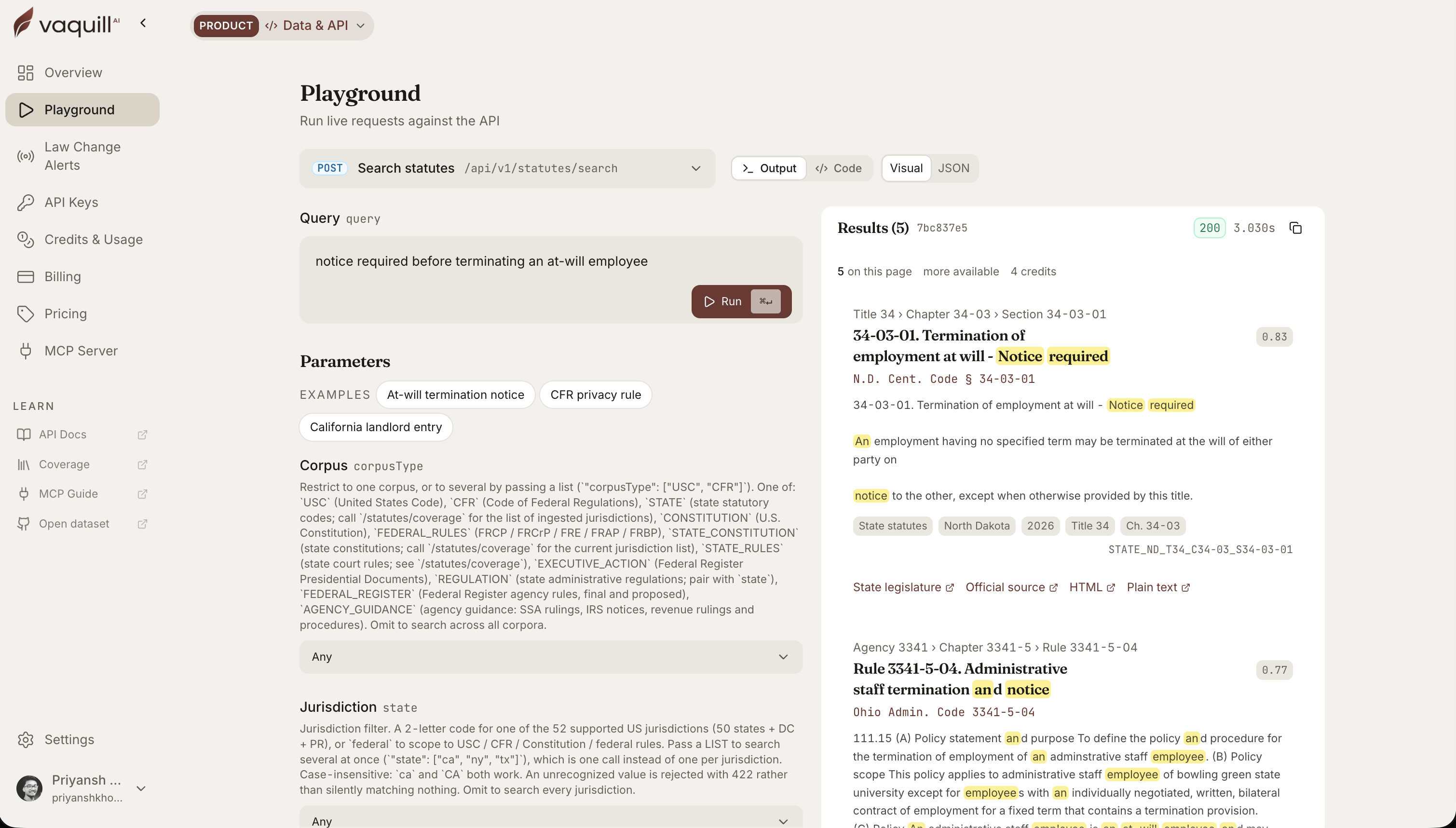 The same corpus behind this article, queried live. Every result carries its citation and a link to the official source.
What lawyers complain about
Five themes repeat across the threads and reviews.
1. Hallucinated case law, now in real filings. The most visceral complaint on r/paralegal is no longer "the AI made something up in a demo." It is "opposing counsel filed a motion with a case that does not exist." Practitioners describe AI-drafted briefs that blend two real cases into one fictitious citation, or invent code sections wholesale. The peer-reviewed data backs the fear: a Stanford RegLab team found the leading research tools from LexisNexis and Thomson Reuters hallucinated 17% to 33% of the time, and concluded that vendor claims of "hallucination-free" AI were overstated. See our AI hallucination sanctions tracker for how often this reaches a courtroom.
2. It adds a step instead of removing one. A widely-upvoted r/legaltech argument runs like this: upload the contract, read the AI summary, then read the whole contract anyway to verify, then do your own analysis. If checking the output takes as long as doing the work, the tool is theater. Lawyers quietly stop using anything that fails this test, usually within two weeks.
3. Price versus substance. The single most repeated structural critique is that four-figure-per-seat tools are overpriced for what practitioners believe is a general model with a legal wrapper. When a competing baseline (a general assistant at a fraction of the price) feels comparable on the actual task, any premium has to be justified by verifiable citations, real integrations, and security, "otherwise it is just a logo."
4. Low actual usage. "It does not pay for itself if nobody logs in" is a recurring line. The most-quoted example is a team spending tens of thousands a year on a research tool that, by their own admission, almost no attorney opens for more than an hour a month. A tool that clears procurement and never enters the workflow is the most common way legal AI fails.
5. Confidentiality and data handling. Threads about feeding privileged documents into consumer chatbots draw sharp responses. The sober middle-ground view that wins these arguments is specific: use tools with a no-training agreement, zero data retention, and tenant isolation, not "never use cloud AI" and not "just paste it in."
What lawyers actually praise
The positive threads are narrower and more consistent, which is what makes them credible.
- Routine, high-volume, low-stakes work. The clearest ROI is bulk NDAs, vendor and supplier agreements, and first-pass review of standard commercial paper. As one in-house voice put it, the question is not whether AI captures "the craft," it is whether it saves two full-time equivalents on repetitive review.
- Historical document extraction. "Find every contract with an arbitration clause, or a liability cap over a set number" is repeatedly cited as something AI does in minutes that used to be near-impossible.
- A trustworthy second pass. Many lawyers run AI after their own review to catch what they missed, or to generate a first draft they then edit. Assistant, not oracle.
- Grounding in trusted sources. The tools lawyers defend most are the ones whose answers pull from content they already rely on. An ex-salesperson's blunt read: the thing that actually closed deals was the underlying Westlaw and Practical Law data, because attorneys trusted output that came from sources they already used.
- Living inside the daily tool. "AI where the work already happens," most often a Microsoft Word add-in, is repeatedly named as the biggest driver of adoption, and its absence as the biggest killer.
The tool-by-tool reputation
Reputations, not ratings, because the star numbers move by the week.
| Tool | Typical user | Grounded in | Main praise | Main complaint |
|---|---|---|---|---|
| Harvey | AmLaw and Fortune 500 in-house, where the employer pays | The firm's own files plus frontier models | Depth on complex, cross-border matters | Called an overpriced wrapper; the seat math fails small firms |
| CoCounsel (Thomson Reuters) | Solo to mid-market inside the TR ecosystem | Westlaw and Practical Law content | Output trusted because the sources already are | Product feel called clunky; tied to a Westlaw subscription |
| Lexis+ AI (with Protege) | Research-heavy firms in the Lexis ecosystem | The Lexis corpus and Shepard's | Citation validation in the answer; lowest measured hallucination rate (Stanford) | "Useful, not transformative"; opaque pricing |
| Robin AI | In-house and M&A teams at higher contract volume | Your contract set and playbook | Fast first-pass NDA and M&A review | AI-drafted language needs heavy editing before it goes out |
| General assistants (Claude, Copilot) | Everyone, as the price and quality baseline | Nothing legal-specific unless you add it | Cheap, flexible, already paid for | Not matter-centric; you supply the legal grounding and the prompts |
In-house and BigLaw are two different markets
The threads split cleanly by buyer.
BigLaw often buys on brand, fear of missing out, and partner politics rather than merit. Innovation teams get bypassed when a vendor sells straight to a senior partner. Because the billable hour blunts the incentive to save time, a six-figure tool can be signed on a handshake and then sit unused.
In-house teams are the more product-rational buyers. They evaluate on ROI, pain-point fit, and price, and they unbundle: the right narrow tool for each task rather than one broad platform. Their published tool lists cluster in the low hundreds of dollars per seat, lean heavily on Word add-ins and multi-jurisdiction research, and get cut fast at renewal if utilization is low. If you want the buyer-side view in depth, see what in-house AI leaders do differently.
What this means if you are evaluating legal AI
The practitioner consensus points to a short buying checklist:
- Demand grounding and one-click citation checking. The tools lawyers trust show their sources so verification takes seconds, not minutes. That single feature is what separates daily-use tools from abandoned ones.
- Buy for the tasks a human already checks. First-pass contract review, triage, and drafting are where a double-digit error rate is tolerable because you verify anyway. Never file or advise on unverified output.
- Measure week-two usage, not the demo. Track whether the team actually opens it, because "passed procurement, never used" is the dominant failure mode.
- Read the price against the substance. Transparent, published pricing and real integrations beat a premium sticker with a sales gate.
Two things decide whether a tool sticks. A legal AI tool earns daily use only if it grounds its answers so verification is fast, and if it lives where the work already happens. Miss either and it slides toward the shelf.
If you want a tool built around exactly that, cited answers you can verify in one click, Vaquill AI is built for in-house and corporate legal teams, with published, self-serve pricing.
FAQ
Do lawyers actually trust legal AI in 2026? Mostly not yet. A 2026 benchmarking report found only about 22% of legal users have high trust in generative AI output, and Bloomberg Law found just 23% of in-house lawyers use it daily. Adoption is wide, but confidence and daily use are thin, and trust tracks closely with whether a tool grounds its answers in verifiable sources.
What do lawyers complain about most? Hallucinated case law is the top complaint, and it now appears in real court filings, not just demos. Close behind are tools that add a verification step instead of removing work, high prices for what practitioners see as thin substance, and low actual usage after purchase.
Is Harvey worth it, according to lawyers? Opinions split by who pays. Skeptics on Reddit call it an overpriced wrapper. Its defenders are largely in-house and BigLaw users whose firm covers the cost and who value its depth on complex, cross-border work. For small firms and solos, the seat math rarely works.
Does legal AI still hallucinate? Yes. A peer-reviewed Stanford RegLab study found the leading legal research tools hallucinated 17% to 33% of the time and that "hallucination-free" marketing was overstated. Verify every citation before you rely on it, regardless of the vendor.
Which legal AI do lawyers rate highest? Reputation beats star ratings here because the numbers shift constantly. Tools grounded in trusted content (Westlaw, Lexis) and tools embedded in Microsoft Word tend to earn the most durable praise. Standalone chat wrappers draw the most skepticism.
How do in-house teams choose legal AI differently from law firms? In-house teams buy on ROI, price, and pain-point fit, and they unbundle into cheaper point tools. Law firms more often buy on brand and partner preference, which is why expensive firm-wide rollouts sometimes go unused.
What should I look for when buying legal AI? Grounded answers with one-click citation checking, a fit with the tasks your team already verifies, transparent pricing, real integrations, and a no-training data commitment. Then measure whether people actually use it in the first two weeks.
Sources
All links checked July 2026. Some report pages block automated checks and are named without a link; their figures come from the publisher's own summaries.
- Legaltech News, coverage of the 2026 GenAI in Legal Benchmarking Report (March 2026)
- Bloomberg Law, State of Practice 2026 (83% use AI, 23% of in-house daily) (2026)
- Magesh et al., Hallucination-Free? Assessing the Reliability of Leading AI Legal Research Tools, Stanford RegLab (Journal of Empirical Legal Studies, 2025)
- Reddit: r/legaltech, r/LawFirm, and r/paralegal threads, 2025 and 2026 (sentiment paraphrased, not reproduced)
- G2 and Lawyerist product pages, checked July 2026 (ratings vary by page and date; described qualitatively)
New legal AI guides, weekly.
Further Reading
Claude Fable 5 and Legal AI: What Its Benchmark Records Actually Mean
Read postThe AI Value Gap: In-House Counsel Want AI Results Their Outside Counsel Are Not Delivering
Read postClaude for Legal: What In-House Teams Need to Know
Read postSpellbook's Autonomous Contract Management: What It Means for In-House Teams
Read postMost In-House Legal Work Is Not Legal Risk (and AI Is Proving It)
Read postThe Legal AI Consolidation Wave: What In-House Buyers Should Watch
Read post
Co-Founder & CEO · Attorney
Arshita leads product and strategy at Vaquill AI, the US primary law data API. As an attorney, she decides which law we carry, how each section is sourced and cited, and what legal AI and compliance teams need from the data.